
Poland Detains Russian National Suspected of Spying on Critical Infrastructure

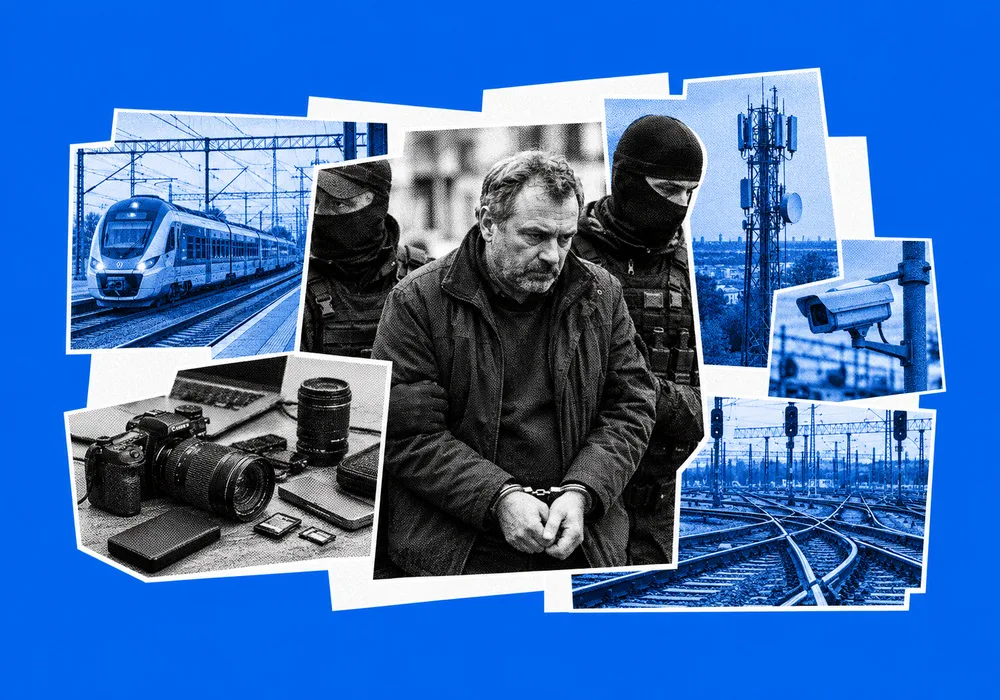
A 55-year-old Russian citizen has been arrested in southwestern Poland after being found photographing railway infrastructure and transport facilities. Investigators say his electronic devices contained extensive photographic records of strategically important locations in several countries, raising further concerns about Russian intelligence activity and the vulnerability of European transport networks.
Polish authorities have detained a 55-year-old Russian national suspected of conducting intelligence-gathering activities on behalf of a foreign intelligence service. The arrest took place in Świdnica, a town in southwestern Poland, after officers noticed the man photographing passing trains and railway infrastructure near a railway crossing.
The incident came to light on 30 October, when police officers assigned to security duties during a football match noticed suspicious activity near the railway line. Subsequent checks led to the identification of the individual and the discovery of photographic equipment and a substantial collection of digital material documenting transport infrastructure and other strategically significant locations.
According to Polish police, the man had thousands of photographs of important sites and transport facilities in his possession. Further examination of his electronic devices reportedly uncovered hundreds of thousands of files documenting various locations, including critical infrastructure in Poland and other countries. The material extended beyond railway facilities, suggesting that the collection may have involved a broader effort to document strategically relevant sites.
Polish investigators suspect that the photographs were gathered for a foreign intelligence service and could have been used in activities threatening national security. The man has been charged with acting on behalf of a foreign intelligence service against Poland by documenting railway and transport infrastructure and industrial facilities with the intention of transferring the material to an intelligence organisation.
A court has ordered the suspect to remain in pre-trial detention for three months. If convicted, he faces a prison sentence of at least five years under Polish law.
Infrastructure as an Intelligence Target
The case highlights the growing security significance of civilian infrastructure in Europe's confrontation with Russian intelligence operations. Railways, bridges, logistics centres and industrial facilities are not merely elements of the transport and economic system. They also form part of the infrastructure required to sustain military mobility, supply chains and national resilience during a crisis.
Railway networks are particularly important for Poland because of the country's geographical position and its role as a major transit corridor for military and humanitarian assistance to Ukraine. Transport infrastructure connects NATO's eastern flank with the rest of the Alliance, while also supporting the movement of equipment, personnel and supplies towards the Ukrainian border.
Systematic photographic documentation of railway facilities could potentially provide intelligence about the physical characteristics of transport routes, the location of strategically important installations and the organisation of logistical networks. Such information could become relevant in the preparation of sabotage operations or other activities designed to disrupt transport and supply systems. However, Polish authorities have not publicly established how the collected material was intended to be used or identified the intelligence service allegedly behind the operation.
The scale and geographical reach of the material found on the suspect's devices are particularly significant. The presence of photographs documenting locations outside Poland suggests that the investigation may extend beyond a single national security incident. It also raises questions about whether similar reconnaissance activities are being conducted across several European countries.
A Broader Pattern of Russian Intelligence Activity
Poland has repeatedly warned about espionage, sabotage and influence operations attributed to Russia. Its security services have increasingly focused on identifying individuals recruited to gather information, monitor sensitive facilities or prepare activities that could undermine critical infrastructure.
One characteristic of these operations is the potential use of intermediaries and foreign nationals rather than direct involvement by Russian intelligence officers. Individuals recruited for relatively limited tasks may be instructed to photograph facilities, monitor transport movements or collect information that could later support more complex operations.
The use of seemingly ordinary activities for intelligence gathering complicates the work of security services. Photographing trains or railway facilities is not inherently illegal, and identifying suspicious behaviour requires authorities to establish the broader context, including the volume of collected material, the locations documented and possible links to foreign intelligence structures.
The arrest in Świdnica therefore carries significance beyond the detention of one individual. It demonstrates how routine security monitoring can uncover potentially extensive intelligence-gathering activity, particularly when officers are alert to suspicious behaviour around strategically important infrastructure.
Polish authorities have not publicly disclosed the identity of the suspect or provided details establishing which foreign intelligence service he allegedly worked for. The Russian embassy had not immediately responded to a request for comment. Moscow has previously rejected Polish accusations of espionage and influence operations.
Implications for European Security
The case adds to concerns about the exposure of Europe's critical infrastructure to hostile intelligence activity. Although the investigation remains at an early stage, the alleged collection of extensive photographic material across national borders illustrates the potential scale of reconnaissance activities targeting transport and industrial networks.
For NATO's eastern members, infrastructure security is closely connected to military preparedness. Poland's railway system is an important component of the wider European logistics network, particularly given the country's role in supporting Ukraine and reinforcing the Alliance's eastern flank. Any disruption to major transport routes could have consequences extending beyond national borders.
The incident also highlights the importance of cooperation between national police forces, intelligence services and infrastructure operators. Detecting suspicious activity is only one part of the response; authorities must also establish whether information has been transmitted abroad, identify possible networks involved and assess whether other facilities have been targeted.
As European governments strengthen their protection of critical infrastructure, the distinction between conventional espionage, reconnaissance and preparations for sabotage is becoming increasingly important. The Polish investigation will help determine whether the suspect's activities were part of a wider intelligence operation and whether the collected information posed a direct threat to national or regional security.
Sources: Polish Police, Polskie Radio