
Nvidia Shares Plunge as Board Weighs Ousting CEO Jensen Huang

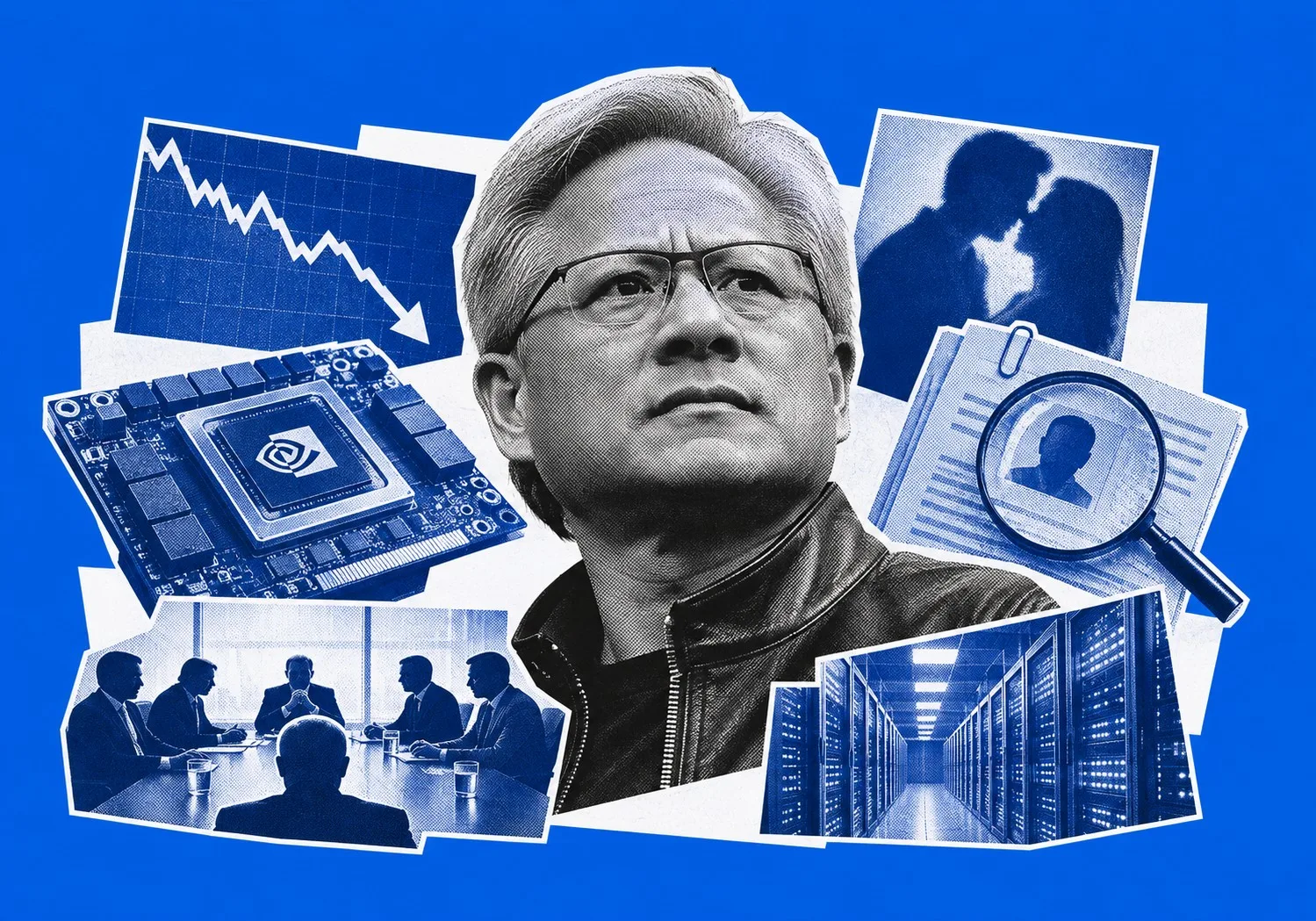
Nvidia shares plunged more than 8% in after-hours trading following reports that its board was considering removing chief executive Jensen Huang. The crisis follows allegations of two extramarital affairs, including one involving a businesswoman suspected of links to Chinese intelligence. Directors met late on Wednesday to discuss Huang's future, just days after publicly backing the Nvidia co-founder. No decision has been announced. The turmoil spread to European semiconductor stocks on Thursday, while speculation grew over who might replace the man who has led Nvidia for 33 years. The possible departure of one of the technology industry's most influential executives comes as investors question the enormous sums being poured into artificial intelligence. Nvidia, valued at roughly $4 trillion, supplies the processors powering much of that expansion.

From boardroom support to crisis
On Sunday, 8 November, Nvidia's directors publicly expressed confidence in Huang. They had just launched an independent investigation into reports that the 63-year-old executive had been targeted by a foreign intelligence operation.
The inquiry followed revelations about his relationship with Alice Huang, a businesswoman suspected by US intelligence officials of links to Chinese espionage. American authorities have been examining allegations that she helped facilitate shipments of Nvidia chips to Chinese companies. The two are not related.
Huang acknowledged being unfaithful to his wife in an email to employees on Sunday. He apologised to his family, accepted responsibility for his conduct and pledged to co-operate with the investigation.

China rejected the espionage allegations.
Nvidia's board said it had no reason to believe company secrets or US national security had been compromised. The investigation is examining whether Huang was targeted by an intelligence operation, rather than treating his knowledge of any alleged activity as established.
The situation became more difficult on Wednesday, when the New York Times reported that Huang had also had an extramarital relationship with Kimberly Powell, Nvidia's vice-president of healthcare, who reported directly to him.
That allegation raised a different problem for directors. A relationship involving a senior executive and someone reporting to him could create a conflict of interest under Nvidia's corporate policies. The circumstances of the alleged relationship have not been publicly established.
The Wall Street Journal subsequently reported that the board was preparing to remove Huang. Directors met that evening to consider his future, although the company has not announced the outcome.
By then, Nvidia's independent directors had already appointed former federal prosecutor Joon H. Kim and the law firm Wachtell, Lipton, Rosen & Katz to conduct the investigation.
Huang has considerable influence within Nvidia, but he cannot prevent directors from dismissing him. The board has 11 members, ten of whom the company considers independent, and its rules allow the chief executive to be removed by majority vote.
The controversy has also reached Washington, where Nvidia's role in the technological rivalry with China has made it a focus of national security concerns.
Its most advanced processors are used to train powerful AI systems and have potential military applications. Successive US administrations have restricted Beijing's access to sophisticated American chips, while Nvidia has sought to preserve its commercial relationships with Chinese customers.
The allegations have brought renewed attention to those export controls and whether restricted technology has reached Chinese companies through unauthorised channels.
President Donald Trump has said he believes Huang was unaware of any alleged intelligence activity. US lawmakers, meanwhile, have sought further information about the matter, adding political pressure to the company's internal investigation.

Europe caught in the sell-off
Financial markets reacted before Nvidia had made any announcement about Huang's future.
Its shares closed Wednesday's regular US session 2.9% higher at $173.73, only to reverse course after the reports emerged. The stock fell as much as 8.8% in extended trading, adding to a series of losses earlier in the week.
The decline threatened to erase roughly $600 billion from Nvidia's market value compared with its position before the scandal, illustrating how closely investors associate the company's fortunes with its founder.
The pressure spread to Asia on Thursday. Taiwan's benchmark index fell 2.6%, while South Korea's Kospi and Japan's Nikkei also declined. Nvidia's processors are manufactured largely in Taiwan, and suppliers across the region provide the memory chips and components used in its AI systems.
European technology shares followed. The STOXX Europe 600 Technology index lost 1.3% shortly after trading began, with semiconductor companies among the hardest hit.
Dutch chip-equipment maker ASM International fell 2.9%, STMicroelectronics dropped 2.6% in Paris and ASML declined 2.5% in Amsterdam. Nvidia shares were also down more than 7% in European pre-market trading.
The wider European market held up better. London's FTSE 100, Frankfurt's DAX and Paris's CAC 40 opened higher, suggesting that concerns were concentrated in technology rather than the broader economy.
For European chipmakers, Nvidia's importance extends far beyond its share price. ASML supplies the sophisticated lithography equipment needed to manufacture leading-edge semiconductors. Other European businesses provide specialised machinery, materials and components to the same global supply chain.
The rapid growth of AI infrastructure has benefited many of these companies. Any prolonged uncertainty over Nvidia's investment plans could affect businesses that have expanded production to meet demand from the world's largest technology groups.
Investors were also drawing distinctions between Nvidia's competitors and companies dependent on its spending. AMD and Broadcom gained in Wednesday's after-hours trading, while shares in Nvidia-backed data-centre operator CoreWeave fell more than 6%.
The market reaction came amid broader doubts about the AI boom. Technology companies have committed billions to data centres, processors and computing capacity, often relying on complex financing arrangements and expectations of substantial future returns.
Nvidia has been one of the main beneficiaries of that spending. It has also helped finance the expansion of businesses that purchase its processors, making its investment strategy important to the wider industry.
A change in leadership could prompt a review of those commitments. For investors, that possibility has added another layer of uncertainty to an already volatile technology sector.
Who could replace Huang?
Replacing Huang would be an unusually difficult task. He founded Nvidia in 1993 with Chris Malachowsky and Curtis Priem and has remained chief executive ever since, overseeing its transformation from a graphics-chip manufacturer into the dominant supplier of AI processors.
He has never publicly identified a successor. His management style also sets Nvidia apart from many large corporations: dozens of senior executives report directly to him, giving Huang close oversight of engineering, products and commercial strategy.
Attention has turned to several people who could keep the company running while directors decide on a permanent appointment.
Colette Kress, Nvidia's chief financial officer, is widely regarded as a possible interim leader. The 59-year-old joined the company in 2013 after senior roles at Microsoft, Cisco and Texas Instruments.
She has overseen Nvidia's finances during its extraordinary expansion and is familiar to institutional investors, regularly appearing alongside Huang during quarterly earnings calls.
Some directors reportedly favour appointing Kress if Huang is removed. Her knowledge of Nvidia's operations and financial commitments could provide continuity during a difficult transition.
For a permanent appointment, however, engineering experience may carry greater weight.
Ian Buck, who joined Nvidia in 2004, is among the strongest internal contenders. He helped develop CUDA, the software platform that allows graphics processors to perform complex computing tasks.
CUDA became central to Nvidia's dominance of artificial intelligence. Developers have built extensive systems around it, making the company's technology difficult and expensive to replace.
Buck now leads hardware and software products for large cloud computing customers. His responsibilities place him close to the businesses driving demand for Nvidia's most advanced processors.
Shay Boloor, chief market strategist at Futurum Equities, considers Buck a strong long-term candidate because of his technical background and understanding of Nvidia's AI business.
Another possibility is Chris Malachowsky, one of Nvidia's original founders and a senior technology executive who has remained with the company throughout its history.
Malachowsky helped establish Nvidia alongside Huang and Priem in 1993. He currently serves as an Nvidia Fellow and member of the executive staff, having previously overseen engineering, operations and research.
His involvement in developing the company's core technologies gives him an understanding of Nvidia that few other executives can match. He has helped guide the business through several generations of computing, from graphics processing to the technologies underpinning modern AI.
Malachowsky's name has emerged in succession speculation, although he is no longer involved in day-to-day operations to the same extent as Huang.
That distinction may be important. His experience and standing as a co-founder could make him influential in choosing a new chief executive or managing a transition, even if he does not take the position himself.
The board could also divide responsibilities between senior executives. Some investors have suggested an interim arrangement combining Kress's financial expertise with Buck's technical leadership, though Nvidia has announced no such plan.
External candidates are attracting attention too.
Johny Srouji, Apple's senior vice-president of hardware technologies, has been mentioned as a possible replacement. He has played a central role in developing Apple's custom processors and has extensive experience overseeing complex semiconductor projects.
René Haas, chief executive of Cambridge-based chip designer Arm, is another name under discussion. A former Nvidia executive, Haas understands the semiconductor industry and has experience running a major international technology company.
His potential appointment would be particularly interesting for Europe's technology sector, given Arm's British headquarters and its position in the global chip-design industry.
Long-serving Nvidia executive Jeff Fisher has also been mentioned among potential candidates.
The board has reportedly engaged an external recruitment firm to assess possible successors. None has been formally nominated, and there is no indication that directors have settled on a replacement.
The future of Nvidia's AI empire
Huang's influence reaches far beyond the company's executive offices. He has personally shaped Nvidia's technology strategy, negotiated partnerships with manufacturers and cultivated relationships with the world's largest cloud computing companies.
His frequent visits to Taiwan and South Korea have helped secure manufacturing capacity and strengthen ties with suppliers such as TSMC, Foxconn and SK Hynix.
Those relationships have become increasingly important as demand for AI processors has accelerated. Building advanced chips requires close co-ordination between designers, manufacturers, memory suppliers and companies developing the equipment used in production.
Executives across Nvidia's Asian supply chain are now considering what a change in leadership might mean for future investment and product development. Some worry that a successor could be less willing to make the large commitments that have helped Nvidia expand so quickly.
The company has also become an important financial backer of the wider AI industry. It invests in businesses that buy its processors, supports data-centre development and enters into long-term arrangements that help customers secure computing capacity.
Nvidia has disclosed substantial financial commitments connected to infrastructure projects and future computing needs. Those arrangements have helped accelerate AI expansion, but they have also prompted concern about the industry's dependence on continued spending by a relatively small group of technology companies.
A new chief executive could adopt a more cautious approach, potentially affecting businesses that have built their growth plans around Nvidia's financial support.
Yet the company's commercial strength does not depend entirely on Huang.
Nvidia's processors remain in high demand, while its software ecosystem gives customers powerful reasons to continue using its technology. Many large cloud providers have already committed substantial sums to AI infrastructure, with products and data centres planned years in advance.
Armina Rosenberg, portfolio manager and co-founder of Minotaur Capital, which owns Nvidia shares, believes an immediate disruption to sales is unlikely. The processors Nvidia will ship over the next year or two have already been developed, while major customers' investment plans extend well beyond any possible leadership change.
The longer-term challenge is harder to measure. Huang repeatedly anticipated shifts in computing before they became major commercial markets. His successor would inherit a highly profitable business but would also have to decide where Nvidia invests next, how it maintains its technological lead and how it responds to growing political scrutiny.
Nvidia is scheduled to publish its quarterly results on 17 November. Investors will be watching its revenue forecasts, profit margins and financial commitments, alongside any indication of how the leadership crisis could affect future plans.
Sources: Nvidia, BBC, Reuters, Financial Times