
Norway Moves to Block Russian and Belarusian Athletes From Competitions

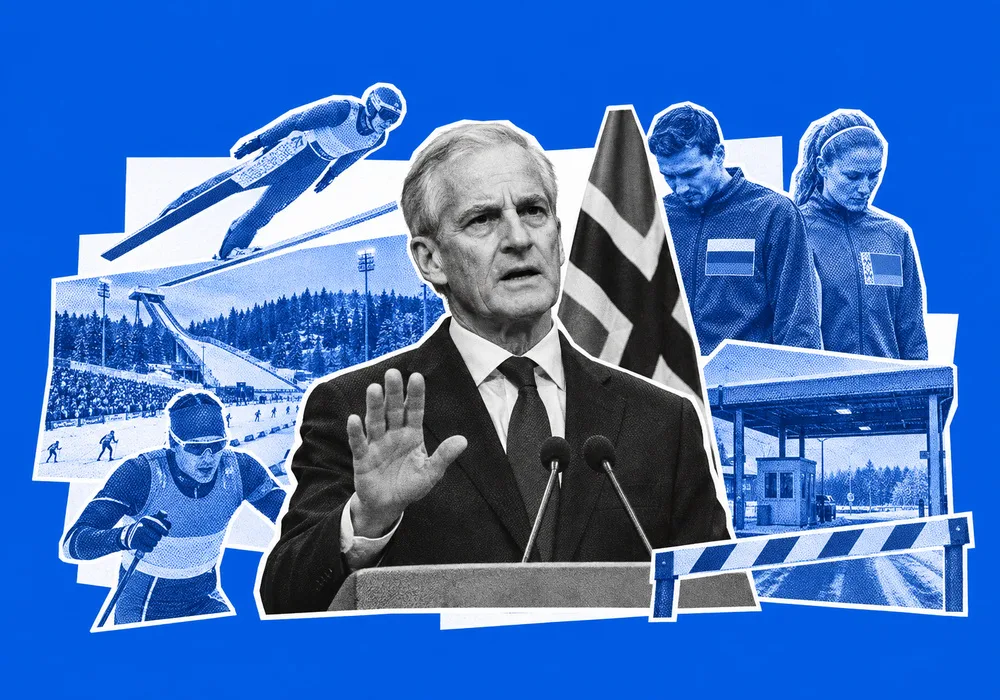
Norway will deny entry to Russian and Belarusian professional athletes and their support staff for as long as Russia's war against Ukraine continues. The decision comes amid growing efforts by international sports federations to reintegrate athletes from both countries, raising questions about the limits of sporting neutrality and the authority of host nations.
Norway has announced plans to prevent Russian and Belarusian professional athletes and accompanying support staff from entering the country to participate in sporting competitions. The decision, announced on 12 November by the Norwegian government, will remain in force for as long as the war in Ukraine continues. The Ministry of Justice and Public Security will instruct the Norwegian Directorate of Immigration (UDI) and the National Police Directorate to refuse entry to athletes and support personnel travelling for this purpose.
The government said existing visa and entry restrictions had not been sufficient to prevent an increasing number of Russian and Belarusian competitors from seeking access to Norwegian sporting events. The change follows decisions by several international sports federations to ease restrictions and allow athletes from both countries to return to international competitions, including under neutral status.
Norwegian Justice and Public Security Minister Astri Aas-Hansen said the government was tightening its approach despite already maintaining restrictive entry rules for Russian and Belarusian citizens. Culture and Equality Minister Lubna Jaffery stressed that professional Russian sport remained closely connected to state authorities and structures, making it impossible to separate international sporting participation from Russia's ongoing aggression against Ukraine. The government also highlighted Belarus's support for and facilitation of Russia's military campaign.
Neutral Status Does Not Guarantee Entry
The Norwegian decision addresses a growing gap between the eligibility rules established by international sporting organisations and the immigration policies of individual countries. In September 2026, the International Ski and Snowboard Federation (FIS) introduced conditions allowing Russian and Belarusian athletes and support personnel to participate in its competitions during the 2026–27 season. Athletes must sign declarations of neutrality, compete individually and refrain from displaying national symbols, including flags, national uniforms and anthems. They must also comply with anti-doping requirements.
However, permission to compete under international federation rules does not automatically grant athletes the right to enter the country hosting an event. Norway's new measures demonstrate that national governments retain the authority to determine who can cross their borders, regardless of the eligibility decisions made by international sports organisations.
The restrictions are particularly significant for winter sports, in which Norway regularly hosts major international competitions. Russian and Belarusian athletes who have received neutral status from international federations could therefore remain eligible on paper while being unable to travel to Norway to participate.
Winter Sports Events Could Be Affected
The announcement comes shortly before the beginning of several major winter sports competitions in Norway. The restrictions could affect the ski-jumping World Cup event in Lillehammer on 20–22 November, as well as cross-country skiing and Nordic combined competitions scheduled in Trondheim in December.
Other international events taking place in Norway during the 2026–27 season could also be affected, depending on the implementation of the new entry rules and the participation arrangements established by individual federations.
Norway's position follows a similar move by Finland, which announced tighter entry restrictions for Russian athletes on 12 November. Helsinki's decision is also intended to prevent Russian competitors from entering the country while the war continues, including those participating under neutral status. The parallel announcements indicate a growing willingness among Nordic governments to use national immigration legislation to maintain restrictions that international sporting bodies have begun relaxing.
The issue has also generated wider disagreement within international sport. Decisions to restore Russian participation have prompted objections from several national federations, particularly in winter sports and ice hockey. The debate has intensified following legal and organisational developments concerning Russia's return to international competitions.
A Wider European Approach to Sporting Restrictions
Norway's announcement reflects a broader disagreement over whether individual athletes can be separated from the political and institutional structures of the states they represent. While international federations increasingly rely on neutrality declarations and restrictions on national symbols, several European governments argue that these measures do not adequately address the political context of Russian sporting participation.
For European countries, the issue extends beyond individual competitions. International sporting events provide visibility, prestige and opportunities for national representation, making decisions about participation politically significant. Allowing athletes to return under neutral status may reduce the formal presence of national symbols, but it does not necessarily resolve concerns about the relationship between elite sport, state institutions and political influence.
Norway's approach also establishes a practical precedent for other host countries considering how to respond to international federation decisions. Rather than attempting to reverse eligibility rulings within sporting organisations, governments can rely on national entry regulations to determine whether athletes can actually participate in competitions on their territory.
The effectiveness of this approach will depend on how consistently the restrictions are implemented and whether other European countries adopt similar measures. For now, the decisions by Norway and Finland suggest that the easing of international sporting restrictions will not automatically translate into unrestricted access to European competitions for Russian and Belarusian athletes.
Sources: Norwegian Government, International Ski and Snowboard Federation, Reform.news