
Melania Trump-Brokered Ceasefire Begins in Oleshky as Missiles Hit Kyiv

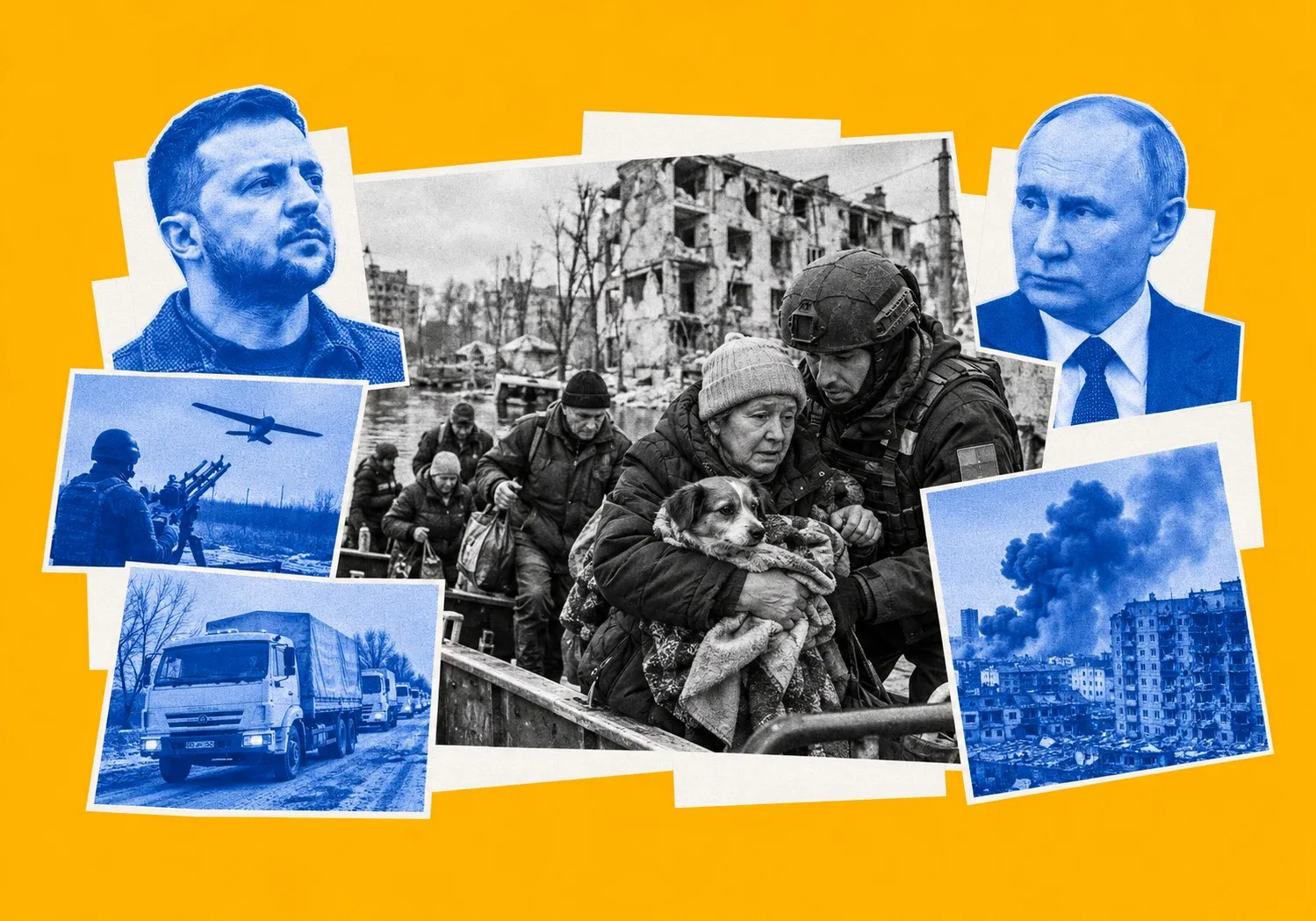
recisely at 03:00 Kyiv time on Tuesday, 27 October 2026—04:00 in Moscow and 01:00 in London—a localized humanitarian silence regime went into effect across the Russian-held enclave of Oleshky in Kherson Oblast. Provisionally scheduled to run for seven days, the frontline pause aims to open a narrow window for emergency supplies and civilian evacuations from a flooded, blockaded settlement on the Dnipro River. Yet just minutes after local guns fell silent along the southern front, Russian strategic forces launched a brutal ballistic missile assault on Kyiv, making clear the strict operational boundaries of the deal.
Oleshky sits directly opposite Ukrainian-controlled Kherson on the river's eastern bank.

Russian troops overran the town during the opening push of the invasion in February 2022.
Sixteen months later, in June 2023, the catastrophic explosion at the Kakhovka Dam submerged whole neighborhoods, wrecking basic municipal networks and drowning local infrastructure.
Before the full-scale war, Oleshky housed roughly 24,000 residents.
Local counts now estimate the remaining population at barely 2,000, consisting almost entirely of elderly civilians and young children.
The town has endured months without centralized power, running water, or heating. Mined access roads and low-flying strike drones have effectively sealed off all movement in and out.
The First Lady’s Deal
The diplomatic track behind the Oleshky agreement bypassed standard institutional channels entirely.
US First Lady Melania Trump initiated the quiet dialogue after attending an event at the United Nations General Assembly in September 2026, establishing direct lines to both Ukrainian President Volodymyr Zelenskyy and Russian President Vladimir Putin.
Parallel outreach from the Vatican reinforced the backchannel effort.
Pope Leo XIV held direct phone calls with President Putin on 16 October 2026, followed by a conversation with President Zelenskyy three days later to push for humanitarian access.
“It is great to have Pope’s support, and they are starting a ceasefire on Oct. 27,” Melania Trump said during an appearance in Palm Beach, Florida. “I hope everything goes as it’s planned.”
Asked whether she might travel to Ukraine to oversee the relief effort, she added, “We will see... It could happen.”
Speaking alongside her, US President Donald Trump endorsed his wife's informal diplomacy.
“I think she’s doing better than the professionals right now,” he said. “She got a ceasefire. This has to do with children and people, elderly people.”
On the operational level, the logistics fell to Dmytro Lubinets, Ukraine's Parliamentary Commissioner for Human Rights, working alongside Russian Human Rights Commissioner Yana Lantratova.
“A ceasefire regime was introduced in designated areas today at 03:00 Kyiv time and 04:00 Moscow time related to the humanitarian mission,” Lubinets stated in an official morning release.
“The parties are adhering to the agreements we've reached as heads of the negotiating teams with Russia's Human Rights Commissioner, Yana Lantratova.”
Lubinets emphasized the delicate nature of the arrangement in a subsequent video address.
“The operation will be carried out gradually,” he noted, “and is extremely challenging to implement.”
He added a firm reassurance regarding military compliance: “As head of the Ukrainian negotiating team, I confirm that the Ukrainian side is honoring its commitments.”
Demining the Front Line
Military orders on the Russian side came through the Armed Forces General Staff.
Gen. Valery Gerasimov announced that Russian units would halt all offensive fire along the Kherson axis starting at 04:00 Moscow time on 27 October to facilitate the relief mission.
Moscow’s Defence Ministry issued a parallel confirmation outlining the military posture: “In preparation for a humanitarian operation near the settlement of Oleshky in Kherson Oblast, the Armed Forces of the Russian Federation have ceased fire on the Kherson front and introduced a 'silence regime' from 04:00 on 27 October 2026.”
Frontline reporting from Ukrainian forces confirmed that fighting had halted on schedule.
Pavlo Drohal, spokesperson for the 30th Marine Corps of the Armed Forces of Ukraine, stated that no ceasefire violations were registered during the morning hours. As of 09:00 Kyiv time, Ukrainian military observers confirmed that Russian troops were holding to the silence regime around the occupied town.
 The agreed protocol splits the operation into three distinct phases:
- Engineering Reconnaissance: Demining teams sweep and clear designated transit lanes to permit heavy supply trucks to cross safely.
- Aid Delivery: Convoys bring in emergency rations, medicine, water purification supplies, and hygiene kits.
- Civilian Evacuation: Transport corridors open for non-combatants choosing to exit the combat zone.
Yana Lantratova confirmed that aid distribution remains the initial priority, with evacuation routes opening only after basic supplies are secured inside the town.
Kremlin spokesman Dmitry Peskov said, that hhose who want to leave Oleshky, would be able to do so.
He refrained from specifying whether refugees would be directed toward Ukrainian-held territory or Russian-controlled regions, nor did he state how long the evacuation corridor would remain open.
Evacuation or Displacement?
The mechanics of the evacuation have sparked deep concern inside the Ukrainian leadership, where officials suspect the demining plan masks a broader demographic maneuver.
“Undoubtedly, Russia will do everything to demine roads in Oleshky in such a way that these people head towards Russia,” President Volodymyr Zelenskyy warned during an interview with Ukrainian news outlet TSN-Tyzhden, “and stay there.”
Zelenskyy laid out Ukraine's core objective regarding the trapped population: “The main thing is to establish how many people are trapped and unblock them so they can survive. Ideally, they should be able to reach their destination and evacuate to Ukraine, which will provide them with everything they need and support them unconditionally.”
Controlling the engineering equipment and demining axis allows the occupying power to steer the physical direction of the transit corridor. While Kyiv prioritizes saving lives regardless of logistical hurdles, the operational reality leaves route selection firmly in the hands of Russian field commanders.
No War-End Signal
The multi-day humanitarian window in Oleshky illustrates how targeted, localized truces can function between warring armies.
For foreign observers, it proves that operational contact remains possible through third-party mediation even during intense combat. Yet the geographic envelope of this pause remains strictly confined to a single sector of Kherson Oblast.
The fundamental disconnect between a local frontline pause and macro-level strategic bombardment became painfully clear overnight on 26–27 October.
As Oleshky quieted down, Russian forces launched a massive combined air strike across Ukraine, heavily targeting the capital city of Kyiv.
Data released by Ukraine's Air Force revealed that Russian units fired Iskander-M and S-400 ballistic missiles alongside a swarm of 280 strike drones.
The aerial fleet included 69 jet-powered Shahed UAVs, accompanied by Gerbera attack drones and Parodiya radar decoys. Ukrainian air defence teams—combining fighter jets, anti-aircraft missile batteries, electronic warfare units, and mobile ground crews—scrambled to meet the attack. By 09:00, defensive systems had shot down or jammed 257 aerial targets, including two ballistic missiles and 255 drones.
Despite high interception rates, missile warheads and falling debris struck 25 locations and damaged property at 16 separate sites.
In Kyiv, missile impacts inflicted severe destruction on vital transport infrastructure, leaving one person dead and 15 injured, among them students staying in a university dormitory.
Mayor Vitali Klitschko reported that a Russian missile struck the Southern Bridge, damaging the elevated metro line spanning the Dnipro River.

“The Pivdennyi Bridge has been hit,” Klitschko announced early Tuesday. “The metro infrastructure on the bridge has also been damaged.”
Kyiv Patrol Police immediately shut down the Bridge to all vehicle traffic in both directions.
The damage severely disrupted commuter transit, restricting the metro's Green Line to operations between Syrets and Vydubychi stations and halting service between Osokorky and Chervonyi Khutir.
In Moscow, the Russian Defence Ministry acknowledged the strikes, stating its forces targeted key transport nodes and logistics centers in Kyiv and Kharkiv Oblast, along with industrial sites and cargo vessels.
Casualties and damage were also reported in Kharkiv and Pavlohrad following missile arrivals.
A Ukrainian drone strike on the border city of Bryansk, Russia, killed one person and wounded six. Meanwhile, in Russian-occupied Zaporizhzhia Oblast, a drone hit a civilian bus, leaving one dead and 30 injured.
The violent strikes on Kyiv confirm that localized humanitarian pauses do not signal broader military de-escalation.
The Oleshky ceasefire stands as a isolated tactical arrangement for a specific logistical goal, executed while the larger war continues unabated across the rest of the country.
The overnight air assault took place against the backdrop of wider diplomatic maneuvers by White House envoys attempting to broker broad negotiation channels.
President Zelenskyy noted that Ukrainian, Russian, and American negotiators have agreed to convene technical talks in Abu Dhabi during the first half of November 2026.
Sources: Reuters, Ukrainian Pravda, Kyiv Independent, New York Post, AP