
Moscow and Kyiv Agree to Localised Ceasefire in Occupied Oleshky

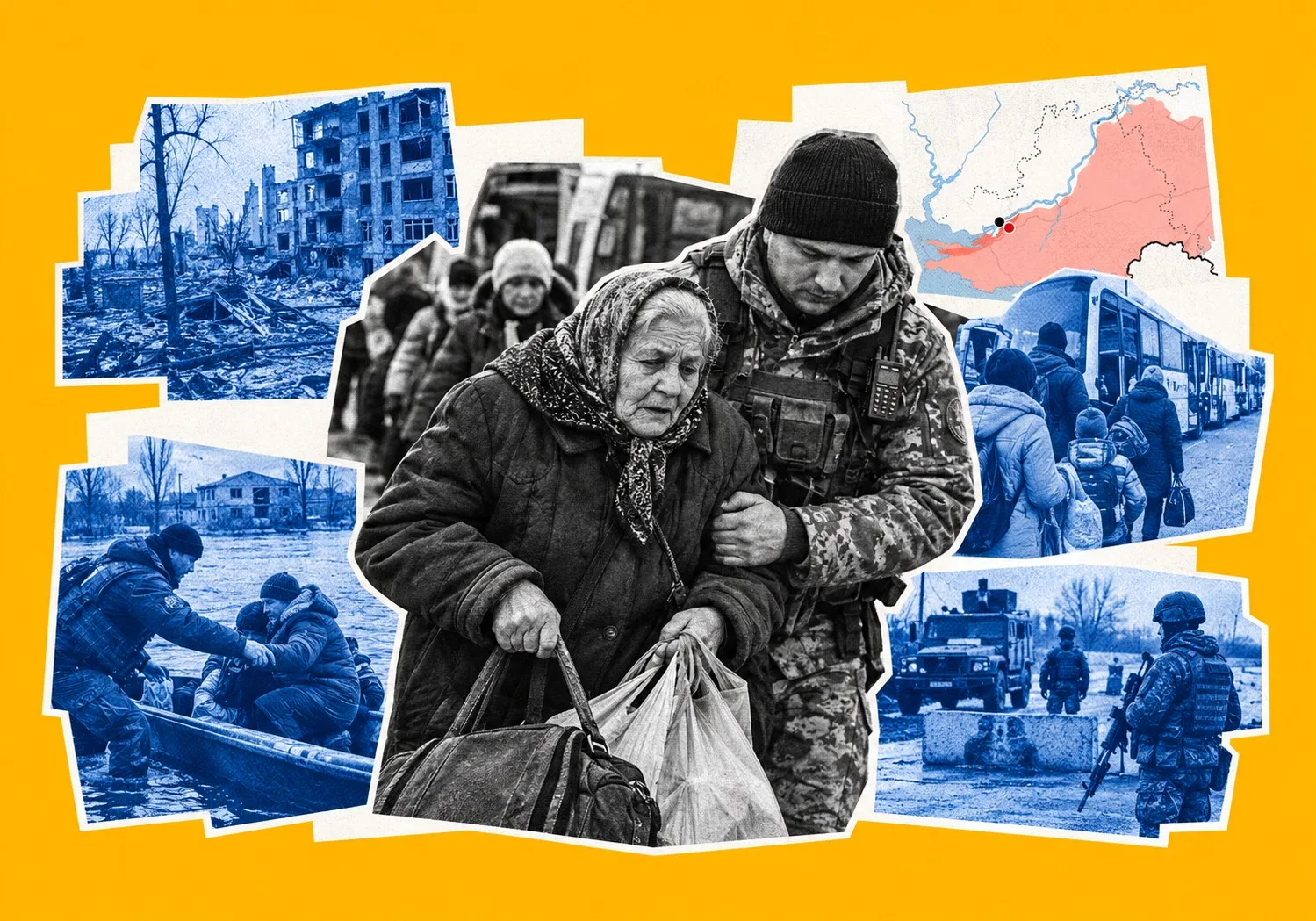
The deal came together after months of absolute silence on the lower Dnipro. On October 23, the White House confirmed that Ukrainian and Russian military leadership had agreed on a temporary operational pause around Oleshky, a riverine city in the occupied Kherson region that has been effectively cut off from basic supplies for half a year. Starting October 27, the agreement freezes military movements in the area to allow engineering teams to clear landmines along access routes, deliver emergency provisions, and facilitate a voluntary civilian evacuation before the winter sets in.
Military commanders from both sides publicly confirmed the exact operational timing of the truce.
Valery Gerasimov, chief of the Russian military’s General Staff, announced that Russian forces would cease fire on the Kherson front starting at 4 a.m. on October 27 for the humanitarian operation in the city, using its Russian designation Alyoshki.
"To ensure people’s safety and deliver essential supplies, arrangements will be made to conduct engineering reconnaissance and provide safe passage for a humanitarian convoy into Alyoshki in the Kherson region," Gerasimov stated.
 The General Staff of the Armed Forces of Ukraine confirmed a matching operational freeze starting at 3:00 a.m. Kyiv time on October 27.
Ukrainian military officials stressed that defence forces "are doing everything possible to help the residents of Oleshky and will make every effort to ensure the safety and rescue of fellow citizens."
Ukrainian Human Rights Commissioner Dmytro Lubinets subsequently confirmed the agreement on the humanitarian mission.
He noted that the operation involves a ceasefire, aid deliveries, and unhindered departure for civilians, while cautioning that the mission "will be complex and will take place in stages."
Lubinets also acknowledged direct assistance from U.S. First Lady Melania Trump, whose team coordinated the final terms between Kyiv and Moscow.
Yet behind the official statements lies a grim military reality.
The truce is the first formal operational pause agreed along the Kherson sector in months, forced not by diplomatic goodwill, but by the absolute collapse of basic human survival inside a city under Russian military control since February 24, 2022.
Oleshky was once home to roughly 24,000 people. Today, fewer than 2,000 remain.

The town’s descent into a grey zone began in late 2022.
When Ukrainian troops pushed Russian forces out of Kherson City on the opposite bank, the Dnipro River hardened into a permanent line of contact. Oleshky became an exposed salient on the east bank, pinned under constant artillery, mortar fire, and drone surveillance from both sides of the water.
Then came June 2023. Russian forces blew up the Kakhovka Hydroelectric Power Plant dam upstream—an action later analyzed by an Associated Press investigation as a deliberate military explosion executed by Russian troops as they withdrew and fortified their eastern lines.
Floodwaters swept through Oleshky, destroying the municipal grid, fouling local water wells, and knocking out sewage systems.

Shelling and fires consumed what the water left behind.
By the summer of 2026, the city had been stripped of municipal governance entirely.
In August, Russian garrison troops withdrew their primary positions deeper into the occupied interior of Kherson Oblast.
They abandoned local civil administration while keeping a tight military blockade that prevented anyone from moving in or out.
Life on the Brink: Inside a Modern Siege Zone
Inside Oleshky’s grid of damaged streets, fewer than 2,000 civilians remain. At least 35 are children. Life has shrunk to basic, daily survival.
The last commercial truck carrying food reached the city on May 26. Since then, official supply lines have been dead. Moscow-appointed governor Vladimir Saldo publicly claimed that occupation officials managed to deliver two tons of aid earlier this month. But civic representatives and international human rights monitors dismissed the claim as a meaningless fraction of what the population needs to stay alive.
With no electricity, gas, or running water, residents—mostly elderly people and those caring for bedridden family members—have had to adapt to survivalist conditions. They cultivate small garden plots, draw drinking water from shallow wells, and chop scavenged timber for cooking. When garden produce ran out over the summer, trapped residents were reduced to foraging for weeds and boiling wild grass.
The local healthcare system has ceased to exist.
With no electric power to run refrigeration units, the city morgue stopped working months ago.
Bodies left behind are decomposing where they fall. In the basement of Oleshky’s central hospital, around one hundred corpses lie stored in darkness. The facility lacks basic antibiotics, bandages, surgical equipment, and working ambulances.
Leaving the hospital or stepping into the street carries immediate risk. Constant drone activity overhead means any visible movement can trigger an artillery strike or an FPV drone attack.
Escaping Oleshky on foot is equally dangerous.
The primary land route links Oleshky to Radensk, an occupied village 20 kilometers further inland.
Locals call it "the road of death."
 Russian forces heavily mined the main road with anti-vehicle and anti-personnel charges. At the same time, Ukrainian military units remotely dropped mines along adjacent forest tracks to disrupt Russian troop movements.
The route is now an open graveyard. Burned-out civilian cars, unexploded artillery shells, and unburied bodies line the asphalt.
Traveling those 20 kilometers on foot or bicycle takes six to eight hours, and civilians can only attempt the journey in dry weather.
Tragedy along the road is routine. An explosion earlier this month killed four civilians and badly injured an 86-year-old man. Other reports describe a local man shot dead while trying to carry bags of bread back to his family in Oleshky.
Lifelines from the Sky: How Drones Bridged the Divide
Faced with a blocked land route and mounting civilian casualties, Ukrainian units across the river turned to an unusual tactic.
Servicemen from the 34th Separate Marine Brigade adapted heavy industrial strike drones to bridge the physical gap across the Dnipro.
These heavy-lift drones can carry loads of over 20 kilograms. Flying low over the water, operators began making regular supply runs directly into Oleshky’s ruined neighborhoods.

Since September, these drone flights have delivered more than seven tons of emergency aid across the river.
The deliveries prioritize high-calorie foods and critical medical items: sacks of flour, buckwheat, rice, canned meats, sugar, and baking supplies. The drones also drop pediatric nutrition, hygiene kits, and essential drugs like insulin.
Lieutenant Yevhen Voronetskyi, a spokesman for the marine brigade, made clear that drone drops were never meant to solve the crisis. They were designed as a temporary measure to give civilians enough physical strength to pack their belongings and attempt an escape.
Even so, the drone operation showed how military technology can adapt when traditional aid channels break down.
It kept a trapped population alive long enough to force diplomatic movement on the ground.
Bypassing the Bureaucracy: The Rise of Unconventional Diplomacy
The October 27 ceasefire highlights a shift in how humanitarian crises are handled along the frontline.
Under the Fourth Geneva Convention, an occupying power has a clear legal duty to supply food, medicine, and basic services to civilians under its control. In Oleshky, those legal obligations were completely ignored.
For months, standard diplomatic channels accomplished little.
Formal appeals from the United Nations human rights office, the International Committee of the Red Cross, the European Union, and the Council of Europe yielded no practical results.
Ukrainian Ombudsman Lubinets led technical negotiations while President Volodymyr Zelenskyy raised the issue internationally, pointing out that Oleshky had been "razed to the ground" and demanding an open corridor.
Yet Moscow refused to provide verifiable security guarantees for aid workers or demining crews.
In the end, the deadlock was broken through direct, high-level personal intervention.
Before the White House release, Pope Leo XIV held a direct phone call with Russian President Vladimir Putin to press for an immediate ceasefire on humanitarian grounds. The Kremlin subsequently confirmed its willingness to cooperate with the Vatican’s request.
At the same time, First Lady Melania Trump used direct channels to negotiate terms between Washington, Kyiv, and Moscow.
Ukrainian officials publicly thanked her team for weeks of coordination that established the operational framework for the truce. That framework includes supervised demining, food deliveries, and a two-way evacuation policy that lets residents choose whether to head toward Ukrainian-controlled territory or into Russian-occupied zones.
The process shows how conventional international institutions are increasingly pushed into secondary roles. When frontline negotiations freeze, breaking the gridlock often requires personal political envoys who can offer direct visibility and prestige to the leaders involved.
A Fragile Precedent: The High-Stakes Test on the Ground
Getting the October 27 truce to work presents major practical problems. Demining teams must clear active minefields along the 20-kilometer Oleshky-Radensk corridor under constant surveillance from artillery and drone units stationed nearby.
The requirement to let evacuees choose their destination will also test the minimal trust between Ukrainian and Russian operators on the ground.
The outcome in Oleshky carries implications beyond one isolated town.
The static war along the Dnipro River has created several unadministered grey zones where civilian life is no longer sustainable, but neither army can easily advance.
If the Oleshky evacuation succeeds, it could serve as a practical model for resolving similar deadlocks in other isolated pockets along the front.
Yet the fact that this agreement was needed at all reflects a deeper breakdown.
When rescuing two thousand starving civilians requires personal calls from the Vatican, direct coordination by the U.S. First Lady, and complex timing agreements between opposing General Staffs, it shows that normal international legal protections for civilians in wartime have completely collapsed, replaced by the raw mechanics of a war of attrition.
Whether this localized pause holds will be proven on October 27 on the road to Radensk.
Sources: Meduza, BBC, Radio Free Europe/ Radio Liberty