
Is Kim Jong Un Alive? Fact-Checking the Death Rumours and Succession Claims

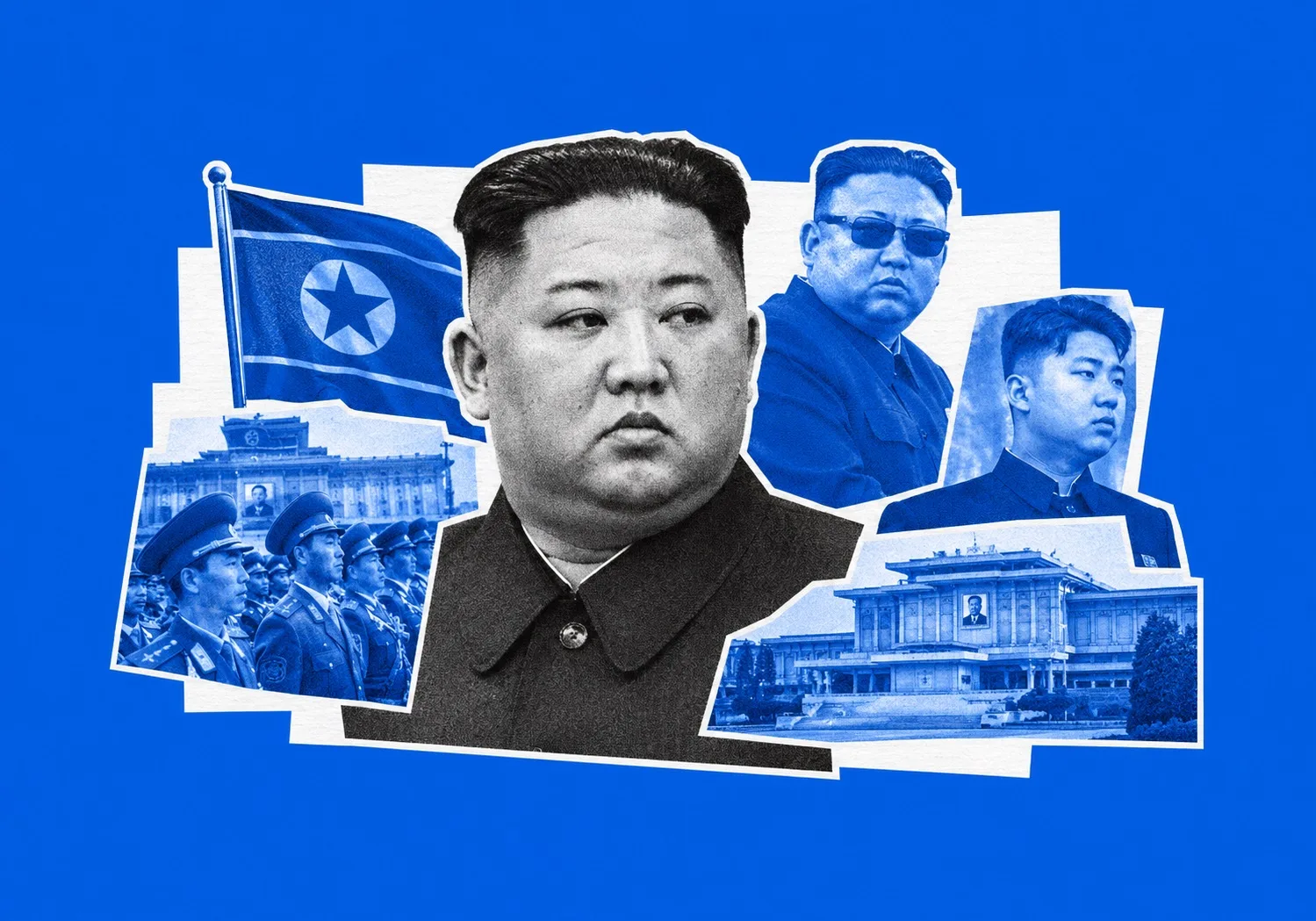
Despite a wave of viral social media rumours claiming Kim Jong Un suffered a fatal brain haemorrhage, North Korea’s leader is alive and has appeared in public. While fresh photographs published by state media quickly disproved reports of his death and foreign military intervention, the episode underscores deep international uncertainty surrounding North Korea’s succession plan and regional stability.
The episode was familiar enough to be dismissed as another internet rumour. But the speed at which an unverified story about a nuclear-armed state became an international talking point says something important about the difficulties of assessing North Korea. There is little reliable information about the country's inner circle, no publicly established succession timetable, and no easy way to establish what is happening behind closed doors.
That leaves room for speculation to travel much further than the evidence supporting it.
The latest reports originated with social media posts by a user identified as Wanjun Xie. The claims grew increasingly dramatic: Kim had allegedly been transferred to Peking Union Medical College Hospital in Beijing, died there, and been returned to Pyongyang in secret. Other posts alleged that China had deployed 9,000 troops to the North Korean capital to stabilise a new administration.
The supposed transition was also given two possible faces. Some accounts pointed to Kim's teenage daughter, Kim Ju Ae, while others suggested that his sister, Kim Yo Jong, had taken power. Claims of increased military readiness by China's Northern Theater Command added another layer to the story.
The Sun and the New York Post picked up the allegations. Yet the underlying claims came without independent medical records, eyewitness accounts, or official confirmation. Neither North Korea nor China acknowledged the alleged death or troop deployment. South Korea's National Intelligence Service (NIS) did not report an acute medical emergency or confirm a change in leadership.
That gap between the scale of the claims and the evidence behind them is the central fact of the episode.
A story can gain credibility in the public mind simply by appearing in several places. But when those reports trace back to the same unverified source, repetition is not corroboration. The number of publications carrying an allegation tells readers how widely it has spread, not whether it is true.
North Korea is particularly vulnerable to this kind of speculation. Foreign observers have limited access to the country's leadership, and official information is tightly controlled. When Kim disappears from public view, there may be no immediate independent evidence to explain why. The resulting uncertainty is easily filled with claims that are difficult to check and impossible to dismiss solely on the basis of silence.
What Seoul knew about Kim's health
There are legitimate reasons for foreign intelligence agencies to monitor Kim's physical condition. In a political system centred on one leader, his ability to govern is a matter of regional security, not merely personal health.
On 30 September, South Korea's NIS told lawmakers that Kim weighed approximately 140kg and faced significant cardiovascular risks associated with severe obesity. Those findings point to potential long-term health problems. They do not establish that he has suffered a stroke or become incapacitated.
The distinction was largely lost in the latest wave of speculation. A leader with serious risk factors may face a greater chance of developing a medical condition, but that does not make every rumour of an emergency credible.
Kim's public appearance offered a more concrete piece of evidence. KCNA released photographs on 20 October showing him at a clothing and footwear exhibition in Pyongyang on 19 October, accompanied by his wife, Ri Sol Ju, and daughter, Kim Ju Ae. He had also visited the National Defence Revolution Museum on 11 October.
The photographs do not provide a medical assessment, and North Korean state media cannot be treated as an independent source on every aspect of the leader's condition. They do, however, establish that Kim appeared in public during the period when claims of his death were circulating.
For South Korea's intelligence services, the challenge is to maintain that distinction between a known health concern and an unconfirmed emergency. For journalists, it is much the same: report what the evidence supports, rather than treating the most dramatic explanation as the most likely one.
The succession question behind the rumours
The reason these stories keep returning is not difficult to understand. North Korea has already undergone two hereditary transfers of power, from Kim Il Sung to Kim Jong Il in 1994 and from Kim Jong Il to Kim Jong Un in 2011. Both required the consolidation of authority within the ruling system.
There is no publicly disclosed succession timetable that would allow outsiders to know who would take over, under what arrangements or how quickly a transition might unfold. The regime's inner workings remain opaque even when the leadership appears stable.
Kim Ju Ae has attracted growing attention through her appearances at prominent public and military events. Her visibility has encouraged speculation that she could eventually inherit power. But she has not been publicly established as the country's next leader, and her appearances alone cannot confirm that a succession plan has been settled.
Kim Yo Jong is a different kind of figure. A senior party official and one of the regime's most prominent public voices, she already has a political role that makes her relevant to any discussion of the leadership's future. That does not mean she has taken control or that a transfer of power is under way.
The distinction matters because succession speculation often turns a range of possibilities into a choice between two supposedly imminent outcomes. In reality, the available public information does not establish either scenario.
For governments in Seoul, Washington and Tokyo, the problem is not simply identifying a likely successor. It is preparing for a situation in which a sudden change at the top could leave the intentions of the ruling elite unclear. The absence of a transparent process makes that planning difficult, regardless of whether the latest rumours have any substance.
The border remains a more immediate concern
While attention focused on Kim's supposed medical emergency, North Korea continued to issue statements on security matters.
On 19 October, Kim Yo Jong addressed cross-border tensions, referring to possible adjustments involving tactical weapons and loudspeaker broadcasts near the South Korean border. Her statement did not announce a leadership change.
These remarks deserve to be considered separately from the death rumours. North Korea's military posture and its exchanges with South Korea are established sources of tension. They do not need a succession crisis to make them significant.
The danger of an unverified story dominating the news is that it can distort how other developments are interpreted. A routine military signal may suddenly appear to be evidence of a wider crisis, even when there is no demonstrated connection between the two.
A genuine leadership vacuum could have serious implications for regional security. But assuming that one exists without evidence risks confusing a hypothetical danger with an actual development.
A market decline with more than one explanation
South Korea's KOSPI index fell by 3.73% on 20 October. The timing made the decline an obvious candidate for a narrative about investors reacting to the rumours. Yet the market was already experiencing wider volatility and regional corrections, making it impossible to attribute the fall to speculation about Kim alone.
Markets are sensitive to geopolitical uncertainty, particularly when it concerns the Korean peninsula. But a decline on the same day as a dramatic news story is not proof of a direct causal relationship.
The episode still illustrates how quickly an unverified claim can enter the broader information environment. Investors, like policymakers, must make decisions while distinguishing between developments that change the underlying risk and stories that merely attract attention.
For outlets seeking clicks and engagement, the incentives are less complicated. A report suggesting that Kim has died and China is preparing to manage his successor is inherently more attention-grabbing than a careful account of what intelligence agencies can and cannot confirm.
The problem is that each additional appearance of the story can give it the weight of a verified event, even when no new evidence has emerged.
Why this will happen again
Kim's disappearance from public view has prompted similar speculation before. Rumours about his health circulated in 2014 and again during his extended absence in April and May 2020. His subsequent public appearances disproved claims that he had died.
The pattern has not changed much. A period without public appearances creates uncertainty, online commentators offer explanations, and sensational versions of events spread internationally. The information environment has become more immediate, but the underlying difficulty remains: outsiders cannot reliably observe the internal workings of North Korea.
The latest photographs have weakened the claims that Kim was dead or incapacitated. They have not answered the more consequential question of how the country would manage a future transfer of power.
That is where the uncertainty becomes a genuine strategic problem. North Korea's nuclear status and militarised relationship with South Korea mean that a leadership crisis would extend well beyond the country's borders. Yet the same lack of transparency that makes such a crisis dangerous also makes it easy to manufacture one in the public imagination.
The next period of Kim's absence may bring another round of speculation. The harder task for intelligence agencies and newsrooms will remain the same: determining whether anything has actually changed inside Pyongyang before the world begins reacting as though it has.
Sources: YONHAP News, INQUIRER, Business Times, AP