
Hungary Blocks Ukraine and Moldova EU Accession Talks Again

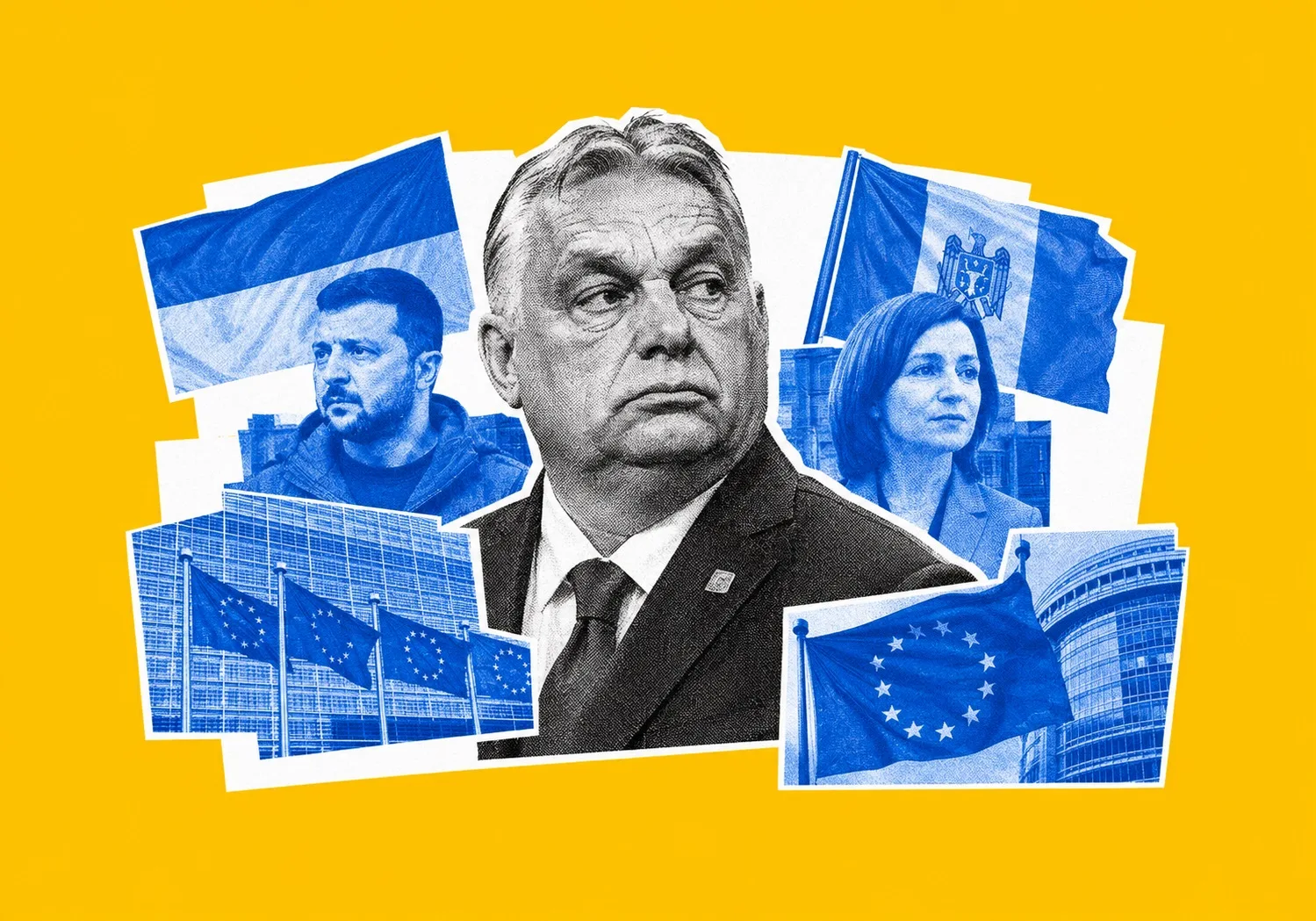
Hungary has blocked a key step in EU accession negotiations for Ukraine and Moldova, vetoing the approval of final negotiating clusters in Brussels. The move leaves 26 member states unable to advance enlargement, exposing deep procedural limits within the European Union.
On Tuesday, 27 October, the confrontation took place in the Council of the EU’s Working Party on Enlargement, known as COELA. Officials were considering screening results for Cluster 4, covering the green agenda and sustainable connectivity, and Cluster 5, which deals with agriculture, resources and cohesion policy.
Neither candidate country can submit its negotiating positions for these areas until the blockage is resolved.
The Irish presidency had known Hungary would object. It put the matter on the agenda anyway, apparently calculating that another public display of disagreement among member states might increase the diplomatic cost of Budapest’s position.
That calculation produced no immediate result. Hungary offered no fresh explanation, saying only that its position remained unchanged. The other 26 member states expressed disappointment and sought clarification, but the discussion ended without agreement.
The exchange revealed something more consequential than another disagreement between Hungary and Ukraine. Brussels has made enlargement a geopolitical priority, yet its procedures still allow individual governments to control the pace of that policy for reasons that may have little to do with the technical merits of a candidate’s application.
A concession that failed to settle the dispute
The timing of Hungary’s latest refusal is particularly awkward for the EU.
For months, Budapest had connected its objections to Ukrainian legislation governing minority education and language rights, an issue closely associated with the Hungarian minority in Transcarpathia.
Kyiv responded through legislation. On 12 October, the Verkhovna Rada adopted amendments addressing the demands Hungary had raised. The following day, Budapest withdrew its objections to Clusters 2 and 3, allowing negotiations covering the internal market and competitiveness to advance.
The sequence appeared to establish a workable diplomatic bargain: Ukraine would make the requested legislative changes, and Hungary would permit the accession process to continue.
Yet Budapest retained its objections to Clusters 4 and 5, first blocking their progress on 20 October and repeating that position a week later.
The Hungarian government has not supplied a new substantive explanation for keeping these particular clusters frozen. Its earlier concerns about minority rights are well documented, but the available account of Tuesday’s meeting does not establish why those concerns should continue to prevent progress after the legislative amendments.
That distinction matters.
An accession process built around defined conditions depends on candidate governments being able to identify what they must do to advance. The European Commission assesses reforms, member states review progress, and applicants adjust their legislation and institutions accordingly.
When a government meets a stated demand but still cannot secure the necessary political consent, the relationship between compliance and advancement becomes less predictable.
Budapest retains considerable bargaining power precisely because it does not need to provide an elaborate new argument. Under the unanimity system, withholding consent is sufficient.
For Ukraine, the immediate difficulty is not simply that negotiations have slowed. It is that further concessions may be difficult to negotiate when the conditions for lifting the remaining objections have not been clearly articulated.
Why Brussels cannot simply outvote Budapest
The other 26 governments have little procedural room to manoeuvre.
EU accession negotiations require unanimous agreement among member states at key stages, including decisions to open negotiating clusters. COELA prepares enlargement decisions within the Council framework, but it cannot turn broad political support into approval when a member state maintains its objection.
The distinction between technical assessment and political authorisation is central to the present dispute.
Screening establishes how a candidate’s legislation and institutions compare with EU requirements. It provides the basis for subsequent negotiations, including the positions that candidate governments will submit.
Yet completing that assessment does not automatically confer permission to proceed.
A member state can therefore hold up the next stage without necessarily disputing the underlying technical work. That is the institutional vulnerability now confronting Ukraine and Moldova.
Changing the voting rules would be considerably more difficult than persuading Hungary to withdraw its objection. Removing the unanimity requirement through treaty reform would itself require unanimous agreement.
Budapest would consequently have a say in any attempt to eliminate the very power it is exercising.
This leaves the European Commission, led on enlargement matters by Commissioner Marta Cos, dependent on political negotiations among governments. The Commission can advocate faster progress and maintain pressure for the opening of all six clusters by the end of 2026. It cannot independently authorise the remaining steps.
The Irish presidency’s decision to bring the issue back to COELA despite knowing the likely outcome makes sense within those constraints.
Repeated discussions can establish where responsibility for a delay lies, maintain pressure on the dissenting government and prevent an unresolved objection from disappearing into procedural inactivity.
But political exposure is not the same as institutional leverage. Hungary can withstand criticism without losing its vote.
Moldova is caught in a dispute centred on Ukraine
The consequences extend beyond Kyiv.
Moldova faces the same blockage to its final two negotiating clusters, although the dispute over minority education legislation concerns Ukraine and Hungary.
The two candidates have advanced through the current enlargement framework in parallel. Hungary’s refusal to approve the relevant screening results therefore interrupts both countries’ progression.
This creates a wider problem for EU enlargement policy.
Linking candidates within a common procedural timetable can make negotiations more coherent and allow the Union to manage comparable stages together. It also means that an objection directed principally at one applicant can affect another.
Moldova has no direct means of resolving Hungary’s complaints about Ukrainian legislation. Nevertheless, its negotiating timetable is exposed to the outcome of that disagreement.
The effect is to widen the reach of an individual member state’s veto beyond the bilateral relationship from which it originated.
It also complicates the political message Brussels sends to candidate countries. Enlargement is presented as a process in which reforms and compliance create opportunities for advancement. Moldova’s position illustrates how progress can also depend on disputes outside an applicant’s immediate control.
That is particularly difficult to reconcile with the EU’s ambition to maintain momentum across both candidacies.
The economic stakes behind the procedural delay
The two blocked clusters are not peripheral parts of the accession agenda.
Cluster 4 covers transport, energy, trans-European networks, environmental regulation and climate policy. Cluster 5 addresses agriculture, fisheries, regional development and financial provisions.
These are among the areas where future membership would require extensive changes to national regulation, public investment and the relationship between domestic economies and the EU market.
Energy and transport negotiations concern the networks through which countries become more closely connected to the wider European economy. Agricultural and regional policies involve substantial financial commitments, while environmental requirements can shape infrastructure and industrial planning.
Delaying the opening of these clusters does not mean that Ukraine and Moldova must suspend all domestic reforms in those sectors. Nor does it amount to a cancellation of their accession negotiations.
It does, however, prevent the formal negotiating process from advancing into these fields, postponing the exchange of positions through which obligations, transition arrangements and financial questions can be addressed.
That distinction is important for governments trying to plan complex reforms over several years.
Four clusters are already open for Ukraine. Negotiations on fundamentals began in June 2026, followed by external relations in July and the internal market and competitiveness clusters on 13 October.
The remaining two clusters would complete the opening phase of the six-cluster framework. Their importance is therefore both practical and political: they concern major areas of economic integration, and their opening would mark a further stage in the accession process.
Kyiv continues to target the end of 2026 for that milestone. EU diplomats believe Hungary’s resistance may yet prove temporary, with further efforts to resolve the disagreement expected before December meetings.
There is still time for a negotiated settlement. There is no guarantee of one.
The political price of unanimity
Hungary’s position offers its government a clear political advantage. It can present itself as defending national interests while retaining the ability to negotiate with Brussels and Kyiv over the conditions for further progress.
For the other member states, the calculation is less comfortable.
They can maintain a united position in favour of advancing negotiations, but unanimity gives that collective position no decisive force until Budapest agrees.
The resulting imbalance is particularly visible when the dissenting government declines to elaborate on its objections. The burden of finding a compromise falls on those seeking movement, even when they cannot identify an additional formal requirement that the candidate must satisfy.
This is not a procedural accident. Unanimity is designed to protect the interests of individual member states in decisions with lasting consequences for the Union.
The difficulty arises when that protection becomes a source of bargaining power over matters extending beyond the immediate decision.
EU governments must then choose between investing political capital in persuading the holdout and allowing the accession timetable to slip. Neither option removes the underlying institutional constraint.
December may provide an opportunity to settle the current dispute. But even if Hungary eventually agrees to the remaining clusters, the precedent will remain relevant to later stages of enlargement.
Ukraine and Moldova are being asked to undertake demanding legal, economic and institutional reforms according to a structured negotiating framework. The Union, meanwhile, cannot ensure that completing those steps will produce a corresponding decision by its members.
The more politically urgent enlargement becomes, the more consequential that gap between technical compliance and unanimous consent is likely to be.
Sources: The Kyiv Post, NV, European Commission