
French Youth Unrest Spreads to Switzerland: Violent Halloween Riots Hit Zurich and Basel

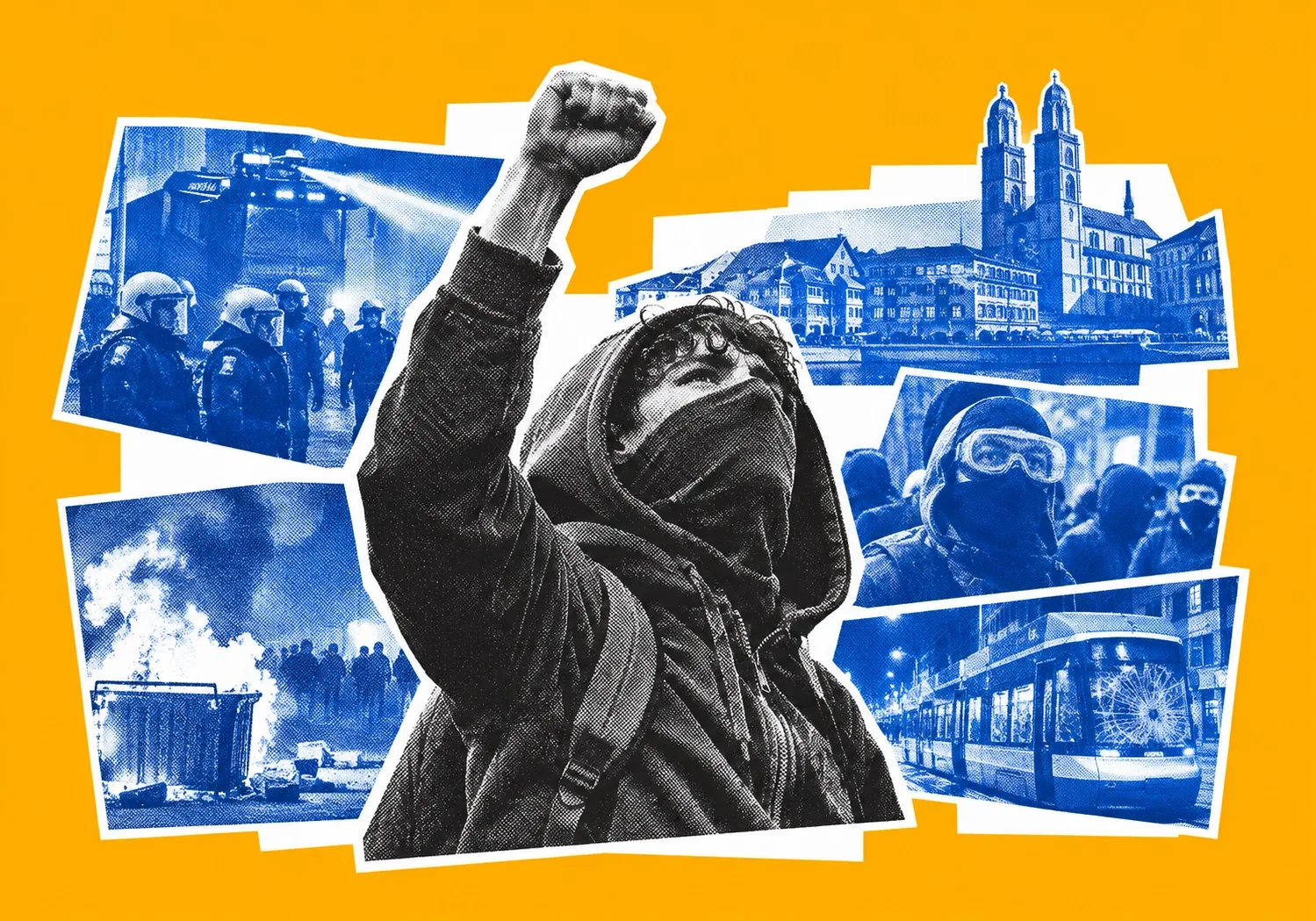
Violence linked to weeks of youth protests in France has crossed the border into Switzerland, with police in Zurich and Basel battling burning barricades, property destruction, and attacks on emergency responders during Halloween night.
The disturbances began late on Saturday, 31 October, and continued into the early hours of Sunday. Several hundred people gathered in Zurich's Langstrasse nightlife district, while a smaller demonstration moved through central Basel. Both gatherings were unauthorised.
The timing made the police response particularly difficult. Halloween had already brought large crowds onto the streets, and demonstrators mixed with partygoers before confrontations began. Some wore masks and protective goggles, while others were dressed in costumes.
By the time the streets were brought under control, police had dealt with burning barricades, attacks involving bottles and stones, and groups moving between several locations.
What happened in Switzerland was also being watched against the backdrop of unrest in France, where protests that began over conditions in schools have developed into a wider movement expressing anger about living costs and inequality.
A French Protest Finds an Audience in Switzerland
The first demonstrations in France centred on familiar complaints from secondary school students: neglected buildings, shortages of teachers and dissatisfaction with the Parcoursup university admissions system.
The protests subsequently attracted a broader constituency. Trade unions and veterans of the Yellow Vest movement joined demonstrations as economic grievances became more prominent.
By the end of October, French authorities had recorded 565 arrests nationwide and injuries to five security personnel.
Calls for solidarity actions then began circulating through social media and radical online platforms in Switzerland. The language used by participants made the connection explicit.

One slogan, “On en a marre – en Suisse aussi”, translates as “We've had enough – in Switzerland too”. Another, “GenZ regelt”, loosely meaning “Gen Z will sort it out”, presented the protests as part of a wider generational challenge to established authority.
Neither slogan explains why individual participants took to the streets. The original French complaints about schools and university admissions cannot simply be transferred to Switzerland, where the political and educational circumstances differ.
But protest movements do not always travel because the underlying problems are identical. Sometimes the appeal lies in the opportunity to express a more general dissatisfaction, particularly when images and messages from demonstrations elsewhere circulate quickly online.
That appears to have been an important element of the Swiss mobilisation.
Autonomous left-radical groups also featured in the networks promoting the gatherings. Their involvement raises questions about how far the subsequent violence was planned, although the available information does not establish who directed the disturbances or whether the incidents in Zurich and Basel were centrally coordinated.
A Night of Fires in Zurich
Zurich's District 4 was already busy when people began gathering at Piazza Cella at about 10.30 pm.
Langstrasse, which runs through the district, is known for its bars, nightlife and long association with political demonstrations. It was an obvious place to attract attention on Halloween, but also a difficult area for police to control once trouble began.
Pyrotechnics were repeatedly detonated among the crowd. At around 11 pm, demonstrators moved along Langstrasse towards Helvetiaplatz.
Near the junction with Stauffacherstrasse, rubbish containers were dragged into the road and set on fire.
Zurich City Police, reinforced by cantonal officers, deployed water cannons to push the crowd back. Instead of bringing the disturbance to an immediate end, the intervention was followed by smaller groups moving through surrounding streets.

More containers were set alight. Electric bicycles and scooters were burned, along with a parked car on Zwinglistrasse. Windows were broken at shops near Helvetiaplatz and at the Stauffacher public transport stop.
Officers came under attack with stones, bottles and pyrotechnics. Police used water cannons, tear gas and rubber bullets.
The number of spectators created another problem. People watching the confrontations crowded into areas where officers were attempting to operate, making it harder to distinguish those involved in the violence from passers-by.
Professional firefighters from Schutz & Rettung Zürich were called to extinguish several fires.
Shortly after midnight, a separate incident illustrated how dangerous the situation had become.
A police patrol was responding to a medical emergency on Brauerstrasse, where a teenager had suffered severe leg injuries. Before officers could assist, a crowd attacked them and damaged their patrol vehicle.
The officers withdrew without being able to attend to the injured teenager.
It remains unclear why the patrol was attacked or whether the people responsible knew that officers were responding to a medical emergency. The result, however, was that violence prevented assistance from reaching an injured minor.
The disturbances gradually subsided, with the situation stabilising at approximately 1.30 am.
Basel Faces Similar Disruption
Basel experienced a smaller but comparable confrontation.
About 150 people joined an unauthorised march beginning at Claraplatz and heading through the city centre towards St. Johann.
At St. Johanns-Platz, demonstrators constructed barricades from rubbish containers and metal fencing, then set them alight.
The fires and barricades disrupted traffic across the area. Public transport services in the city centre were temporarily halted, while private vehicles faced considerable delays.
Cantonal police intervened, prompting demonstrators to scatter into St. Johann Park. Fire crews extinguished the burning barricades.
Basel's location on the French border makes the appearance of protests associated with the French movement particularly notable. Yet the events in the two Swiss cities shared more than a geographical connection to France.
Both involved unauthorised gatherings, burning street furniture and disruption to transport infrastructure. Both also ended with demonstrators dispersing from the principal confrontation sites.
There is insufficient information to determine whether the similarities resulted from direct coordination, shared tactics circulating online or local groups independently adopting methods seen elsewhere.
For police, the distinction matters when trying to anticipate further disturbances. For people living and working in the affected neighbourhoods, the immediate consequences were much the same.

The Limits of Crowd Control
The Zurich disturbances presented police with a problem that is considerably harder to manage than a demonstration following an agreed route.
Once the initial crowd broke into smaller groups, officers had to deal with incidents across several streets. A fire could draw firefighters to one location while another group damaged property elsewhere. Police also had to maintain access for emergency vehicles through areas crowded with demonstrators, spectators and Halloween revellers.
The attack on the patrol responding to the injured teenager was especially troubling because it interfered with an emergency response unrelated to controlling the demonstration itself.
Such incidents create difficult choices for police commanders. Deploying officers to protect emergency workers may reduce the personnel available to contain violence elsewhere. Concentrating resources on dispersing rioters, meanwhile, does not necessarily guarantee that firefighters or medical teams can move safely through neighbouring streets.
The growing use of electric bicycles and scooters in cities introduces another practical concern. In Zurich, these vehicles became additional targets for arson, alongside conventional street furniture and a parked car.
Public transport infrastructure was also affected in both cities, through physical damage in Zurich and interrupted services in Basel.
None of these targets requires sophisticated equipment to attack. Yet the resulting disruption can extend well beyond the immediate location of a fire or barricade.
The economic damage has not been assessed. Businesses must contend with broken windows and interrupted activity, while municipalities face the costs of damaged infrastructure and emergency operations.
As of Sunday morning, Swiss authorities had not published confirmed figures for arrests or injured police officers. Zurich City Police had opened criminal investigations.
The absence of those figures also makes direct comparisons with France premature. French police were confronting a much larger wave of demonstrations, while Swiss authorities dealt with disturbances concentrated in two cities during a single night.
An Uncertain Movement Behind the Violence
The role of radical activist networks remains one of the important unresolved questions.
Online mobilisation can bring together people who would otherwise have little organisational connection. Established groups may provide slogans, meeting points or experience of confrontational demonstrations, while others join because an event is already attracting attention.
Halloween added another complication. Costumes and crowded nightlife streets provided opportunities for participants to conceal their identities or move among people who had no connection to the protests.
But the presence of masked demonstrators does not, by itself, establish the degree of planning behind the violence.
Nor is it clear how closely the Swiss participants identified with the educational grievances that originally brought French students onto the streets.
The movement's language has broadened from specific demands about schools and admissions to expressions of generational anger. That makes it easier for people in different countries to identify with the protests, but harder to determine what political changes participants actually want.
Swiss authorities now have to investigate the individuals responsible for the violence while assessing whether the gatherings represent isolated solidarity actions or the beginning of more sustained mobilisation.
That assessment will influence how police prepare for future demonstrations, particularly in neighbourhoods where political gatherings overlap with nightlife and busy transport routes.
Zurich's experience also leaves a more immediate operational question. Officers were able to disperse the main crowd, but violence continued across surrounding streets, and a patrol attempting to reach an injured teenager was forced to retreat.
For a city managing public disorder, controlling the principal demonstration is only part of the task. Keeping streets accessible to ambulances, firefighters, and other emergency responders can prove considerably more difficult once confrontations spread beyond a single location.
Sources: Stadt Zürich, Belga News Agency, Bluewin