
Europe’s Security at Risk as Trump and Putin Test Western Unity

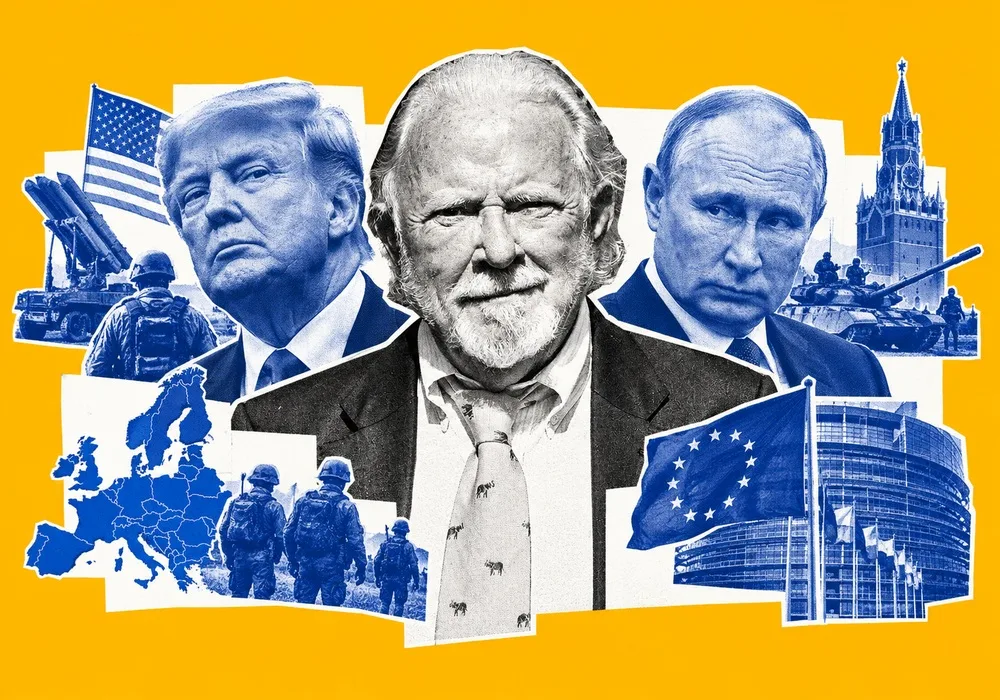
Political analyst Tony Meehan argues that Russia’s strategy extends beyond the war against Ukraine to weakening Western unity from within. As uncertainty over US commitments grows, Europe faces a test of its political resilience, military readiness and technological independence. Whether Washington and Moscow can reshape the continent’s security order will depend in part on Europe’s ability to act collectively rather than remain dependent on decisions made elsewhere.
The prospect of Donald Trump, Vladimir Putin and Xi Jinping negotiating a new international order without Ukraine or European representatives has raised concerns about a possible return to great-power politics based on spheres of influence. Such an arrangement would challenge the foundations of European security, particularly if Russia sought greater freedom to determine the political and military direction of countries along its borders while Washington reduced its commitments to traditional allies. The comparison with the 1945 Yalta Conference reflects a broader fear that decisions affecting the continent could once again be made by external powers rather than by Europeans themselves.
Political analyst Tony Meehan believes that such a scenario cannot be dismissed, given the unpredictability of the leaders involved. In an interview with Russia Unmasked, he recalled an earlier discussion about the possibility of a new economic and military grouping involving the United States, Russia and China, which he described as “ARC — America, Russia, and China”. While the prospect of a formal agreement dividing the world into spheres of influence remains uncertain, the political consequences of closer coordination among major powers could be significant for Europe.

Meehan argues that Putin’s ambitions extend beyond the conquest of Ukrainian territory. “Ukraine is and was a distraction for the West, while he, Putin, follows his true objectives, and that is to destroy the West from within,” he said. This interpretation places the war against Ukraine within a broader confrontation over the cohesion of Western institutions, the credibility of democratic governments and the durability of transatlantic cooperation.
In this reading, Russia’s strategic objective is not necessarily to defeat every European country militarily. Weakening alliances, exploiting domestic divisions and encouraging political fragmentation could achieve some of the same results at a lower direct cost. If European governments become less willing to support Ukraine, disagree over defence spending or lose public confidence in democratic institutions, Moscow could gain greater room to pursue its interests without confronting a united Western response.
Transatlantic Divisions as a Strategic Opportunity for Moscow
Meehan argues that recent decisions by the Trump administration have created opportunities for Russia by placing additional strain on relations between Washington and its European allies. He points to changes in US support for Ukraine, the handling of sanctions against Russia, tensions with Canada and dismissive rhetoric towards NATO and European governments as developments that could weaken the Western position.
In his assessment, these decisions have helped advance one of Putin’s central objectives: isolating the United States from its traditional partners. “This means that Putin has isolated the United States from the rest of the world, one of his key objectives,” Meehan said.
The distinction between American society and the decisions of its current political leadership is important to his argument. The United States retains substantial military, technological and economic capabilities, but the reliability of its commitments can become less predictable when foreign policy depends heavily on the preferences of an individual president. For European governments, uncertainty over Washington’s intentions complicates long-term defence planning and raises questions about how much responsibility the continent must assume for its own security.
A weakening of transatlantic cooperation would not automatically translate into Russian control over Europe. European states retain considerable economic resources, military capabilities and institutional strength. However, divisions over the scale of the Russian threat, the future of NATO and the costs of supporting Ukraine could make it more difficult to convert those resources into a coherent strategy.

Meehan believes that Europe, working with Canada, has the political will and military strength to resist attempts by major powers to determine its future. The more serious uncertainty concerns the continent’s political trajectory. He warns that a shift in the governments of major European states could change the balance within the European Union, particularly if political forces more sympathetic to Moscow gained influence in France or Germany.
“If he’s got his people, his friendly people running France and running Germany, then that will impact on the European Union,” he said.
The concern is not limited to individual leaders or election results. The EU depends on cooperation among its member states to sustain sanctions, coordinate assistance to Ukraine and develop common defence policies. A government that systematically obstructs these efforts could weaken the bloc’s ability to respond even without formally abandoning its European commitments. Russia would therefore have an incentive to exploit political disagreements that already exist rather than create every division from scratch.
Political Interference and the Weakening of Democracies
The struggle over Europe’s future is also taking place within national political systems. Disinformation, polarisation and the amplification of domestic grievances can influence public debate without requiring direct military confrontation. Protests, economic discontent and disputes over migration or public services may originate in legitimate local concerns, but external actors can seek to exploit them for their own strategic purposes.
Meehan argues that Russian influence operations frequently work through existing political and social divisions. Rather than relying exclusively on openly pro-Russian organisations, such efforts can benefit from local actors whose immediate objectives have little to do with Moscow. The challenge for European governments is to distinguish between genuine domestic opposition and attempts to manipulate public debate from abroad without undermining democratic freedoms or treating ordinary political disagreement as evidence of foreign interference.
“The beneficiary, we have to ask ourselves, who is the beneficiary?” Meehan said, describing how he evaluates the political effects of unrest and electoral disruption. He added that Putin “uses everything as a weapon”.
However, the analyst also acknowledged an important evidentiary limitation. Discussing recent unrest in European countries, he said there might be no evidence directly linking Russia to the disturbances on the ground. His concern was that Moscow could still benefit from the resulting instability or exploit events after they occurred. This distinction matters: identifying a strategic beneficiary is not, by itself, proof that the beneficiary organised or directed an event.
For European institutions, the practical challenge is to improve the detection of coordinated foreign influence while preserving confidence in democratic processes. Transparent political financing, independent journalism, public access to reliable information and effective cooperation among intelligence and law-enforcement agencies can reduce opportunities for manipulation. Yet these measures become harder to sustain when political leaders themselves undermine trust in elections, courts or the media.
Meehan believes that democracies can be weakened without a single shot being fired. “Absolutely. The impact would be terminal,” he said when asked whether Russia could destabilise European governments from within. His language reflects the severity of his concern, although the actual effects of interference depend on the resilience of national institutions, the scale of foreign involvement and the ability of governments to respond.
The danger is cumulative rather than necessarily immediate. Domestic grievances can dominate political agendas, leaving governments with less capacity to coordinate foreign policy. Over time, public distrust and polarisation can make it more difficult to sustain long-term commitments to Ukraine or agree on the investment required to defend Europe.
US Midterm Elections and the Limits of Presidential Power
The US midterm elections scheduled for 3 November 2026 could have consequences extending beyond domestic American politics. Changes in the balance of power in Congress could affect the administration’s ability to pursue its agenda, oversee government departments and shape policy towards Russia, Ukraine and European security.

Meehan said he hoped the Democrats would win control of both chambers of Congress. He predicted that such an outcome could lead to an intense political confrontation, with Trump potentially challenging the results and seeking investigations into his opponents. He also warned of further unrest, saying, “Sadly, I think we can expect more street riots,” before adding that “there will probably be bloodshed.”
These statements are Meehan’s forecasts, not established outcomes. The scale of any political confrontation would depend on the election results, the conduct of political leaders, the response of law-enforcement agencies and the functioning of the courts. Nevertheless, the possibility of prolonged institutional conflict is relevant to European governments because uncertainty in Washington can affect decisions on military assistance, sanctions and collective defence.
Meehan argues that a change in congressional control could strengthen legislative oversight of the administration and create opportunities to challenge or reverse some of its decisions. New committee leadership and investigations could examine the legal basis for executive actions and scrutinise policies affecting Ukraine, Russia and NATO. Congress could also become a more significant obstacle to unilateral changes in foreign policy.
He expects the United States eventually to return to its established defence partnerships, arguing that isolation would be contrary to American interests. “And secondly, to demonstrate to the world that America is not part of Putin’s new Russian empire,” he said, explaining why he believes Washington has reasons to preserve its traditional alliances.
For Europe, however, relying on a future reversal of American policy would be a risky strategy. Even if Congress limits presidential authority or a subsequent administration restores closer cooperation with European allies, the process could take time. Military procurement, intelligence-sharing arrangements and defence planning require continuity, while political uncertainty can complicate decisions long before formal policy changes take effect.
The central question is therefore not simply whether American institutions can constrain Trump. It is whether European governments can protect their own security interests while the direction of US policy remains uncertain.
European Defence and the Search for Strategic Autonomy
Europe’s ability to resist pressure from Russia ultimately depends on more than political declarations. Military readiness, defence production, intelligence-sharing and credible deterrence are essential if European governments are to retain the freedom to make their own decisions.
The recent joint nuclear exercise involving British and French military aircraft, discussed during the interview, illustrates the growing importance of European defence cooperation. The exercise included French Rafale aircraft simulating a nuclear strike and British fighter aircraft providing an escort. It represented a visible demonstration of cooperation between two European nuclear powers at a time when questions about the durability of US security guarantees have become increasingly prominent.
Meehan described the exercise as a belated but important signal of commitment to European defence. He said Britain and France were demonstrating their preparedness to respond to Russian military aggression and to test their ability to counter potential threats.

“They are fully aware of the potential dangers and the challenges they face from Russia,” he said of European military forces. His criticism was directed instead at political leaders whom he believes have been reluctant to allocate sufficient funding to defence because of competing domestic priorities.
This gap between military awareness and political investment is one of the principal challenges facing European security. Armed forces may recognise the scale of the threat, but readiness depends on budgets, industrial capacity, trained personnel, ammunition stocks and the ability to sustain operations over time. Greater European responsibility for defence would therefore require decisions that extend well beyond individual exercises or high-level declarations.
Closer cooperation between Britain, France and other European countries could improve deterrence and reduce the risk that Moscow interprets political uncertainty as an opportunity to test the continent’s defences. At the same time, the development of a more independent European security capability would require careful coordination with NATO, whose existing structures remain central to collective defence.
Strategic autonomy does not necessarily mean severing the transatlantic relationship. Rather, it means ensuring that Europe can respond effectively if American support becomes delayed, limited or politically conditional. The stronger Europe’s own capabilities become, the less vulnerable it will be to changes in Washington and the more credible its position in any future negotiations with Russia.
Ukraine and the Risks of Dependence on American Technology
The controversy surrounding restrictions on Starlink services in Ukraine has highlighted another vulnerability: dependence on privately controlled technology that plays a role in military communications and battlefield operations.
During the interview, Meehan was asked about reported disruptions affecting Ukrainian military communications and drone operations, as well as the reported restoration of operating speeds on 24 October. The episode raised questions about the extent to which Ukraine’s ability to defend itself can be affected by decisions taken in Washington or by the leadership of a private technology company.
Meehan argued that the distinction between the American public and individual political and business leaders is essential. “Can Europe trust America? I believe it can,” he said. He then qualified that assessment by adding: “Europe cannot trust its president Trump, or Elon Musk.”
The broader issue is the concentration of strategic capabilities in the hands of a small number of decision-makers. Commercial satellite communications can provide critical support to military operations, but dependence on a single provider creates vulnerabilities if access is restricted, commercial priorities change or political considerations influence service availability. For Ukraine, whose armed forces have adapted extensively to the demands of a prolonged war, such uncertainty can have immediate operational implications.
For Europe, the lesson extends beyond Starlink. Secure communications, satellite navigation, intelligence collection and other critical technologies are increasingly important to military effectiveness. If European states cannot guarantee access to these capabilities independently or through reliable agreements, their freedom of action may be constrained by decisions taken outside their control.

Meehan believes Europe has the technical expertise and resources needed to develop alternatives. “Does it have the budget is another question,” he said, distinguishing technological capability from the political willingness to finance it.
He pointed to the possibility of building on existing European satellite initiatives, including OneWeb and the EU’s IRIS² secure connectivity programme. Greater coordination could help create a more resilient system for communications and defence applications, while reducing reliance on a single commercial provider.
Ukraine itself offers a relevant example of how wartime pressure can accelerate technological adaptation. Meehan argued that the country had demonstrated its ability to develop defensive weapons and strategies against a much larger military power. European governments could draw on this experience by supporting Ukrainian innovation and incorporating lessons from the battlefield into their own defence planning.
Nevertheless, developing alternative satellite infrastructure and integrating it into military operations would require sustained investment, technical coordination and time. Replacing dependence on one provider cannot be achieved through political declarations alone. It requires functioning systems, secure networks and the capacity to maintain them during a crisis.
Kremlin Narratives and the War Against Ukraine
The contest over European security also involves the historical narratives used to justify Russia’s invasion of Ukraine. Putin has repeatedly portrayed Russians and Ukrainians as one people and presented occupied Ukrainian territories as historically Russian. These claims form part of the Kremlin’s broader effort to deny Ukraine’s independent political identity and portray Russia’s war as the correction of a historical injustice rather than an act of aggression.
Meehan believes that most European politicians and citizens do not accept these arguments. He described those who repeat Kremlin narratives as a “very vociferous minority”, arguing that support for Ukraine remains firmly established across much of Europe.
The persistence of such claims nevertheless creates political opportunities for Moscow. Historical distortions can be used to blur responsibility for the war, weaken support for Ukrainian sovereignty and portray European assistance as unnecessary interference in a supposedly internal dispute. When repeated by domestic political figures, these narratives can reach audiences that might distrust Russian state media but remain receptive to familiar ideological or nationalist arguments.
Meehan considers European efforts to challenge Russian propaganda broadly effective, while acknowledging that more can be done. He cited European funding for weapons, training and intelligence-sharing as tangible expressions of support for Ukraine. These measures have strategic significance because they demonstrate that opposition to Russia’s invasion is not confined to public statements but is reflected in material assistance.
The challenge is to sustain this support while confronting the political and economic pressures facing European societies. Disinformation campaigns are more likely to gain traction when citizens feel that their governments are ignoring domestic concerns or when political leaders frame international commitments as incompatible with national interests. Addressing these vulnerabilities requires both effective communication and policies that maintain public confidence.
For Ukraine, the stakes extend beyond the outcome of individual battles. Its ability to remain sovereign depends partly on whether European states continue to reject the principle that military force can determine international borders and whether they retain the political capacity to support that position over the long term.
Europe’s Future Remains Contested
The interview presents a warning about the interaction between Russian ambitions, uncertainty in American foreign policy and vulnerabilities within European democracies. Meehan argues that Putin seeks to weaken the West from within, while changes in Washington and political fragmentation in Europe could make that strategy more effective. His assessment is strongly critical of Trump’s approach to Russia and should be understood as the analyst’s interpretation rather than proof of a coordinated agreement between Washington and Moscow.
There is no established evidence in the interview that Trump and Putin have already reached a deal to divide Europe into spheres of influence. The concern is instead that their decisions, whether coordinated or not, could produce outcomes that weaken Europe’s position. A reduction in American support for Ukraine, divisions among European governments and dependence on external technology could create strategic advantages for Russia without any formal agreement on the continent’s future.
Europe retains substantial resources to resist such pressure, but those resources must be translated into coordinated action. Defence spending, industrial capacity, technological independence and resilience against foreign interference will determine whether European states can maintain credible deterrence and influence decisions affecting their security.
The immediate challenge is to ensure that uncertainty in Washington does not become paralysis in European capitals. If European governments can strengthen their own capabilities while maintaining cooperation with reliable partners, they will be better positioned to resist external pressure and preserve Ukraine’s place in the European security order.

Trump and Putin may be testing the limits of Europe’s cohesion, but they have not predetermined its future. That future will depend on whether European leaders are prepared to defend their political independence, invest in their security and treat collective action as a strategic necessity rather than an optional ambition.