
Europe’s Leaders Meet in Dublin for Security Summit Ahead of Crucial EU Talks on AI Sovereignty

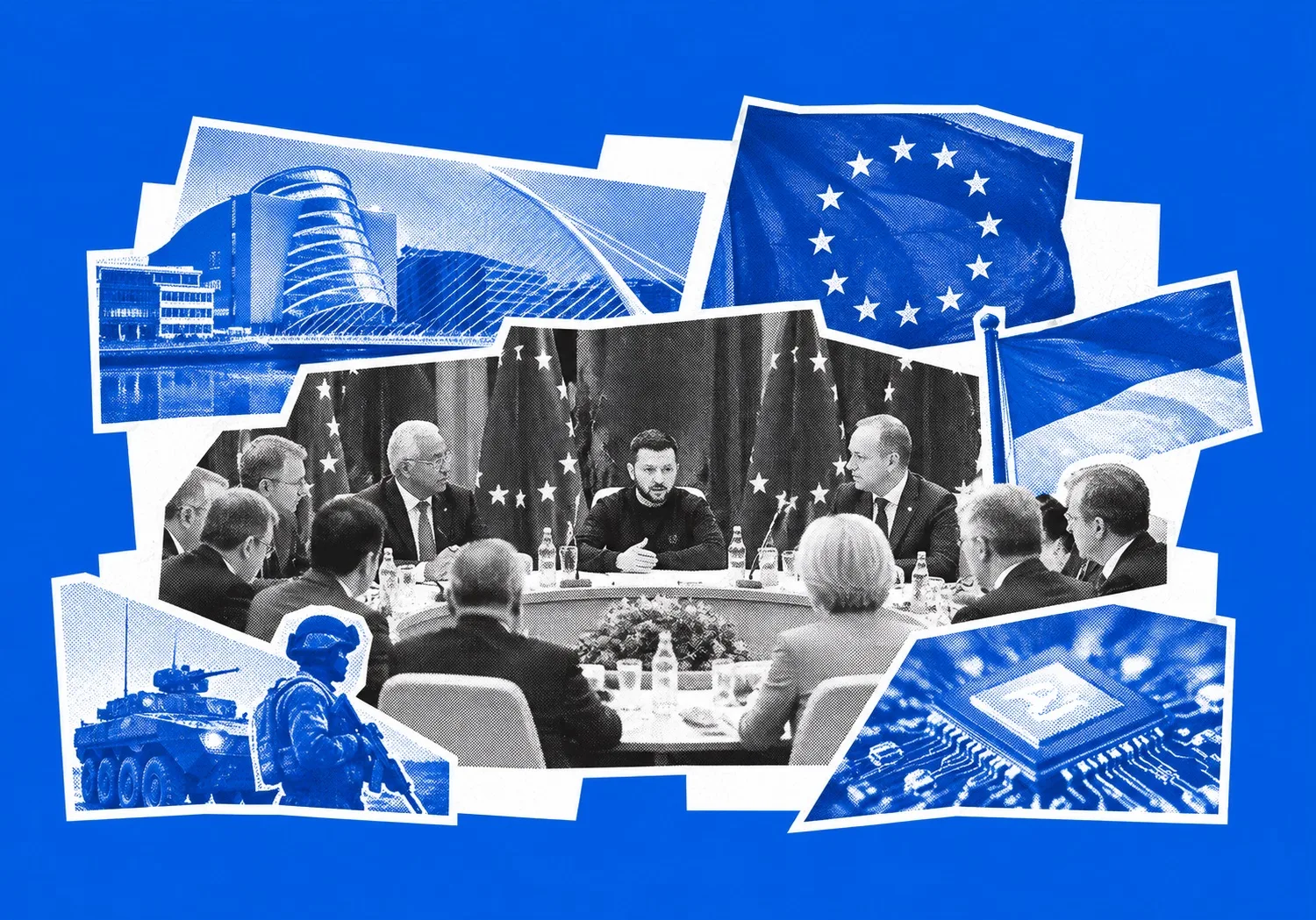
The two-day diplomatic gathering brings together European and non-EU leaders to confront Russian threats, energy insecurity and economic vulnerabilities before the EU turns to artificial intelligence and technological independence.
European leaders are gathering in Dublin on 12 November for the ninth European Political Community (EPC) summit, followed by an informal meeting of the European Council on 13 November. The back-to-back meetings will address two connected challenges: strengthening Europe's security and resilience in an increasingly unstable geopolitical environment, and ensuring that the European Union can compete in the rapidly evolving global artificial intelligence industry. The gatherings, hosted by Irish Taoiseach Micheál Martin and chaired jointly with European Council President António Costa, represent the largest diplomatic event of its kind in Ireland's history.
The EPC summit is taking place at the Convention Centre Dublin under the theme "Europe – strong, secure and connected". The agenda combines defence and democratic resilience with economic competitiveness, innovation, connectivity and affordable energy.
According to the European Council, 48 heads of state and government were invited, representing EU member states and a wider group of European partners, with Canada participating as a guest.
The discussions come at a moment when European governments are confronting Russia's continued war against Ukraine, suspected hostile intelligence operations, pressure on energy supplies and growing questions about the continent's technological dependence on foreign companies.
Unlike a conventional European Council meeting, the EPC brings together countries both inside and outside the European Union. That broader participation gives leaders an opportunity to discuss shared security concerns without being constrained by EU membership.
The following day's meeting will have a narrower institutional focus but potentially far-reaching economic implications. EU leaders are expected to examine how artificial intelligence could reshape Europe's industries, security and democratic institutions.
Why the Dublin Summit Matters for European Security
The European Political Community was established in 2022 following Russia's full-scale invasion of Ukraine. Its purpose was to create a forum for strategic dialogue involving European countries regardless of their relationship with the EU.
The format includes the 27 EU member states alongside countries such as Ukraine, the United Kingdom, Norway, Switzerland, Türkiye and several Western Balkan states.
Canada has also been invited to participate in Dublin as a guest.
This broad membership reflects a fundamental reality of European security: the continent's major challenges cannot be addressed exclusively through EU institutions.
Russia's war against Ukraine, cross-border energy infrastructure, migration pressures, cyber threats and foreign interference affect countries with different political and institutional relationships with Brussels.
The EPC does not have the legislative authority of EU institutions or NATO's collective defence commitments. Its value lies primarily in facilitating direct political coordination, bilateral discussions and informal diplomatic exchanges.
That distinction also exposes a limitation. The summit cannot independently impose sanctions, allocate EU funds or adopt binding legislation. Any substantial policy commitments must be implemented through national governments, EU institutions or other international mechanisms.
Nevertheless, the participation of countries outside the EU allows leaders to discuss matters that would otherwise require separate diplomatic processes.
Ireland's government has described the Dublin gathering as an opportunity to strengthen cooperation on common political, economic and security challenges.
Ukraine and Russian Hybrid Threats Dominate the Security Debate
Russia's war against Ukraine remains a central issue for European security discussions.
Irish broadcaster RTÉ reported that Ukrainian President Volodymyr Zelenskyy was scheduled to address the opening plenary alongside Micheál Martin and António Costa.
The summit's discussions are expected to cover the war, Russian hybrid operations and the protection of European democratic systems against foreign interference.
The importance of these issues extends beyond military assistance to Kyiv.
European governments have increasingly confronted threats involving suspected sabotage, cyber operations, disinformation and interference with civilian infrastructure.
Such activities can affect transport networks, energy supplies, communications systems and public confidence in government institutions.
For countries bordering Russia or Belarus, the risks are particularly immediate. Yet recent investigations into suspected Russian-linked sabotage across Europe demonstrate that geographic distance from the war does not necessarily eliminate exposure.
The Dublin summit provides an opportunity for EU and non-EU governments to compare their assessments of these threats and explore stronger coordination.
For Ukraine, participation in the EPC also maintains direct diplomatic engagement with partners whose support is essential to its defence and economic resilience.
At the same time, the meeting takes place against the background of renewed international diplomatic efforts concerning the war.
Associated Press reported on 12 November that European leaders were seeking to preserve a meaningful role in negotiations over Ukraine's future, following recent US-mediated diplomatic contacts.
The challenge for European governments is to translate political support into sustained defence cooperation while ensuring that any diplomatic settlement does not undermine the continent's long-term security.
Energy Security and Competitiveness Are Becoming Strategic Questions
The EPC agenda also places considerable emphasis on economic competitiveness, innovation, connectivity and affordable energy.
These issues are increasingly difficult to separate from traditional defence policy.
Energy costs influence the competitiveness of European manufacturers, the affordability of essential services and the capacity of governments to finance long-term investment.
Reliable electricity supplies are also essential for digital infrastructure, industrial automation and the rapidly expanding data centres required by artificial intelligence systems.
For European governments, energy policy therefore involves more than reducing household bills or managing industrial costs. It is becoming an important component of strategic autonomy.
The Dublin discussions offer an opportunity to examine how European countries can improve energy connectivity, reduce vulnerabilities and support investment across national borders.
The inclusion of non-EU countries is significant because European electricity markets, energy infrastructure and supply chains frequently extend beyond the Union's borders.
However, the EPC's informal nature means that discussions on energy cooperation should not be confused with the adoption of specific EU regulatory or financing measures.
Any concrete outcomes will depend on subsequent decisions by participating governments and institutions.
Democratic Resilience and Foreign Interference
Another major theme of the Dublin summit is the defence of democratic institutions.
European governments are concerned about foreign interference, disinformation campaigns and attempts to manipulate political debate.
According to RTÉ, summit discussions are expected to consider how governments can improve their resilience against such activities, particularly as several European countries prepare for elections in 2027.
The issue is not limited to the spread of false information.
Foreign interference can involve coordinated online influence campaigns, cyberattacks, covert financing, intimidation and efforts to exploit political divisions.
These activities present a difficult challenge because governments must protect democratic processes without undermining freedom of expression or legitimate political disagreement.
Cross-border cooperation is particularly important where influence operations involve networks operating in multiple jurisdictions.
The EPC offers a forum for exchanging political approaches and identifying areas where closer coordination may be possible.
Yet the effectiveness of such cooperation will ultimately depend on the willingness of individual governments to share information, develop institutional safeguards and respond consistently to documented threats.
A Second Summit Will Focus on Europe’s AI Sovereignty
While Thursday's EPC meeting covers a broad range of security and economic issues, Friday's informal European Council has a more specific agenda.
In an invitation letter dated 3 November, António Costa confirmed that the meeting of EU leaders on 13 November would focus on artificial intelligence.
The discussions will examine Europe's position in the global AI industry, the economic opportunities associated with emerging technologies and the risks posed by their rapid development.
Costa linked the meeting to the EU's decision to make 2026 a year of competitiveness, arguing that Europe needs to accelerate innovation and direct investment towards technologies capable of supporting future economic growth.
The meeting will also address the Union's dependence on external technology providers and the infrastructure required to strengthen its technological independence.
The discussion is particularly significant because the EU has already developed an extensive regulatory framework for artificial intelligence but continues to face questions about its ability to produce globally competitive AI technologies.
Regulation alone cannot guarantee industrial leadership.
European companies also require access to advanced computing capacity, skilled workers, investment capital and affordable electricity.
The informal meeting is intended to address how these conditions can be improved while maintaining European standards on safety and fundamental rights.
Mistral AI and Geoffrey Hinton to Address European Leaders
Two prominent figures from the artificial intelligence sector are scheduled to participate in Friday's discussions.
The first is Arthur Mensch, co-founder and chief executive of French AI company Mistral AI.
His presentation will focus on Europe's position in the global AI industry and the strategic challenges facing European technology companies.
According to Costa's invitation letter, leaders will examine how to reduce critical dependencies, strengthen European AI capabilities and develop the infrastructure required to support advanced technologies.
The discussion will also consider the importance of public and private investment, affordable clean energy and the wider adoption of AI across European industries.
Mistral AI's participation is significant because the company represents Europe's ambition to develop competitive alternatives to major American and Chinese AI providers.
The second invited speaker is Geoffrey Hinton, the Nobel Prize-winning computer scientist whose research helped establish the foundations of modern artificial intelligence.
Hinton's presentation will address the broader consequences of AI development for European societies.
Topics will include fundamental rights, children's protection, democratic processes, cybersecurity, market concentration and international cooperation on AI safety.
The inclusion of both speakers reflects two competing priorities facing European policymakers.
Europe wants to accelerate the development and deployment of artificial intelligence while also protecting citizens against the risks associated with increasingly powerful systems.
The challenge is to avoid allowing either objective to undermine the other.
A regulatory environment that fails to support innovation could weaken Europe's competitiveness. Conversely, rapid technological deployment without adequate safeguards could expose citizens and institutions to new forms of economic and security risk.
These tensions are likely to shape future EU policy discussions.
Why AI Is Now a European Security Issue
Artificial intelligence is no longer exclusively an industrial or digital policy question.
Its growing applications in cybersecurity, intelligence analysis, military logistics and autonomous systems have made it relevant to national security planning.
AI technologies can help identify cyber threats, process large volumes of information and improve the efficiency of complex industrial processes.
However, the same capabilities can also be exploited for malicious purposes, including sophisticated phishing campaigns, automated disinformation and the development of more effective cyberattack techniques.
Dependence on foreign providers creates another strategic concern.
If European governments, companies and public institutions rely heavily on external suppliers for critical AI infrastructure, their technological capabilities may become vulnerable to geopolitical disputes, export restrictions or disruptions in international supply chains.
This does not mean that technological self-sufficiency is necessarily achievable or desirable in every sector.
Instead, the central policy question is how Europe can maintain access to advanced technologies while reducing its exposure to concentrated dependencies.
Costa's invitation explicitly connects AI sovereignty with investment, infrastructure and energy availability.
That approach reflects the reality that technological independence requires more than domestic software development. It also depends on computing resources, electricity generation, financing and the capacity to deploy new technologies throughout the economy.
For Europe's defence and security sectors, the outcome of these debates could influence future procurement, research cooperation and industrial investment.
Dublin Hosts Ireland’s Largest Diplomatic Security Operation
The scale of the two summits has required an unprecedented security deployment in Ireland.
An Garda Síochána, Ireland's national police service, described the arrangements as the largest policing and security operation in the country's history.
According to an official statement issued on 10 November, preparations involve more than 15,000 twelve-hour duty tours over the course of the operation.
The deployment includes more than 500 public-order officers and more than 500 armed tactical personnel each day, alongside specialist search teams, motorcycle escorts and support from the Irish Defence Forces.

Security cordons, road closures and parking restrictions have been introduced around the Convention Centre Dublin and the National Gallery of Ireland, where a formal dinner for visiting leaders is scheduled.
The operation has also involved coordination with transport providers and local authorities to manage disruption across the city.
The extraordinary security arrangements reflect both the number of high-profile participants and the heightened threat environment surrounding major international gatherings.
What Happens Next: The 13 November European Council Meeting
The informal meeting of EU heads of state or government is scheduled to begin on Friday morning, with the main working session starting at 09:45 local time.
Leaders will first hear from Arthur Mensch and Geoffrey Hinton before continuing their discussions over a working lunch.
The lunch session will provide an opportunity for the 27 EU member states to exchange views on the future direction of European AI policy.
A press conference involving António Costa, Micheál Martin and European Commission President Ursula von der Leyen is scheduled for 16:15.
Unlike a formal European Council summit, the meeting is primarily designed to facilitate strategic discussion rather than immediately adopt binding decisions.
Nevertheless, the issues raised could influence the EU's future approach to technological investment, industrial competitiveness and digital security.
Costa has already indicated that leaders are expected to return to artificial intelligence in 2027, including during another leaders' retreat in Alden Biesen.
That timetable suggests the Dublin meeting is intended as an early stage in a longer political process.
For the EU, the central challenge will be translating broad agreement on technological sovereignty into practical policies that support European innovation without compromising security or fundamental rights.
For the wider continent, the two Dublin meetings illustrate how Europe's security agenda is expanding.
Military threats, energy resilience, economic competitiveness and technological dependence are increasingly interconnected. The European Political Community offers a platform for discussing those challenges with partners beyond the EU, while the following day's meeting will test whether the Union's leaders can establish a shared direction on artificial intelligence.
The immediate measure of the Dublin gatherings will be the political priorities leaders articulate. Their longer-term significance will depend on whether those discussions lead to concrete cooperation, investment and policy decisions.
Sources: European Council, Irish Presidency, RTÉ, Associated Press