
Europe Sees Robotics and Physical AI as a New Opportunity to Challenge US and Asian Rivals

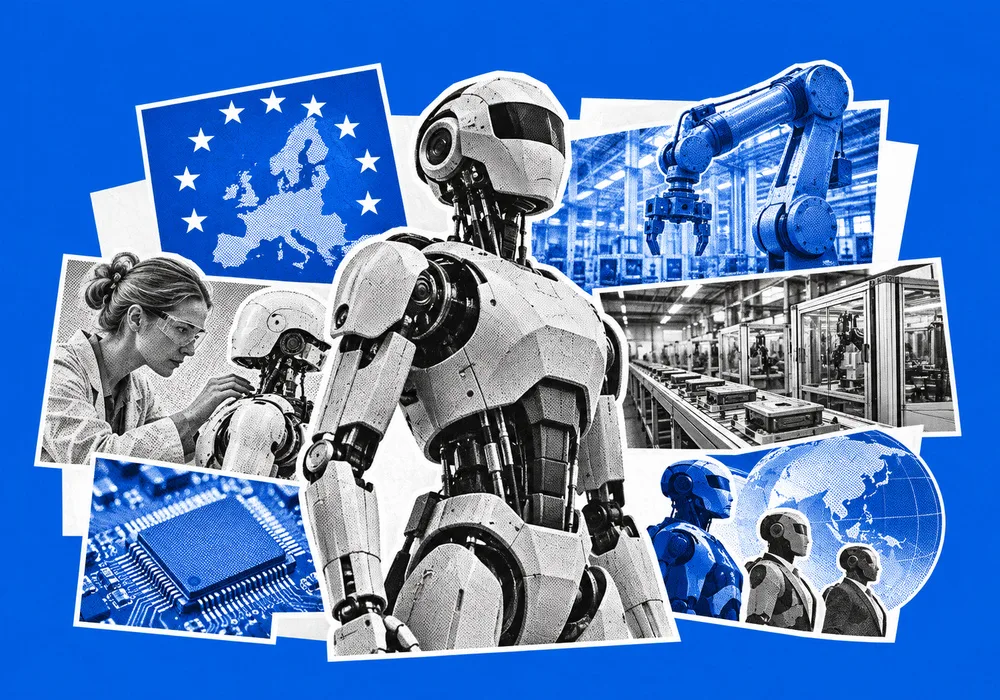
Europe’s leading semiconductor companies believe the continent can strengthen its position in the global technology race by expanding into robotics and physical artificial intelligence. Building on its automotive and industrial expertise, the region is seeking to turn existing manufacturing capabilities into an advantage as AI moves beyond digital applications and into physical systems.
Europe's semiconductor industry sees robotics and physical artificial intelligence (AI) as an opportunity to regain ground in the global technology competition. The chief executives of Infineon, STMicroelectronics and NXP argue that the continent has the industrial foundations needed to compete with the United States and Asia as AI becomes increasingly integrated into vehicles, robots and industrial machinery. Their position reflects a broader shift in the technology sector, where the next stage of AI development will depend not only on computing power and software but also on the ability to interact safely and reliably with the physical world.
The transition from digital AI applications to physical systems is expected to create new demand for specialised semiconductors, sensors, power-management components and microcontrollers. These technologies allow machines to interpret their surroundings, process information and perform actions with a high degree of precision. European manufacturers already have an established presence in automotive electronics and industrial automation, giving them an industrial base that could support the development of this emerging market.
Infineon chief executive Jochen Hanebeck has described industrial and physical AI as an essential area for Europe to win, particularly as the continent seeks to address its weaker position in several advanced technology sectors. The company, alongside STMicroelectronics and NXP, supplies components used in the systems that will underpin next-generation robotics. Their competition includes US manufacturers such as Texas Instruments and onsemi, as well as technology companies across Asia.
Industrial Robotics Becomes a Testing Ground
The development of physical AI will require closer cooperation between semiconductor producers, robotics companies and industrial customers. Unlike conventional AI applications, systems operating in physical environments must be trained to respond to unpredictable conditions and interact with objects, equipment and people without causing damage. This makes simulation, testing and safety engineering particularly important before autonomous machines can be deployed on a wider scale.
STMicroelectronics has already begun translating this approach into industrial applications through an agreement to introduce humanoid robots developed by Italy's Oversonic into its factories. The first unit has been installed at a semiconductor manufacturing facility in Malta. Although such deployments remain at an early stage, they provide an opportunity to test how humanoid systems can perform tasks in real industrial environments and how their integration can improve manufacturing processes.
The gap between experimental projects and large-scale adoption remains substantial. Factory trials are still more common than widespread commercial use, and manufacturers must demonstrate that robotic systems can operate consistently, safely and economically before companies commit to extensive deployment. Nevertheless, the involvement of established European semiconductor producers suggests that the region is positioning itself to participate in the development of the underlying technologies rather than simply purchasing finished robotic systems from foreign suppliers.
Safety Could Become Europe's Competitive Advantage
One potential advantage for European companies lies in their experience with safety-critical technologies. Automotive and industrial systems require components capable of functioning reliably under demanding conditions, where technical failures can have serious consequences. As AI moves from providing recommendations to directly controlling machinery, vehicles and robots, the importance of predictable behaviour and dependable hardware is likely to increase.
NXP chief executive Rafael Sotomayor has emphasised that physical AI introduces risks that do not exist in the same way in purely digital applications. An incorrect decision made by an autonomous system can result in physical injury, making reliability and safety central requirements rather than optional features. Europe's established automotive supply chains and industrial engineering expertise could therefore become important assets as companies develop systems that must meet demanding operational standards.
This could also create opportunities for European manufacturers to differentiate themselves in a market increasingly shaped by competition over cost, computing capacity and technological scale. While US companies have significant advantages in advanced AI software and computing infrastructure, European suppliers have long-standing expertise in the components that connect digital intelligence with physical equipment. The extent to which this advantage can be converted into a leading position will depend on the ability to accelerate innovation and bring new products to market.
The Challenge of Turning Industrial Strength into Technological Leadership
Europe's ambitions in physical AI come against the background of its broader difficulties in competing with the United States and China in advanced technologies. The continent has a strong industrial base and established research capabilities, but its ability to scale new technologies remains a persistent challenge. Fragmented markets, investment constraints and dependence on external suppliers in certain critical areas could limit the speed at which European companies expand their presence in emerging industries.
Robotics and physical AI offer a possible route to build on sectors where Europe already has significant industrial experience. Rather than competing exclusively in the development of general-purpose AI models or large-scale computing infrastructure, European companies could focus on specialised chips, intelligent sensors, industrial automation and safety systems. These capabilities are essential to the deployment of AI in manufacturing, transport and other areas where digital decisions must translate into reliable physical actions.
The strategic significance of this transition extends beyond the semiconductor industry. Greater domestic capacity in robotics and industrial AI could strengthen European manufacturing competitiveness, reduce dependence on external technology providers and support the modernisation of production facilities. However, the opportunity will only translate into a lasting advantage if European companies can move beyond individual factory experiments towards commercially viable solutions that can be deployed at scale.
Europe's position in physical AI will therefore depend on whether its existing industrial strengths can be matched with sustained investment, closer cooperation across the technology sector and faster commercial adoption. The continent may not lead every part of the global AI industry, but robotics and industrial applications could provide a more realistic opportunity to establish a competitive position in technologies that will increasingly shape the future of manufacturing and economic productivity.
Sources: Reuters, Channel News Asia