
EU Candidate Countries Excluded from Talks on Safeguards Against Hungarian Vetoes

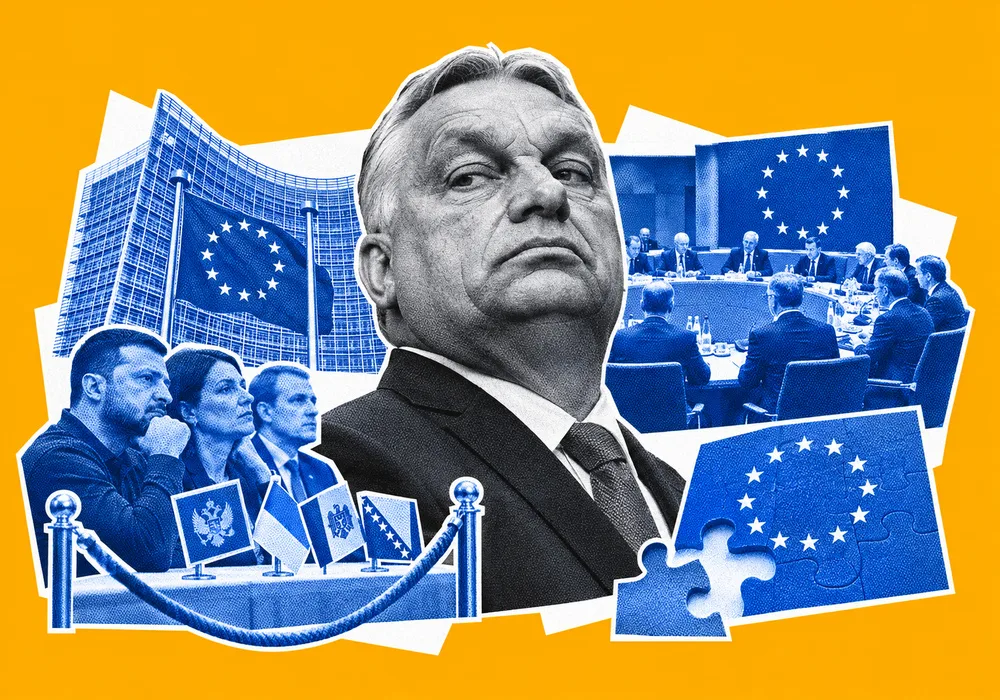
The European Union is preparing stricter safeguards for future members, including a 15-year probation period and the possibility of suspending voting rights in cases of serious breaches of EU principles. Montenegro is the first candidate expected to accept the new conditions, but the negotiations are taking place without its formal participation. The proposed framework could reshape the terms of enlargement for Ukraine, Moldova and the Western Balkans, while raising questions about equal rights within the Union.
European Union candidate countries will have no formal role in negotiating a new set of institutional safeguards designed to prevent future members from undermining the bloc's decision-making process. Montenegro, the most advanced candidate for EU membership, is the first country expected to incorporate the measures into its accession treaty. The proposed arrangements include a 15-year probation period after accession and the possibility of suspending a new member's voting rights in cases of serious violations of EU values and the principle of sincere cooperation.
The European Commission introduced the initiative in October 2026 following calls from several founding EU members to draw lessons from the bloc's experience with Hungary under Viktor Orbán. The proposal is intended to provide the Union with additional instruments to respond to democratic backsliding and political obstruction after a country has joined. Brussels argues that existing mechanisms have proved insufficient to address situations in which a member state uses its institutional powers to delay or block decisions affecting the wider Union.
For Montenegro, the timing creates a difficult negotiating position. The country began accession talks in 2012 and has spent more than a decade aligning its legislation, institutions and economic policies with EU requirements. Having invested substantial administrative resources and political capital in the process, Podgorica has little incentive to reject conditions introduced at the final stages of negotiations.
Unlike conventional accession chapters, the safeguards are not being treated as an area in which Montenegro can present its own negotiating position or demonstrate compliance through additional reform benchmarks. The country is effectively expected to accept the institutional provisions prepared by the EU or risk jeopardising its membership prospects. Montenegrin officials have therefore been cautious about publicly challenging the proposal, while attempting to influence its final wording through diplomatic contacts with existing member states.
Hungary's veto power drives institutional reform
The initiative reflects growing concern among EU governments about the ability of individual member states to obstruct collective decisions. Under the current treaty framework, unanimity remains necessary in several important policy areas, including key stages of enlargement and significant aspects of foreign and security policy. This arrangement is intended to protect national interests and ensure that major decisions receive broad political support.
However, Hungary's repeated use of its veto has demonstrated how the system can become a source of prolonged institutional deadlock. Budapest has blocked or delayed decisions involving Ukraine, including financial assistance and measures connected to its European integration. The disputes have raised questions about whether a single government should be able to hold up decisions supported by the other member states, particularly when the disagreement concerns broader European security and foreign policy priorities.
The Commission's proposal seeks to address a different but related vulnerability: the possibility that a country could join the EU while meeting accession requirements and subsequently weaken democratic institutions, undermine the rule of law or use its membership rights to obstruct the Union. Once a candidate becomes a member, the political and legal relationship changes substantially, making corrective action more difficult.
Article 7 of the Treaty on European Union already provides a mechanism for responding to serious violations of the bloc's fundamental values. It can ultimately lead to the suspension of certain membership rights, including voting rights in the Council. However, the procedure involves demanding political thresholds, particularly at its most serious stage, and has proved difficult to use effectively against governments accused of democratic backsliding.
The proposed institutional safeguard would complement Article 7 rather than replace it. It would establish an additional, accession-specific mechanism applicable to new members during their first 15 years in the Union. According to the Commission's proposal, measures could range from financial consequences to the suspension of voting rights in particularly serious cases. The response would have to reflect the nature and gravity of the breach, with regular reviews and the possibility of lifting restrictions once the underlying problems have been addressed.
The proposed procedure also differs from the traditional political process under Article 7. The Commission envisages a mechanism under which measures could be initiated by the European Commission or following a reasoned request from member states, with the Council having a defined period to reject them by qualified majority. This approach is intended to make the response more operational and reduce the risk that political alliances will prevent action.
A 15-year probation period raises questions about equal membership
The duration and scope of the proposed safeguards have become two of the main sources of concern among candidate countries. A 15-year period is particularly significant because it would extend well beyond the immediate transition following accession. Governments seeking membership fear that such a long period could create a distinction between established member states and countries admitted under the new framework.
The debate is not limited to the formal possibility of losing voting rights. The mechanism could also affect access to EU funding and other institutional benefits if serious breaches of the bloc's principles are identified. For countries that have spent years implementing reforms to qualify for membership, the prospect of facing additional restrictions after accession raises questions about the practical value of joining under different conditions.
The European Commission maintains that the safeguards are temporary and intended to protect the Union's institutional integrity rather than establish a permanent hierarchy among members. Enlargement Commissioner Marta Kos has argued that the EU must avoid admitting countries that could subsequently undermine its ability to function. The initiative reflects the Commission's view that the lessons of the Hungarian experience should be incorporated into future accession agreements rather than addressed only after problems emerge.
However, the distinction between temporary safeguards and unequal membership rights remains politically sensitive. Candidate countries have called for clear criteria governing the activation of the mechanism, proportionate responses and guarantees that restrictions cannot be extended or applied arbitrarily. They also want decisions to be based on objective assessments of systemic breaches rather than political disagreements between governments.
An additional concern involves the possibility that institutional safeguards could become a source of pressure in bilateral disputes. If the procedure allows existing members to initiate action against a newcomer, the criteria and oversight arrangements will be important in preventing the mechanism from being used to advance unrelated national interests.
The Commission's proposal includes judicial scrutiny and regular reviews, but the final legal text and the precise conditions for applying the measures remain subject to negotiations among EU governments. The balance between effective enforcement and protection against political misuse will therefore be central to the final arrangement.
EU governments divided over the conditions for future members
Although member states broadly recognise the need to address institutional vulnerabilities, they disagree over how far the new safeguards should go and whether identical conditions should apply to every candidate.
Italy, which is part of the Friends of the Western Balkans group, has argued for proportionate and country-specific arrangements that respect the principle of equality among member states. This approach reflects concerns that excessively restrictive conditions could undermine the credibility of enlargement and make accession less attractive to countries that have already undertaken extensive reforms.
The Netherlands has advocated a more uniform approach, arguing against differentiated treatment of individual candidates. From this perspective, applying the same safeguards to all newcomers would provide consistent protection for the Union and prevent governments from negotiating exemptions that could weaken the framework.
France has also supported stronger guarantees on the rule of law, reflecting the position that future members should not be able to undermine democratic standards after accession. The debate nevertheless extends beyond the political objective of preventing backsliding to questions about the legal design of the mechanism, including the threshold for action, the duration of restrictions and the role of the European Commission.
The Irish presidency of the Council of the EU is coordinating the collection of national positions on the draft provisions. Following the initial exchange of views, the presidency is expected to prepare a consolidated position for discussion at ambassador level. The Commission will then be able to incorporate the member states' guidance into the proposed institutional provisions for Montenegro's accession treaty.
This process gives existing members substantial influence over the final arrangement, while leaving candidate countries with limited formal negotiating power. Montenegro's remaining opportunity to affect the outcome lies primarily in diplomatic engagement with national governments before the EU establishes its common position.
Ukraine and Moldova could face the same framework
The implications extend beyond Montenegro. Ukraine, Moldova, Albania and other Western Balkan candidates are likely to encounter the same institutional debate as their accession processes advance. The Commission's approach could establish a template for future accession treaties, meaning that the conditions developed for Montenegro may influence the membership terms offered to subsequent candidates.
For Ukraine, the issue has particular significance because its accession process is closely connected to the EU's broader security and geopolitical priorities. Membership is intended to anchor the country's long-term political and economic integration with Europe, while supporting institutional reforms and reducing the risks associated with external interference. However, the new safeguards would introduce additional conditions governing Ukraine's position within the Union after accession.
Kyiv has previously emphasised the importance of maintaining a predictable and credible enlargement process. In October, Ukraine's Deputy Prime Minister for European Integration Vsevolod Chentsov told Euronews that any transitional arrangements should be justified, proportionate and time-limited. His comments reflected concerns that new institutional conditions should not undermine the principle of full integration into the EU's single market and political structures.
The debate also comes as the EU attempts to make enlargement more predictable through accession roadmaps and gradual integration arrangements. Montenegro's progress is particularly important because its accession treaty is expected to serve as a model for subsequent negotiations. According to the European Policy Centre, the indicative roadmap envisages a final negotiating conference in December 2026 and a possible treaty signature in June 2027, although ratification by every member state remains a separate political challenge.
For Ukraine and Moldova, the emerging framework therefore creates a dual challenge. They must continue meeting the existing requirements concerning the rule of law, public administration, judicial independence and economic alignment, while preparing for additional institutional conditions that could affect their rights after joining.
The issue is especially relevant because candidate countries do not participate in the EU's internal decision-making as full members. They can engage in diplomatic consultations and seek support from individual governments, but they cannot vote on the rules that will determine the institutional framework of their future membership.
Enlargement tests the EU's own institutional model
The proposed safeguards expose a wider contradiction in the EU's enlargement policy. Brussels wants to expand the Union to strengthen its geopolitical position, increase its economic weight and consolidate stability across Eastern Europe and the Western Balkans. At the same time, it is attempting to protect a decision-making system in which individual member states retain significant powers to block collective action.
The introduction of additional restrictions for future members may address some of the concerns that have slowed EU decision-making. However, it does not resolve the underlying problem of unanimity or the possibility that existing member states could continue using veto powers to obstruct common policies. The proposed mechanism would primarily regulate the position of newcomers, leaving the broader institutional balance between current members largely unchanged.
This creates a question about whether the EU is preparing for enlargement through a comprehensive reform of its decision-making system or placing additional obligations on countries seeking admission. If new members face a prolonged period of restricted institutional rights while existing members retain their full powers, the Union could face criticism that it is creating different categories of membership.
The European Policy Centre has also highlighted the broader institutional dilemma: safeguards limited to newcomers risk creating second-class membership, while common rules applicable to all member states would address the issue of institutional integrity more consistently. This raises the possibility that future enlargement will require not only stricter accession treaties but also a wider discussion about how the EU itself makes decisions.
The final arrangement for Montenegro will therefore have implications beyond the country's accession timetable. It could determine the conditions under which Ukraine, Moldova and other candidates eventually join the Union, while setting a precedent for the relationship between national sovereignty, institutional accountability and equal membership rights.
The challenge for Brussels will be to ensure that the safeguards remain targeted, legally enforceable and proportionate without turning accession into a permanent system of differentiated membership. The credibility of enlargement will depend not only on whether candidate countries fulfil their obligations, but also on whether the EU is prepared to offer them a clear and equal place in the Union once they do.