
Éric Zemmour Enters France’s 2027 Presidential Race as the Far Right Seeks to Expand Its Influence

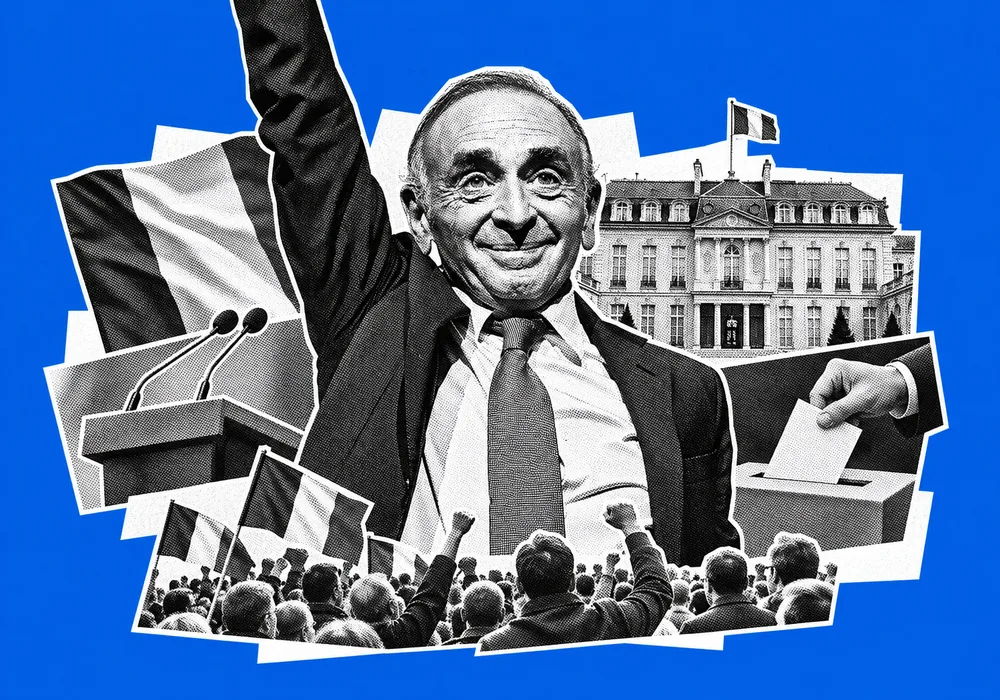
Éric Zemmour has confirmed that he intends to run in France’s 2027 presidential election, returning to the national political arena with a campaign centred on immigration, national identity and his vision of France’s future. His announcement adds another contender to an increasingly fragmented right-wing political landscape and raises questions about the relationship between competing nationalist forces ahead of the vote.
French far-right politician Éric Zemmour has confirmed that he will stand in the 2027 presidential election, seeking another opportunity to translate his political movement into national electoral support. The announcement marks his return to the presidential contest after his unsuccessful campaign in 2022, when he finished fourth in the first round with approximately 7% of the vote.
Zemmour leads Reconquête!, the political movement he founded in 2021 after building a public profile through journalism, television commentary and controversial statements on immigration and French national identity. His political programme has consistently focused on restricting immigration, strengthening national sovereignty and promoting an assimilationist understanding of French identity.
His renewed candidacy comes as France prepares for an election against a background of political fragmentation, institutional tensions and continuing debates over the country's economic and security priorities. President Emmanuel Macron cannot seek a third consecutive term, making the 2027 contest an opportunity for a new political leadership configuration to emerge.
Competition Within the French Right
Zemmour's announcement introduces another potential source of competition among France's right-wing political forces. Reconquête! operates in an electoral space also contested by the National Rally (RN), led by Marine Le Pen and Jordan Bardella, as well as traditional conservative politicians.
Although these movements share positions on several issues, particularly immigration and national identity, they differ in their political strategies, leadership structures and approaches to building broader electoral coalitions. The National Rally has spent years seeking to expand its appeal beyond its traditional electorate, while Zemmour has maintained a more explicitly ideological political profile.
The presence of multiple candidates competing for voters on the right could complicate efforts to consolidate support ahead of the first round. The extent of this competition will depend on the candidates who ultimately enter the race, their campaign programmes and the political alliances that emerge during the coming months.
Sarah Knafo's Role in the Campaign
The decision also settles an internal question over the leadership of Reconquête!'s presidential campaign. Sarah Knafo, the party's only member of the European Parliament, had increasingly attracted attention as a possible alternative candidate. Her political profile grew following the publication of her anti-tax book, Le Casse du siècle, which sold more than 300,000 copies and strengthened her visibility among conservative voters.
Some party supporters had favoured Knafo taking over the presidential campaign, viewing her communication style and political positioning as an opportunity to broaden the movement's appeal. Instead, Zemmour has retained the candidacy, with Knafo expected to play a central role in organising the campaign. Her position will remain important in determining how the party balances its established ideological identity with attempts to reach a wider electorate.
Immigration at the Centre of the Programme
Zemmour has continued to place immigration at the heart of his political platform. During his announcement, he presented so-called 'negative immigration' as a central pillar of his programme, proposing to reduce the immigrant population by two million over a five-year presidential term.
His proposals also include a more restrictive approach to citizenship and national identity, alongside measures intended to strengthen the authority of the French state over migration policy. These positions distinguish Reconquête! from other conservative forces not only through their ideological emphasis but also through the scale of the changes proposed.
The focus on immigration is likely to remain a defining feature of the campaign, particularly as the National Rally and traditional right-wing parties also seek to address public concerns about border management, integration and national security. Competition over these issues could influence the wider political agenda even if Reconquête! does not secure a significant electoral breakthrough.
Organisational Challenges Facing Reconquête!
Reconquête! enters the campaign with a smaller political presence than during its initial expansion in 2021–2022. The departure of several prominent figures, including representatives who left the movement in 2024, has reduced its institutional and organisational reach. The party has also struggled to translate its media visibility into a substantial electoral base.
Zemmour's political record presents an additional challenge. He has received several criminal convictions, including cases involving incitement to hatred and racist insults. These legal controversies have become part of the wider debate surrounding his political movement and its position within France's electoral system.
The party must therefore address two parallel objectives: maintaining its established ideological identity and demonstrating that it can operate as a sustainable political force beyond its founder's personal visibility. The presidential campaign will provide an opportunity to test its organisational capacity and its ability to mobilise supporters across the country.
Implications for France and the European Union
The 2027 presidential election will have implications beyond domestic French politics. France remains one of the EU's central political and military powers, with considerable influence over European defence cooperation, institutional decision-making, migration policy and relations with international partners.
A campaign dominated by debates over national sovereignty, immigration and European integration could affect the political positions of other member states. France's approach to common migration arrangements, EU decision-making and the balance between national and European authority will be particularly relevant to the bloc's future political direction.
Zemmour's candidacy does not in itself determine the outcome or direction of the election. However, it ensures that his political agenda will remain part of the national debate and adds another dimension to competition among France's right-wing parties. The campaign will also test whether Reconquête! can maintain its relevance despite organisational departures and the limited electoral support it secured in the previous presidential contest.