
Departing Flights Grounded Across US After Air Traffic Control Communications Failure

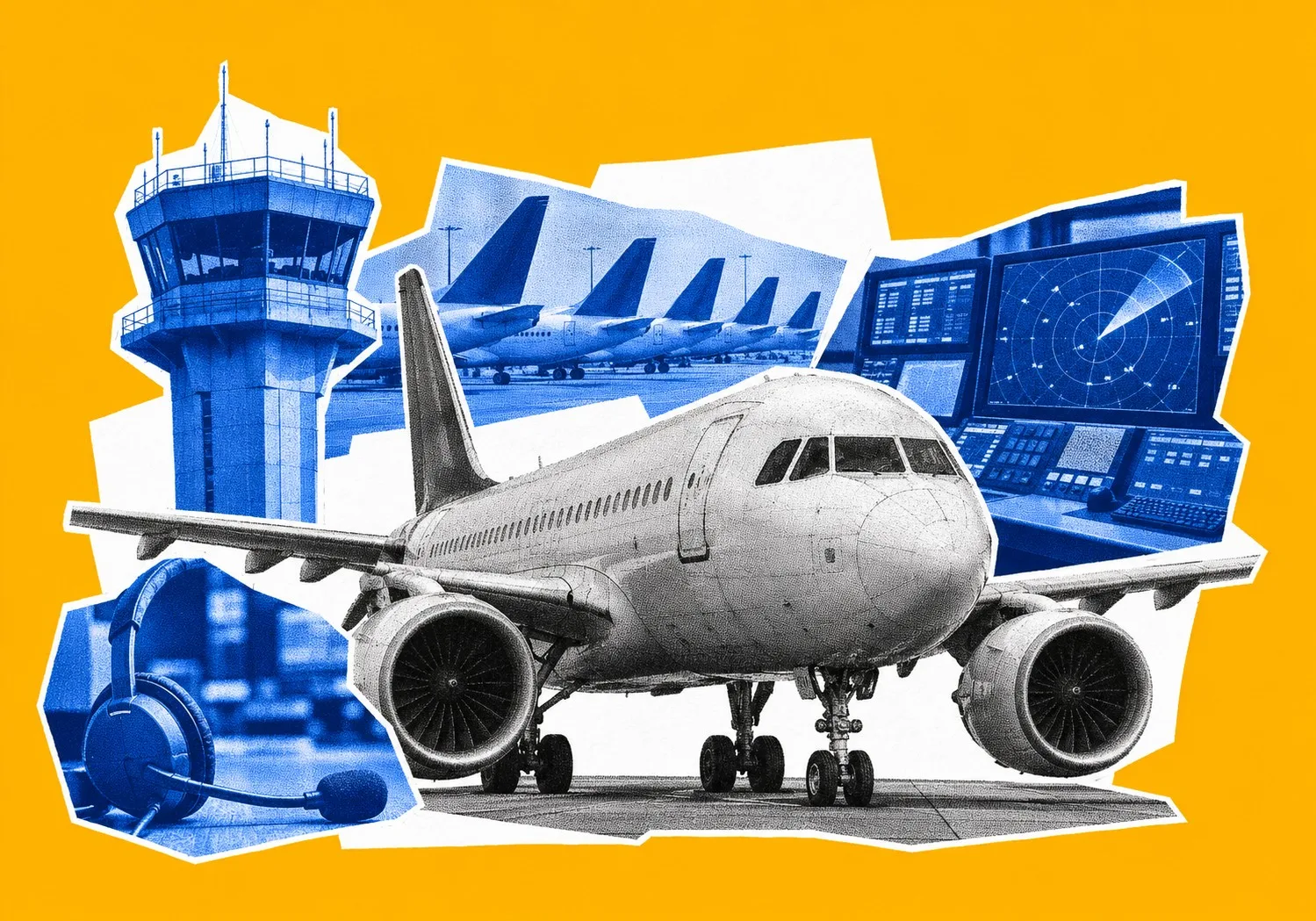
The US Federal Aviation Administration (FAA) ordered a nationwide ground stop on Friday, 13 November, after a communications failure hit regional air traffic control centres. The order halted departures from US airports. Aircraft already in the air could still land, and the FAA said it would handle inbound international flights case by case. Nearly 7,000 flights were delayed or cancelled, according to an initial FlightAware tally. The restrictions began in Chicago before the FAA extended them nationwide shortly before 4pm Eastern time (9pm GMT). The initial advisory listed 11pm Eastern time (4am GMT on Saturday) as the end of its event window, with departures to remain on hold until further notice. The FAA had yet to confirm when take-offs would resume.

US transport secretary Sean Duffy said the communications problem had affected all of the country’s regional en-route control centres. FAA technicians were investigating the fault. Two law enforcement officials told CNN that early information pointed away from a cyberattack. The FAA had yet to establish what caused the failure.
At Seattle-Tacoma International Airport, a controller told a Southwest Airlines pilot that there was no word on when the stop would end. Near Washington, Reagan National and Dulles remained open, though their airports authority warned of delays.
Chicago Approach Lost Radio Contact
“Approach is ATC Zero,” a controller warned pilots approaching Chicago in a recording cited by CNN.
The controller said the separate Chicago en-route centre was close to reaching that status too. The approach facility had lost its radio frequencies and the automated tools it uses to transfer aircraft between controllers and keep track of flights.
ATC Zero is an FAA designation used when a facility can no longer provide its usual air traffic services under normal operating arrangements. Approach controllers normally sequence aircraft as they arrive near an airport. They use radio to talk to pilots and flight progress strips, on paper or on a screen, to keep track of individual aircraft.
The centres named by Duffy handle flights once they leave the airspace around an airport.
A tower clears a plane for take-off, then departure controllers guide it through the initial climb. Once it is farther from the airport, a regional centre takes responsibility. On a flight across the country, controllers can hand the same aircraft from one centre to another before approach controllers at the destination take over. A tower can be fully operational while a problem elsewhere on the route prevents it from clearing a flight to leave.
Ground stops are a routine tool at individual airports. If thunderstorms reduce the number of aircraft an airport can accept, controllers can hold some of its incoming flights at their points of departure. A nationwide order applies the same principle on a much larger scale. By keeping departures on the ground, the FAA limits the number of aircraft entering the system while controllers deal with the traffic they already have.
About 3,115 flights were still heading for US airports at around 4.40pm Eastern time, according to AirNav Radar. The FAA’s operating rules give a ground stop priority over other traffic measures and require approval from the authority that issued it before held flights can be released.
The Knock-on Effect for Transatlantic Flights
Passengers making a connection in the US could land on their first flight and still find the second leg held at the gate.
Once controllers can clear aircraft for departure, airlines still have to put their schedules back together. A plane due to arrive in Europe overnight may be scheduled to fly back the next morning. If it leaves the US several hours late, the return flight can inherit the delay. The airline may be able to substitute an aircraft or move passengers to another service. Its options depend on where it has spare planes and crews and how many seats it can find on other flights.
A cancellation also changes what passengers can claim. Under US Department of Transportation rules, airlines owe a refund when they cancel a flight to, from or within the United States and the passenger declines alternative travel or a voucher. The rule also applies when a passenger declines to travel after a significant change to the booking. For an international itinerary, that can include a scheduled arrival at least six hours later than originally booked. The refund covers the unused portion of the ticket, and airlines must issue it automatically when it is due.
The Previous Nationwide Stop
Friday’s order was the first nationwide halt to departures since January 2023.
The previous nationwide stop before 2023 followed the attacks of 11 September 2001. In January 2023, the FAA suspended domestic departures after an overnight outage in the system that distributes safety notices to flight crews. Those notices tell pilots about temporary hazards and restrictions, including runway closures. The FAA held flights while it checked that the information available to crews was reliable.
Newark and Atlanta were allowed to start releasing flights early to ease congestion. The FAA lifted the wider order at 8.50am Eastern time, less than two hours after announcing the pause. In its preliminary findings the following week, the agency said contractors had accidentally deleted files while trying to resolve a synchronisation problem between the main database and its backup.
The 2023 outage led the FAA to review the technology that controllers depend on.
The Government Accountability Office, Congress’s spending watchdog, reported in 2024 that the agency had judged 51 of 138 air traffic control systems unsustainable.
A further 54 were considered potentially unsustainable.
Of those two groups, 58 systems were critical to the safe and efficient operation of US airspace, the watchdog found. The review cited problems such as equipment that was difficult to maintain and spare parts that were hard to find. Some replacement projects, the watchdog said at the time, were still a decade or more from completion.
The $30.1 Billion Request Before Congress
Hours before the nationwide ground stop, the White House and the Department of Transportation asked Congress for a further $30.1 billion for aviation infrastructure. Lawmakers had already approved $12.5 billion in July 2025 to upgrade air traffic control and hire more controllers. American, Delta, United and Southwest have backed the new request.
The proposal allocates $10.1 billion to air traffic control modernisation, including $7.2 billion for new controller workstations and a common automation platform. A further $2 billion would go towards replacing or upgrading control towers. The largest share, $18 billion, is for airport projects, including work on ageing terminals.
Duffy and White House budget director Russell Vought told lawmakers that the FAA had replaced about two-thirds of its old copper telecommunications network with high-speed fibre. The transport department’s wider programme also covers radios, digital voice equipment and radar. Earlier in November it announced the first installations of a system to replace displays that date back to the 1980s. Some of the older equipment still uses floppy disks for weather and other operational information.
The FAA plans to install the replacement displays at 435 sites by the end of 2028.
Sources: Reuters, CNN, BBC, The Washington Post