
ATypI Faces Backlash Over Russian Participation After Ukrainian Designers Withdraw

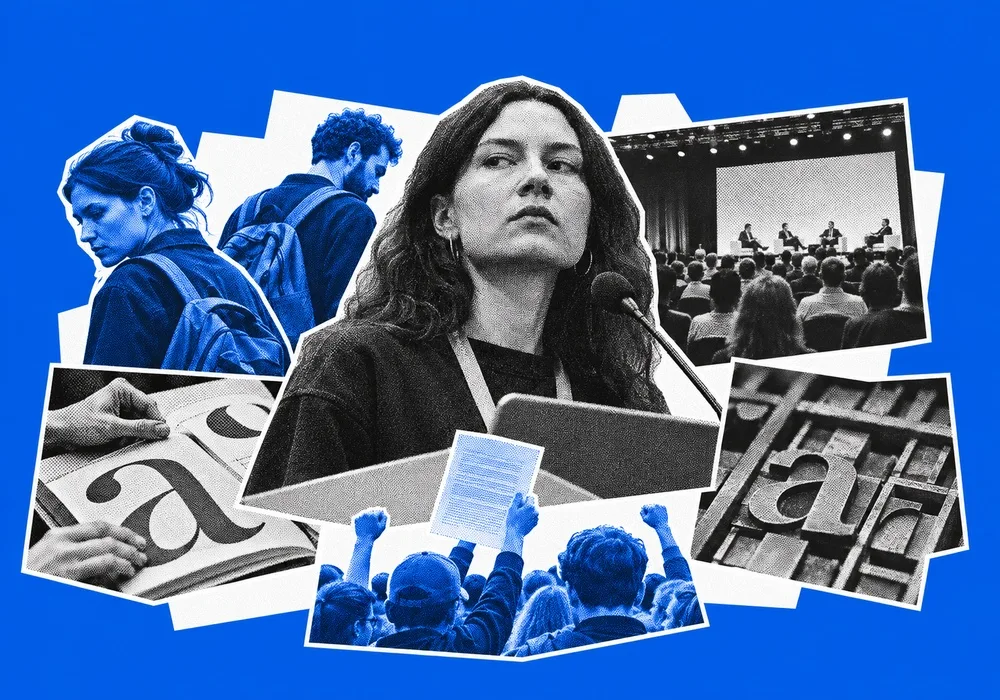
The International Typography Association has faced criticism after inviting a Russian designer linked to ParaType to its 2026 conference, despite concerns over the company's involvement in software used by Russian state and military institutions. The dispute has raised questions about the treatment of Ukrainian professionals and the responsibility of international cultural organisations during Russia's war against Ukraine.
The Association Typographique Internationale (ATypI), one of the world's leading professional organisations dedicated to typography and type design, has come under criticism from Ukrainian and international designers over its handling of Russian participation in its 2026 conference in Sharjah, United Arab Emirates. The controversy centres on the invitation of Alexandra Korolkova, a Russian type designer, art director and co-owner of the Russian type foundry ParaType, whose professional work is connected to software infrastructure used by Russian state institutions and the military.
The decision became contentious after Ukrainian designers Oleksandra Korchevska-Tsekhosh and Oleksii Chekal, both selected to participate in the conference, raised concerns about Korolkova's professional affiliations. They argued that her involvement with ParaType could not be considered independently of the company's work on typefaces used in Astra Linux, an operating system deployed across Russian government, security and military structures. Their objections were not simply about the participation of a Russian citizen in an international event, but about the professional and institutional connections behind that participation.
ParaType's links to Russian state infrastructure
The central issue concerns the PT Astra Sans and PT Astra Serif typefaces developed by ParaType in cooperation with RusBitTech, the company behind Astra Linux. The collaboration began in 2016, when the Russian developer sought domestic alternatives to Western typefaces after losing access to a licence for Times New Roman from the American company Monotype. Alexandra Korolkova and fellow designer Isabella Chaeva were involved in developing the replacement fonts.
Astra Linux Special Edition has been certified by Russia's Federal Security Service and is designed to handle classified information. It is used in Russian government institutions and organisations operating in sensitive sectors, including defence. The system forms part of Moscow's broader effort to replace foreign software with domestic products and reduce dependence on Western technology. The Ukrainian designers therefore argue that ParaType's contribution should be considered in the context of Russia's state infrastructure rather than treated as an isolated example of commercial font design.
Their concerns also extend to ParaType's management. The company's director, Anna Yakupova, publicly supported Russia's attempted annexation of Ukrainian territories in 2022. According to the Ukrainian organisers of the appeal, Korolkova remains ParaType's art director and holds a 5% stake in the company. These circumstances formed part of the evidence presented to ATypI when the Ukrainian designers challenged her participation.
More than 300 professionals support the Ukrainian appeal
Korchevska-Tsekhosh and Chekal submitted an open appeal to ATypI's board, calling on the organisation to reconsider Korolkova's participation and examine the company's connections to Russian state and military infrastructure. The initiative gathered more than 300 signatures from Ukrainian and international representatives of the professional design community. The signatories argued that international professional organisations should not ignore the institutional context in which creative work is produced, particularly when that work contributes to infrastructure serving a state waging a war of aggression.
The appeal also raised questions about the principles of inclusivity and solidarity that ATypI promotes. Its authors stressed that the issue was not the exclusion of designers on the basis of nationality, but the need to assess documented professional affiliations and their implications. They called for a transparent approach that would allow organisations to address comparable situations consistently rather than dismissing concerns as political disagreements unrelated to professional activity.
The Ukrainian designers' objections did not result in the outcome they sought. Their concerns were not meaningfully addressed, and both ultimately withdrew from the conference. They also criticised the organisation's handling of public discussion on its social media platforms, reporting that Ukrainian professionals who continued to raise the issue were blocked rather than given substantive answers. The dispute thus developed beyond the original question of one speaker's participation and became a broader disagreement over the organisation's treatment of its Ukrainian members.
Russian symbols and the limits of international solidarity
The controversy intensified after ATypI published a celebratory video featuring another ParaType representative, Russian designer Alice Matienko, displaying the Russian flag under the slogan "United by ATypI". For Ukrainian designers, the imagery was difficult to reconcile with the organisation's claims of international unity, particularly after the withdrawal of two Ukrainian speakers and the failure to address their concerns.
The timing and symbolism of the video have raised further questions about how ATypI understands professional solidarity. While the organisation presents itself as a platform bringing together designers from different countries, its handling of the dispute has created the impression that the participation of Russian representatives was treated as unproblematic, whereas Ukrainian objections were unwelcome. The contrast is particularly striking because the Ukrainian professionals involved had themselves been selected to participate and were members of the same international community the association claims to represent.
Ukrainian designers continue to work under the consequences of war
The dispute also has a human dimension that is difficult to separate from the professional debate. Russia's full-scale invasion has forced members of Ukraine's typography and design community to leave their homes, relocate their work and rebuild professional lives under conditions of displacement and insecurity. Among them are type designer Kyrylo Tkachov, originally from Luhansk, and Andrii Shevchenko, from Berdiansk. Chekal, meanwhile, has said that he was included on Russian execution lists in 2022.
For the wider Ukrainian design community, the consequences of the war extend far beyond individual cases. Some professionals have been forced to leave occupied territories, others have lost access to studios and workplaces, while many continue working amid air raid alerts, power disruptions and Russian attacks on Ukrainian cities. International conferences and professional networks consequently serve an important purpose: they allow Ukrainian designers to maintain visibility, establish partnerships and ensure that Ukrainian creative work remains part of international cultural and professional life.
The withdrawal of the two selected speakers therefore represents more than a disagreement over one conference invitation. It deprived the event of Ukrainian contributions at a time when the country's creative industries are struggling to preserve their institutional and international presence. It also raises questions about whether international organisations adequately consider the unequal conditions under which their members operate.
The cost of institutional neutrality
The ATypI controversy reflects a wider challenge facing European cultural and professional institutions. The principle of keeping professional exchange separate from politics is often presented as a way to protect international cooperation. However, that approach becomes increasingly difficult to sustain when professional work has documented connections to state structures involved in aggression, occupation or repression. Russia's war against Ukraine is not confined to the battlefield: it also relies on technological, industrial and institutional capacities that support the state's military and administrative systems.
For European organisations, this raises questions about the standards applied to international partnerships, conference invitations and professional recognition. Businesses and individuals may operate in creative or technical industries, but their work can also become part of infrastructure serving state institutions, including those involved in military activities. The challenge is to distinguish between participation based solely on nationality and professional relationships that warrant closer scrutiny. Without transparent assessment procedures, organisations risk either applying inconsistent standards or avoiding difficult questions altogether.
The implications extend beyond typography to architecture, publishing, technology, academia and other professional sectors in which international collaboration can intersect with state interests. European cultural institutions have a particular responsibility to ensure that their commitment to openness does not become a reason to overlook the realities of Russia's aggression. Supporting Ukraine requires more than political declarations and financial assistance; it also involves preserving the country's access to international professional networks and ensuring that Ukrainian voices are not marginalised in the very spaces where European cooperation is promoted.
ATypI's handling of the dispute has therefore become a test of whether international professional solidarity can accommodate the realities of a war in Europe. An organisation cannot credibly promote unity while disregarding the circumstances that prevent some of its members from participating on equal terms. The question is not whether professional communities should abandon international cooperation, but whether that cooperation can retain its credibility without transparency, accountability and recognition of the consequences of Russia's war.