
US Troops in Lithuania: Why Washington’s Force Review Threatens Baltic Security

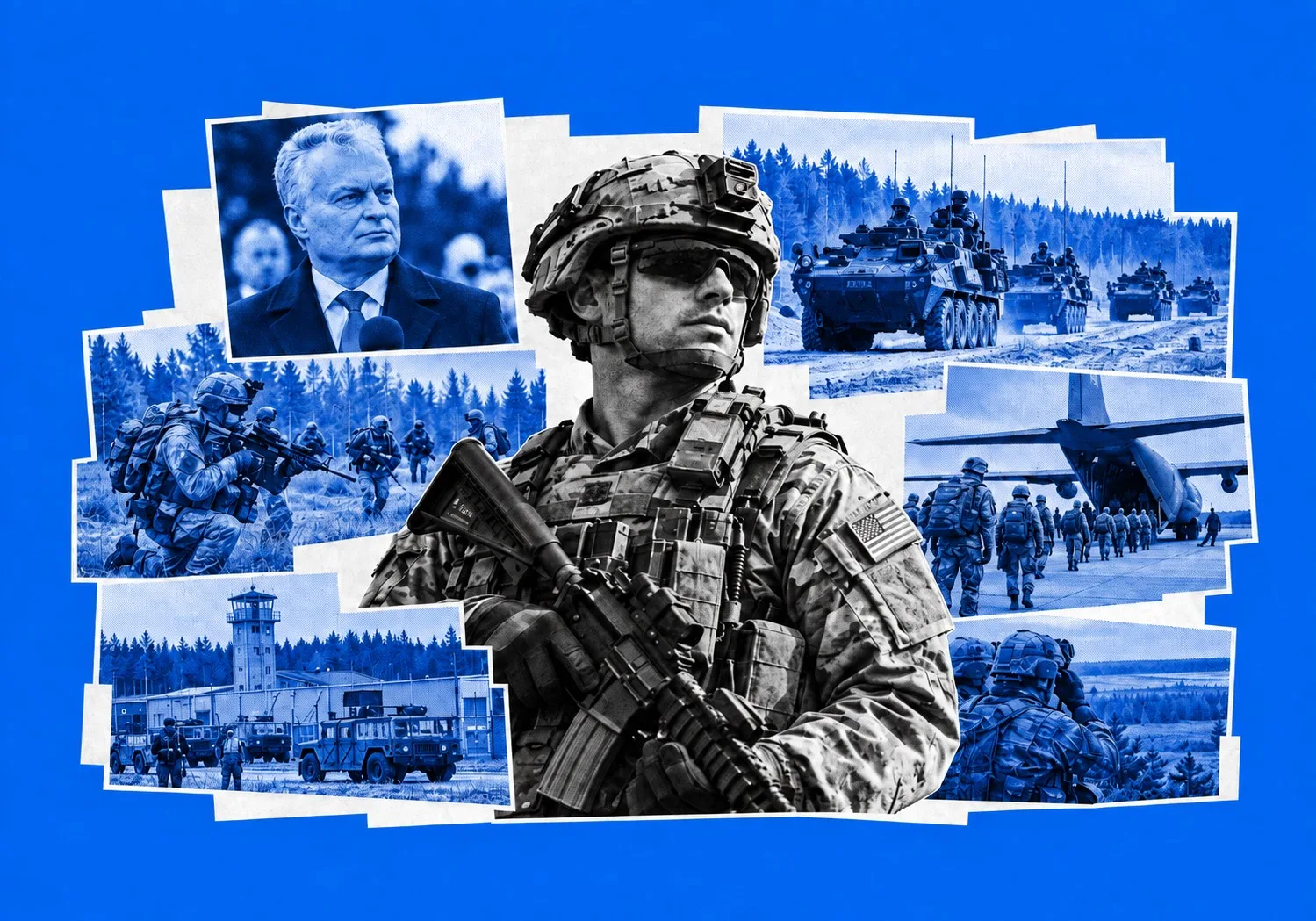
The arrival of around 1,000 American military personnel in Lithuania this October delivers immediate heavy armour to NATO’s eastern flank, but it also highlights a growing rift in transatlantic strategy. As troops from the US 1st Infantry Division roll into the General Silvestras Žukauskas Training Area in Pabradė for their nine-month rotation—bringing M1 Abrams main battle tanks and specialized combat engineering units—defense officials in Vilnius are watching Washington with increasing unease. The Pentagon’s ongoing global force posture review—and a planned high-level NATO future-planning meeting in Poland next month that systematically omitted the Baltic states, France, and the UK—signals that physical troop presence on the ground no longer guarantees a voice in shaping Europe’s defense architecture.
The tanks arrive at a bizarrely awkward moment for European defense planners. In Washington, the Pentagon is currently wrapping up a comprehensive global force posture review, leaving capitals from London to Tallinn trying to guess how many American troops will actually be left on this side of the Atlantic three or four years down the line. To make matters worse, news broke this week that a Pentagon-led working group on the future of NATO—scheduled to take place in Poland next month under Elbridge Colby’s policy team—has pointedly left key European allies off the guest list. Neither the British, the French, nor the Baltics received an invitation.
Not even a heads-up.

Naturally, this creates a strange split reality. On the dirt ranges of Pabradė, tactical integration works fine. American soldiers drive tanks, build pontoon bridges, and staff officers trade paperwork alongside local units. But at the strategic level, the old consensus-based transatlantic model is quietly dissolving into something far more transactional, selective, and frankly unpredictable.
The Mechanics of Flank Defence
Look at a map of Lithuania and the problem becomes glaringly obvious. The country is wedged squarely between the heavily armed Russian exclave of Kaliningrad to the west and Belarus to the east, tied to Poland by nothing more than the Suwalki Gap—a sixty-mile strip of farmland. If things go wrong, that corridor closes fast.
In a landscape like that, light infantry is basically a speed bump. You need steel. Heavy armour brings immediate direct fire and hard counter-mobility, giving local commanders something solid to hold the line with while the rest of the alliance gets its act together. That is why the arriving combat unit and engineer battalion matter so much on the ground. They complement the German-led multinational battle group already stationed in the country under NATO’s Enhanced Forward Presence, which was set up back after the 2016 Warsaw Summit. The Germans provide the political glue; the Americans bring the heavy metal.
When the defence minister in Vilnius went on air to confirm the October deployment dates, you could almost hear the collective sigh of relief in the ministry offices. Diplomatic staff over at NATO headquarters dropped subtle hints that Washington was still sending positive signals about keeping these nine-month rotations going.
Fair enough. But mistaking a scheduled rail shipment of armor for a permanent, ironclad political guarantee is a mistake.

The Economics of Hostage Protection
Vilnius isn't stupid. Knowing full well that American strategic priorities are drifting towards the Indo-Pacific, Lithuanian officials have spent the last few years throwing money at the problem, trying to make their territory so friction-free for visiting US troops that the Pentagon simply won't have a decent operational excuse to pack up and leave.
They have pushed national defense spending well past 3 per cent of GDP. A massive chunk of that cash isn't going into shiny new toys for the local army, but into host-nation support infrastructure—building brand new facilities like Camp Herkus in Pabradė, upgrading heavy vehicle firing ranges, and expanding railheads capable of handling sixty-ton main battle tanks.
It is a calculated bet, but Lithuania is far from alone in playing it. Across the entire region, neighboring nations like Poland, Estonia, and Latvia are aggressively bidding for American military presence, spending heavily on bases and training grounds in an explicit effort to host more US troops on their own soil.
Call it protection money or host-nation support; the practical reality is identical. Small frontline states are now effectively forced to compete against each other for American protection, bidding on who can offer the best ranges, the newest barracks, and the lowest local bills. Security is no longer treated purely as a sacred, treaty-bound collective obligation under Article 5. It has turned into a competitive market.
And for a smaller economy, that hurts. Every million euros spent pouring concrete for specialized tank wash-downs in Pabradė is a million euros locked up in trying to anchor a foreign military whose ultimate presence depends entirely on political mood swings inside the Washington beltway.
Consultation Without Consensus
Yet the real headache for Baltic security planners right now isn't the cost of building barracks. It’s the creeping sense of diplomatic isolation.
Reports that the Trump administration’s Pentagon has organised a restricted, future-planning gathering in Poland next month while leaving the UK, France, and the Baltic states out in the cold marks a sharp break from standard alliance manners. NATO was built on the idea that everyone gets a seat at the table when the core defense of the continent is being hammered out.
American power was the anchor, sure, but consensus was the rule.
“We’re doing everything we’re being asked to do. We’re trying to understand what the criteria are and what the purpose of these meetings is. So far, we’ve been given little information,” an official from one of the excluded allied countries told Politico.
When Washington starts organizing closed-door working groups about NATO’s future and deliberately excluding frontline nations—all while those very nations meet or exceed their defense spending targets—the whole deterrence model starts to look brittle. For countries like Lithuania, Latvia, and Estonia, whose national survival relies on the absolute predictability of a joint response, being cut out of upcoming high-level strategic planning creates a very dangerous kind of haze.
It also exposes the hard limits of host-nation spending. You can build the most modern tank ranges in Eastern Europe, lay down double-track railway lines right up to the bases, and pay for the heating in the barracks, but none of that buys you a vote when Washington decides to re-evaluate its global priorities behind closed doors.
Washington gets to keep its hands free, using temporary rotations to project power without committing to the legal or political baggage of permanent military bases. Meanwhile, frontline allies foot the bill for the local support facilities while living with the risk that the whole arrangement could be rewritten overnight.
A Fracture Between Force and Strategy
What we are looking at along Europe’s eastern border today is a two-speed alliance.
Down in the mud, the military engine hums along quite nicely. Battalions move, supply officers swap spreadsheets, and American tank crews shoot up targets alongside local defense forces. The mechanics work.
At the top, though, the machinery is visibly grinding. The old habit of inclusive, multilateral decision-making is giving way to a far more fragmented setup, with Washington opting for direct bilateral deals and small-group huddling whenever the formal NATO structures feel too unwieldy.
For major European capitals like London and Paris, this shift cuts right into their traditional role as key co-architects of Western security. For the Baltics, the stakes are existential. They face the very real prospect of being model hosts—generous, reliable, and heavily integrated at the tactical level—while remaining almost entirely sidelined from the rooms where the long-term strategic map of Europe is actually drawn.
So when those Abrams tanks roll off the train ramps in Pabradė this October, they will certainly deliver a heavy dose of immediate, hard-headed deterrence to a nervous region. The armour is thick, the crews are sharp, and the firepower is real enough. But as the dust settles over the training grounds, those tracks leave behind an uncomfortable question that no one in Vilnius quite knows how to answer: what happens when physical presence on the ground no longer guarantees a voice at the political table?