
Ukraine’s Winter Power Crisis: Why Physical Repairs Aren't Enough to Survive Russian Attacks

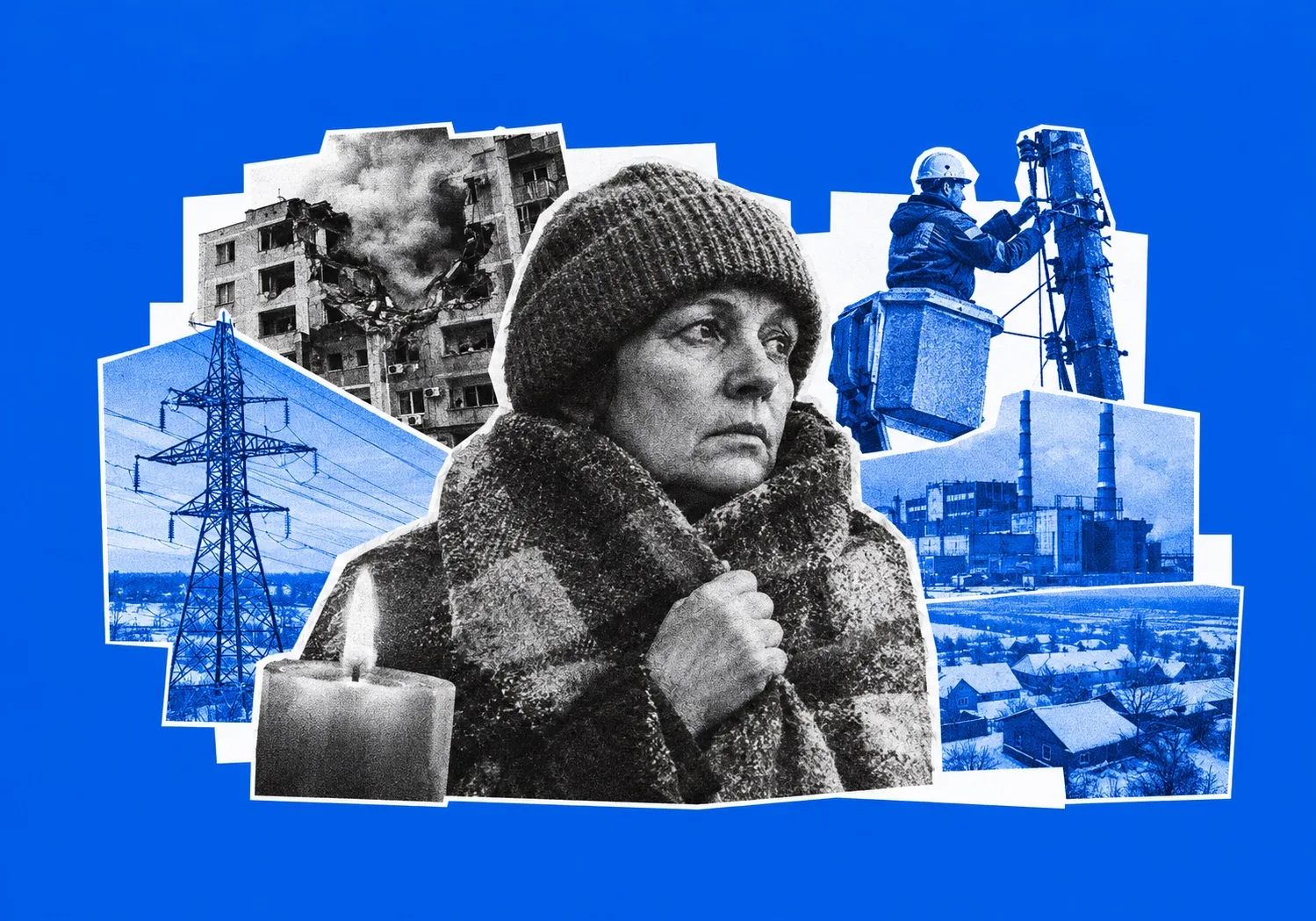
As Russia launches earlier, more sophisticated strikes on Ukraine’s energy grid, physical repairs and concrete shelters are reaching their limits. Facing its hardest wartime winter with under 60% of pre-war generating capacity, Ukraine must combine air defense with urgent market reforms to attract private capital and build a decentralized, resilient power system.
Russia’s Attacks on Ukraine’s Power Grid Expose a Winter Crisis That Repairs Alone Cannot Solve
Russia is attacking Ukraine’s energy infrastructure earlier and with greater technical sophistication than in previous winters. A barrage of missiles and drones on 18–19 October struck 28 critical facilities, temporarily leaving about 550,000 households without electricity and, in some areas, heating and water. The damage comes as Ukraine prepares for its fifth wartime heating season with less than 60 per cent of the generating capacity it had before the full-scale invasion.

Ukraine has spent months repairing power stations, protecting substations and installing emergency generation equipment. Those efforts have kept the electricity system functioning through repeated attacks. But the latest strikes are exposing a weakness that cannot be repaired with concrete barriers and replacement transformers: the country's energy market remains heavily indebted, tightly regulated and poorly equipped to attract the private investment needed to reduce its dependence on large, vulnerable facilities.
The immediate concern is keeping the lights on through winter. The more difficult question is how long Ukraine can afford to keep rebuilding an electricity system that Russia has learned to attack.
Russia has changed how it attacks the grid
The autumn campaign began on 30 September, unusually early for a concentrated assault on infrastructure ahead of the heating season. Major attacks followed on 6–7 October and 13–14 October, when Russian forces launched 39 ballistic missiles and 128 drones against electricity generation and transmission facilities.
The 18–19 October assault was particularly extensive. Alongside 16 ballistic missiles, Russia deployed 269 drones, including 59 jet-powered Shahed variants. Attacks reached regions in western Ukraine as well as the industrial and population centres that have experienced repeated strikes throughout the war.
The use of faster drones is changing the calculations for Ukrainian air defence. Russia is mixing expensive missiles and more capable attack drones with cheap decoys, forcing defenders to identify and intercept threats arriving simultaneously.
Ukraine cannot treat every incoming aircraft as an equally serious target. Nor can it afford to expend scarce high-value interceptors on inexpensive decoys.
The problem is particularly acute around electricity substations.
Ukrenergo has installed physical protection around important equipment, including high-voltage autotransformers. These structures were intended to limit damage from drones and missile fragments. Russian forces are now directing precision strikes at the protective structures themselves, while other weapons target exposed electrical equipment.
There is no practical way to place every component of a high-voltage network inside a reinforced shelter.
A power station can remain operational while the transmission infrastructure needed to carry its electricity is damaged. Conversely, a functioning substation offers little protection against a shortage of generation elsewhere.
Russia appears to be exploiting both weaknesses.
Its campaign also reaches beyond the electricity industry. Fuel storage facilities, rail connections, logistics centres and industrial supply chains have become targets. Disrupting them damages commercial activity and complicates the movement of essential supplies, including those needed by the armed forces.
The geographical spread of the attacks makes defence more expensive. Ukraine must protect infrastructure in the western regions while maintaining air defences around Kyiv, major industrial centres and military positions closer to the front.
That competition for resources is likely to become more severe as Russia increases its use of ballistic missiles and jet-powered drones.
Why falling electricity demand is a warning sign
Ukraine's energy authorities face an unusual problem: lower electricity consumption is making the system look more stable than it really is.
Ukrenergo estimates that available generating capacity has fallen to 57 per cent of its February 2022 level. Thermal generation has suffered especially heavy losses, with capacity down by more than 65 per cent by early 2026.
Under ordinary circumstances, such reductions would produce an enormous gap between supply and demand.
But Ukraine's industrial economy has also contracted under the pressure of Russian attacks.
Strikes against major industrial enterprises, including steel producers, have reduced electricity consumption by approximately 1.5 gigawatts. Factories that are damaged or unable to operate no longer require the same amount of power.
For the grid operator, that means less demand to meet. For the economy, it means lost production and weaker revenues.
The distinction becomes critical as temperatures fall.
Electricity consumption during relatively mild autumn weather provides little reassurance about what will happen when residential heating demand increases. Damaged thermal power stations cannot simply return to service when households need more electricity.
District heating systems, water pumps and municipal infrastructure also depend on a reliable electricity supply.
An interruption that begins with damage to a substation can therefore leave residents without several essential services.
The government has already introduced scheduled restrictions for consumers and limits on industrial electricity use. By 20–21 October, outages were being enforced across six regions, with second-tier hourly restrictions affecting households.
Analysts have warned that vulnerable areas could experience interruptions lasting eight to 20 hours a day during severe frost conditions. That remains a risk scenario rather than a prediction for the country as a whole. Much will depend on further Russian attacks, winter temperatures and the ability of repair teams to restore damaged equipment.
The difficulty is that the system has little room for additional losses.
Ukraine restored about 4.8 gigawatts of generating capacity over the summer. It has also received decentralised generating units from international partners. Yet every major attack forces engineers to devote resources to repairing existing infrastructure rather than expanding the country's future energy supply.
A market that struggles to finance its own recovery
There is another reason Ukraine remains dependent on emergency reconstruction.
Its electricity market is burdened by debts that have accumulated across producers, suppliers and the transmission system.
Obligations in the balancing market exceed €1.5 billion. Ukrenergo is owed approximately 47.3 billion hryvnias while owing other market participants around 36.7 billion hryvnias.
These debts affect more than accounting.
A company considering investment in a small power station or decentralised generating unit needs to know whether it will receive payment for the electricity it produces. The Ukrainian market offers considerable uncertainty on that point.
The problem is compounded by regulated electricity prices and unresolved compensation arrangements.
Household tariffs remain fixed at 4.32 hryvnias per kilowatt-hour. Keeping prices affordable during wartime is politically and socially important, particularly when households are already coping with disrupted services and economic insecurity.
But the costs of generating and delivering electricity do not disappear when consumer tariffs are held down.
Someone must absorb the difference.
Ukraine's system of public service obligations and regulated price caps has struggled to distribute those costs without creating further debts. Municipal heating companies owe Naftogaz close to 150 billion hryvnias, adding another layer of financial pressure.
For potential investors, these arrangements make it difficult to calculate future returns.
This matters because decentralised generation cannot expand at the required pace through public procurement and international donations alone.
Private businesses could finance smaller generating facilities closer to the consumers they serve. Such investments would reduce the consequences of damage to individual large power stations or transmission nodes.
But capital is unlikely to enter a market where payments are uncertain and commercial decisions remain subject to extensive administrative controls.
Ukraine's energy sector has therefore become caught between two incompatible demands. It needs substantial private investment to make the electricity network more resilient, while its financial and regulatory arrangements discourage the investors capable of providing it.
The limits of centralised reconstruction
Ukraine's response to repeated attacks has relied heavily on restoring damaged facilities and strengthening their physical protection.
There are good reasons for that approach. Existing power stations and substations are essential to keeping the country supplied, and replacing destroyed equipment is often the quickest way to recover lost capacity.
The government has also required municipalities to prepare resilience plans intended to maintain essential services during prolonged interruptions.
Yet local authorities have limited control over the financial conditions under which they operate.
A municipality can identify the generating capacity it needs to maintain water supplies or district heating. Financing that capacity is a different matter, particularly when local heating companies already face substantial debts.
International partners have supplied equipment, but donated generators cannot substitute indefinitely for a functioning investment market.
The Ukraine Facility Platform has pointed to weaknesses in governance, market regulation and financing as obstacles to developing a more resilient energy system.
These problems are not new. Progress towards European electricity market integration has been delayed, while independent corporate governance at state energy companies remains incomplete.
War has made reform more complicated. It has also made the cost of postponement considerably higher.
The destruction of major thermal facilities, including Trypilska, Zmiivska and Ladyzhynska, has already demonstrated the risks of relying on concentrated generating capacity.
Restoring those assets may be necessary. Recreating the same dependence on a small number of large facilities would leave Russia with familiar targets.
A more distributed system would still require national transmission infrastructure and effective grid management. It would not be immune to attack. But damage to one installation would be less likely to interrupt supply across a large area.
Getting there requires more than an engineering programme.
It requires settling accumulated debts, establishing reliable payment arrangements, reconsidering regulatory restrictions and allowing private operators greater scope to invest.
None of those measures offers an immediate solution to October's blackouts. They determine whether the same vulnerabilities will persist in future winters.
The political cost of keeping Ukraine in the dark
Russia's energy campaign is unfolding alongside a crowded international political calendar.
Potential negotiations involving Ukraine, Russia and the United States, European Council meetings, the G20 summit and the American midterm elections all create opportunities for Moscow to apply diplomatic pressure.
The humanitarian consequences of electricity and heating shortages can strengthen that pressure.
If prolonged outages force families to relocate, interrupt industrial production or require further emergency assistance, the costs fall not only on Ukraine but also on its international supporters.
Moscow can seek to use those costs to influence negotiations over territory, sanctions and continued military assistance.
There is insufficient evidence in the available account to establish that individual attacks were timed to particular diplomatic meetings. The strategic value of sustained infrastructure destruction, however, does not depend on such precise coordination.
It creates pressure that can be exploited whenever negotiations occur.
The financial effects are similarly persistent.
Industrial shutdowns reduce production and tax revenues. Emergency repairs absorb public money. Additional air-defence requirements compete with other military needs. Municipalities must finance essential services while dealing with damaged infrastructure and accumulated debts.
Russia is also gaining experience in attacking a defended electricity network with increasingly sophisticated combinations of weapons. That experience has implications beyond Ukraine, particularly for European countries whose own critical infrastructure depends on large, interconnected systems.
For Kyiv, the immediate priority remains surviving the coming months.
Gas reserves have reached 15.5 billion cubic metres, generating capacity has been restored where possible, and emergency equipment continues to arrive. These preparations provide some protection against further disruption.
But they do not resolve the financial weakness beneath the electricity system.
The government faces a difficult political choice. Maintaining extensive price controls protects consumers from immediate increases in energy costs, while leaving unresolved debts and payment risks that discourage investment. Liberalising parts of the market could help attract capital, but would require credible arrangements to protect households and finance public service obligations.
Russia's attacks make those decisions harder to implement and more expensive to delay.
Ukraine may again succeed in restoring electricity after successive missile and drone strikes. Whether private investors will finance enough new, dispersed generating capacity to reduce the need for those emergency repairs remains a question that the country's existing energy market has yet to answer.
Sources: Ukraine Facility Platform, The Kyiv Independent, Interfax, Glavred