
The 2026 Nobel Economists Who Reshaped Central Banks: How Robert Hall and Michael Woodford Changed Monetary Policy

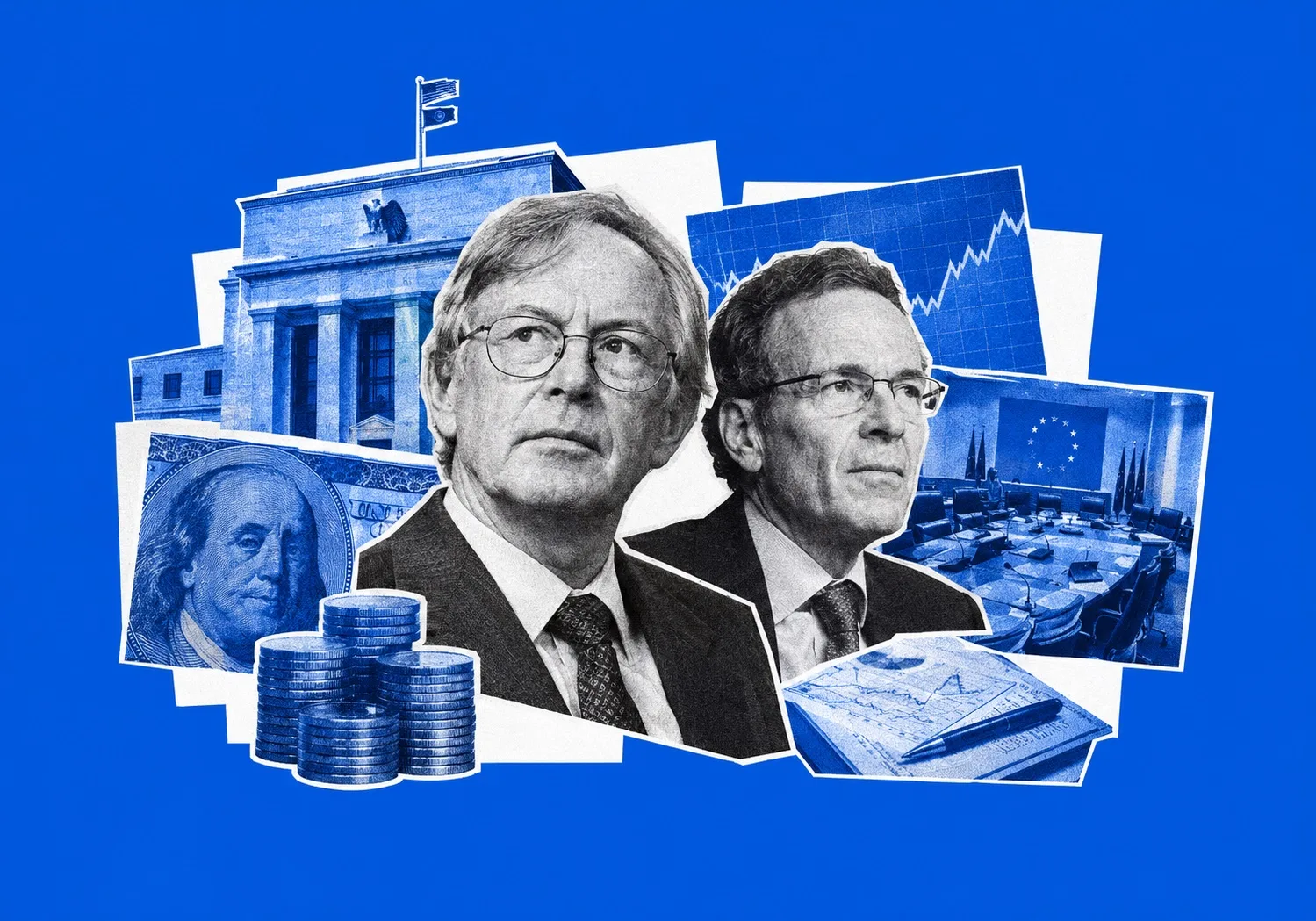
American economists Robert Hall and Michael Woodford have been awarded the 2026 Nobel Prize in Economic Sciences for building the microeconomic foundations of modern monetary policy. Their research fundamentally reshaped how central banks respond to inflation, interest rates, and recessions—shifting the focus from aggregate statistics to the real-world decisions of individuals and firms.
Older macroeconomic models often relied on observed relationships between inflation, output, consumption and employment. These relationships were useful, but they could be unreliable when policymakers changed the rules of the game. A pattern found in historical data did not necessarily explain how households and firms would behave under a different policy regime.
The missing element was the decision-making behind the statistics.
Consider inflation. If prices rise, households may bring forward purchases because they expect goods to become more expensive. Businesses facing stronger demand may raise their prices, while workers seek wage increases to protect their purchasing power. Those decisions can reinforce one another. Inflation becomes harder to contain if people begin to treat it as a normal feature of the future rather than a temporary disturbance.

The reverse can happen during a downturn. Households worried about their jobs spend less. Companies facing weaker demand postpone investment and hiring. Falling expenditure puts further pressure on businesses, potentially deepening the slowdown.
These are not simply movements in national accounts. They are decisions made by people who are trying to anticipate what others will do.
The microeconomic foundations developed by Hall, Woodford and other economists provided a more systematic way to represent such behaviour in models of the wider economy. Policymakers could examine how decisions about consumption, saving, investment and prices interact, rather than relying exclusively on correlations observed in the past.
That did not make economic forecasting an exact science. It did give central banks a stronger framework for asking why an economy was moving in a particular direction and how policy might alter that course.
Woodford’s central insight: policy starts before the rate changes
Woodford’s influence is especially visible in monetary policy. His 2003 book, Interest and Prices: Foundations of a Theory of Monetary Policy, became a foundational text for central bankers by setting out how interest rates, price-setting and expectations interact.
The argument has practical consequences. A company deciding whether to build a factory must estimate future borrowing costs and demand, not merely look at the interest rate announced today. A household considering a mortgage faces a similar calculation. Both decisions depend partly on what they believe the central bank will do next.
Monetary policy therefore operates through expectations as well as through immediate changes in borrowing costs.
This is the logic behind forward guidance, an approach associated with Woodford’s research. Central banks communicate their intentions about the likely future direction of policy in an attempt to influence financial conditions before they actually change interest rates.
The instrument became particularly important when rates approached the zero lower bound after the financial crisis. Conventional rate cuts offered little additional room for manoeuvre. Policymakers had to consider other ways of supporting demand, including convincing markets that borrowing costs would remain low for an extended period.
The promise itself could affect decisions in the present. If investors expected rates to remain low, longer-term borrowing costs could respond even without an immediate change in the policy rate. Businesses and households could then make spending decisions on the basis of those expectations.
There is a catch. Guidance works only to the extent that people believe it. A central bank cannot credibly promise to maintain one course regardless of what happens to inflation or economic activity. Nor can it assume that every household or business will react to its statements in the same way.
Communication gives policymakers another means of influencing the economy. It also leaves them exposed when their words and subsequent decisions appear to diverge.
Three equations, and the decisions behind them
Woodford’s work helped establish the framework now commonly associated with New Keynesian economics. Its standard three-equation model connects inflation, economic activity and the central bank’s interest-rate decisions.
The Phillips curve relates inflation to economic slack and expectations. The intertemporal IS curve describes how interest rates and expectations about future conditions affect current demand. The Taylor rule captures how a central bank adjusts its policy rate in response to inflation and economic activity.
The appeal is that these relationships can be examined together. A rate increase may restrain demand and ease price pressures, but its effect depends on expectations, the state of the economy and how strongly households and businesses respond. Policymakers can use the framework to assess different scenarios instead of treating each indicator as an isolated signal.
It is a common language, not a set of instructions that can be followed without judgement.
Robert Hall’s research addressed another essential part of the problem: the way labour markets, wages and consumption behave through the economic cycle. His work contributed to the understanding of how changes in employment and income feed into household decisions and wider economic activity.
Hall also spent decades leading the National Bureau of Economic Research committee responsible for dating US business cycles. Determining when a recession begins or ends is less straightforward than waiting for a single indicator to cross a threshold. Economic activity can weaken unevenly, and the timing of a downturn may only become clear once several measures have been examined.
For governments, that distinction is consequential. A recession identified too late may leave policymakers responding to damage that has already spread. Acting too aggressively on an apparent downturn that proves temporary carries its own risks.
Hall’s work on consumption and labour markets, alongside his role in business-cycle dating, helped make the behaviour beneath headline figures central to that assessment.
The crisis that forced the models to change
The 2008 financial crisis exposed a serious weakness in early versions of influential macroeconomic models: financial instability and banking disruptions had not always received sufficient attention.
The failure was important because the financial system is not merely a channel through which monetary policy reaches the economy. Credit conditions can themselves become a source of economic contraction. When lending deteriorates, businesses may lose access to finance, investment can collapse and households can find borrowing more difficult even as policymakers attempt to support demand.
The crisis prompted economists, including Woodford and other researchers, to incorporate financial frictions and credit spreads into their analysis. The models had to account more directly for the possibility that disruptions in lending could amplify a downturn.
The subsequent period of exceptionally low interest rates brought another difficulty. If rates approach zero, central banks have less scope to stimulate activity through conventional cuts. Forward guidance and unconventional monetary easing consequently became more important parts of the policy debate.
The pandemic posed a different test. Disruptions to production and supply chains occurred alongside abrupt changes in consumption, employment and demand. An economy could experience falling output in one area and mounting price pressures in another. Models needed to account for shocks that did not fit neatly into familiar patterns.
These episodes do not invalidate the microeconomic approach. They do expose the danger of confusing a useful model with a complete description of reality. The quality of the analysis depends on which mechanisms it includes, which it leaves out and how readily economists revise their assumptions when events contradict them.
For central banks, the practical challenge is to adapt without abandoning the discipline that makes models useful in the first place.
The limits of managing expectations
There is an uncomfortable implication in the growing emphasis on expectations. If monetary policy depends partly on what people believe, central banks must pay attention to public confidence as well as economic data. But confidence is not an instrument they can adjust directly.
A central bank may raise rates to cool demand and find that households continue spending. Businesses may maintain prices because they expect costs to rise, even as borrowing becomes more expensive. Alternatively, consumers may cut spending sharply before higher rates have had their full effect on employment.
Models can help policymakers estimate these responses. They cannot remove the uncertainty surrounding them.
Nor do technically sophisticated models settle the political questions raised by monetary policy. Higher rates may help bring inflation down while increasing mortgage payments and financing costs for businesses. Lower rates may support employment and investment but risk sustaining price pressures. The costs are distributed unevenly, and the appropriate balance cannot be determined by an equation alone.
Communication creates its own accountability problem. Forward guidance can help markets understand a central bank’s intentions, but a change in circumstances may force policymakers to revise their plans. If they move away from earlier guidance, they risk damaging credibility. If they adhere to it despite changing conditions, they may pursue a policy that no longer makes economic sense.
Woodford’s framework explains why such communication matters. Hall’s work helps explain why the effects of policy must ultimately be traced through the decisions of households and firms. Neither contribution promises that policymakers can control the outcome.
The recognition of their work comes as central banks face the task of making decisions in economies where expectations can change quickly and the sources of instability are not always visible in headline figures. Their models offer a way to organise that uncertainty. Whether the models capture the next shock will depend on what economists have chosen to put inside them.
Read also:
- The Norwegian Nobel Committee awarded the 2026 Nobel Peace Prize to Navi Pillay on Friday, selecting the 85-year-old former UN High Commissioner for Human Rights and International Criminal Court judge. Official statements from the committee confirmed that Pillay was selected for her "efforts to promote peace and international law" and her work in establishing legal mechanisms for state accountability. Committee chair Jørgen Watne Frydnes outlined the rationale during the announcement in Oslo, stating that international legal frameworks face friction as sovereign states substitute treaty obligations for unilateral force. The award includes a 12 million Swedish kronor check.
- Nobel Chemistry 2026: How Henri Kagan and Kenso Soai Solved the Mystery of Life’s Mirror Molecules. By discovering how chemical homochirality can emerge spontaneously, French chemist Henri B. Kagan and Japanese chemist Kenso Soai solved a century-old origin-of-life mystery regarding nature’s preference for single-handed mirror molecules.
- The awarding of the 2026 Nobel Prize in Physics to Francis Halzen recognises a fundamental shift in how humanity observes the universe. By turning a cubic kilometre of Antarctic ice into the IceCube Neutrino Observatory, the UW–Madison physicist helped establish neutrino astronomy - a breakthrough that coincides with the completion of IceCube's first major upgrade.
- The 2026 Nobel Prize in Physiology or Medicine, awarded to Karl Deisseroth, Peter Hegemann, and Georg Nagel, recognizes a profound shift in neuroscience. By converting light-sensitive algal proteins into a precision switch for mammalian neurons, their work transformed the brain from something scientists merely observe into an engineered system they can directly control - and potentially heal.
Sources: The Nobel Prize, Office President Columbia, The Hill, Reuters