
Navi Pillay Wins Nobel Peace Prize 2026 for Defence of International Law

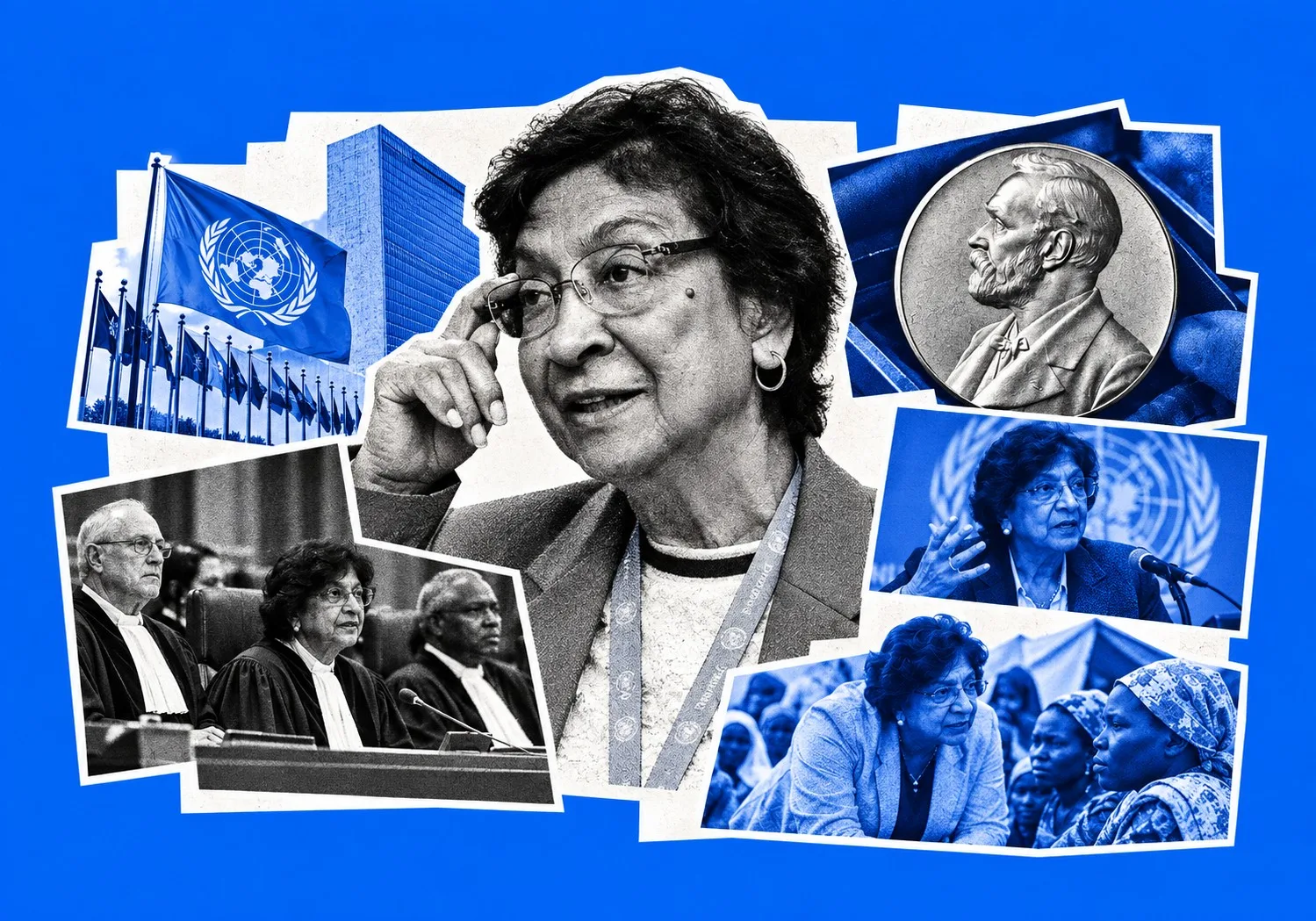
The Norwegian Nobel Committee awarded the 2026 Nobel Peace Prize to Navi Pillay on Friday, selecting the 85-year-old former UN High Commissioner for Human Rights and International Criminal Court judge. Official statements from the committee confirmed that Pillay was selected for her "efforts to promote peace and international law" and her work in establishing legal mechanisms for state accountability. Committee chair Jørgen Watne Frydnes outlined the rationale during the announcement in Oslo, stating that international legal frameworks face friction as sovereign states substitute treaty obligations for unilateral force. The award includes a 12 million Swedish kronor check.
The announcement included an administrative delay, as Frydnes noted during the press conference that the committee had been unable to contact Pillay directly prior to the broadcast, saying: "My message to her would be: if you see a Norwegian number calling, please pick up."

Pillay received news of the award after 13:00. Called away from her desk by an aide named Christoph, she addressed a group assembled off camera: "It must be a joke. Your applause means everything to me. But, being a lawyer and a judge, I still want to verify this thing."
Referring to political figures who had publicly discussed the prize, she stated: "If you clap a little bit more I may share this prize with Trump."
Legal Practice in Natal
Pillay’s career in law began in Natal during the late 1960s. Born in Durban into an Indian Tamil family, the daughter of a bus driver became the first non-white woman to establish a law practice in Natal Province in 1967. Under apartheid legislation, her practice focused on defending political detainees held without trial, representing members of the African National Congress, and assisting in the defence of Nelson Mandela and his co-defendants.
After earning a doctorate from Harvard Law School in 1988, Pillay was appointed as the first non-white female judge on South Africa’s High Court in 1994 following the end of legal apartheid. She later transitioned to international tribunals, maintaining an approach focused on statutory limits on state authority regardless of a nation's military capacity or international alliances.
The ICTR And the Akayesu Judgment
Elected as a judge to the International Criminal Tribunal for Rwanda (ICTR) by the UN General Assembly in 1995, Pillay served eight years on the bench, including four years as tribunal president. Her legal work included presiding over the 1998 trial of Jean-Paul Akayesu, the former mayor of Taba commune.
Prior to the Akayesu ruling, systematic sexual violence during armed conflict was rarely prosecuted as a primary international crime. Under Pillay’s presidency, the tribunal held that targeted, systematic rape constitutes an act of genocide when committed with the intent to destroy, in whole or in part, a protected group. The judgment incorporated conflict-related sexual violence directly into the legal framework governing genocide prosecutions.
This precedent informed the drafting of the Rome Statute and guided the operational rules of the International Criminal Court. Pillay subsequently served as an ICC judge from 11 March 2003 to 31 August 2012, elected from the African States group, where she participated in drafting procedural and evidentiary regulations.

Between 2008 and 2014, Pillay served as United Nations High Commissioner for Human Rights, addressing member states on issues including civilian protection, drone operations, and maritime blockades. In 2021, she was appointed chair of the UN Independent International Commission of Inquiry on the Occupied Palestinian Territory, which issued findings stating that Israel had committed genocide against Palestinians in Gaza. She also serves as an ad hoc judge on the International Court of Justice in the genocide proceedings brought by The Gambia against Myanmar concerning the Rohingya.
Prediction Markets And Political Context
The choice of an 85-year-old magistrate preceded comments from US President Donald Trump, who had publicly discussed the prize earlier in the week, stating that passing him over would represent a "great discredit" to the committee. In January 2026, 2025 laureate María Corina Machado presented her Nobel medal to Trump in Washington—a event Pillay referenced in her off-camera remarks.
Simultaneously, prediction platforms such as Polymarket recorded trading volume prior to the announcement, with positions shifting between Yulia Navalnaya, widow of Russian opposition figure Alexey Navalny, and Ukrainian children's rights advocate Mykola Kuleba.
Following the announcement, European Commission President Ursula von der Leyen issued a statement on X regarding the decision, stating that Pillay had looked injustice in the eye and describing her career as a compass for international justice.
Structural Context And Enforcement Limits
The award coincides with enforcement challenges within multilateral legal institutions. While the Genocide Convention, the Geneva Conventions, and the Rome Statute maintain formal ratification, state compliance varies when treaty provisions conflict with national strategic priorities.
During the 1990s and early 2000s, international legal enforcement operated alongside geopolitical agreements that enabled the establishment of ad hoc tribunals and UN commissions of inquiry. In recent years, UN Security Council vetoes have prevented new ICC referrals and peacekeeping mandates, shifting human rights monitoring to regional courts, national jurisdictions exercising universal jurisdiction, and ad hoc commissions.
When UN commissions or international courts issue findings or provisional measures, state responses include diplomatic counter-statements, challenges to judicial jurisdiction, or non-compliance. A Nobel Peace Prize carries no formal mechanisms to alter military deployments or enforce judicial decisions on sovereign governments.
The initial difficulty in reaching Pillay prior to the live announcement reflected operational aspects of modern multilateral bodies, which continue issuing formal legal notices regardless of state responses.
Procedural Developments at the ICTR and ICC
During the mid-1990s, when the ICTR began operations in 1995, international criminal procedure lacked established administrative protocols for managing genocide indictments involving witness protection measures, untranslated evidence, and state involvement from the post-genocide Rwandan government.
During the Akayesu trial, Pillay paused proceedings to allow the prosecution to amend its indictment after witness testimony presented uncharged acts of sexual violence. The decision required the prosecution to meet specific evidentiary standards prior to the conviction. The procedural protocols established in that trial formed a template for managing testimony in international courts.
Her subsequent work at the ICC involved drafting internal regulations, rules of procedure, and evidentiary guidelines during the court’s foundational period from 2003 onward. These frameworks provided the operational structure for the ICC to issue arrest warrants and manage jurisdictional parameters involving non-signatory states.
As UN High Commissioner for Human Rights from 2008 to 2014, Pillay altered standard reporting practices by identifying non-compliant member states during Human Rights Council sessions when access to conflict zones or funding for investigative mandates was blocked. This approach established a public record of state compliance with UN monitoring bodies.
Application of Legal Standards
Pillay’s legal career is characterized by the application of statutory standards across different geopolitical contexts. Over six decades, she applied legal criteria to Western-backed administrations, autocratic governments, and non-state armed actors.
Her work includes assessments of US drone strikes in Pakistan and Yemen, evaluations of Sri Lankan state conduct during the end of its civil war, findings on Israeli military operations in Gaza, and ongoing ICJ work regarding Myanmar.
By selecting a jurist whose career includes legal defence in Natal, ad hoc genocide tribunals in Rwanda, the ICC, and UN commissions of inquiry, the Norwegian Nobel Committee highlighted the principle of uniform legal application across jurisdictions.
Read also: Nobel Chemistry 2026: How Henri Kagan and Kenso Soai Solved the Mystery of Life’s Mirror Molecules. By discovering how chemical homochirality can emerge spontaneously, French chemist Henri B. Kagan and Japanese chemist Kenso Soai solved a century-old origin-of-life mystery regarding nature’s preference for single-handed mirror molecules.