
Russia-China Trade Hit by US Sanctions as Chinese Banks Reject Payments

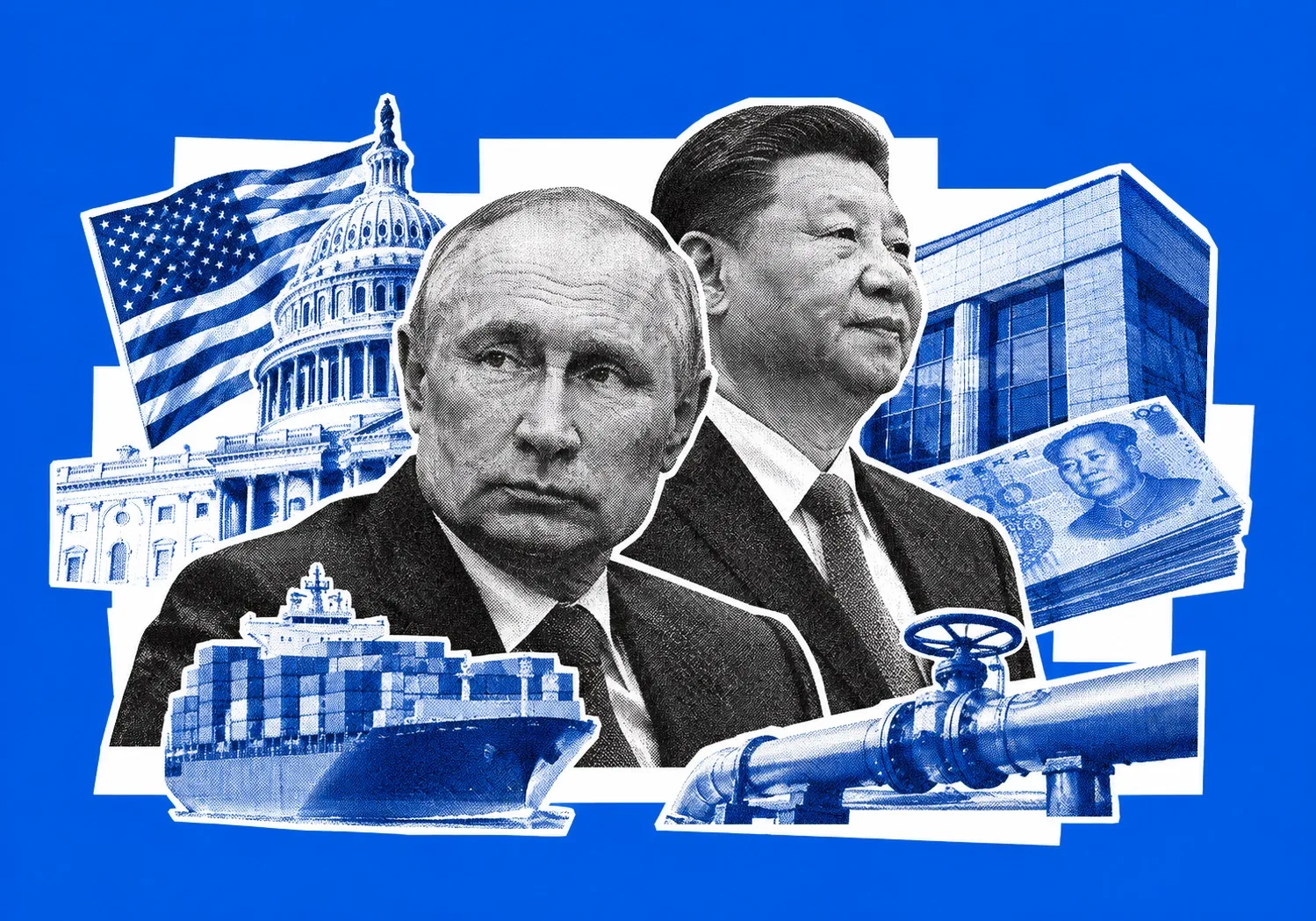
Russia’s attempt to bypass Western financial networks by switching to the Chinese yuan has hit a critical bottleneck. Following expanded US secondary sanctions, major Chinese banks are delaying and rejecting Russian transactions, driving payment costs up to 20% and forcing Moscow to rely on fragile third-country intermediaries - with indirect fallout now reaching European supply chains.
The yuan’s share of payments for Russian exports has fallen by half from its mid-2024 peak to approximately 22%, according to Bank of Russia figures reported by Bloomberg. While Russian companies are increasingly accepting roubles instead, the shift has exposed a core flaw in Moscow’s strategy: receiving export revenue is considerably easier than using that money to pay foreign suppliers for critical goods like machinery, electronics, and industrial components.
The experience also offers a test of how far countries can reduce their dependence on Western financial infrastructure without developing a reliable alternative.
Why Chinese Banks Pulled Back from Russian Transactions
Russia accelerated its move towards national-currency trade after its full-scale invasion of Ukraine in 2022. Western sanctions and the freezing of nearly $300 billion in Russian central bank reserves gave Moscow an immediate incentive to reduce its exposure to the dollar and euro.
China appeared to offer a practical alternative. Its substantial trade relationship with Russia provided an existing commercial foundation for greater use of the yuan, while Beijing's ambitions to internationalise its currency broadly aligned with Moscow's desire to reduce reliance on Western financial systems.
Yet the arrangement depended on Chinese banks being willing to process Russian payments.
That willingness weakened considerably following the US Treasury's June 2024 expansion of secondary sanctions. The measures broadened the circumstances under which foreign financial institutions could face penalties for facilitating transactions connected to Russia's military-industrial base.
For Chinese banks, the potential consequences were substantial. Institutions found to be conducting prohibited transactions risked losing access to US correspondent accounts, an important connection to dollar-based international banking.
The calculation was therefore commercial as well as political. Processing Russian transactions could generate business, but the associated sanctions exposure threatened access to financial services used across much larger international markets.
Major Chinese institutions responded by tightening their handling of Russian payments. Transfers were delayed, returned or refused, creating uncertainty even for businesses attempting to maintain established trading relationships.
The disruption did not require Washington to prohibit every transaction between Russia and China. The possibility of penalties was enough to encourage banks to restrict activity they considered risky.
That distinction matters. Secondary sanctions can affect commercial relationships beyond the immediate jurisdiction of the country imposing them because financial institutions must weigh the value of individual transactions against their broader international exposure.
The Rouble Solves One Problem but Creates Another
Moscow has presented the growing use of its national currency in foreign trade as evidence of financial resilience.
In August, Russian state news agency RIA Novosti portrayed rising rouble settlements as a sign of the currency's strengthening international position.
Bank of Russia figures show why that interpretation requires qualification.
By mid-2025, roubles accounted for approximately 69% of Russian export payments involving Asian partners. The currency also represented 55% of Russian import settlements in the second quarter of 2026.
Those figures indicate a substantial change in how Russian trade is invoiced and settled. They do not, however, establish that the rouble has become a widely accepted international payment instrument.
An exporter receiving roubles can record revenue domestically without necessarily obtaining a currency that foreign suppliers are willing or able to accept.
An importer faces a different challenge. Purchasing goods abroad requires access to a payment channel acceptable to the overseas seller and its bank. Even where a transaction is denominated in roubles or yuan, the participating institutions must be prepared to process it.
The distinction between currency denomination and payment infrastructure is central to Russia's difficulties.
A bilateral agreement to use national currencies cannot guarantee that commercial banks will facilitate the resulting transactions. Nor does it eliminate restrictions on transferring funds, converting currencies or accessing foreign financial institutions.
Russia's growing reliance on rouble settlements has therefore helped preserve domestic export receipts without resolving the practical obstacles facing importers.
The mismatch becomes particularly important when companies need foreign-made equipment or components. Funds available inside Russia cannot automatically be converted into payments that an overseas supplier can receive.
The Rising Cost of Keeping Trade Moving
Businesses have responded to banking restrictions by turning to payment intermediaries in third countries.
Rather than transferring money directly between Russian and Chinese financial institutions, transactions may involve additional companies, banking relationships and jurisdictions.
Such arrangements can provide alternative channels when direct payments are unavailable. They also introduce more participants, each potentially charging fees and conducting its own compliance checks.
According to transport logistics company STT Logistics, the combined cost of cross-border payment arrangements involving intermediaries has reached an average of 15–20% of transaction value.
That is a substantial burden for businesses operating on narrow margins.
A transaction worth €100,000, for example, would incur €15,000–€20,000 in additional expenses if those reported rates applied. The calculation illustrates the scale of the costs rather than the price of any specific documented shipment.
Payment delays create further difficulties. Importers cannot reliably plan deliveries when financial transfers may remain unresolved for weeks or months. Suppliers, meanwhile, face uncertainty over when they will receive payment.
The resulting pressure can spread through procurement and logistics operations, particularly where businesses depend on imported machinery, electronics or industrial inputs.
Higher transaction expenses may eventually be incorporated into domestic prices, although the available evidence does not establish how much Russian consumer inflation can be attributed specifically to these payment problems.
The difficulties are not confined to smaller commercial operators.
Sberbank first deputy chairman Alexander Vedyakhin acknowledged in June that significant gaps remained in the payment infrastructure connecting Russia and China.
His assessment points to a persistent institutional problem rather than a temporary shortage of willing intermediaries.
What Russia’s Experience Means for the Yuan
The difficulties have implications for China's wider ambitions to expand international use of its currency.
The yuan initially benefited from Russia's reduced access to Western financial channels. Russian demand created an opportunity for greater use of Chinese currency in bilateral trade.
But that opportunity has proved vulnerable to the same sanctions pressures that encouraged Moscow to seek alternatives in the first place.
Martin Chorzempa, a senior research fellow at the Peterson Institute for International Economics, has argued that the sanctions-driven momentum behind yuan internationalisation has effectively dissipated.
The yuan has also slipped to fifth place among currencies used in payments through SWIFT, behind the dollar, euro, pound sterling and Japanese yen.
SWIFT rankings measure activity within that messaging network rather than every international transaction. They cannot, by themselves, establish the yuan's position across all payment systems.
Nevertheless, the Russian experience exposes a limitation of currency diversification: international adoption depends on more than political agreements or the volume of bilateral trade.
Financial institutions must be willing to handle transactions, while businesses need dependable mechanisms for moving and using their money.
China's banks have demonstrated that access to the dollar-based system remains a powerful consideration even when dealing with an important trading partner.
This does not mean that national-currency settlements have disappeared or that efforts to diversify international payments have ended. Russia continues to conduct substantial trade in roubles, and the yuan remains part of its settlement arrangements.
What has weakened is the assumption that replacing the dollar as an invoicing currency automatically removes the influence of American financial restrictions.
Europe's Indirect Exposure
For European companies, the immediate consequences are more limited than those facing Russian importers.
Existing EU sanctions and trade restrictions have already reduced many direct commercial links with Russia. The payment disruptions therefore do not translate into equivalent problems across European markets.
Exposure is more plausible in permitted trade and supply chains involving third-country intermediaries.
European businesses operating through such networks may encounter additional compliance requirements, longer settlement periods or higher logistics expenses when transactions intersect with restricted Russian financial relationships.
The extent of these effects remains uncertain. The available evidence does not quantify the additional costs borne by European companies or establish a measurable inflationary impact on EU markets.
For European policymakers, however, the episode provides evidence about the practical operation of sanctions enforcement.
Restrictions imposed by the United States have influenced the behaviour of major Chinese financial institutions without requiring those institutions to abandon their broader commercial relationships with Russia.
That influence depends on continued access to American financial infrastructure remaining sufficiently valuable to outweigh the benefits of processing higher-risk transactions.
Russia's response has been to develop more complicated payment routes rather than abandon international trade. Such arrangements can preserve commercial activity, but their costs and reliability differ considerably from conventional banking channels.
The unresolved question is whether Moscow and its trading partners can develop payment infrastructure that foreign banks regard as commercially viable without exposing themselves to unacceptable sanctions risks. For now, rising rouble settlement figures provide little evidence that this problem has been solved.
Sources: Bloomberg, Meduza, Interfax