
Record Heat and a Powerful El Niño Raise Stakes for Climate Summit in Turkey

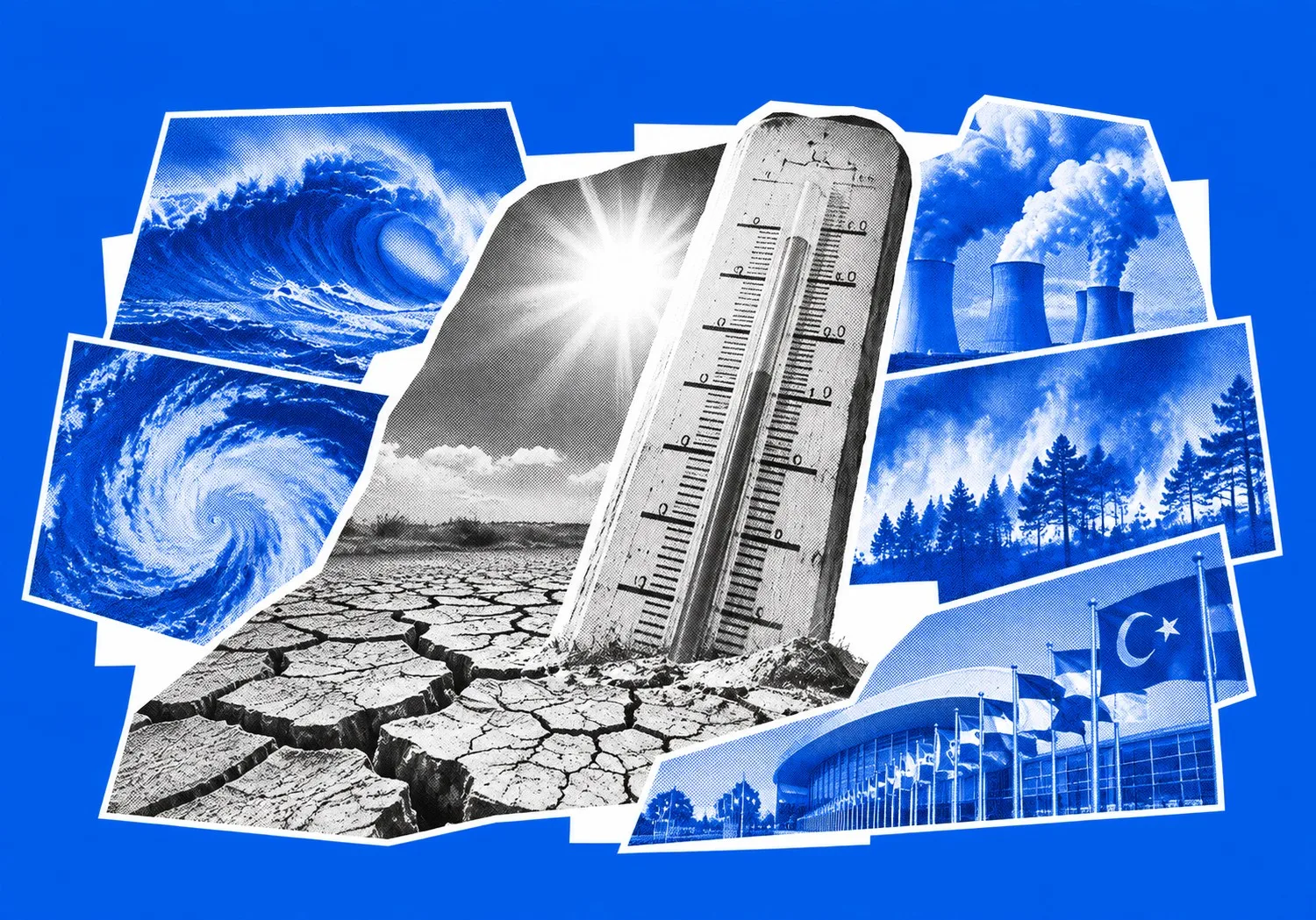
An exceptionally powerful El Niño could intensify heatwaves, droughts and heavy rainfall into 2027, the World Meteorological Organization warned on Monday, as new figures showed global temperatures running 1.47°C above pre-industrial levels during the first nine months of 2026. The findings come as nearly 200 countries gather for the COP31 climate summit in Antalya, Turkey, where disputes over fossil fuels and funding for vulnerable nations threaten to complicate negotiations.
The world's glaciers lost approximately 408 billion tonnes of ice in 2025 — enough to fill five Olympic-sized swimming pools every second. Ocean heat continued to rise, while global sea levels reached their highest point since satellite measurements began in 1993.
The figures are contained in the World Meteorological Organization's latest climate assessment, released on 9 November as the UN climate summit opened in Turkey.
The WMO expects 2026 to rank among the four hottest years ever recorded, extending an extraordinary run of global temperatures. The past 12 years have been the warmest in the instrumental record.

The European Union's Copernicus Climate Change Service has issued a more specific forecast. Based on measurements through October, it predicts that 2026 is virtually certain to exceed 1.5°C above pre-industrial levels. There is an 80% probability that it will become the second-warmest year on record, behind 2024. October itself was the hottest ever recorded, at 1.75°C above the pre-industrial average.
The scientific warnings arrived as COP31 began in Antalya, where negotiations are scheduled to continue until 20 November. The opening ceremony was delayed by around 90 minutes following disagreements over climate finance.
Developing countries want stronger commitments from wealthier nations to help protect communities against floods, drought and extreme heat. European governments and other developed economies have resisted new financial pledges.
El Niño adds heat to an already warming planet
The current El Niño has strengthened rapidly since August and is expected to reach record intensity by December. Its influence could continue into early 2027, bringing further weather extremes.
El Niño develops when unusually warm water spreads across the central and eastern tropical Pacific Ocean. The resulting changes in atmospheric circulation affect rainfall and temperatures far beyond the region, bringing drought to some countries and unusually heavy rain to others.
The phenomenon also raises global average temperatures by releasing heat stored in the oceans.
This year, that heat is already at unprecedented levels.
According to the WMO, Earth's energy imbalance — the difference between incoming solar energy and the heat escaping back into space — has reached its highest measured level.
Greenhouse gases trap increasing amounts of heat in the climate system, with the oceans absorbing around 90% of the excess. Preliminary observations suggest that 2026 is heading towards a tenth consecutive year of record ocean heat content.
"El Niño doesn't add new heat to the planet. It releases heat from the ocean," WMO Secretary-General Celeste Saulo said, noting that the oceans are now warmer than ever measured.
El Niño typically raises annual global average temperatures by around 0.1°C to 0.2°C. The long-term warming trend, however, is driven primarily by greenhouse gas emissions from human activity.
The consequences have already been visible across several continents.
Europe experienced severe summer heat in 2026, followed by exceptionally low river flows in parts of the continent. The Rhine, Danube and Vistula were among the waterways affected. In Nepal, a catastrophic ice and rock collapse triggered deadly flooding, while Indonesia suffered major wildfires.
Not every extreme weather event can be attributed to El Niño. Scientists distinguish between the influence of natural climate variability and the longer-term effects of rising global temperatures, which can increase the severity of certain hazards.
The latest measurements have also renewed attention on the Paris Agreement's goal of limiting global warming to 1.5°C.
A single calendar year above that threshold does not mean the agreement's long-term temperature limit has formally been breached. The target refers to sustained warming rather than one year's average.
Nevertheless, the UN Environment Programme (UNEP) estimates that global greenhouse gas emissions must fall by 45% by 2035 compared with 2025 levels to follow a pathway capable of returning warming to 1.5°C by the end of the century after a temporary overshoot.
Existing national climate commitments fall well short of that reduction.
What governments are negotiating at COP31
The conference in Antalya is the 31st annual meeting of countries participating in the UN Framework Convention on Climate Change.
It brings governments together to assess progress under existing climate agreements and negotiate measures to reduce emissions, protect vulnerable populations and finance the transition towards cleaner energy.
Turkey is hosting and presiding over the summit, while Australia leads the formal negotiations under a compromise reached after both countries sought hosting rights.
The Turkish presidency has described COP31 as a conference focused on implementing previous commitments.
One of its principal proposals is to increase the share of global final energy consumption supplied by electricity from roughly 20% today to 35% by 2035.
The voluntary initiative would encourage investment in electric vehicles, heating systems, industrial equipment and infrastructure that can replace direct fossil fuel combustion.
European negotiators support cleaner electrification but argue that rising electricity demand must be matched by low-carbon generation. Expanding electric transport or heating would deliver smaller emissions reductions if additional power came from coal or gas.
The future of fossil fuels remains one of the most contentious subjects.
At COP28 in Dubai in 2023, governments agreed for the first time to transition away from fossil fuels in their energy systems.
Two years later, COP30 in Brazil ended without an explicit fossil fuel phase-out commitment in its final negotiated agreement, following opposition from producing countries. Brazil subsequently pursued a voluntary roadmap for reducing reliance on coal, oil and gas.
Several governments and environmental organisations want COP31 to advance that work, although producing countries remain reluctant to accept measures that could restrict energy output or exports.
The international energy crisis has complicated discussions.
The war involving Iran has disrupted oil supplies and increased prices, while Russia's invasion of Ukraine continues to influence European energy policy.
Higher fossil fuel prices have strengthened the economic case for renewable electricity in countries dependent on imports. Yet expanding clean energy also requires investment in electricity networks, storage and new industrial infrastructure.
COP31 will examine methane reductions, energy efficiency and support for workers and communities affected by the move away from fossil fuels.
Turkey is also promoting initiatives involving climate-resilient cities and cleaner industrial development. Many would operate through voluntary partnerships rather than binding agreements negotiated by all participating countries.
Climate finance divides wealthy and developing nations
Financial assistance to developing countries has become the first major dispute at COP31.
Negotiators spent Sunday discussing demands to include additional funding commitments in the official agenda. African governments pressed for separate discussions on tripling adaptation finance.
Adaptation includes measures such as flood defences, stronger drainage and water infrastructure, drought-resistant agriculture and early warning systems.
According to AFP, the tripling of adaptation finance will be discussed during the conference, although it will not have a separate agenda item.
The dispute follows years of disagreements over how much wealthy countries should contribute.
At COP29 in Azerbaijan, governments agreed on a goal of mobilising at least $300 billion annually for developing countries by 2035. Several poorer nations criticised the amount as insufficient.
UNEP's latest figures illustrate the gap between commitments and projected needs.
Its 2026 Adaptation Gap Report estimates that developing countries will require approximately $305 billion annually by 2035 for adaptation alone.
International public adaptation finance from developed to developing countries reached only $28.2 billion–$31.7 billion in 2024.
Even if the ambition agreed at COP30 to triple adaptation funding by 2035 is achieved, UNEP calculates that it would cover only 20–29% of projected needs.
The type of assistance is also contentious. Some funding comes as grants, while other support is provided through loans or private investment. Governments already facing heavy debt burdens argue that borrowing to protect infrastructure or recover from disasters places additional pressure on public finances.
Smaller states can also struggle to access international funds because applications require extensive technical and administrative work.
A separate fund for responding to irreversible climate-related losses and damage faces similar pressure. Its first funding round attracted requests worth $2.8 billion, compared with an initial allocation of $342 million.
Wealthier governments acknowledge the need for more adaptation assistance but remain divided over additional pledges.
A senior EU official warned before the summit that there was little political willingness to announce new funding commitments this year.
The negotiations will address how financial obligations are implemented, how different forms of assistance are counted and whether poorer countries can obtain funding more easily.
What COP31 could change for Europe's climate policy
The European Union arrives in Antalya with legally binding emissions targets and disagreements over the cost of meeting them.
EU law requires net greenhouse gas emissions to fall by at least 55% by 2030 compared with 1990 levels. In March 2026, the bloc adopted a further target of a 90% net reduction by 2040, towards climate neutrality in 2050.
At least 85% of that reduction must be achieved within the EU. From 2036, international carbon credits may contribute up to five percentage points towards the 2040 target.
Meeting these commitments will require further investment in energy generation, transport, buildings and heavy industry.
An agreement at COP31 encouraging cleaner electrification could reinforce European investment in renewable power, electricity networks, energy storage and technologies that replace fossil fuel combustion.
It would not automatically change EU legislation. Any additional binding requirements would still need to pass through the bloc's own legislative procedures.
European manufacturers face high energy costs and competition from countries with different emissions standards. Industries such as steel, cement and chemicals also require expensive changes to production processes.
EU governments disagree over how quickly some industries should be required to cut emissions and how much financial support should accompany stricter rules.
Climate finance presents another challenge. Although the EU is a major provider of international climate assistance, member states face competing demands for public spending, including defence, infrastructure and energy security.
The United States is absent from the official COP31 negotiating process after President Donald Trump withdrew the country from the Paris Agreement.
American lawmakers are attending the summit, but they cannot negotiate commitments on behalf of the administration.
China, the world's largest annual greenhouse gas emitter, is another major participant. It also dominates production of several technologies used in the energy transition, including solar panels, batteries and electric vehicles. Trade policies and industrial subsidies influence how quickly other countries can adopt those technologies.
The summit will also review progress in protecting communities against climate disasters.
According to the WMO, the number of countries reporting multi-hazard early warning systems increased from 56 in 2015 to 136 in 2025. Such systems allow authorities to warn residents of approaching floods, storms and heatwaves.
Negotiators are discussing how to measure adaptation progress and improve financial support for investments in water supplies, agriculture, healthcare and infrastructure.
COP31 is scheduled to conclude on 20 November. Governments are seeking decisions on climate finance and the implementation of previous commitments, while separate voluntary initiatives may be announced on electrification, methane reductions and climate-resilient infrastructure.
Any negotiated decisions would still require implementation through national policies, financing arrangements and investment programmes.
Sources: WMO, Copernicus, Le Monde