
Kraków Shooting: Breivik Web History Points to Possible Far-Right Motive, Minister Says

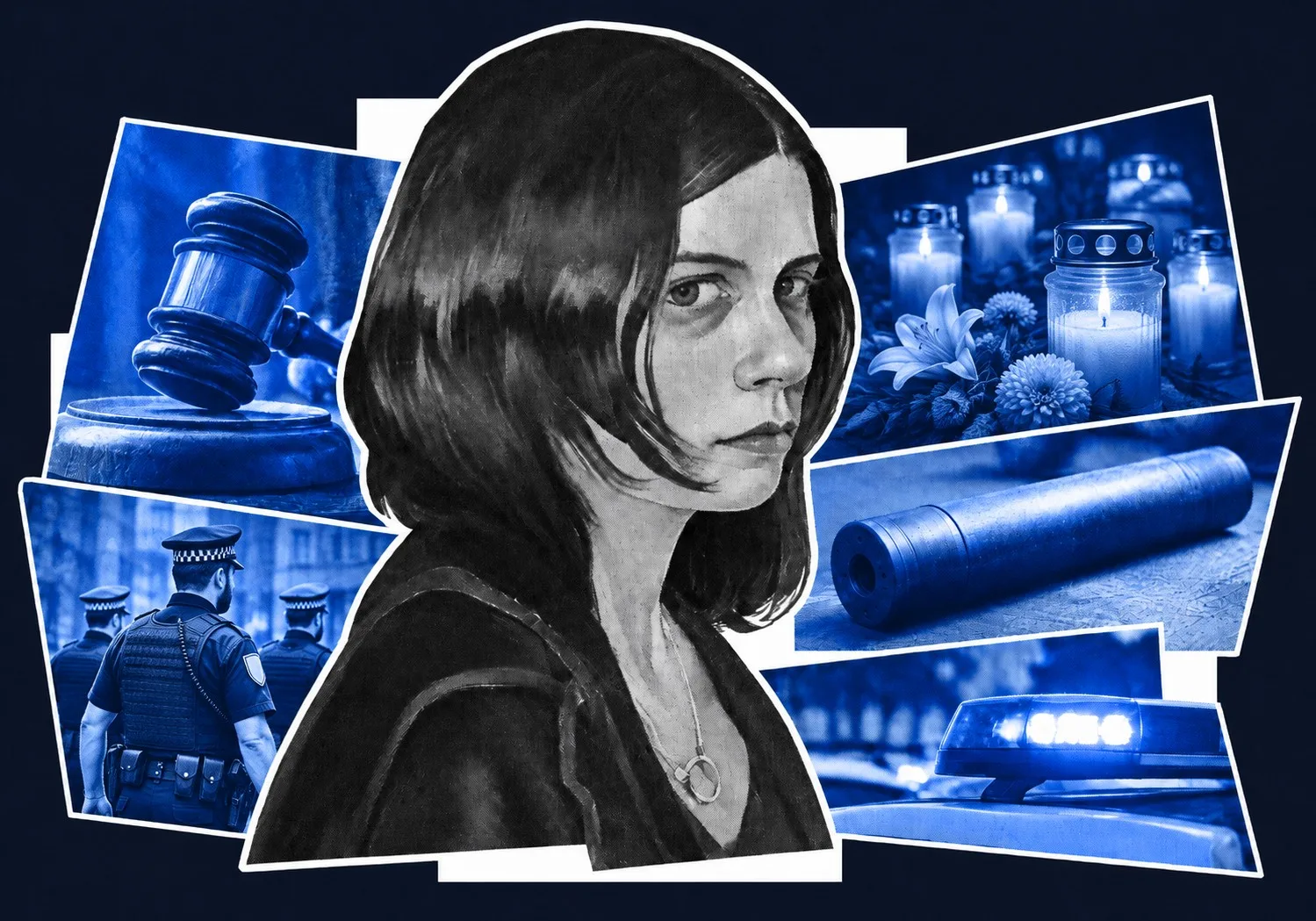
Polish investigators have found evidence that the suspect in the Kraków mass shooting visited websites about Norwegian far-right terrorist Anders Breivik. Justice Minister Waldemar Żurek says far-right extremism has emerged as a strong line of inquiry after six people were killed in Kraków and three members of the suspect's family were found dead in Ostrowiec Świętokrzyski. A firearm suppressor and an extensive collection of weapons and ammunition were also recovered during searches. Prosecutors have yet to establish a motive.

Breivik Websites, Political Symbols and a Suppressor
The digital evidence was recovered from a computer belonging to Michał Oksiński, the 24-year-old suspected of carrying out the attacks on 7 November. Żurek disclosed the findings during an interview with Radio Kraków on Tuesday, 10 November.
Anders Behring Breivik killed 77 people in coordinated attacks in Oslo and on the island of Utøya in July 2011.
Żurek did not identify the websites visited by Oksiński or say how frequently they had been accessed. Investigators have not established whether he studied Breivik's ideology or drew inspiration from his attacks.
Searches of the suspect's family home in Ostrowiec Świętokrzyski, about 200 kilometres north-east of Kraków, uncovered a yellow Gadsden flag depicting a coiled rattlesnake with the words “Don't Tread on Me”.
Originally associated with the American Revolution, the flag has since been adopted by libertarians, gun-rights campaigners and some far-right movements. It was also displayed during the storming of the US Capitol in January 2021.
National Prosecutor's Office spokesman Przemysław Nowak cautioned against interpreting the flag as proof of extremist beliefs, citing its different historical and political meanings. Żurek said other symbols had been discovered at Oksiński's workplace but did not identify them.
The firearm suppressor found in the suspect's car is also undergoing examination.
Żurek said the device could be evidence of advance preparation. Oksiński's parents and younger sister were found shot dead in their apartment, although neighbours had reportedly heard no gunfire. Forensic experts have not determined whether the suppressor was used in either attack.
Police recovered eleven firearms in total. According to the National Prosecutor's Office, two AR-15 rifles and two pistols were found with Oksiński or in his vehicle. Seven additional firearms were discovered in the family apartment.
The searches also yielded nearly 500 rounds of ammunition and numerous magazines.
Żurek questioned why the suspect had accumulated so much ammunition, suggesting that the quantity exceeded what would ordinarily be needed for shooting practice.
Oksiński obtained a firearms permit in January 2026 and purchased his first weapon in March. His father also held a permit. Prosecutors have not established that the weapons were acquired illegally.
Nine Killed in Two Attacks
The investigation covers the deaths of three members of the suspect's family and six people shot in central Kraków.
Prosecutors believe Oksiński killed his 53-year-old father, 52-year-old mother and 21-year-old sister in their apartment in Ostrowiec Świętokrzyski overnight on 6–7 November or early on Saturday morning.
All three had suffered two gunshot wounds to the head.
Oksiński then allegedly drove to Kraków. At approximately 3pm on 7 November, he entered the historic Main Market Square and opened fire on pedestrians.
Six people were killed — four women and two men. Four were Polish nationals, one was British and another Austrian.
Fifteen people were injured, including six foreign nationals and two police officers who confronted the gunman.
Police shot and detained Oksiński following a pursuit. He died in hospital early on Monday, 9 November, before prosecutors could formally question or charge him.
Prosecutors are investigating the Kraków shooting as murder and attempted murder, treating it as a terrorist offence. The three family deaths are being examined as part of the same investigation.
Forensic examinations of the weapons, ammunition and victims' injuries are intended to reconstruct the sequence of the killings. Investigators are also reviewing the suspect's firearms purchases and whether anyone knew about his preparations.
Oksiński's death has left prosecutors without direct testimony about his intentions. No manifesto, letter or other document explaining the killings has been found.
Investigators are therefore examining his electronic devices and personal contacts for evidence of planning or possible outside involvement.
Investigators Examine Possible Extremist Links
Four mobile phones were recovered from Oksiński's vehicle, along with electronic equipment from the family apartment.
Prosecutors are examining his contacts, internet activity, workplace and possible associations with political or extremist organisations. They also want to establish whether anyone helped him acquire weapons, prepare the attacks or carry them out.
Żurek confirmed that investigators were examining the family's social and political background. He declined to provide details and warned against circulating unverified claims about relatives' political activities.
No organisation has been publicly identified as having assisted or directed the gunman.
The possibility of a far-right motive has generated political controversy.
Interior Minister Marcin Kierwiński raised concerns about radicalisation shortly after the attack, while opposition Law and Justice leader Jarosław Kaczyński rejected attempts to associate the killings with far-right ideology.
Investigators are also examining Oksiński's personal circumstances and psychological condition.
No psychiatric diagnosis explaining his actions has been publicly established.
The case has brought renewed attention to Poland's firearms licensing system.
Żurek has called for a review of medical and psychological assessments for gun permits. He questioned whether existing procedures provide sufficient oversight when a licence holder's circumstances change.
The minister also raised concerns about the number of functioning firearms an individual can legally accumulate. No legislative amendments have been announced.
Poland's parliamentary committee overseeing the intelligence services is due to hear from the head of the Internal Security Agency and the national police chief on 18 November.
Kraków's Art Community Mourns Two Artists
As investigators continue searching for a motive, Kraków's artistic community is mourning two of those killed: Magdalena Oksińska, the suspect's 21-year-old sister, and painter Izabela Woźna, who died in the Main Market Square attack.

Magdalena was a third-year painting student at the Jan Matejko Academy of Fine Arts in Kraków.
Her work had already attracted attention beyond the academy.
At the Zofia Weiss Gallery on Podwale Street in Kraków, her self-portrait is displayed on an easel. The painting shows Magdalena seated with a brush in her hand, looking towards the viewer. Behind her is a reference to Rembrandt's The Anatomy Lesson of Dr Nicolaes Tulp.
Gallery owner Zofia Weiss told Gazeta Wyborcza that she first noticed the painting at a student exhibition about a year and a half earlier. She recognised a distinctive style emerging in Magdalena's work, and the painting soon found a buyer.
Magdalena had previously exhibited in her hometown and participated in student exhibitions in Kraków. Her paintings explored adolescence, the body and personal experience. Two days before her death, her work was included in another exhibition at the academy.
Friends remembered her as someone who remained attached to her hometown but hoped to build a life in Kraków.
The academy's rector, Professor Andrzej Bednarczyk, issued a statement mourning her death and appealed to journalists to respect the privacy of students and staff.
Izabela Woźna was among the six people killed in the Main Market Square. She had opened an exhibition of her work the day before the shooting and left four children. Fellow artists and friends have begun organising financial support for her family.
At the Zofia Weiss Gallery, a black mourning ribbon now hangs from the easel displaying Magdalena's self-portrait.
Sources: Gazeta Wyborcza, ASP Krakow