
Kerch Bridge Strikes Trigger Fuel Rationing and Panic Buying in Crimea

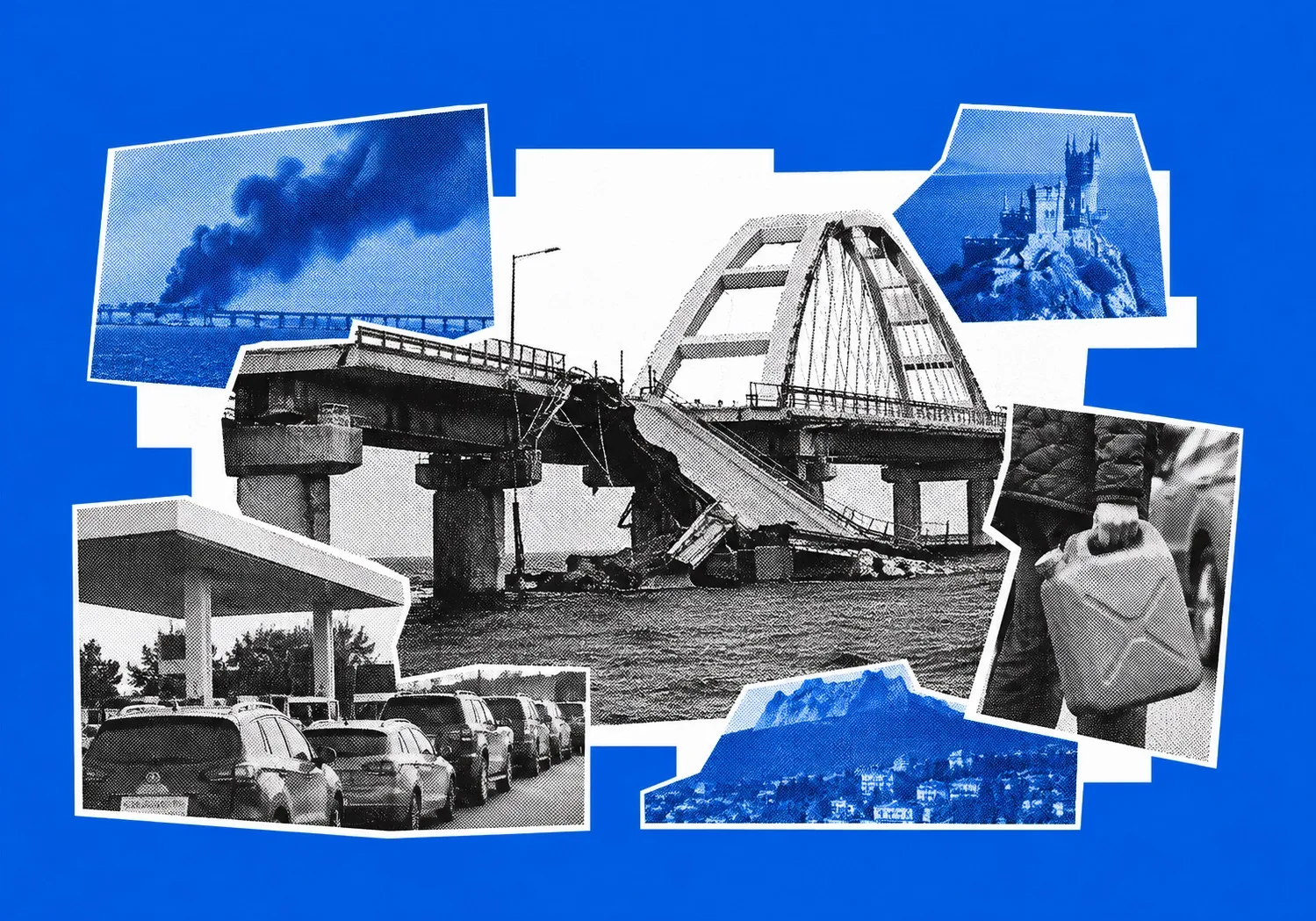
Petrol stations are rationing fuel, residents are stockpiling food, and Russia is scrambling to reroute supplies after a wave of Ukrainian missile and drone strikes severely damaged the Kerch Bridge. Long queues have formed at filling stations across Sevastopol, with motorists filling canisters amid fears of prolonged fuel shortages. Supermarkets are seeing a surge in demand for staples, while anyone attempting to leave Russian-occupied Crimea now faces a longer, riskier detour through southern Ukraine.
Three attacks between November 16 and 19 left sections of the road bridge in the water and temporarily halted railway services. The damage has disrupted one of Crimea's most important supply routes, leaving residents uncertain about how long fuel and other goods will remain readily available.
Petrol Stations Introduce Limits as Residents Rush to Buy Fuel
The first visible signs of anxiety appeared at filling stations.
By November 19, queues had formed across Sevastopol. Local Telegram channels reported that some motorists were buying between 200 and 500 litres of petrol at a time, apparently fearing that deliveries would soon become unreliable.
Two major filling station networks, ATAN and TES, responded by restricting purchases. Drivers could still fill their vehicle tanks, but additional petrol sold in containers was limited to 20 litres.
The restrictions came before any confirmed peninsula-wide exhaustion of fuel stocks. They appear to be an attempt to prevent panic buying from draining supplies already available at filling stations.
For Crimean residents, the concern is familiar. Petrol shortages had repeatedly affected the peninsula during 2026, with queues, rising prices and purchase limits reported months before the bridge was damaged.
The latest attacks have brought those concerns back, this time with a damaged transport crossing complicating deliveries from Russia.
Food purchases have also increased, according to Ukraine's National Resistance Center. Its reports describe residents buying cereals, pasta, canned food and other products that can be stored for long periods.
The scale of the reported stockpiling remains difficult to establish independently. There is no verified evidence that Crimea has run out of essential food supplies.
Still, the scenes at petrol stations suggest that at least some residents are preparing for disruptions that could last considerably longer than the temporary bridge closures they have experienced before.
What Happened to the Kerch Bridge?
The attacks began on November 16, when Russian-installed authorities reported disruptions to traffic across the bridge.
A second strike followed overnight into November 17, causing extensive structural damage.
Ukraine's General Staff reported that part of the bridge's metal arch and road deck had collapsed. Radio Free Europe/Radio Liberty reported that more than 200 metres of the structure had fallen into the Kerch Strait.
Ukrainian officials said the operation involved several domestically developed weapons, including Neptune missiles, Palianytsia drones and a Flamingo cruise missile.
Rail services initially resumed after the attacks, but the crossing was struck again overnight on November 19.
Ukraine's General Staff said Neptune missiles had hit the railway section near the bridge's arch. Russia's Transport Ministry subsequently confirmed that train services were suspended while specialists inspected the damage.
Russian-installed Crimean leader Sergei Aksyonov said railway traffic was expected to resume later that day.
The condition of the railway infrastructure and the time needed to restore normal operations were not immediately clear.
The damage to the road crossing appears considerably more serious.
Large sections of the structure will need to be replaced, according to engineering specialists interviewed by RFE/RL. Unlike earlier attacks, when repairs could be carried out on individual damaged spans, the latest destruction may require extensive reconstruction.
Leaving Crimea Is Still Possible, but the Journey Is Longer
The Kerch Bridge was not Crimea's only connection to the outside world.
Russia continues to control a land corridor running through occupied parts of southern Ukraine, linking the peninsula with Russian territory along the Sea of Azov.
That route remains available for vehicles and supplies. It is, however, longer than the direct crossing over the Kerch Strait and passes through territory exposed to Ukrainian military operations.
For motorists, it means additional travel time and uncertainty. For freight companies, longer journeys mean higher fuel consumption, more complicated schedules and potentially increased delivery costs.
The situation becomes more difficult when civilian traffic has to share limited transport capacity with military vehicles and supply convoys.
Russia has invested in roads and railways across occupied southern Ukraine to reduce its dependence on the Kerch Bridge. Those connections now face a more demanding test.
There is no evidence that Crimea has been completely cut off from supplies or that residents have lost every available route out.
But the damage has removed much of the convenience and predictability provided by the bridge.
For people trying to leave, the question is no longer simply whether a crossing is open. It is also how reliable the remaining journey will be.
Ukraine Is Targeting More Than One Transport Route
The attacks on the Kerch Bridge form part of a broader Ukrainian effort to disrupt Russian transport infrastructure in the occupied south.
The Polish Centre for Eastern Studies reported on November 17 that Ukrainian forces had also damaged bridges along the R-280 Novorossiya highway, including a crossing over the Mius River near Taganrog.
The road is part of the transport network connecting Russia with occupied Ukrainian territory.
Its disruption matters because Russian forces can use these routes to move equipment, ammunition and fuel towards the front.
The Kerch Bridge has long served a similar purpose, linking Russia with military facilities and supply depots in Crimea.
Russian troops are not entirely dependent on the crossing. Moscow has developed alternative supply routes, particularly since the bridge suffered earlier attacks in 2022 and 2023.
But moving shipments onto other roads and railways creates additional pressure on those connections.
The military consequences will depend on how much cargo can be redirected, how quickly damaged infrastructure can be repaired and whether Ukraine continues striking the remaining routes.
The attacks do not establish that Russian military supplies have stopped. They do, however, force Moscow to operate with fewer reliable transport options.
Repairs Could Take More Than a Year
Russian authorities have promised to rebuild the bridge, although they have not announced a definitive timetable.
The engineering work could be substantial.
Experts interviewed by RFE/RL said replacing the damaged sections would involve far more than repairing the road surface or installing temporary supports.
Large replacement spans may need to be assembled on land and transported into position using specialised equipment.
Ukrainian aviation engineer Konstantin Kryvolap estimated that repairs could take more than a year. British bridge specialist David MacKenzie also described the complexity of replacing the damaged structures.
Those are expert estimates rather than an official reconstruction schedule.
Work in the Kerch Strait is particularly challenging during winter, when strong winds and rough seas can interfere with construction and maritime operations.
There is also the question of security. Repair crews would be working on infrastructure that Ukraine has repeatedly demonstrated it can attack.
Even if railway traffic resumes relatively quickly, restoring the bridge's full road capacity could prove much more difficult.
Wreckage in the Strait Creates Another Problem for Russia
The collapse has also affected the waterway beneath the bridge.
The Kerch Strait connects the Black Sea with the Sea of Azov, providing maritime access to several ports, including Mariupol, Berdiansk and Taganrog.
Large pieces of the destroyed structure have fallen into the water, obstructing parts of the navigable passage.
Removing the wreckage will require specialised vessels and underwater operations. The work could be complicated by weather conditions and the risk of further attacks.
The Polish Centre for Eastern Studies has warned that prolonged disruption could affect shipping to ports on the Sea of Azov.
The extent of the interruption remains unclear. There is not yet enough verified information to determine how much commercial shipping has been delayed or redirected.
Nevertheless, Russia now faces the prospect of repairing the bridge while also clearing debris from a strategically important maritime route.
Putin's Showcase Project Faces Its Most Serious Crisis
When Vladimir Putin drove a truck across the Kerch Bridge at its opening in 2018, Moscow presented the crossing as a lasting connection between Russia and Crimea.
The project was designed to strengthen Russian control over the peninsula, which Moscow illegally annexed in 2014.
It also provided a direct route for civilian travel, commercial deliveries and military transport.
Ukraine has attacked the bridge several times since Russia's full-scale invasion began in 2022. Previous strikes caused major disruption, but Russia eventually restored traffic.
The November 2026 attacks have left more extensive damage and raised new questions about the crossing's long-term operation.
For Moscow, the problem extends beyond the cost of reconstruction. Russia must keep supplying the peninsula, maintain military transport and protect alternative routes while the bridge remains damaged.
For residents, the immediate concerns are more ordinary: whether petrol will be available next week, whether deliveries will arrive on time and how difficult it will be to travel.
Those concerns are already visible at filling stations in Sevastopol.
The bridge was built to make Crimea easier to reach from Russia. After three attacks in four days, people on the peninsula are once again wondering how dependable that connection really is.
Sources: Associated Press, Radio Free Europe/Radio Liberty, Kyiv Post, UNN, Polish Centre for Eastern Studies, Ukrainska Pravda