
How Ukraine’s Defence Ecosystem Can Secure Europe’s Military Future

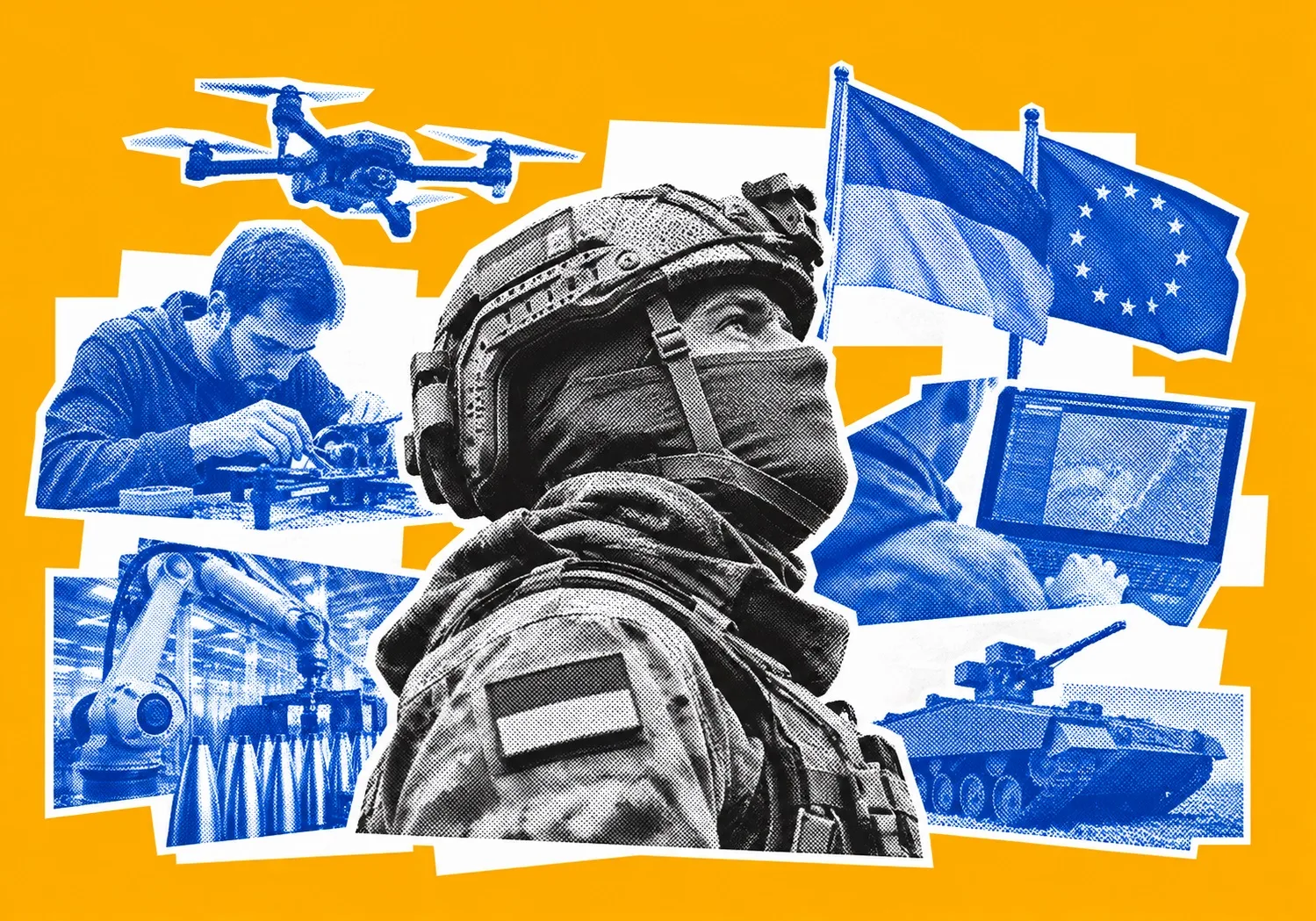
Buying Ukrainian weapons is not enough. A new UAFP study argues that Europe must integrate directly into Ukraine’s wartime innovation and industrial ecosystem to keep pace with evolving threats.
A new analytical report by the Ukraine Facility Platform (UAFP), How Unique Ukraine’s Defence Ecosystem Can Contribute to European Collective Security, argues that Ukraine offers a potential answer. Its greatest contribution is not any particular drone, missile or electronic warfare system, but an industrial ecosystem capable of adapting technology to battlefield conditions in days rather than months.
The study, prepared with the support of Ukrainian defence industry associations, proposes moving beyond bilateral production agreements towards a shared European security architecture in which Ukraine participates as an equal partner.
That argument comes at a consequential moment. European governments face pressure to strengthen their defence capabilities while reducing strategic dependencies on the United States and China. Meanwhile, Russia continues to expand military production, and the technological demands of warfare are changing faster than conventional procurement systems were designed to accommodate.

Ukraine's defence industry has undergone an extraordinary expansion since Russia launched its full-scale invasion in February 2022.
According to the UAFP study, the number of defence companies increased from several dozen in 2022 to approximately 1,500 by early 2026. The report estimates potential annual production capacity at $55 billion, compared with roughly $1 billion at the beginning of the invasion.
Yet production capacity and actual orders remain far apart. The researchers cite estimates suggesting that the sector operates at only around 40% of its potential.
This distinction matters for European policymakers. Ukraine has built manufacturing capabilities that exceed what its domestic defence budget can consistently finance. European procurement and investment could help close that gap while increasing the continent's own military production capacity.
But the report identifies a more fundamental advantage.
Unlike traditional defence industries, which typically develop new systems through established contractors and lengthy procurement programmes, much of Ukraine's modern defence technology emerged from civilian businesses, volunteer networks and direct cooperation with frontline units.
Agricultural drone operators became military specialists. Software developers built battlefield management systems. Engineers from motorsport, aviation and civilian manufacturing adapted their expertise to military applications.
Volunteer organisations provided funding, logistics and connections between manufacturers and military units, particularly when official procurement mechanisms struggled to respond quickly enough.
This created an unusually decentralised system in which innovation is driven by operational demand rather than solely by government contracts.
The researchers describe a process in which soldiers identify technical problems, communicate directly with engineers and receive modified equipment within days, sometimes hours.
A drone vulnerable to electronic interference can be redesigned. Software can be updated as battlefield conditions change. Components can be replaced without waiting for an entirely new procurement cycle.
For Europe, the implication is significant: acquiring Ukrainian technology does not automatically reproduce the organisational structure that makes that technology effective.
Why Europe Cannot Simply Buy Ukraine’s Battlefield Experience
European defence procurement has traditionally prioritised reliability, certification, standardisation and long-term equipment programmes. These requirements remain essential, particularly for complex systems expected to operate safely for decades.
However, they become more difficult to reconcile with technologies whose effectiveness can change rapidly in response to enemy countermeasures.
A drone that performs successfully during initial testing may become less effective after an adversary introduces new electronic warfare equipment. A communication system may require repeated software modifications before a procurement contract has even been completed.
The UAFP report argues that this creates a structural problem for traditional acquisition models.
European governments can purchase a particular Ukrainian system, license its production or establish a joint venture with its manufacturer. But those arrangements do not necessarily provide access to the military engineers, frontline operators and continuous testing processes responsible for improving it.
The study places particular emphasis on research and development teams embedded within Ukrainian military units.
These teams are not merely consumers of equipment. They modify existing systems, identify operational weaknesses and sometimes develop new technologies themselves.
Yet European procurement programmes generally contract with companies rather than military units, leaving an important part of Ukraine's innovation process outside conventional industrial partnerships.
This is where the report's argument moves beyond technology transfer.
European manufacturers need mechanisms for working directly with Ukrainian military specialists, exchanging technical knowledge and incorporating battlefield feedback into development programmes.
Such cooperation would require appropriate security clearances, protection of sensitive operational information and formal arrangements governing access to military data.
Ukraine's Delta battlefield management system illustrates both the opportunity and the challenge. The value of such platforms extends beyond the software itself to the operational information they help organise and analyse.
That information can support weapons development, but sharing it with foreign partners raises questions about classification, cybersecurity and national control over sensitive military intelligence.
The objective, therefore, cannot be unrestricted access to battlefield data. It must be a secure framework allowing relevant lessons to reach authorised engineers and military planners without compromising Ukrainian operations.
Brussels Has Already Begun Moving in This Direction
The UAFP proposal does not emerge in a policy vacuum.
In July 2026, European Commission President Ursula von der Leyen publicly described Ukraine as a net security provider for Europe, marking an important change in how Brussels presents its relationship with Kyiv.
Speaking during a visit to Ukraine, von der Leyen acknowledged the speed of Ukrainian military innovation and announced a new EU-Ukraine Defence Industrial Partnership.
The shift was significant. Ukraine was being recognised not simply as a recipient of European military assistance but as a country whose defence capabilities could strengthen Europe itself.
The clearest practical example is the EU-Ukraine Drone Alliance, formally launched in Kyiv in July 2026.
The initiative brings together 18 founding companies, evenly divided between European and Ukrainian participants. Its objectives include establishing joint ventures and accelerating the development and production of drones and counter-drone systems.
Among its European members are Germany's Quantum Systems, Italy's Fincantieri and Spain's Indra Group. Ukrainian participants include Skyfall, Vyriy, TAF Industries and other manufacturers.
The European Commission received close to 400 applications before selecting the founding members, demonstrating substantial industry interest in the initiative.
In September, the alliance held its first board meeting in Brussels. European Commissioner for Defence and Space Andrius Kubilius emphasised the need for development cycles measured in weeks rather than months.
The alliance represents an important step towards integrating Ukrainian expertise into Europe's defence industry. But it also illustrates the distinction raised by the UAFP report.
Joint ventures and industrial cooperation can accelerate manufacturing. Whether they can reproduce Ukraine's continuous interaction between frontline operators and developers remains a separate question.
Europe’s Dependence on Chinese Components Creates Another Vulnerability
The industrial challenge extends beyond drones.
Modern autonomous systems depend on microelectronics, sensors, optical equipment, electric motors, batteries and communication components. Many of these supply chains involve Chinese manufacturers or materials.
For European governments seeking greater defence autonomy, such dependencies present risks involving export restrictions, supply disruptions and access to critical technologies.
Ukraine faces similar constraints.
According to the UAFP study, wartime demand and supply-chain difficulties have encouraged Ukrainian companies to develop domestic capabilities in radio components, electric propulsion, microelectronics, optics, sensors and specialised materials.
These activities remain at different stages of development. They should not be mistaken for a complete domestic replacement of Chinese supply chains.
Nevertheless, they create opportunities for cooperation with European manufacturers.
European companies can contribute capital, industrial equipment, advanced technologies and access to larger markets. Ukrainian companies can provide engineering experience, specialised designs and direct knowledge of how components perform under wartime conditions.
The potential benefit extends beyond military procurement.
European investment in Ukrainian component manufacturing could strengthen alternative supply chains for civilian industries, including telecommunications, robotics, energy storage and industrial automation.
This would make defence cooperation part of a broader industrial resilience strategy.
The economic case is particularly relevant for technologies that can serve both civilian and military customers, allowing manufacturers to maintain production during periods of lower military demand.
The Risk of Building 27 Different Defence Systems
One of the most consequential warnings in the UAFP report concerns fragmentation.
European countries are increasingly pursuing bilateral defence agreements with Ukraine. These arrangements can deliver immediate benefits, including local production, technology transfer and access to Ukrainian military expertise.
However, the researchers warn that a network of separate national projects could reproduce the structural weaknesses already present in Europe's defence market.
Different countries may develop incompatible systems, establish separate technical standards and prioritise their domestic manufacturers over broader European requirements.
The result could be a larger defence industry without a corresponding improvement in collective military effectiveness.
For smaller European states, this problem is particularly serious. Limited procurement budgets make it difficult to sustain independent production programmes, while incompatible equipment can complicate joint operations and maintenance.
The UAFP proposes an alternative: the Partnership Architecture for Collective Security (PACS).
Rather than waiting for Ukraine to join NATO or the European Union, PACS would establish a multilateral framework among countries willing to cooperate on shared defence capabilities.
Under this proposal, participating governments could coordinate procurement, establish common requirements, organise joint military training and support industrial research involving Ukrainian and European partners.
The framework would also allow participating countries to combine orders, potentially reducing the cost of mass-produced autonomous systems.
Importantly, PACS remains a proposal advanced by UAFP, not an established European security institution.
Its practical implementation would require political agreements, governance arrangements, funding commitments and clear rules governing sensitive technologies.
It would also need to demonstrate how it could complement existing EU and NATO mechanisms rather than duplicate them.
Europe Already Has Funding Instruments - But Can They Deliver Integration?
The European Union has established financial and regulatory mechanisms intended to support joint defence procurement.
The Security Action for Europe (SAFE) instrument provides up to €150 billion in loans to EU member states for defence investment.
Ukraine can participate in common procurement under SAFE on equal terms with EU member states, although only EU countries can directly receive the loans.
According to the Council of the European Union, 15 of the 19 national SAFE plans submitted in 2025 included projects involving Ukraine.
The European Defence Industry Programme (EDIP) provides another avenue for cooperation. Its €1.5 billion budget for 2025–2027 includes €300 million for a dedicated Ukraine Support Instrument.
EDIP is intended to strengthen industrial capacity, encourage joint procurement and facilitate cooperation between European and Ukrainian manufacturers.
These initiatives show that the EU is already creating mechanisms for deeper industrial integration.
The unresolved issue is whether financial instruments designed primarily around companies and procurement contracts can also accommodate the military-industrial feedback mechanisms described in the UAFP report.
Funding a factory is relatively straightforward compared with establishing a secure multinational process through which soldiers, engineers, manufacturers and procurement officials can continuously exchange information.
The report therefore calls for reforms that would allow procurement contracts to finance ongoing upgrades rather than treating equipment delivery as the end of development.
It also advocates clearer intellectual property arrangements, predictable long-term purchasing commitments and procedures for incorporating new technical modifications without restarting the entire procurement process.
Such changes could help European governments avoid paying for equipment that becomes outdated before it enters operational service.
The Civilian Economy Could Help Sustain Europe’s Defence Readiness
The report also examines what happens when wartime demand eventually declines.
Many of the technologies developed by Ukraine's defence industry have potential civilian applications.
Autonomous ground vehicles designed for military logistics could be adapted for warehouses, ports and industrial facilities. Battlefield communications and monitoring technologies could support critical infrastructure protection. Decentralised power systems developed under wartime conditions could improve energy resilience.
Other opportunities include agricultural robotics, cybersecurity, medical technologies and industrial applications of artificial intelligence.
For Europe, this creates the possibility of an industrial model in which civilian production supports military readiness.
Companies operating in both markets could retain skilled engineers, manufacturing equipment and supply chains during periods of lower defence spending.
If security conditions deteriorate, parts of that production capacity could potentially be redirected towards military requirements.
Such conversion would still require appropriate equipment, certification, trained personnel and access to specialised components. It cannot be assumed that civilian factories could immediately begin producing military systems.
Nevertheless, the dual-use approach offers an alternative to maintaining expensive production facilities that remain largely idle between procurement cycles.
It could also make defence-related investment more attractive to private capital by reducing dependence on government military contracts.
The Window for Cooperation May Not Remain Open
The UAFP report identifies a final risk: Ukraine's defence ecosystem may not retain its present structure indefinitely.
Much of its innovation capacity depends on the extraordinary conditions created by Russia's full-scale invasion.
Military personnel with civilian engineering backgrounds work directly with manufacturers. Volunteer organisations maintain procurement networks. Frontline units continuously test and modify equipment.
A ceasefire or a reduction in hostilities could change those conditions.
Demobilisation may remove specialists from military research teams. Government procurement could decline. Some manufacturers may relocate, consolidate or return to civilian markets.
The flow of operational information that currently drives rapid technological development could also diminish.
This does not mean Ukraine's defence industry would disappear after the war. Established companies, production facilities and accumulated engineering expertise would remain important assets.
But the informal networks and operational relationships responsible for the sector's unusual speed may prove more difficult to preserve.
That creates a time-sensitive challenge for European governments.
If cooperation is limited to purchasing finished equipment, Europe may gain useful technologies without acquiring the institutional ability to keep improving them.
If joint development, training and procurement mechanisms are established while the ecosystem remains active, some of those capabilities could become permanent features of European defence cooperation.
The distinction is particularly relevant to Europe's longer-term relationship with Ukraine.
European security policy increasingly recognises Ukrainian military innovation as a strategic asset. Yet recognition alone does not determine who controls future technologies, where production takes place or how the benefits of joint development are distributed.
For Ukraine, equitable participation would require access to European defence markets, protection of intellectual property, continued domestic manufacturing and a meaningful role in decisions about future capabilities.
For European governments, the benefit would be access to an industrial partner with extensive experience adapting military technology under sustained combat pressure.
The challenge is to turn that mutual interest into a durable institutional arrangement.
Europe's defence debate has long focused on budgets, equipment shortages and the reliability of American security guarantees. The UAFP research adds another question: whether the continent's defence institutions can learn to innovate at the speed demanded by modern warfare.
Ukraine has demonstrated one model under extreme conditions. The European Union has begun creating the industrial partnerships and funding instruments needed to work with it.
What remains uncertain is whether those initiatives will produce a genuinely shared defence ecosystem or simply a collection of additional manufacturing agreements.
That choice will help determine whether Ukraine becomes an enduring participant in Europe's collective security architecture or remains primarily a source of technologies and battlefield experience developed elsewhere.
Sources: Analytical report UFP, PACS, SAFE