
Germany Renewable Energy Reform: Ending Feed-in Tariffs and Shifting Grid Risk to Developers

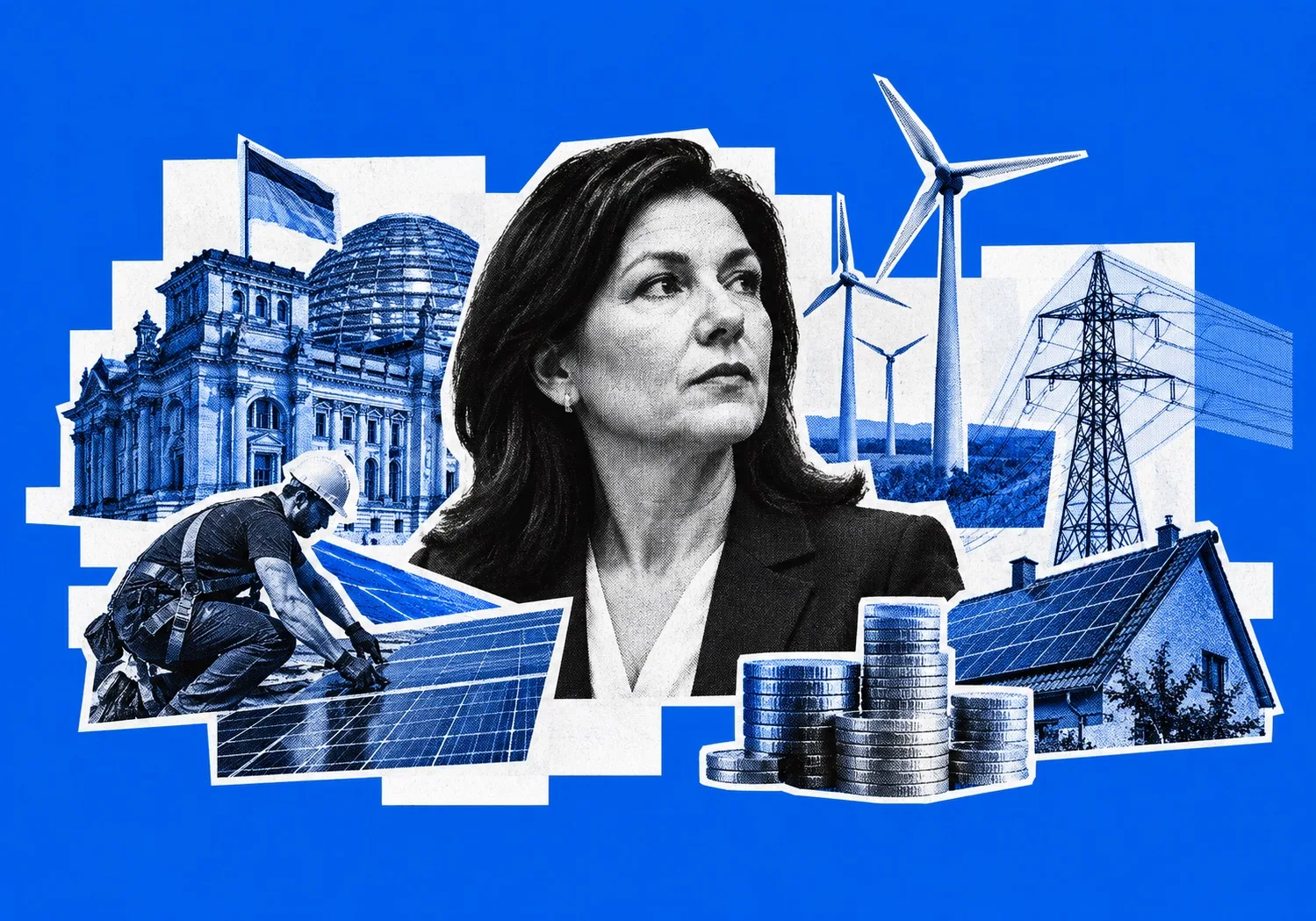
Germany is set to overhaul its renewable energy market as the Bundestag reviews a reform package targeting feed-in tariffs and grid curtailment. Under the proposals, solar and wind developers face reduced compensation for grid congestion, two-sided Contracts for Difference (CfDs), and the phase-out of guaranteed payments for new rooftop solar installations. Here is how Berlin's shift toward market-driven green energy impacts European investors and the 2030 targets.
Germany is not abandoning its ambition to obtain 80 per cent of electricity consumption from renewable sources by 2030. It is questioning how much of the financial risk the state should continue to carry.
That distinction matters. For much of the past two decades, European renewable energy policy has concentrated on getting wind turbines and solar panels built. Germany's proposed rules address a less politically attractive question: what happens when electricity generation expands faster than the infrastructure needed to use it?
The cost of electricity that cannot be delivered
Germany currently spends between €15bn and €17bn annually on renewable energy subsidies. Compensation for electricity production curtailed because of grid congestion adds approximately €3bn.
Those payments expose a weakness in the country's approach to expanding clean energy. Developers have been encouraged to install generating capacity, even in areas where transmission infrastructure cannot reliably accommodate additional output. When networks become overloaded, operators may have to reduce production, while the financial consequences have often fallen on the public purse.
The government now wants developers to consider those constraints before committing capital.
Under the proposed legislation, new renewable projects in congested grid areas could be required to accept uncompensated curtailment of up to 20 per cent of annual generation for as long as six years. In priority wind development zones, the threshold would be 18 per cent.
These are substantial potential losses for projects whose financing depends on forecasts of annual electricity output. A wind farm may have favourable weather conditions, suitable land and competitive construction costs, yet become considerably less attractive if a significant share of its production cannot generate revenue.

The reform would also introduce regionally differentiated grid development fees and revise connection priorities. Electricity producers would therefore face financial signals reflecting where they build, rather than simply how much they produce.
The logic is straightforward: capacity should be developed where it can be absorbed efficiently.
Whether that approach is fair is more contentious. Developers do not control the pace of transmission investment. Penalising them for congestion could improve future siting decisions, but it could also transfer the consequences of inadequate infrastructure onto businesses that made investments under earlier policy assumptions.
A different bargain for renewable investors
The government's proposals distinguish between large power plants and smaller installations, although both face a reduction in the predictability that characterised Germany's original renewable support system.
For new utility-scale wind and solar projects, Berlin proposes two-sided Contracts for Difference, or CfDs.
The mechanism offers protection when wholesale electricity prices fall below an agreed level. Developers receive payments to cover the difference, supporting revenue stability and making projects easier to finance.
But the arrangement works in reverse when market prices rise above that level. Generators must return excess revenues to the state.
Unlike an unconditional subsidy, a two-sided CfD limits both downside exposure and exceptional gains. It can provide investors with a more predictable revenue framework while preventing producers from retaining the full benefit of unusually high electricity prices.
This is not a complete withdrawal of public support. The state remains involved in financing renewable generation, but the terms become more reciprocal.
For investors, the distinction between revenue protection and profit limitation will be important. The attractiveness of individual projects will depend on contract terms, expected market prices and the additional costs associated with grid access and curtailment.
The changes facing smaller solar installations are potentially more disruptive.
New residential and commercial rooftop systems below 25 kilowatts would gradually lose guaranteed feed-in tariffs, with lower payments available under transitional arrangements. Owners would increasingly need to sell electricity directly into the market or consume more of what they generate.
Germany's original feed-in tariff model, established through the Renewable Energy Sources Act, helped make rooftop solar financially accessible to households and smaller businesses. Its appeal lay partly in simplicity. Owners could estimate future payments without having to navigate wholesale electricity markets.
Removing that certainty changes the investment calculation.
A household considering rooftop panels would need to place greater weight on its own electricity consumption, the timing of production and the possible value of battery storage. Commercial property owners would face similar questions, particularly where daytime demand does not coincide with peak solar output.

The change arrives during an already difficult period for smaller installations. Early 2026 figures showed residential rooftop solar installations falling 21 per cent year on year, while commercial installations declined 33 per cent.
Further reductions in guaranteed payments could deepen that slowdown, although the effect will depend on how quickly alternative commercial models develop.
Berlin's budget problem becomes an industry problem
Economy and Energy Minister Katherina Reiche has defended the reforms as a "paradigm shift", arguing that installations capable of delivering strong returns without subsidies should no longer receive the same public support.
The Federation of German Industries, or BDI, broadly supports stronger market integration and efforts to reduce the overall cost of the electricity system.
For energy-intensive manufacturers, the issue extends beyond renewable investment itself. An electricity system that requires substantial public expenditure to manage congestion creates costs that must eventually be financed somewhere in the economy.
Lowering those costs could improve the conditions under which German industry operates, although the proposed reforms do not establish an automatic reduction in industrial electricity prices.
Renewable energy organisations see a different set of risks.
The German Renewable Energy Federation, the German Wind Energy Association and BSW Solar have warned that weaker revenue guarantees, additional grid charges and uncompensated curtailment could undermine investment and employment.
Their concern is not confined to project developers. A sustained decline in demand for rooftop installations would affect equipment suppliers, installation businesses and maintenance companies.

There is also a timing problem.
Germany's existing EU state-aid approvals for renewable support expire at the end of 2026. That deadline has added urgency to the parliamentary process, leaving lawmakers relatively little time to resolve disagreements before the current approval framework runs out.
The government must therefore balance immediate regulatory requirements against the longer-term investment conditions needed to meet its 2030 target.
Europe is already moving away from old incentives
Germany's proposals are part of a wider European reassessment, although governments are taking different approaches.
France has reduced photovoltaic subsidies and payments for surplus electricity from smaller installations below 9 kilowatts. The Netherlands plans to end its net-metering arrangements on 1 January 2027, while Sweden reduced tax credits for residential solar installations from 20 to 15 per cent in mid-2025.
These measures differ in design and scale. None is identical to Germany's combination of market-based contracts, grid charges and uncompensated curtailment.
Nevertheless, they point towards a common economic problem. Policies designed to stimulate renewable adoption become harder to maintain unchanged once installations reach a scale that materially affects electricity prices, network operation and public finances.
Germany's influence makes its experiment particularly consequential. Developers and financiers active across European markets will be watching how the new rules affect investment decisions in the EU's largest electricity market.
The most important response may come not from solar or wind developers themselves, but from businesses supplying the flexibility that renewable-heavy electricity systems increasingly require.
Battery storage can allow producers and consumers to retain electricity when immediate export is unattractive or impossible. Smart energy management can shift consumption towards periods of abundant generation. Projects combining renewable generation with local demand may become more commercially appealing than installations designed primarily to export power.
These opportunities are not guaranteed to compensate for reduced subsidies. Storage requires additional investment, and its returns depend on electricity price differences and patterns of consumption.
Yet the direction of the incentives is changing. The value of renewable electricity will depend increasingly on when and where it is available, rather than simply on the quantity generated.
The infrastructure question Berlin cannot avoid
The proposed legislation creates an uncomfortable division of responsibility.
Renewable developers would be expected to make better decisions about project locations, incorporate grid constraints into financial forecasts and invest in flexibility where commercially justified.
Grid operators, meanwhile, would gain greater scope to manage congestion without the same level of compensation expenditure.
But electricity networks cannot be expanded through pricing signals alone.
A developer can choose a less congested location or install batteries. Neither decision necessarily resolves the underlying shortage of transmission capacity connecting areas of renewable generation with major centres of electricity demand.
There is a risk that tighter financial conditions discourage investment in regions where additional clean electricity will eventually be needed, particularly if network improvements arrive later than expected.
The opposite risk is equally serious. Continuing to guarantee revenues regardless of grid conditions could encourage further construction in unsuitable locations and preserve the expensive mismatch between generation and transmission.
Germany's proposed settlement attempts to resolve that tension by making developers more sensitive to the physical limitations of the electricity system.
Its effectiveness will depend partly on whether network investment catches up with the incentives imposed on producers.
The Bundestag's November deliberations will therefore concern more than the future of renewable subsidies. They will help determine how Germany divides the costs of an increasingly complex electricity system between taxpayers, network operators, investors and consumers.
For developers considering projects that may operate for decades, the immediate question is whether they can price those risks with sufficient confidence to invest. For Berlin, it is whether shifting the risks away from the state will produce a more efficient electricity system before it begins to constrain the renewable expansion the government still intends to deliver.
Sources: Сlean Energy Wire, Green Central Banking, Energy Connects, OilPrice