
France Strikes Spread Across Europe: Why Concessions Failed and What to Expect

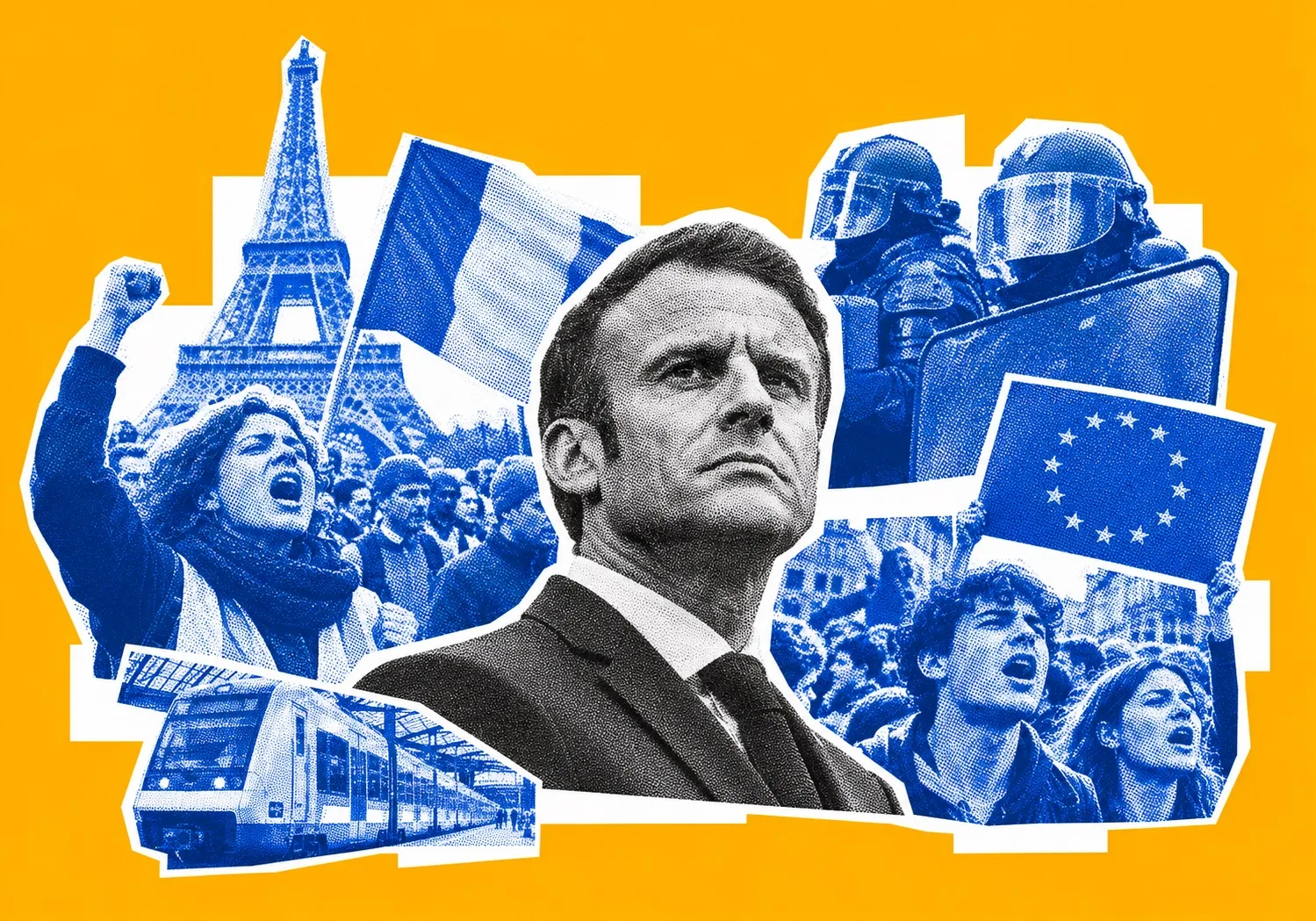
Hundreds of thousands of workers shut down transport and schools across France on November 5, marking a sharp escalation in Europe’s growing cost-of-living protests. Despite initial government concessions, major trade unions have joined forces with student groups and the Yellow Vests, triggering broader unrest over wages and public spending that is now spreading to Belgium, Spain, Portugal, and Italy.
The French Interior Ministry counted approximately 575,000 demonstrators nationwide. Trade union CGT put the figure at 1.57 million. In Paris, organisers claimed as many as 350,000 people had joined the march.
The Eiffel Tower closed, regional train services were cancelled, and strikes disrupted schools and public services. Police detained 448 people, while 53 officers were reported injured during clashes.
Prime Minister Sébastien Lecornu has now called trade unions and employers to a meeting on November 9. The talks will focus on wages and purchasing power, two issues that have moved to the centre of the protests.
But the government is dealing with a different movement from the one that took to the streets several weeks ago. And France is not the only European country facing such pressure.
October's protests were losing momentum. November changed that
The October figures suggested that the demonstrations were running out of steam.
According to government estimates, around 550,000 people protested on October 17. A week later, the number had fallen to 410,000. By October 31, it was down to approximately 320,000.
The November 5 turnout reversed that decline. It also brought a different kind of disruption.
Previous demonstrations had largely taken place on Saturdays, when protesters could march without necessarily missing work. This time, trade unions called a weekday strike. Employees walked out, schools closed, and public transport was affected.
The CGT, CFDT, Force Ouvrière, UNSA and FSU were among the unions involved. Student organisations and the Yellow Vests also joined the demonstrations.
The Yellow Vests first emerged as a nationwide movement in 2018, initially protesting fuel taxes before expanding their demands to include wages, living costs and political representation. Their participation now gives the latest demonstrations a connection to an earlier period of prolonged unrest under Emmanuel Macron.
The involvement of major unions matters for another reason. They can organise industrial action across workplaces, turning public dissatisfaction into direct pressure on employers and the government.
That was evident on November 5. While demonstrations filled city centres, strikes disrupted services that millions of people use every day.
As Le Monde reported, the mobilisation brought together people with different grievances, but many shared a concern that their incomes were failing to keep up with everyday expenses.
What has the government actually offered?
Lecornu's government has tried to respond to the unrest, although most of its measures have addressed individual demands rather than the wider cost-of-living problem.
In late October, officials announced changes affecting education. These included additional university places, adjustments to the admissions system, plans to reduce class sizes and increased resources for schools.
The measures were intended to address complaints from students and teachers, who had played a prominent role in the earlier demonstrations.
But they offered little to workers demanding higher pay or households struggling with rising bills.
For teachers, the dispute also extends beyond education policy. Unions have raised concerns about salaries, staffing levels and working conditions. Students, meanwhile, continue to oppose aspects of the Parcoursup university admissions system and changes to the baccalaureate examination.
The government has also discussed bringing forward an increase in the statutory minimum wage, known as the SMIC.
That would help workers on the lowest salaries. It would not, however, settle the demands of employees earning above the minimum wage, including many public sector workers.
This is where the government's room for manoeuvre becomes limited. France is already under pressure to reduce its budget deficit, and any substantial increase in public spending would make that task harder.
The November 9 conference is therefore an important test.
According to Le Monde, Lecornu has invited trade unions and employers to Matignon to discuss wages and purchasing power.
The meeting gives the government a chance to negotiate rather than respond to each new demonstration separately. Yet no agreement has been announced, and unions have not withdrawn their demands.
Schools closed, trains cancelled and police deployed across France
The scale of the November 5 strike became apparent early in the day.
Rail passengers faced cancellations, particularly on regional routes. The Eiffel Tower was closed to visitors. Schools and universities reported strikes, blockades and disruptions to classes.
Education unions said nearly 1,000 secondary schools had been blocked or closed, although government figures were considerably lower.
There were also disagreements over how many teachers had joined the strike. The Education Ministry reported participation of around 16%, while the SNES-FSU union estimated that more than half of staff in secondary education had stopped work.
These differences are not unusual during French strikes. Ministries generally count employees according to administrative reporting systems, while unions use their own estimates.
Even so, the disruption was extensive enough to affect families, commuters and businesses well beyond the demonstrations themselves.
Police were also preparing for trouble.
Approximately 70,000 officers and gendarmes were deployed nationwide. Most marches were peaceful, but clashes broke out in Paris, Lyon, Rennes, Marseille, Nantes, Bordeaux and Strasbourg.
Some groups threw projectiles and fireworks at police. Authorities also reported fires, vandalism and damage to buildings.
By the end of the day, 448 people had been detained and 53 police officers injured.
The Interior Ministry blamed radical and far-left groups for some of the violence. Their actions were separate from the largely peaceful marches organised by unions and student groups.
For the government, the disturbances created an additional problem. Police had to contain the violence without escalating confrontations with demonstrators whose demands had broad public resonance.
The budget problem behind the protests
France's financial difficulties are making the dispute harder to resolve.
The government is trying to bring down a budget deficit that reached 5.4% of GDP. At the same time, it faces demands for higher wages, better-funded schools and hospitals, and protection from rising living costs.
In September, Lecornu outlined plans for roughly €54 billion in savings in the 2027 budget, according to Reuters.
Those plans have become a source of conflict.

Reducing expenditure could help reassure investors concerned about France's debt. But cuts to public services risk angering the same groups already protesting in the streets.
The government's borrowing costs have also risen. France's benchmark 10-year bond yield exceeded 5% in October, according to Le Monde.
Higher yields mean the state must pay more to borrow money. Over time, that leaves less room in the budget for other priorities.
Economists have warned that prolonged strikes could make the situation worse by disrupting business activity and weakening consumer confidence.
But the reverse is also true: efforts to repair public finances through spending cuts may provoke more strikes.
France has faced this dilemma before, particularly during the pension reform protests of 2023. The difference now is that several disputes have converged at once, from education and wages to public spending and the cost of living.
Why protests are also growing in Belgium, Spain, Portugal and Italy
France's unrest is attracting attention partly because similar demonstrations are taking place elsewhere in Europe.
The movements are not all connected, and their demands vary from country to country. Yet the complaints are familiar: salaries that have not kept pace with prices, expensive housing, pressure on public services and frustration with government economic policies.
In Belgium, demonstrations have targeted austerity measures and proposed changes affecting public services and social protection. Teachers and other public sector employees have been among those protesting.
Spain is dealing with several disputes of its own. Teachers in Madrid began rolling strikes in October, demanding better pay and smaller classes. Housing costs have also brought demonstrators onto the streets, particularly in major cities where rents have risen sharply.
Spanish unions have called for a general strike on November 11.

In neighbouring Portugal, protesters have demanded higher wages and pensions, while housing campaigners have organised demonstrations and protest camps in Lisbon and Porto. Unions are also preparing industrial action on November 11.
Italy faces a similar dispute over incomes and living costs. Trade unions have criticised wages, energy prices and funding for public services. A nationwide strike is scheduled for November 20.
As Le Monde reported in October, the protests reflect growing dissatisfaction with economic conditions across several European countries.
It would be misleading, however, to describe them as a movement spreading directly from France.
Spanish housing activists are responding primarily to Spain's rental market. Italian unions are challenging domestic labour and budget policies. Belgian demonstrators have their own disputes with the government.
What connects these movements is not a common leadership but the problems behind them.
For many European households, the issue is no longer simply inflation. Even where the pace of price increases has slowed, the higher cost of food, rent and energy remains part of monthly spending. Wage increases have not always been sufficient to offset those costs.
That helps explain why protests continue even when governments point to improving economic indicators.
Could France's strikes affect the rest of Europe?
France's position in the European economy makes prolonged disruption a concern for neighbouring countries.
The most immediate effects would be felt in transport and trade.
French railways, ports and logistics networks connect major European markets. Repeated strikes could delay passenger travel and freight deliveries, particularly if industrial action extends to transport workers and energy facilities.
Businesses with operations in France could also face higher costs from interruptions to production and distribution.
The financial consequences are potentially more serious.
France is one of the eurozone's largest borrowers. Its government bonds are held by banks, insurance companies and investment funds across Europe.
If investors become more concerned about the country's ability to control spending, borrowing costs could rise further.
That would not automatically trigger a wider eurozone crisis. However, pressure on French bonds could influence sentiment towards other countries with high debt levels.
An analysis by Allianz examined how France's fiscal difficulties and rising bond yields were already affecting European debt markets.
There is also a political dimension.
European governments are being asked to spend more on defence, energy security and support for Ukraine while maintaining pensions, healthcare, education and other public services.
Those priorities are becoming increasingly difficult to finance simultaneously.
The protests in France and elsewhere show what can happen when governments attempt to limit spending while voters demand more economic support.
That does not mean Europe is heading towards a single continent-wide uprising. But national governments may face similar confrontations as they prepare their next budgets.
A political test before France's 2027 election
The timing of the protests is particularly difficult for France's political leadership.
The country will hold a presidential election in 2027, and Emmanuel Macron cannot run for a third consecutive term.
That has already encouraged political parties to position themselves for the contest.
Opposition figures, including Jean-Luc Mélenchon and Raphaël Glucksmann, joined the November 5 demonstrations.
Their participation illustrates how social protests can become part of an election campaign, even when the organisers are primarily focused on wages and working conditions.
For opposition parties, the demonstrations provide an opportunity to challenge the government's economic record.
For Lecornu, they create a problem that cannot be solved through policing alone.

The government must negotiate with unions, defend its budget plans and demonstrate that it can respond to public demands.
France's fragmented parliament makes that task more difficult. Passing controversial financial measures has already proved challenging, and further unrest could weaken support for spending reductions.
The next presidential election is still months away, but the dispute over wages and living standards is likely to remain part of the political debate.
November 9 could determine the next phase of the protests
Attention now turns to the social conference scheduled for Monday, November 9.
Lecornu is expected to meet trade union leaders and employers to discuss wages and purchasing power.
The meeting will show whether the government is prepared to offer measures beyond the education changes announced in October.
Union leaders will also have to decide whether any proposals are sufficient to justify reducing industrial action.
There are reasons to doubt that a single meeting will settle the dispute.
The protesters do not represent one profession or one political organisation. Their demands cover salaries, education, pensions, public services and broader economic policy.
Even an agreement with the largest unions would not necessarily bring an end to demonstrations organised by students or the Yellow Vests.
Further action is already being discussed. Yellow Vest organisers have called for continued strikes and blockades on November 6, followed by demonstrations on November 7.
The next two weeks will also bring important developments elsewhere in Europe, with planned strikes in Spain and Portugal on November 11 and Italy on November 20.
For now, the November 5 demonstrations have overturned the expectation that France's protest movement was gradually fading.
The government has offered concessions, but the main dispute over wages and living costs remains unresolved. Whether the November 9 talks produce an agreement will help determine if France moves towards another round of strikes or a period of negotiations.
And while the protests across Europe have different origins, the coming weeks will show how far governments are prepared to go to address the economic pressures driving them.