
EU Proposes European Heritage List to Strengthen Cultural Ties and Regional Development

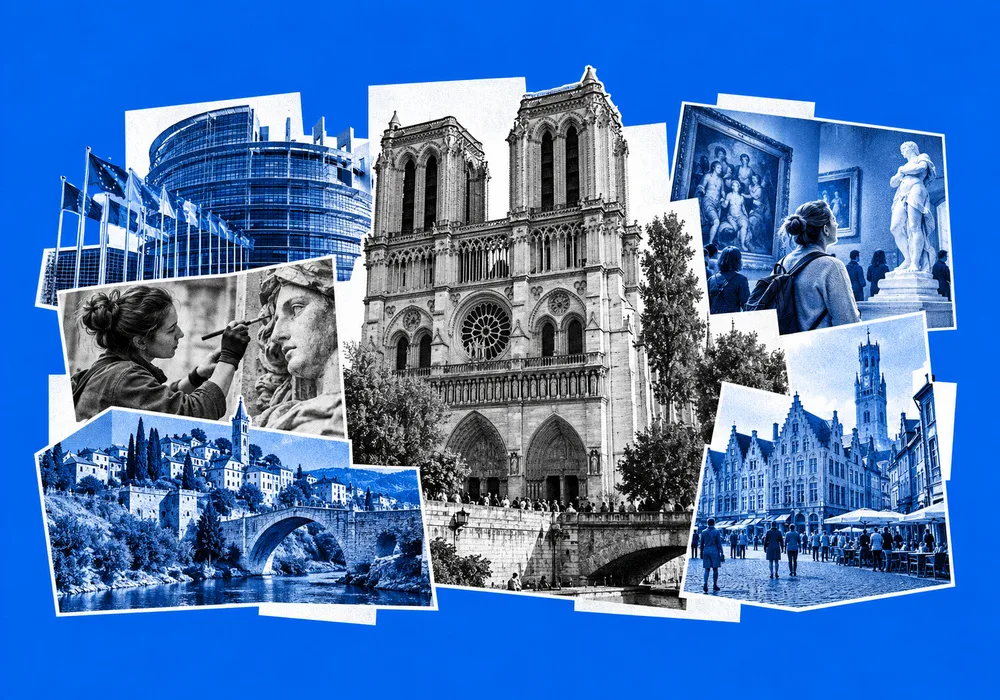
The European Commission has proposed replacing the European Heritage Label with a strengthened European Heritage List, introducing clearer selection criteria, a new award for sites with measurable impact and broader participation from countries beyond the EU. The reform aims to reinforce a shared European identity while supporting cultural tourism and regional development.
The European Commission has proposed a revision of the legal framework governing the European Heritage Label, seeking to strengthen the role of cultural heritage in European integration, public education and regional development. Published on 23 October 2026, the proposal would establish a European Heritage List, replacing the existing initiative with a framework designed to improve the visibility of historically significant sites and strengthen cooperation between participating institutions.
Launched in 2011, the European Heritage Label recognises sites with exceptional symbolic value for Europe and a significant role in shaping its history, culture and integration. Unlike initiatives focused primarily on architectural significance or the preservation of individual monuments, the scheme emphasises the wider European meaning of places, buildings, collections and other cultural assets. It seeks to demonstrate how local and national histories connect with the political, social and cultural developments that have shaped the continent.
The existing initiative connects 80 sites across 237 locations in 23 EU member states. The Commission argues that the scheme has helped raise the profile of participating sites and communicate their European significance, but the experience accumulated since its establishment has also highlighted the need to update its legal framework and improve its implementation.
The proposed reform would preserve the initiative's central purpose while introducing more clearly defined criteria, stronger coordination, revised monitoring procedures and additional opportunities for cooperation. It would also establish European Heritage status for sites included on the new list, giving the initiative a more explicit identity as a coordinated European cultural network.
From national history to a shared European narrative
The proposal reflects the EU's continuing effort to develop a common understanding of European history without erasing national and regional differences. Historical events are often interpreted through national experiences, while their wider European consequences can receive less attention. By connecting selected sites through a common framework, the initiative aims to make these relationships more visible to visitors, students and local communities.
This approach is particularly relevant to places associated with major political transformations, cultural exchanges, industrial development, conflict, democratic change and European integration. Their significance can extend beyond the country in which they are located, offering opportunities to explain how events in one part of Europe influenced societies elsewhere.
The European Heritage List would therefore be intended not simply as a register of important locations, but as a network through which participating institutions could interpret the continent's shared experiences. Its value would depend partly on their ability to explain complex historical developments in accessible ways while acknowledging different national perspectives.
The Commission's proposal also places European values and the historical development of integration within the selection framework. Sites would be assessed according to their European significance, the quality of their proposed action plans and their operational capacity. The assessment of European significance would consider their relationship to European history, integration and the values underpinning the Union.
These requirements would give the initiative a more structured basis for evaluating applications. Rather than relying exclusively on the historical importance of a site, the framework would also examine how institutions intend to communicate that importance, engage audiences and deliver their proposed activities.
Clearer selection criteria and stronger accountability
Under the proposed system, selection would take place through a combination of national and European-level procedures. Participating countries would remain responsible for identifying candidate sites, while a panel operating under the Commission's responsibility would assess applications against common criteria.
EU member states could select up to three sites every two years at national level. A European-level panel would then pre-select candidates based on their European significance before assessing shortlisted applications in greater detail, including their action plans and operational capacity. The panel could select up to 15 sites per selection cycle, with a maximum of one site per participating country.
The proposed framework would also make monitoring more systematic. Sites awarded European Heritage status would be assessed regularly, with monitoring taking place every two years according to the proposed arrangements. Where a site failed to meet the criteria or implement its action plan, the panel could recommend practical improvements. Continued non-compliance could ultimately lead to the withdrawal of its status.
This approach would make recognition more closely linked to the site's continuing activities rather than treating it solely as a permanent distinction. The intention is to ensure that participating institutions remain committed to communicating European significance, improving access and cooperating with other sites.
A new award would also recognise selected and monitored sites for their impact on the ground. Together with measures to improve visibility, support and coordination, this is intended to encourage institutions to demonstrate tangible results rather than rely on the prestige associated with European recognition alone.
The practical effect will depend on the resources available to participating institutions. Smaller museums, archives and heritage organisations may have significant historical assets but limited staff, funding or visitor infrastructure. Clearer procedures could improve consistency, although the requirements for action plans, monitoring and public engagement will need to remain proportionate to the different capacities of participating sites.
Young people and access to cultural heritage
A central objective of the proposal is to strengthen public understanding of European history, particularly among younger generations. The Commission intends to give young people a stronger voice within the initiative and improve their access to participating sites.
This reflects a broader challenge facing cultural institutions: preserving historical assets does not necessarily ensure that they remain relevant to new audiences. Younger visitors increasingly encounter history through digital platforms, educational projects and interactive formats, creating opportunities for heritage organisations to develop approaches that complement traditional exhibitions and guided visits.
The proposed framework would encourage intercultural and intergenerational dialogue through artistic, cultural and historical education. It would also seek to improve access for different audiences and strengthen connections between cultural heritage and contemporary creativity.
For educational institutions, the network could provide a basis for cross-border projects, exchanges and teaching materials that connect local history with wider European developments. For participating sites, cooperation could facilitate the sharing of educational methods and practical experience, helping institutions reach audiences beyond their immediate communities.
The emphasis on public engagement also has a civic dimension. Understanding the historical development of European institutions, democratic traditions and shared values can provide context for contemporary debates about integration, identity and political cooperation. The proposal does not remove differences in how European history is understood, but it creates a framework in which those differences can be explored alongside common experiences.
Cultural tourism and regional economic development
The Commission expects the European Heritage List to contribute to the attractiveness and sustainable economic development of the regions where participating sites are located, particularly through cultural tourism. Recognition could help lesser-known destinations reach wider audiences and encourage visitors to explore places outside Europe's established tourist centres.
The potential benefits extend beyond ticket sales. Increased interest in heritage sites can create opportunities for accommodation providers, restaurants, local transport operators, guides, craft businesses and other services. Cultural institutions can also contribute to local employment and help communities maintain activities connected to their historical identity.
A coordinated European network could strengthen these effects by encouraging cross-border itineraries built around shared historical themes. Visitors might be encouraged to explore several locations connected by industrial development, political movements, artistic traditions or other aspects of European history. For participating institutions, joint promotion could provide greater visibility than individual marketing efforts alone.
However, European recognition does not automatically translate into increased tourism or economic gains. Outcomes will depend on accessibility, transport connections, conservation standards, local investment and the ability of regional authorities to integrate cultural assets into broader development strategies.
There is also a need to balance visitor growth with the preservation of historical sites and the interests of local communities. Increased tourism can place pressure on infrastructure and fragile heritage assets if it is not managed carefully. The proposal's emphasis on monitoring and sustainable development will therefore need to be reflected in the practical management of participating locations.
The economic dimension of the initiative is best understood as a potential benefit of stronger cultural cooperation, rather than a guaranteed result of receiving European Heritage status. Its contribution will vary according to local circumstances and the resources available to each site.
Extending the network beyond EU borders
The proposed reform would broaden participation beyond the EU's 27 member states. Sites in Iceland, Liechtenstein and Norway would become eligible, alongside sites in candidate or potential candidate countries associated with the EU's Creative Europe programme or its successor programmes supporting culture.
This extension would give the initiative a wider geographical reach and create additional opportunities for cultural cooperation between EU members and other European countries. It would also allow participating countries seeking closer relations with the Union to present their historical and cultural connections within a common European framework.
The proposal establishes specific arrangements for participation by these countries, including national selection procedures and limits on the number of sites that may be submitted and selected. Their inclusion would therefore expand the network while retaining a structured European-level assessment process.
Cultural cooperation can complement political and economic relations by creating opportunities for institutions, researchers, educators and local communities to work together. Shared heritage projects can highlight historical connections that cross present-day borders and encourage engagement with different national perspectives.
Nevertheless, participation in the European Heritage List would not confer EU membership or substitute for the accession process. Its significance lies in creating a cultural framework for cooperation that can operate across the Union's external borders.
Integration with wider European cultural policy
The proposal forms part of the Commission's broader approach to cultural policy, including the Culture Compass for Europe. The framework seeks to protect and promote cultural heritage, increase access to culture, support cultural diversity and strengthen the contribution of culture to social and territorial cohesion.
The European Heritage List would also complement other European and international initiatives, including the UNESCO World Heritage List, the Council of Europe's Cultural Routes and the European Heritage Days. These programmes have different objectives and selection mechanisms, but their activities can reinforce public awareness of cultural heritage and encourage cooperation between institutions.
The distinctive contribution of the European Heritage List would remain its focus on the European significance of selected sites, their educational role, their efforts to engage citizens and their cooperation with other participating locations. This would provide a basis for linking heritage preservation with broader objectives in education, civic participation and regional development.
The Commission also envisages potential synergies with EU programmes supporting culture, education, mobility, research and sustainable tourism. Such connections could help heritage institutions reach new audiences and develop projects that extend beyond the preservation of individual sites.
The longer-term impact will depend on how effectively these initiatives are coordinated and whether participating institutions receive sufficient support to maintain their activities. A common European framework can provide visibility and direction, but its results will ultimately be determined by implementation at national and local levels.
Legislative process and next steps
The proposal will now be negotiated by the European Parliament and the Council of the European Union under the ordinary legislative procedure. The revised framework must pass through this process before the new system can be formally established.
The proposal also contains transitional arrangements under which the existing framework would continue to apply to the 2027 selection process. Sites already awarded the European Heritage Label would be transferred to the new list and recognised as holding European Heritage status under the proposed system.
The reform would therefore build on an established network rather than begin from scratch. Its central challenge will be to convert existing recognition into more sustained cooperation, stronger public engagement and demonstrable benefits for participating communities.
For the EU, the initiative offers a way to connect cultural preservation with a wider discussion about European identity and cooperation. Its success will depend on whether the new framework can make the continent's shared historical experiences more accessible while respecting the diversity of the societies and regions in which that history unfolded.
Sources: European Commission, Danish Parliament0579/index.htm)