
UK-EU Free Movement: Why Britain is Rethinking Returning to the Single Market

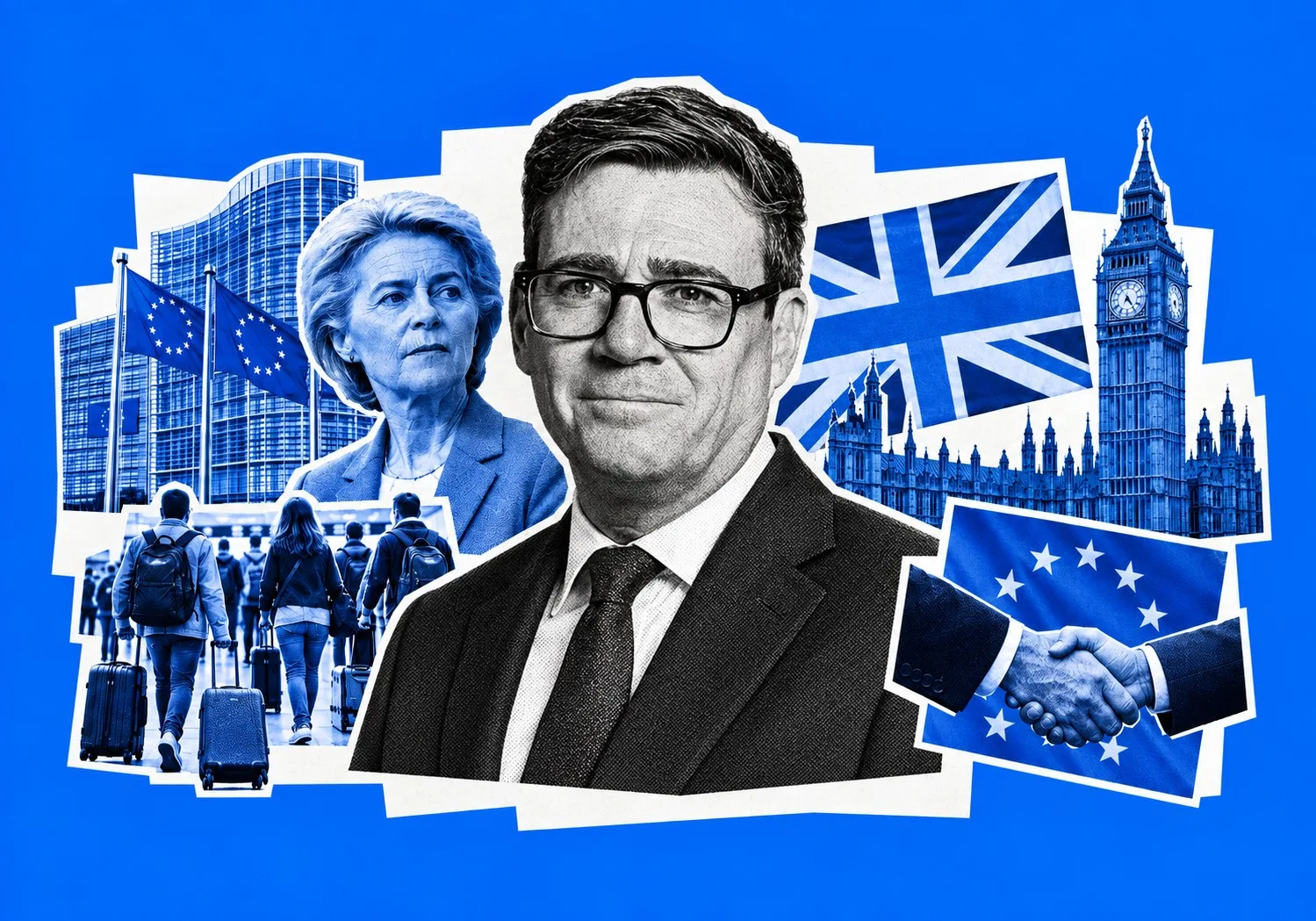
British and European officials meeting ahead of the EU summit on November 20 are preparing for negotiations that extend far beyond trade in food, electricity, and youth mobility. Business Secretary Jonathan Reynolds has confirmed that UK and EU representatives are actively discussing future strategic options—including a potential return to freedom of movement. Driven by Prime Minister Andy Burnham’s call for an "honest discussion" on rejoining the European single market, London is beginning to confront the severe fiscal and economic realities of post-Brexit isolation.
The admission follows remarks from Burnham in an interview with The Sunday Times, where he fired the starting gun on the debate by questioning one of the central red lines of post-Brexit politics.
Remaining outside the single market and refusing freedom of movement are no longer immovable tenets of government policy.
"I think we’ve just got to have an honest discussion about those things," Burnham urged, arguing that accepting labor mobility and re-entering the single market could be put to voters in a future general election manifesto, rather than requiring a separate referendum.
In doing so, the Prime Minister effectively breached a political taboo that held firm through four successive administrations.
Appearing on BBC Radio 4’s Today programme, Reynolds confirmed that officials "will be talking to them about what the future options for our relationship might be." While emphasizing that Downing Street's immediate focus remains on securing tangible trade improvements in November, Reynolds noted that the Prime Minister intends to set out long-term options after the summit: "He is going to be frank with the British people about what the trade-offs are."
What appears on the surface to be a sudden policy drift is a direct confrontation with hard arithmetic.
Years after the UK’s formal departure from the bloc, the structural costs of economic isolation have become impossible to ignore. The Office for Budget Responsibility has long estimated that Brexit trade and labor barriers will inflict a cumulative 4 percent hit on total UK economic output. For a government struggling to finance public services while avoiding swingeing tax rises, that lost growth represents an ongoing fiscal hemorrhage.
The Treasury Trap
The immediate catalyst for this tentative rapprochement is not ideological enthusiasm, but severe treasury arithmetic. British chancellors are running out of fiscal headroom.
Public debate during the Brexit years focused intensely on controlling border flows. Yet the post-Brexit points-based system produced unexpected consequences. Net migration actually surged, peaking at an all-time high of 944,000 in the year ending March 2023, compared with 330,000 prior to the 2016 referendum.
Now that immigration volumes are turning downward, fiscal watchdogs point to a new hazard. Independent economic bodies, including the Resolution Foundation and the Institute for Fiscal Studies, calculate that a fall in net migration of 300,000 over the next five years will strip billions from government coffers.
That reduction will remove roughly £4.7 billion from tax revenues by 2029–30 alone.
For business groups such as the British Chambers of Commerce, piecemeal agreements have reached their limit.
Trade policy director William Bain warned that current strategies are "approaching the ceiling of what can be achieved." Corporate executives are increasingly vocal over regulatory friction, leaving the BCC to urge the Treasury to formally model the economic options of deeper EU alignment.
Senior Cabinet ministers view revisiting the relationship as a matter of pure economic realism. Foreign Secretary Ed Miliband and Housing Secretary Angela Rayner both favor closer ties.
Rayner backed Burnham’s stance on BBC’s Sunday with Laura Kuenssberg, stating she would "like to have an honest conversation about what the trade-offs could be, and then put that to the people at a general election."
Labour Movement for Europe chair Stella Creasy echoed that sentiment, adding that Britain was "long overdue for a grownup conversation about what EU freedom of movement actually means."
Red Wall Dilemma
Yet reopening the European question has exposed an immediate fault line across the ruling party and Cabinet.
Labour’s 2024 election victory was built on a precise manifesto pledge: no return to the single market, the customs union, or freedom of movement before 2029. Downing Street insists those promises remain intact for the current term. However, Burnham’s look ahead to the next election cycle has unsettled dozens of backbenchers representing leave-voting constituencies.
In the northern and coastal "red wall" seats regained from the Conservatives, the debate over migration remains deeply sensitive.
Labour MP Melanie Onn, whose Great Grimsby and Cleethorpes constituency backed leaving the EU, publicly urged caution on BBC Radio 4: "I don't think that the scars have healed for many people around the country, so I do think this is an unnecessary conversation to be having at this time." Warning against squandering voter faith, Onn added: "Trust is incredibly important, it's hard-earned and easily lost, and on this matter I think that we should tread incredibly carefully."
Other backbenchers, including Jonathan Hinder in Pendle, have pressed the leadership in Parliament to rule out any compromise on border control.
These anxieties stem from direct political self-preservation. In working-class districts, the primary beneficiary of any voter backlash is Reform UK.
Reform UK leader Nigel Farage moved swiftly to attack Burnham’s comments, calling the talks a "total betrayal of Brexit Britain" and asserting that "Andy Burnham has no mandate to be in Brussels, to be negotiating any of this."
Conservative leader Kemi Badenoch similarly dismissed the intervention as "another example of Burnham’s foot-in-mouth syndrome."
Internal opposition extends beyond backbenchers in marginal seats. Home Secretary Shabana Mahmood has previously voiced deep skepticism regarding closer structural ties with Brussels, warning of "quite hard trade-offs" such as eliminating trade friction without "some of the burdens that also brings."
Managing these internal tensions will test parliamentary discipline to its limits, especially if backbenchers conclude that the leadership is prioritizing macro-economic targets over their local electoral survival.
Brussels’ Hard Line
If the domestic debate in Britain is fraught, the institutional realities awaiting in Brussels are equally unyielding. European leaders have consistently maintained that the four freedoms of the single market—goods, services, capital, and people—are indivisible.
British ministers might hope to negotiate bespoke arrangements that capture economic benefits while minimizing political fallout. Yet EU negotiators have little incentive to dismantle their core regulatory architecture to accommodate London's domestic political cycle.
Officials in Brussels view the UK's shifting posture with cautious interest rather than immediate concession.
They remain wary of embarking on lengthy structural negotiations, only to see commitments unraveled by political volatility in Westminster. Furthermore, any deal granting single market access would inevitably require the UK to accept European regulatory standards and contribute to the EU budget.
Burnham’s defense of free movement rests on a specific distinction between past and present migration dynamics.
"Revolving-door migration where people would come and then go back is different," he observed, arguing that European mobility presented fewer long-term integration challenges than the permanent, non-EU migration flows that replaced it under the points system. Whether British voters can be persuaded by this subtle policy distinction remains unproven.
A High-Stakes Gamble
The decision to initiate a debate on freedom of movement marks a turning point in Britain's post-Brexit political development. By explicitly connecting economic performance to European integration, the government has broken with years of defensive consensus.
Yet the strategic calculus remains exceptionally high-risk.
Corporate leaders, economic forecasters, and pro-European ministers view closer alignment as indispensable toward national recovery. Conversely, backbench MPs in Brexit-voting seats fear it could dismantle the electoral coalition that brought the party to power.
As negotiations over technical trade measures begin in November, the broader battle over Britain's long-term destination has already begun. The country faces a fundamental choice between the political taboos of the past decade and the urgent economic pressures of the next.
Sources: BBC, The Guardian