
EU Links UK Market Access to China Tariffs Amid ‘Made in Europe’ Dispute

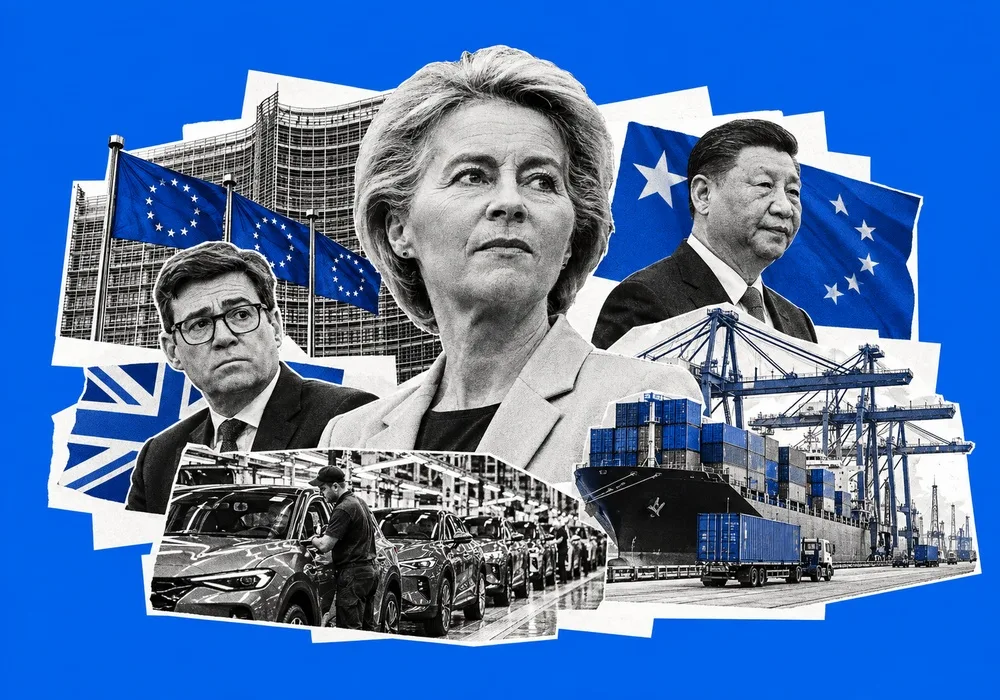
Brussels is linking Britain’s concerns over exclusion from the EU’s “Made in Europe” industrial policy with calls for closer alignment on Chinese car tariffs, highlighting the growing tension between post-Brexit trade rules and integrated European supply chains.
Brussels has told Britain that closer alignment with EU trade policy, including higher tariffs on Chinese cars, could help address concerns over the UK being excluded from the European Union’s emerging “Made in Europe” rules, the Financial Times reported on September 25. The proposal adds a new trade dimension to negotiations over Britain’s access to a policy designed to strengthen European manufacturing and reduce dependence on Chinese industrial inputs.
The EU’s position, as reported by the Financial Times and cited by Reuters, is that differences between British and EU tariffs could create a route for Chinese manufacturers to enter the European market indirectly through the UK. Two people familiar with the discussions told the Financial Times that joining the EU customs union would resolve many of the problems surrounding the proposed “Made in Europe” framework. Reuters said it could not independently verify the report, while the EU and the British Foreign Office had not immediately commented.
Britain seeks access to ‘Made in Europe’
The dispute centres on the EU’s proposed Industrial Accelerator Act, which would give European-made products preferential treatment in public procurement, subsidies and other forms of state-supported investment in strategic industries. The framework is intended to strengthen European industrial capacity and reduce exposure to foreign suppliers, particularly China. Proposed rules cover sectors including electric vehicles, renewable energy, hydrogen and nuclear technologies.
The automotive sector is particularly exposed. British manufacturers remain deeply integrated into European supply chains, while UK-made vehicles and components are sold across the EU. The automotive trade between Britain and the bloc is worth tens of billions of euros annually, making the definition of “European” production commercially significant for companies operating on both sides of the Channel.
Prime Minister Andy Burnham has been seeking “trusted partner” status for Britain rather than full exclusion from the scheme. During his visit to New York for the UN General Assembly, he argued that the EU’s industrial policy is aimed at addressing competition from China rather than British companies and warned against creating additional barriers within integrated European supply chains.
Tariffs become part of the wider dispute
The latest discussions indicate that Brussels sees tariff alignment as one possible way of limiting the risk that Chinese products could circumvent EU trade measures through Britain. A customs union would remove most tariff differences between the UK and EU, but it would also represent a major change from the post-Brexit trading relationship.
Britain has instead been seeking a more limited arrangement that would allow its manufacturers to benefit from parts of the EU industrial framework without reversing the fundamental terms of Brexit. The question is complicated by the fact that the “Made in Europe” legislation is still under negotiation and EU governments disagree over how widely the rules should apply.
France has argued for a narrower definition centred on the EU’s 27 member states. Other governments have taken a more open position. Germany has said partner countries could be included under a reciprocity principle, while Sweden has also stressed the importance of countries outside the EU that remain deeply integrated into the European economy.
Pressure on Britain’s automotive industry
For British carmakers, the issue extends beyond access to public procurement. Exclusion from European industrial incentives could weaken the economic case for maintaining production in Britain if companies face additional costs when supplying the EU market.
The concern is particularly relevant as European manufacturers compete with rapidly expanding Chinese electric-vehicle producers. The EU is attempting to strengthen domestic production while reducing strategic dependencies, but the structure of its policy could affect neighbouring economies that remain closely connected to the bloc after Brexit.
British manufacturers have therefore pushed London to address both sides of the problem: access to EU industrial measures and the competitive pressure created by Chinese imports. Nissan, for example, has called for higher UK tariffs on Chinese vehicles while warning about the pressures facing its British operations.
Another test for UK-EU relations
The dispute is becoming part of a broader attempt by London and Brussels to rebuild economic ties after Brexit. The two sides have been discussing closer cooperation on trade and other areas, but several issues remain unresolved, including the scope of future industrial cooperation and the terms of a proposed youth mobility arrangement. A UK-EU summit planned for earlier this year was postponed, with both sides still seeking a new date.
For the EU, the central issue is how to strengthen European industrial capacity without creating loopholes or weakening the policy’s focus on reducing external dependencies. For Britain, the challenge is to remain connected to European supply chains while operating outside the EU’s single market and customs union.
The debate therefore goes beyond tariffs on Chinese cars. It is becoming a test of how far Brussels is prepared to extend its emerging industrial policy to a major neighbouring economy that remains economically integrated with the bloc but is no longer part of its regulatory and customs framework.
Sources: Business Recorder, The Guardian