
Spain’s Deadly Train Crash Puts Rail Safety and Political Accountability Under Scrutiny

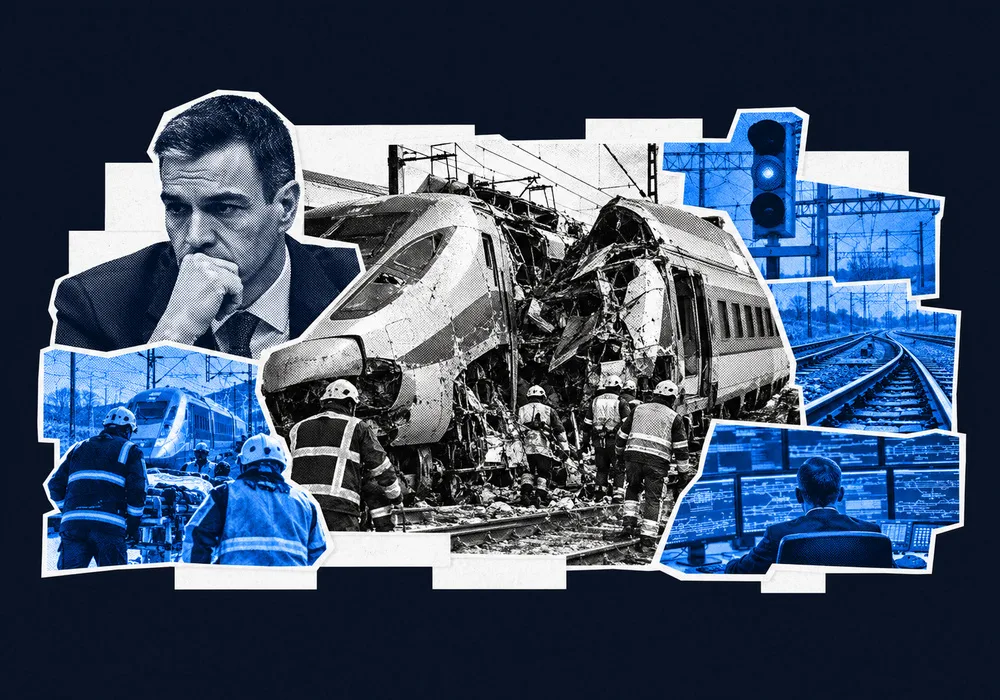
Transport Minister Óscar Puente has ruled out resignation following the Urda railway disaster, which killed 69 people. Preliminary findings point to a possible failure in the signalling system and a chain of operational errors, intensifying questions over Spain’s railway safety standards, infrastructure management and political responsibility.
Spain is facing renewed scrutiny of its railway safety system following a collision near Urda that killed 69 people and injured more than 100. The accident has become one of the country's deadliest railway disasters in recent years and has triggered questions about the reliability of railway infrastructure, the effectiveness of emergency safety mechanisms and the oversight of the national rail network.
The preliminary technical assessment points to a possible malfunction in the LZB railway protection system and a sequence of failures that may have contributed to the collision. Investigators are examining the role of the control centre operated by Adif, the state-owned company responsible for railway infrastructure, as well as the procedures followed by railway personnel before the crash. The Spanish Transport Accident Investigation Authority (AITAT) has stressed that the initial findings are not a definitive account of what happened and that the investigation remains ongoing.
The circumstances surrounding the accident have raised particular concerns about the safeguards designed to prevent trains from entering occupied sections of track. According to the initial assessment, the necessary safety barriers did not operate as intended. Investigators are therefore examining whether the collision resulted from a technical malfunction, human error or a combination of weaknesses across several layers of the railway system.
Puente Rejects Calls to Resign
Transport Minister Óscar Puente has ruled out stepping down, despite mounting criticism from opposition parties, trade unions and sections of the public. Speaking at a press conference in Madrid on 30 October, he said his understanding of political responsibility was to remain in office, explain what had happened and ensure that the necessary corrective measures were taken.
Puente argued that determining responsibility before the investigation is complete would risk identifying a convenient scapegoat rather than establishing the actual causes of the disaster. He maintained that investigators and the judiciary should determine what happened and who, if anyone, bears legal responsibility. At the same time, he rejected the suggestion that he was attempting to distance himself from the consequences of the accident.
His position has nevertheless intensified the political debate over ministerial accountability. The disaster has placed the government under pressure to demonstrate that it can provide credible answers and ensure that the railway network meets the safety standards expected by passengers. The minister's refusal to resign also comes amid criticism of the railway system following another major accident earlier in the year.
The investigation has drawn attention to the Adif control centre in Madrid's Atocha station. The employee who was on duty there at the time of the Urda collision has reportedly declined to give a statement to the Civil Guard. His decision does not establish responsibility, but the control centre's procedures and communications are likely to remain central to the investigation.
Infrastructure Failures and the Question of Systemic Risk
The preliminary findings have brought the reliability of railway signalling infrastructure into focus. Safety systems such as LZB are designed to monitor train movements and intervene when operating conditions become dangerous. A failure in such a system can expose weaknesses elsewhere in the network, particularly if alternative safeguards do not function as intended.
The investigation must establish whether the LZB malfunction was an isolated technical incident or part of a wider pattern of operational and infrastructure problems. It will also need to examine maintenance practices, the availability of backup systems, communication between control-centre personnel and train operators, and the procedures applied when automated protection becomes unavailable.
These questions extend beyond the immediate circumstances of the Urda collision. Railway safety depends on several interconnected layers of protection, from technical equipment and infrastructure maintenance to staff training and operational protocols. If several safeguards fail simultaneously, the consequences can be catastrophic even where individual procedures appear to have been followed.
The findings could therefore have implications for the wider Spanish railway network. Any recommendations resulting from the investigation may require changes to signalling systems, operational rules and infrastructure investment. The government will also face pressure to explain whether existing safety procedures are sufficient to prevent a similar disaster.
Urda's Response Highlights the Human Cost
While investigators and political leaders focus on the causes of the collision, the town of Urda has become a focal point of the humanitarian response. Residents, local businesses and volunteers mobilised to assist survivors and families travelling to identify or locate relatives. They provided food, blankets, medical supplies and temporary accommodation, with some residents opening their homes to people affected by the disaster.
Local pharmacist Antonio García was among those who responded shortly after the crash, returning to the scene with medical supplies alongside members of his family. A sports hall was also used to accommodate relatives, while volunteers organised food distribution and psychological support.
The response has demonstrated the importance of local communities during large-scale emergencies, particularly in the first hours after a disaster when emergency services are under considerable pressure. However, the scale of the mobilisation also reflects the number of people affected and the prolonged needs of families dealing with bereavement, injuries and uncertainty.
Political Consequences Will Depend on the Investigation
The Urda disaster has created a difficult test for Spain's government. Beyond the immediate emergency response, authorities must establish whether the railway system failed because of a specific technical defect, inadequate procedures or deeper structural weaknesses. The credibility of the investigation will be essential to restoring public confidence.
For Puente, remaining in office means that he will continue to face scrutiny as the investigation develops. His political position may become increasingly difficult if further evidence points to failures that could have been identified or prevented through earlier intervention. Conversely, a clear and independently established account of the accident will be necessary to distinguish between political responsibility, administrative shortcomings and individual liability.
The central issue is no longer limited to whether the transport minister should resign. Spain must determine why several safety mechanisms may have failed and whether the railway network has the infrastructure, oversight and operational safeguards required to protect passengers. The investigation's conclusions will shape not only the political response to the disaster but also the future of railway safety policy in the country.