
Spain Train Collision Disrupts High-Speed Rail Link Between Madrid and Andalusia

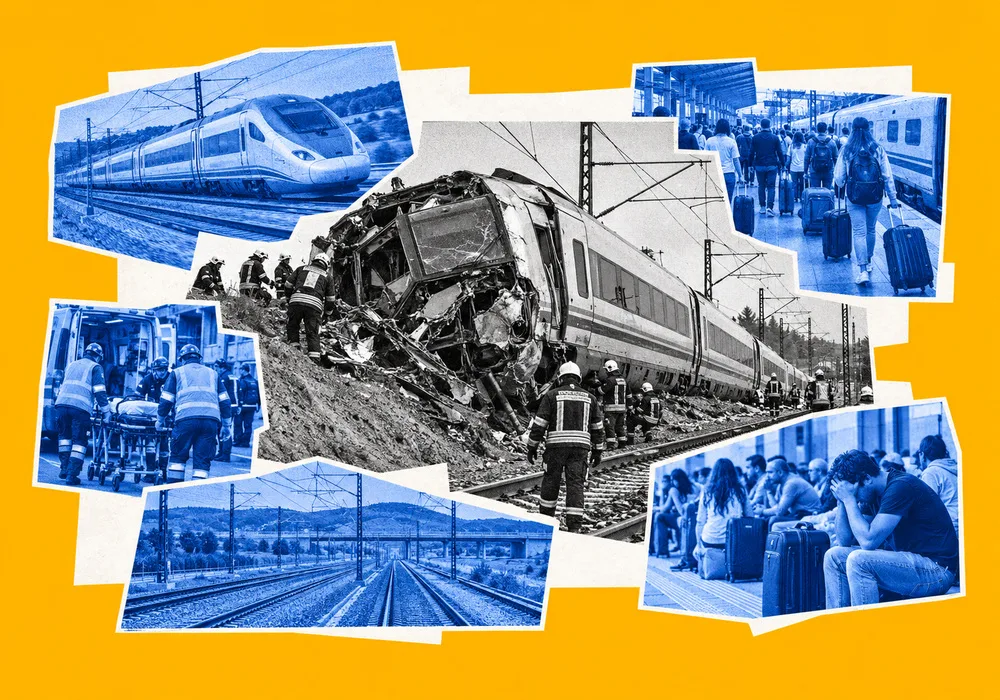
A collision between two passenger trains in Spain’s Toledo province on 28 October has left passengers injured and forced the suspension of high-speed services linking Madrid with southern Spain. The incident has mobilised emergency services and raised immediate questions about the circumstances of the collision, while disrupting a major transport corridor connecting the capital with Andalusia.
Two passenger trains collided near the municipality of Urda in Spain’s Toledo province on the morning of 28 October, prompting an emergency response and the suspension of high-speed rail services between Madrid and Andalusia. The accident involved a Renfe-operated AVE train and a service operated by Iryo, both travelling on the Madrid–Seville route. Spain’s rail infrastructure manager, Adif, initially described the incident as a rear-end collision and announced that traffic on the line had been interrupted in both directions. Early reports confirmed injuries among passengers, while the full scale of the incident and its consequences remained subject to official assessment.
The collision occurred at approximately 08:54 local time, according to information attributed to Spain’s emergency services. Initial reports indicated that two carriages had left the tracks and fallen down an embankment, complicating efforts to reach passengers and assess the damage. The circumstances surrounding the collision had not been fully established in the first official updates. Investigators will need to determine the precise sequence of events, including the movements of both trains and the operational conditions immediately before the impact.

The incident brought together two of Spain’s principal passenger rail operators on a route connecting the capital with one of the country’s most important southern regions. Renfe operates the state-owned AVE high-speed service, while Iryo is a competing operator in Spain’s liberalised long-distance passenger rail market. The presence of multiple operators on the same high-speed corridor reflects the expansion of competition in Spanish rail transport, but the investigation will need to establish whether any operational or technical factors contributed to the accident before broader conclusions can be drawn.
Emergency Response and Passenger Assistance
Emergency services deployed firefighters from the Alcázar de San Juan and Orgaz stations, Civil Protection personnel from surrounding municipalities, three medical helicopters and two advanced mobile intensive care units. The response was organised to provide immediate medical assistance, reach affected carriages and evacuate passengers where necessary. Local authorities also prepared additional accommodation for people affected by the disruption, with Urda’s mayor, Manuel Galán, saying that a municipal sports pavilion had been requested as a potential reception point.
The deployment of specialised medical resources reflected the challenges associated with an incident involving high-speed passenger trains and carriages displaced from the track. Emergency teams needed to assess injuries, secure the area and coordinate access to the damaged rolling stock. In such circumstances, the initial number of people reported injured may not provide a complete picture of the situation, particularly before all passengers have been accounted for and examined.
The authorities’ immediate priorities were to assist those affected, establish the extent of the damage and secure the site for further investigation. The emergency response also required coordination between local services, regional authorities, infrastructure managers and the operators responsible for the trains. The subsequent investigation will depend on the recovery of technical information and the examination of the trains and railway infrastructure.
High-Speed Services Suspended
Adif suspended traffic on the Madrid–Andalusia high-speed line following the collision. Renfe separately announced that services between Madrid, Ciudad Real and Andalusia had been interrupted, affecting passengers travelling to destinations across southern Spain. The disruption extended beyond the immediate accident site because trains using the corridor could not continue along their scheduled routes while the line remained closed.
Renfe made changes and cancellations available without charge for passengers affected by the interruption. However, the early announcements did not establish when services would resume or provide a complete timetable for alternative travel arrangements. Passengers therefore faced uncertainty over onward connections, arrival times and the availability of replacement services. The duration of the disruption would depend on emergency operations, technical inspections and the time required to determine whether the infrastructure could safely reopen.
The Madrid–Andalusia corridor is an important component of Spain’s domestic transport network. It connects Madrid with major urban centres in the south, including Seville, and supports business travel, tourism and routine intercity mobility. An interruption can affect passengers with onward rail connections and those travelling for work or other time-sensitive commitments. The consequences may also extend to transport operators, which must manage displaced passengers, rescheduling and the operational effects of trains and crews being out of position.
The collision demonstrates how an incident on a single section of high-speed railway can disrupt journeys across a much wider geographical area. Even when the physical damage is concentrated at one location, the suspension of a major corridor can create knock-on effects throughout the timetable. Restoring normal service therefore requires more than clearing the immediate site: operators and infrastructure managers must also determine how to return trains and staff to their planned schedules.
Investigation and Railway Safety
The investigation will need to establish how the collision occurred and whether signalling, train movements, braking performance, communications or other operational factors played a role. The initial description of a rear-end collision identifies the reported form of the incident but does not, by itself, establish its cause. No definitive conclusion about technical failure, human error or responsibility can be drawn from the initial reports.
Investigators will be expected to examine the relevant signalling and traffic-management records, data recorded by the trains and the condition of the infrastructure. They will also need to establish the speeds and positions of the trains before the collision, alongside the instructions issued to their crews. These findings will be essential for determining whether the incident resulted from an isolated failure or exposed a weakness requiring corrective action.
The distinction matters for the response beyond the immediate emergency. If the investigation identifies a specific technical or procedural problem, the findings may lead to changes in operating practices, equipment checks or safety controls. If the evidence instead points to a different set of circumstances, the resulting recommendations will need to reflect those findings. Until the evidence has been assessed, speculation about the cause risks obscuring the practical questions that the investigation must answer.
The incident also brings attention to the responsibilities shared across a railway system. Infrastructure managers oversee the tracks and traffic-management arrangements, while train operators are responsible for their services, rolling stock and operational procedures. Effective safety depends on these elements working together, supported by clear communication and reliable safeguards. Establishing where any failure occurred is therefore central to both accountability and the prevention of similar incidents.
Implications for Spain’s Rail Network
Spain has developed an extensive high-speed railway network that plays a significant role in domestic travel and offers an alternative to road and air transport on major routes. The system’s value depends not only on journey times and connectivity but also on reliability and public confidence. A serious collision can therefore have consequences beyond the immediate disruption, particularly when passengers are left waiting for information about the cause of an accident and the restoration of services.
The presence of competing operators has expanded passenger choice on some Spanish routes, but competition does not remove the need for consistent safety standards and effective coordination across shared infrastructure. The investigation into the Toledo collision will need to distinguish between the responsibilities of the operators involved and those associated with the wider railway system. Any recommendations should be based on evidence from the incident rather than assumptions about the effects of market competition or the performance of a particular operator.
For regional authorities and transport planners, the immediate issue is restoring connectivity while ensuring that the affected section can be reopened safely. For the operators, the challenge includes assisting passengers, managing cancellations and communicating changes as reliable information becomes available. For investigators, the priority is to establish the sequence of events and identify any measures that could reduce the risk of a recurrence.
The collision near Urda has interrupted a major transport link and placed emergency services, rail operators and infrastructure managers under immediate pressure. The scale of the operational response and the disruption to services underline the importance of dependable railway coordination, particularly on routes carrying large numbers of passengers. The longer-term implications will depend on the confirmed casualty figures, the findings of the investigation and the measures taken in response. Until those details are established, the priority remains passenger assistance, a safe restoration of rail services and a clear account of how the collision occurred.