
Measles Outbreak 2026: What Bangladesh’s Deadly Surge Warns Europe About Falling Vaccination Rates

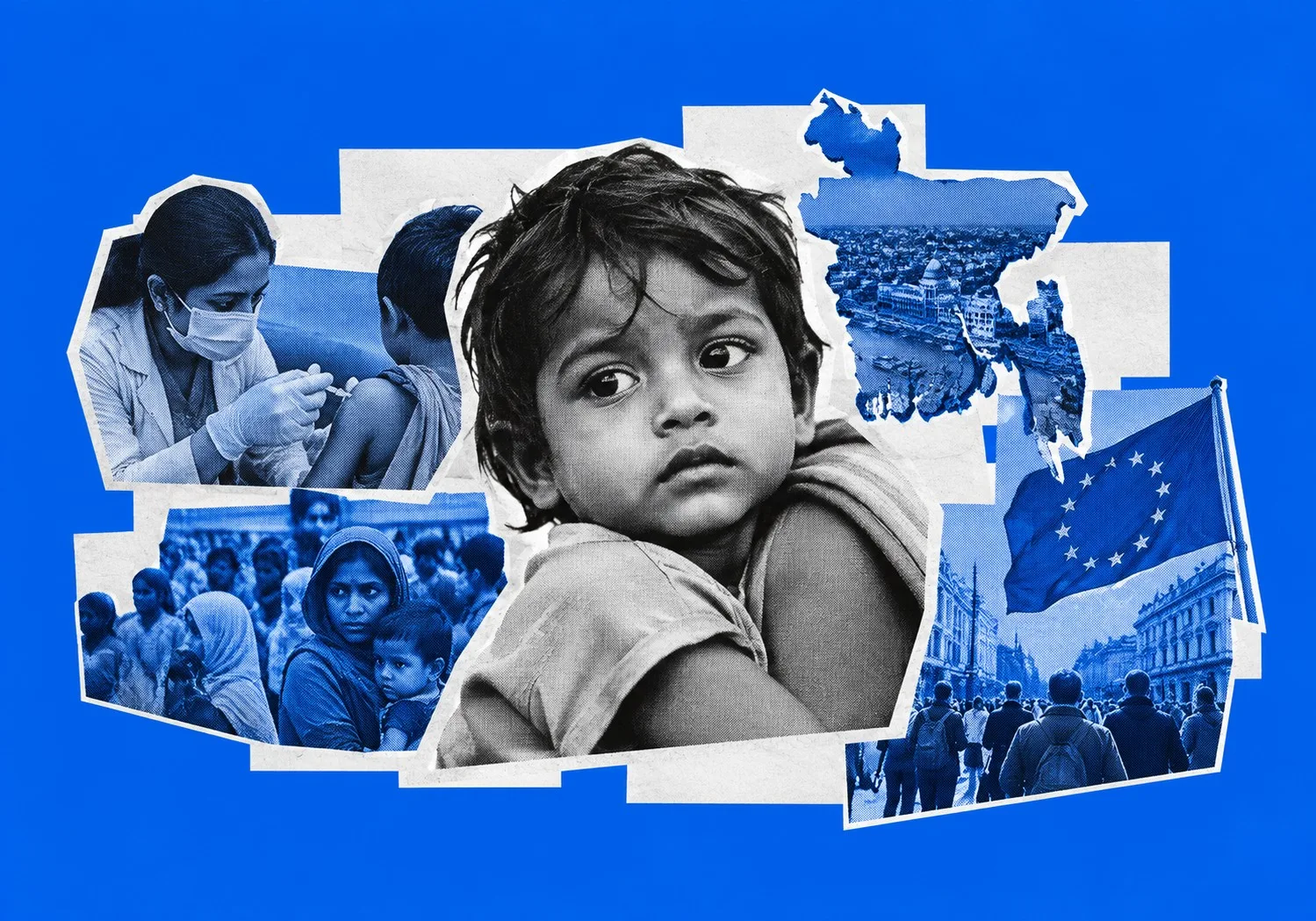
Bangladesh is currently battling the world’s worst measles outbreak, recording over 202,000 suspected cases and 1,100 deaths. In response, public health authorities in Europe face a sobering reality check. Latest data from the European Centre for Disease Prevention and Control records over 2,300 measles cases across 30 European Union and European Economic Area countries. This spread is driven largely by local community transmission and falling MMR vaccination rates in states like Italy, Bulgaria, and Romania. These epidemiological figures demonstrate how rapidly population immunity wanes when coverage drops below the World Health Organization’s 95 per cent threshold. Consequently, critical administrative and clinical vulnerabilities are being exposed in both developing and developed healthcare systems.
Between mid-March and October, official WHO metrics confirm that Bangladesh recorded 202,000 suspected cases of measles and 22,000 laboratory-confirmed infections. The outbreak has resulted in 1,147 confirmed fatalities.
Notably, children under five years of age account for 94 per cent of all deaths.

Until recently, national routine immunisation data reflected high coverage rates.
Joint WHO and UNICEF estimates show that in 2024 Bangladesh achieved 96 per cent national coverage for the first dose of the measles-containing vaccine.
Coverage for the second dose stood at 93 per cent. Both metrics directly aligned with the WHO target of 95 per cent required to prevent sustained transmission.
In 2024, mass political protests led to health worker strikes, delayed vaccine procurement orders, and disruptions to routine follow-up care. In a report published in July, the WHO and UNICEF estimated that national first-dose coverage dropped to 90 per cent in 2025.
Meanwhile, second-dose coverage fell to 86 per cent.
Unregistered Populations and Coverage Discrepancies
During April and May, health authorities conducted an emergency vaccination campaign.
This effort administered doses to approximately 20 million children aged six months to five years and led to an initial decline in new cases. In May, Health Minister Sardar Md. Sakhawat Husain spoke at a news conference. He stated that emergency operations had reduced infections in hotspots almost to zero and declared the outbreak under control.
However, official surveillance soon recorded a fresh increase in transmission. By September, the daily average reached 1,198 new cases.
A routine health intervention conducted in June targeted the exact same age demographic.
Surprisingly, it identified a baseline register containing 4 million more children than the April-May emergency campaign had covered. Ziauddin Hyder, special assistant on health affairs to Prime Minister Tarique Rahman, acknowledged the shortfall on 14 September. He confirmed that a coverage gap had developed, attributing it primarily to parental vaccine hesitancy and childhood illnesses.
Review minutes from inter-agency planning meetings in April and August documented earlier administrative inaccuracies.
Official reports for the years 2023 through 2025 routinely recorded preliminary coverage figures exceeding 100 per cent of targeted populations. These figures indicated systematic errors in population counting and target calculations long before the outbreak.
Additional structural factors contributed to this coverage gap. Joint data from UNICEF and the Bangladesh Bureau of Statistics indicate that up to 40 per cent of children in the country remain unregistered at birth. Furthermore, official health service records show that approximately one-third of public health worker posts are currently vacant.
Emergency Protocols and Regional Hospital Strain
Due to severe time constraints, the government reduced its pre-campaign operational readiness checks for the April emergency rollout. According to minutes from an April 19 inter-agency meeting, preparations were cut from the standard four rounds down to a single round.
Professor Mahmudur Rahman is the chair of Bangladesh's National Verification Committee for Measles and Rubella Elimination. He noted that when preparedness checks are not performed properly, the poorest and most isolated children miss out on vaccination and suffer the consequences.
Tajul Islam Abdul Bari, former head of immunisation in Bangladesh, emphasized the logistical timeline. He stressed that standard national campaigns typically require months of planning rather than a four-week rush.
Surveys reviewed during an August inter-agency meeting reinforced these concerns. They showed that the proportion of confirmed measles cases among completely unvaccinated individuals remained at 85 per cent post-campaign. This was virtually unchanged from the 82 per cent baseline recorded prior to the emergency drive.
In the northeastern region of Sylhet, official records document 180 child fatalities. Field interviews were conducted across 16 local communities in September. In half of these families, residents reported that public health personnel visited their villages only after a child had already died from measles. Clinical facilities in the region experienced severe capacity constraints. For instance, the 100-bed Shahid Shamsuddin Ahmed Hospital in Sylhet admitted 178 patients on a single day in September while simultaneously managing a national dengue epidemic.
Operational Prevention and Target Age Parameters
Health advisers continue to emphasize the economic and operational limits of emergency containment efforts.
Mark Jit is a WHO vaccine adviser and professor at New York University's School of Global Public Health. He pointed out that preventing an outbreak through vaccinations is far easier, cheaper, and safer than responding to an active emergency. He added that while emergency responses eventually stop transmission, many children contract the disease or die in the interim.
In late September, the government launched a secondary drive targeting 3.4 million previously missed children. Health Minister Husain promised to engage local communities directly so that no child would be left behind.
However, WHO data indicates that children over five years old account for one-third of all confirmed measles cases in Bangladesh. This age bracket is currently excluded from emergency campaign guidelines. Additionally, researchers in Bangladesh are studying new clinical data. Their findings indicate a faster waning of maternal immunity in infants under six months.
Commenting on long-term strategy, Dr Rajesh Narwal, deputy WHO representative to Bangladesh, delivered a clear message. He stated that routine immunisation must become more effective and resilient so that these structural gaps do not develop again.
And What About Europe?
The epidemiological mechanisms observed during coverage drops are also tracked in high-income regions. The latest surveillance data from the European Centre for Disease Prevention and Control details measles transmission dynamics across European states over a 12-month period from 1 September 2025 to 31 August 2026.
During this period, 30 EU and EEA Member States reported a total of 2,335 measles cases. Of these, 2,040 cases, or 87.4 per cent, were laboratory confirmed. Crucially, zero deaths attributable to measles were reported to the ECDC during these 12 months.

Surveillance data confirms that the majority of European infections were acquired locally rather than imported from abroad.
Specifically, 965 cases, representing 41.3 per cent of the total, were conclusively identified as locally acquired community transmission.
Another 973 cases, or 41.7 per cent, had an unknown importation status.
Direct importations accounted for 191 cases, or 8.2 per cent.
Meanwhile, import-related cases linked to imported transmission chains represented 206 cases, or 8.8 per cent.
In 13 European countries, half or more of all reported cases were classified as imported or import-related. However, overall figures still point to sustained local transmission within the bloc.
High case counts were heavily concentrated in five EU Member States.
Together, these countries accounted for 79.3 per cent of the European total.
Italy reported the highest volume with 653 cases, representing 28.0 per cent of all European cases.

Bulgaria followed with 564 cases, or 24.2 per cent.
Romania recorded 255 cases, representing 10.9 per cent.
Spain recorded 230 cases, or 9.9 per cent.
Finally, France reported 146 cases, representing 6.3 per cent.
Notification rates per million population varied significantly across reporting states against an EU and EEA average of 5.1 per million.
Bulgaria recorded an acute rate of 87.6 cases per million population.
Latvia followed at 26.3, Romania at 13.4, and Italy at 11.1 per million.

European Vaccination Status and Surveillance Gaps
Age-specific notification rates in the EU and EEA show the highest vulnerability among young children.
Infants under one year of age suffered a notification rate of 54.8 cases per million population.
Children aged one to four years recorded 27.5 cases per million.
Combined, children under five years accounted for 636 cases, or 27.2 per cent of the European total.
Concurrently, individuals aged 15 and above represented 1,203 cases, or 51.5 per cent of all reported cases.
This reveals substantial immunity gaps among older cohorts.
Among the 2,068 European cases with known age and vaccination status, 1,487 individuals, or 71.9 per cent, were completely unvaccinated.
A further 342 individuals, representing 16.5 per cent, had received one dose of a measles-containing vaccine.
Another 193 individuals, or 9.3 per cent, had received two or more doses.
Finally, 45 individuals, or 2.2 per cent, had an unknown number of doses. In the target age group of children aged one to four years, 311 out of 437 reported cases, or 71.2 per cent, were completely unvaccinated.
106 children, or 24.3 per cent, had received only a single dose.
Surveillance registries also show administrative data gaps across the bloc.
Vaccination status was recorded as unknown in 11.1 per cent of all reported European cases, representing 258 individuals. This figure reached 23.5 per cent among infected adults over 30 years of age.
Furthermore, reporting methods remain fragmented across Member States.
While most countries submit case-based data to the Epipulse surveillance platform, Belgium reports aggregated data for measles and omits rubella entirely.
Similarly, Poland uses aggregated reporting for rubella data.
In its public health guidelines, the ECDC outlines clear priorities for member states. It highlights that maintaining population coverage above 95 per cent for the second MMR dose is essential.
Ensuring timely routine administration, closing historical adult immunity gaps, and maintaining high-quality surveillance systems remain the core requirements for preventing localized measles transmission across European nations.
Sources: Reuters, European Centre for Disease Prevention and Control