
Russia’s Siberian Plague Scare: Lab Worker’s Death in Irkutsk Sparks Bio-Security Alarm

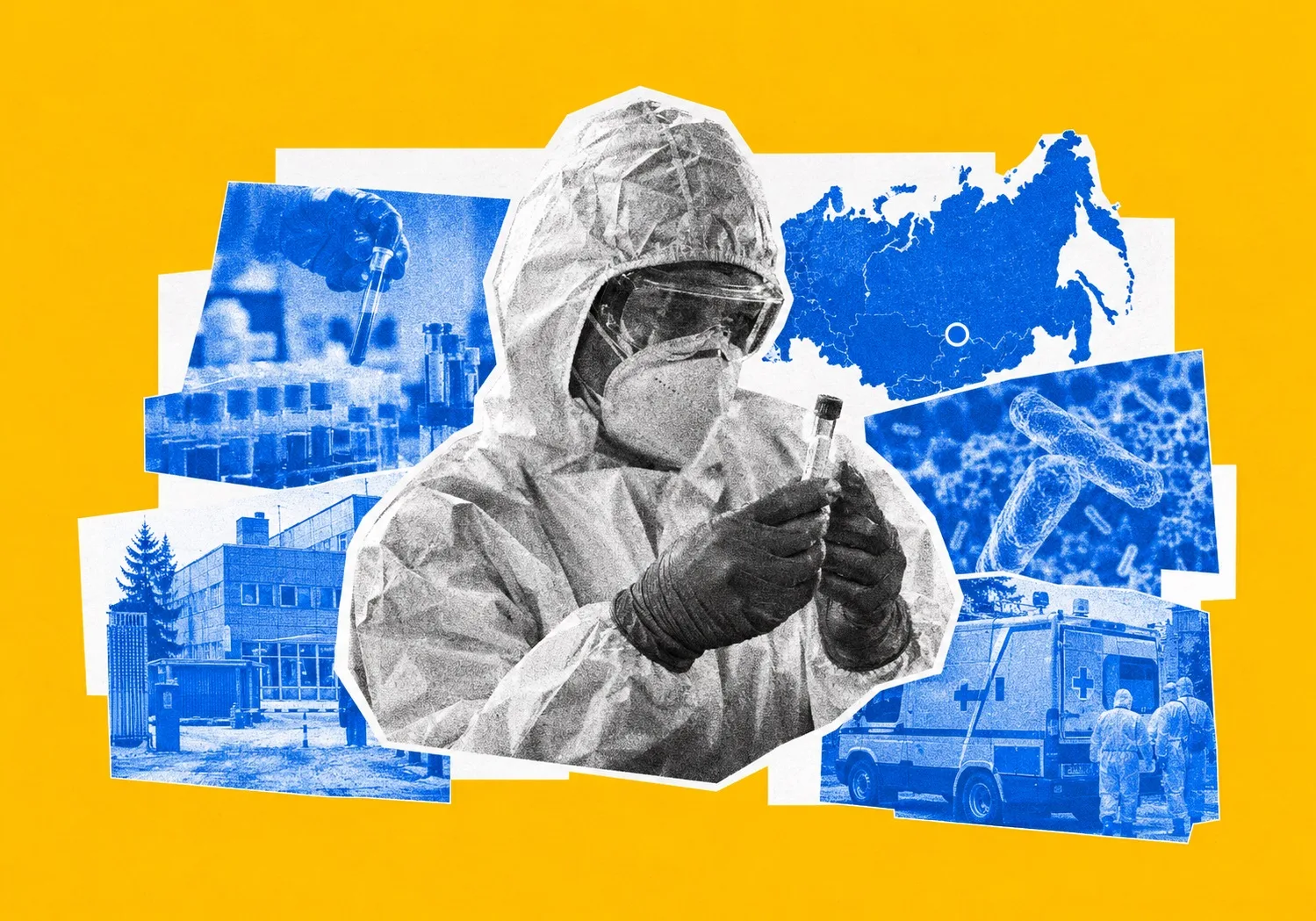
The death of 28-year-old laboratory worker Darya Shipilova at a specialist anti-plague institute in Irkutsk has triggered a major bio-security response across Siberia, despite Moscow’s firm denials of a plague outbreak. With nearly 200 people placed under medical observation and emergency measures implemented in nearby facilities, European and international health authorities are closely monitoring the growing gap between Russia’s official messaging and its actions.
That distinction matters.
The story is not, at least for now, that Russia is experiencing a plague epidemic. There is no evidence of a wider outbreak or sustained person-to-person transmission.
The story is that a death inside a facility designed to handle some of the country’s most dangerous pathogens has produced a response that looks much more serious than Moscow’s public messaging. The resulting information gap has forced Russia’s neighbours, the United States, the European Union and the WHO to assess a potentially sensitive biological-security incident without a complete public account of what happened.
A death at the worst possible workplace
Shipilova worked at the Irkutsk Anti-Plague Research Institute of Siberia and the Far East. Local and international reports identify her as a 28-year-old laboratory worker.
She became seriously ill in late September and was admitted to a hospital in Shelekhov on 29 September, according to reports. She died on 2 October after developing severe pneumonia.
The timing immediately raised questions because the institute where she worked is precisely the kind of facility where exposure to dangerous pathogens is a theoretical occupational risk.

But the first crucial fact is also the simplest: Russia has not confirmed that Shipilova had plague.
Rospotrebnadzor, the country’s federal public-health watchdog, has described her condition as pneumonia of unknown aetiology. It says additional testing found no microorganisms associated with her professional activities and that investigators found no accident at the institute involving pathogenic microorganisms.
That is the official position.
The problem is that events around the case have generated a second narrative.
According to reports by the independent Siberian outlet People of Baikal, Shipilova may have accidentally broken a test tube containing plague bacteria on 25 September. That account would provide a straightforward explanation for the timing: laboratory exposure, a short interval, severe respiratory illness and death.
But it remains an allegation. Russian authorities have denied evidence of such an accident. There is no publicly available independent laboratory evidence establishing that the test tube incident occurred.
That leaves the first major unanswered question: what actually caused Shipilova’s pneumonia?
Why nearly 200 people were isolated if there was no plague
The second question is more difficult.
If the authorities were confident that plague had been ruled out, why did they respond with measures normally associated with a potentially dangerous infectious event?
Around 200 people who had contact with Shipilova were placed under medical observation or isolation. Parts of the Shelekhov hospital where she was treated were cordoned off. More than 60 employees of the anti-plague institute were reportedly isolated. Reports also described precautionary measures at other hospitals in Irkutsk, including a maternity hospital, while workers at an aluminium plant in Shelekhov were reportedly instructed to wear masks.
Anna Popova, the head of Rospotrebnadzor, travelled to the region for an emergency meeting.
Those measures do not prove that plague was present.
They do, however, demonstrate that Russian authorities considered the possibility serious enough to justify an unusually cautious response before the diagnosis was settled.
That is entirely rational from a public-health perspective. When a person who works with dangerous pathogens dies from an unexplained severe respiratory illness, authorities cannot simply wait for certainty before tracing contacts.
But it creates a communications problem.
Moscow is effectively asking the public to accept two messages at the same time: there is no confirmed plague and the situation is under control, but the state is behaving as if a potentially serious biological event cannot yet be excluded.
For an outside observer, that is not necessarily evidence of a cover-up. It is evidence of uncertainty.
And uncertainty is precisely what makes the case politically sensitive.
The broken test tube that Russia says never happened
The laboratory-accident theory has become the most persistent explanation circulating outside the official narrative.
The alleged scenario is simple. A laboratory worker handling plague material accidentally breaks a test tube, is exposed to Yersinia pestis, develops pneumonic disease and later dies.
There is a reason this story has gained traction beyond social media.
It fits the workplace, the timing and the subsequent containment measures.
But the same facts can support a much less dramatic explanation: Shipilova may have contracted an unrelated infection, and because of her professional background, authorities treated the possibility of plague as a worst-case scenario until it could be excluded.
There is also another possibility: exposure could have occurred outside the laboratory.
Reports have mentioned possible work-related travel, including a trip connected with Buryatia. Siberia and parts of neighbouring regions contain natural plague reservoirs, where the bacterium circulates among wild rodents and their fleas. Human plague remains rare, but the disease is not an exotic pathogen imported from somewhere else. It exists naturally in the region.
So there are at least three plausible explanations for Shipilova’s illness: an unrelated pneumonia, exposure to plague or another dangerous infection outside the laboratory, or a laboratory accident.
None has been conclusively established in public.
That is why the broken-test-tube story should be treated as a hypothesis rather than a fact.
Russia’s changing story is becoming part of the story
The information surrounding the death has been unusually unstable.
One of the clearest examples came from Alexei Tsydenov, the head of neighbouring Buryatia. His original wording reportedly stated that the woman had died of plague. The post was subsequently changed to say that she had “possibly” died of the disease.
Another local authority, in the city of Baikalsk, reportedly published a warning advising residents not to travel to Shelekhov. That post was later deleted. Independent outlet Meduza, citing People of Baikal, also reported that REN TV deleted five social-media posts concerning the alleged spread of plague in Shelekhov.
None of this proves that Russian authorities were suppressing evidence of an epidemic.
But it does demonstrate something more concrete: the public narrative changed while the authorities were still trying to establish what had happened.
The Kremlin subsequently attempted to close the information gap. Spokesman Dmitry Peskov urged people to rely on official information rather than rumours and speculation. Rospotrebnadzor repeatedly insisted that there was no confirmed plague outbreak and no evidence connecting Shipilova’s death with pathogens at the institute.
The result is a familiar pattern in Russian crisis communication: local information appears, is revised or removed, federal authorities provide a more controlled version, and outside observers are left trying to reconstruct the chronology from fragments.
This matters more in a biological incident than in an ordinary political scandal.
With a contagious pathogen, the value of information is measured in hours, not days. International health systems need to know what happened, where the exposure occurred, who was exposed and whether transmission is continuing.
The absence of evidence of an outbreak is reassuring.
The absence of a clear account of the original exposure is not.
The most uncomfortable possibility: Russia may not know either
There is a temptation to interpret every contradiction as evidence that Moscow is hiding something.
But there is another explanation, and it may be more important.
Russia itself may not initially have known what happened.
A patient with severe pneumonia arrives at a hospital. Her professional background makes an especially dangerous infection plausible. Doctors cannot immediately establish the cause. Authorities begin contact tracing. Samples are tested. Hospitals are restricted. The federal public-health leadership intervenes.
At the same time, regional officials and journalists receive incomplete information.
That produces exactly the kind of information chaos now visible around Irkutsk.
In this interpretation, the central problem is not necessarily a secret epidemic. It is a system struggling to establish and communicate a diagnosis in an environment where information is tightly controlled.
That distinction matters.
A government can conceal an outbreak deliberately. It can also generate the appearance of concealment simply by releasing too little information while an investigation is under way.
For international health-security officials, both scenarios create the same operational problem: they have to plan for the possibility that the official picture is incomplete.
Moscow’s neighbours are not waiting for certainty
The reaction beyond Russia illustrates that logic.
Kazakhstan has officially said it is monitoring the situation in Irkutsk and has strengthened sanitary-quarantine controls at border checkpoints. Its Health Ministry said no symptomatic or suspected passengers had been identified and assessed the risk of importation as low while the Russian investigation continued.
The key point is that Kazakhstan has not declared an outbreak. It has taken precautionary measures while acknowledging that Russia has not established a final diagnosis.
Kyrgyzstan has also intensified sanitary controls at its border checkpoints, according to its Health Ministry, with monitoring of people, vehicles and cargo. The measures were described as preventive rather than a response to a confirmed outbreak.
That distinction is important.
Central Asian governments are not necessarily saying Russia has a plague epidemic. They are effectively saying that when information is incomplete and the disease under discussion is potentially dangerous, the cost of checking travellers is lower than the cost of discovering a cross-border transmission chain too late.
There has been less reliable evidence of concrete measures by Mongolia or China directly connected to the Irkutsk case, so claims that both countries have tightened their borders should not be presented as established fact without further official confirmation.
That itself illustrates the broader information problem: rumours have moved faster than verified government statements.
Washington is watching, but not sounding the alarm
The United States has taken the case seriously without treating it as an emerging international epidemic.
US Secretary of State Marco Rubio said Washington was monitoring developments closely. President Donald Trump also offered US assistance to Russia.
The State Department has urged Russian authorities to provide accurate information quickly and openly. US officials have been monitoring the case with the Centers for Disease Control and Prevention and other agencies.
That is a significant response given the wider strategic relationship between Washington and Moscow.
It also reflects a basic biological-security calculation.
If the event is simply an isolated case of unexplained pneumonia, the international consequences are limited.
If it is pneumonic plague acquired in a laboratory, the question becomes one of laboratory safety and containment.
If there is evidence of person-to-person transmission, the issue becomes an outbreak.
And if the pathogen was mishandled inside a facility working with dangerous biological agents, the case becomes relevant to a much wider discussion about Russian biological-security infrastructure.
Those are very different scenarios.
At present, there is no evidence that the worst one is occurring.
But international governments have little incentive to assume the best case before the evidence is complete.
Europe is watching the same information gap
The European Commission has said it is monitoring the situation “very closely” and is in contact with European Centre for Disease Prevention and Control experts. Brussels has said it is ready to coordinate between member states if necessary, while stressing that no emergency European response has been activated.
The European position is revealing because it shows how the case is being treated institutionally.
The EU is not responding to a confirmed Russian plague outbreak.
It is monitoring a potential biological incident in a country where independent access to information is limited.
That means European officials are relying heavily on international health mechanisms, particularly the WHO, to establish what Russia itself is reporting.
In practical terms, this puts the WHO in the position of an external cross-check.
The WHO has become the outside reference point
On 6 October, the WHO said Russian authorities had informed the organisation that there were no plague cases in Irkutsk.
The Russian authorities also reported that contacts of the deceased had been identified and that tests for dangerous infectious pathogens were negative.
But there is an important caveat.
Reuters reported that it could not establish whether the same testing conclusively ruled out plague in Shipilova herself.
That leaves an uncomfortable gap between two statements:
Russia says there are no plague cases in Irkutsk.
But the question of exactly what killed the laboratory worker has not been publicly resolved in equivalent detail.
The WHO has nevertheless assessed the general public-health risk as low on the information available.
That assessment is consistent with the evidence so far. There is no confirmed chain of transmission, no reported cluster of plague cases and no indication that the general population of Irkutsk is facing a confirmed outbreak.
The WHO's position is therefore neither “there is a plague outbreak” nor “nothing happened”.
It is closer to: the evidence currently does not show a wider threat, but the incident warrants monitoring while the investigation continues.
Why plague makes this different from an ordinary pneumonia case
The biological background matters, but only up to a point.
Plague is caused by Yersinia pestis, a bacterium that persists naturally in animal populations in parts of Siberia and other regions. Russia has recorded human cases before, although they are rare. The last confirmed human case in Russia was reported in 2016 in the Altai Republic.
The pneumonic form is particularly sensitive from a security perspective because it affects the lungs and can be transmitted between people through respiratory droplets.
That does not make every suspected case an international emergency.
It does mean that an unexplained respiratory death in a specialist anti-plague laboratory has a different risk profile from an unexplained respiratory death in the general population.
The institute itself is part of the story.
Facilities working with dangerous pathogens exist precisely because countries need to monitor natural disease reservoirs, diagnose infections and develop public-health countermeasures. They are also environments in which laboratory safety is critical.
The Soviet Union's history adds another layer.
The USSR maintained a large offensive biological-weapons programme and investigated pathogens including plague. Modern Russia rejects accusations that it maintains an offensive biological-weapons programme, while the United States has continued to raise concerns about Russian biological-weapons capabilities.
But there is no public evidence connecting the Irkutsk incident to a weapons programme.
That distinction must remain clear.
The existence of a Soviet biological-weapons legacy does not prove that an employee at a modern Russian anti-plague institute was working on weapons. Nor does a suspected laboratory accident prove deliberate research into offensive capabilities.
The more immediate question is much narrower and, in some ways, more important:
Can Russia demonstrate what happened inside a facility handling a pathogen capable of causing a serious respiratory infection?
Eleven explanations, one unresolved case
The competing explanations around Shipilova’s death range from the mundane to the alarming.
She may have died from an ordinary or unusual pneumonia unrelated to plague.
She may have been infected outside the laboratory.
She may have acquired an infection during fieldwork or travel.
She may have been exposed accidentally inside the laboratory.
The broken-test-tube account may be true.
It may be false.
There may have been another laboratory incident that has not been publicly described.
There may be no outbreak at all.
There may be a small, contained cluster that authorities are still investigating.
There is currently no evidence for a large hidden epidemic.
There is also no evidence linking the case to biological weapons.
And there is no confirmed evidence that Shipilova died from plague.
What is documented is the scale of the precautionary response, the conflicting early accounts, the subsequent editing and deletion of some local reports, the international requests for clarity and the decision by several governments to increase monitoring.
That leaves one interpretation standing out from the more dramatic theories.
Perhaps the central problem in Irkutsk is not that Russia is hiding a plague epidemic.
Perhaps it is that the country has not yet provided a sufficiently clear account of what happened.
For Russia's neighbours, that distinction may not make the situation less important.
In biological security, uncertainty is itself a risk factor.
And Irkutsk has produced a particularly uncomfortable kind of uncertainty: a laboratory worker died of unexplained pneumonia at an institution built to study one of the world's most dangerous pathogens, while the state simultaneously insists that there is no plague and behaves as though it cannot yet afford to assume that there is not.
That is why the case has travelled far beyond Siberia.
It has become a test not only of Russia's epidemic preparedness, but of how much information the outside world can obtain when a potentially sensitive biological incident occurs inside Russia.
Sources: CNBC, Reuters, Euronews, Interfax KZ, The Insaider