
Leaked Messages Raise Questions over Russian Influence in Belgium’s Security Services

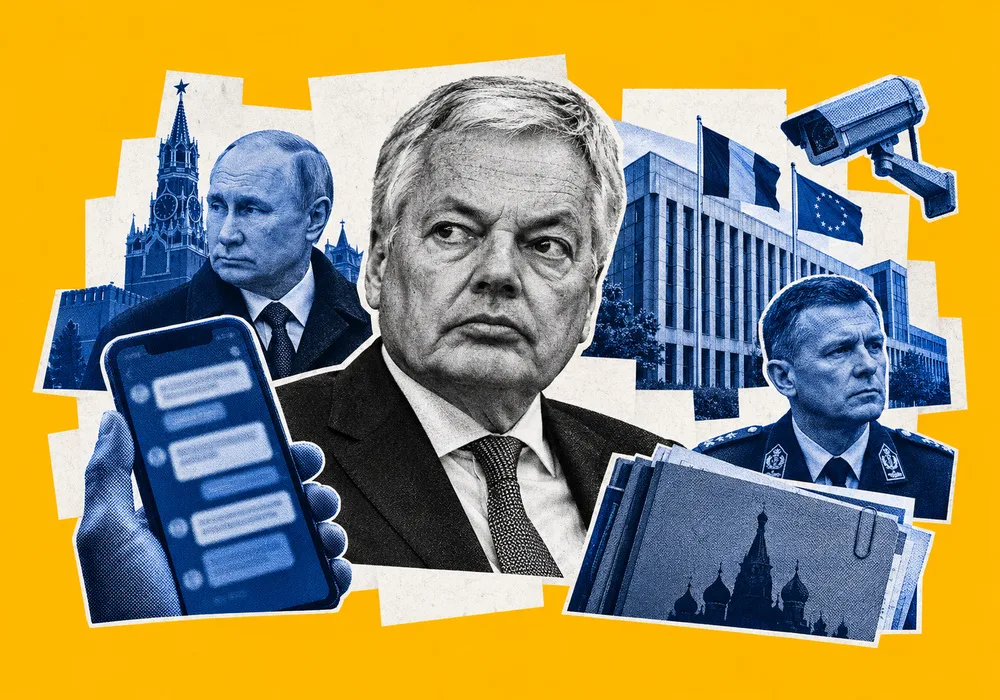
Leaked WhatsApp exchanges between former EU justice commissioner Didier Reynders and a senior Belgian intelligence official have raised questions about possible political interference in investigations into alleged Russian links. The disclosures add a new dimension to a money-laundering case against Reynders and expose potential vulnerabilities in Belgium’s intelligence oversight.
Leaked WhatsApp messages between former European Commissioner for Justice Didier Reynders and Hugues Brulin, a senior official in Belgium’s State Security Service (VSSE), have raised fresh questions about whether investigations into Reynders’ alleged links to Russia were deliberately obstructed. Published by EUobserver on 23 October, the exchanges date from September 2019 to April 2023, when Reynders served as an EU commissioner and Brulin held a senior position in the Belgian intelligence service.
The correspondence was recovered from Reynders’ phone during the Belgian federal police investigation into alleged money laundering. A 16-page file compiled by the police financial crimes unit contained the messages, which investigators may examine alongside other evidence. In one exchange from December 2022, Brulin said that a “job” involving the restructuring of the intelligence service’s management had largely been completed, prompting Reynders to reply, “Bravo for the work you did.” Although the immediate context concerned personnel changes, five current and former intelligence officers told EUobserver that the restructuring was connected to efforts to halt inquiries into Reynders. The publication said it could not independently verify those allegations.
The relationship between the two men has attracted particular scrutiny because Brulin had previously worked as a security adviser in Reynders’ ministerial cabinet. Their continued private contact while Reynders held a senior EU position raises questions about the boundaries between political relationships and the independence of national intelligence institutions. The messages do not, on their own, establish that the personnel changes were intended to suppress investigations, but the accounts provided by intelligence sources suggest that the exchanges warrant further examination.
Allegations of Interference with Russia Investigations
According to the intelligence officers cited by EUobserver, three VSSE officers who had investigated Reynders, including officials responsible for Russia and Africa-related work, saw their careers come to an end. One source alleged that the service’s internal management had worked to dismantle inquiries into the politician and his potential foreign connections. Another said that some counter-intelligence officers had become reluctant to include sensitive findings in their reports because they feared professional consequences.
The allegations concern more than the treatment of individual investigators. Intelligence services depend on their ability to examine potential foreign interference without political pressure, particularly when the individuals under scrutiny hold positions with access to classified information. If investigations were curtailed because they implicated a politically influential figure, the consequences would extend beyond Belgium’s domestic institutions to the wider European security system.
The correspondence also shows Brulin offering to help Reynders organise a “counterattack” against Nicolas Ullens, a former Belgian intelligence officer who had publicly accused the politician of acting in Russia’s interests. Ullens left the service in 2018 and subsequently raised allegations about Belgium’s response to Russian intelligence activities and the handling of suspected Russian networks. Reynders and Brulin discussed the controversy in private messages, using disparaging language about Ullens.
The existence of those exchanges does not establish that an intelligence investigation was unlawfully terminated or that Ullens’ allegations were accurate. Nevertheless, the apparent willingness of a senior intelligence official to discuss a political response with a former cabinet associate raises questions about institutional impartiality and the handling of whistleblowers. Reynders’ lawyer, André Renette, rejected Ullens’ claims as baseless and said that his client had never contemplated taking legal action against him. Brulin did not respond to EUobserver’s request for comment, while the Brussels prosecutor’s office and the VSSE declined to comment on the investigation.
The Wider Network under Scrutiny
The police material cited by EUobserver also contains information about Ernest de Laminne de Bex, a Belgian aristocrat who maintained contacts with Reynders and organised diplomatic gatherings through the Cercle International Diplomatique et Consulaire. Belgian intelligence reports from 2015 and 2017 reportedly described suspicions that de Laminne de Bex could act as an influence agent for Russian and Chinese intelligence services and that the organisation’s events could provide opportunities for foreign services to approach European and Belgian decision-makers.
According to the investigation, more than 20 intelligence reports concerning de Laminne de Bex were not followed by the formal warnings to government authorities that would normally allow officials to assess potential security risks. An intelligence source alleged that the reports were systematically suppressed because of Reynders’ connections. De Laminne de Bex has denied having links to Russian or Chinese intelligence, describing the allegations as defamatory.
The material also indicates that de Laminne de Bex contacted Reynders in January 2020 about Ullens’ allegations and proposed discussing a response to them. This adds to questions about how political, personal and intelligence-service relationships intersected during the period in which Reynders held senior positions in Belgium and the EU. However, the available messages and reported intelligence assessments do not independently prove that the aristocrat acted on behalf of a foreign government or that Reynders collaborated with Russian intelligence.
The central issue is therefore not simply whether particular allegations about Russia can be substantiated. It is also whether potentially significant intelligence was assessed and passed to the relevant authorities through established procedures. If warnings were withheld because of personal or political relationships, Belgium’s ability to identify foreign influence operations could have been weakened regardless of whether the individuals concerned ultimately faced criminal charges.
Money-Laundering Investigation Adds to the Pressure
The disclosures have emerged against the backdrop of a separate criminal investigation into Reynders’ finances. Belgian police raided his properties in December 2024, shortly after he left the European Commission. In 2025, he was charged with money-laundering offences relating to transactions allegedly involving approximately €1 million, including lottery-ticket purchases and cash deposits through ING Bank.
The leaked correspondence is part of the wider investigative material, but the financial allegations and the claims of possible Russian connections remain distinct issues. The existence of the money-laundering case does not prove foreign collaboration, just as the WhatsApp exchanges do not establish that Reynders passed classified information to Russia or acted on behalf of the Kremlin. Reynders denies wrongdoing, and he has not been convicted in the case.
The potential security implications are nevertheless significant because Reynders previously held several positions involving access to sensitive information. Before becoming EU justice commissioner in 2019, he served as Belgium’s foreign and defence minister from 2011 to 2019. His responsibilities included exposure to national, EU and NATO security matters, while his European portfolio involved cooperation with institutions responsible for protecting the bloc’s financial interests and enforcing the law.
This background makes the investigation relevant beyond Belgium’s domestic political scene. The concern is not that access to classified material automatically implies misconduct, but that any proven interference with security investigations could undermine the safeguards intended to protect sensitive information and prevent conflicts of interest. The extent of any damage would depend on what investigators can establish about the alleged conduct and whether classified information or operational intelligence was compromised.
Implications for European Counter-Intelligence
The case highlights a structural vulnerability facing European security services: intelligence agencies can be exposed to political pressure when senior officials have close ties to politicians who may themselves become subjects of investigation. Professional safeguards are designed to prevent this, but their effectiveness depends on independent oversight, clear reporting procedures and the ability of investigators to pursue sensitive cases without fear of retaliation.
Belgium’s position makes the issue particularly consequential. Brussels hosts EU and NATO institutions, alongside diplomatic missions and international organisations that are potential targets for foreign intelligence operations. The country’s security services therefore operate in an environment where attempts to cultivate political access can have implications for institutions well beyond national borders. Any failure to investigate credible warnings about foreign influence could create opportunities for hostile services to build relationships with decision-makers or exploit gaps in institutional oversight.
The allegations also come amid broader European concerns about Russian espionage, political influence operations and attempts to undermine support for Ukraine. Since Russia’s full-scale invasion of Ukraine in February 2022, European governments have expelled Russian diplomats suspected of espionage and strengthened counter-intelligence measures. Yet personnel disputes, political patronage and weak accountability can create vulnerabilities that are not addressed through diplomatic expulsions or sanctions alone.
For European institutions, the immediate test is whether Belgian investigators and intelligence oversight bodies can establish what happened, distinguish substantiated evidence from disputed testimony and determine whether internal procedures were breached. The European Commission has said it stands ready to cooperate with national authorities where necessary and relevant, while emphasising the independence of the European Public Prosecutor’s Office from the Commission and national governments.
The leaked messages have not established that Reynders collaborated with Russia or that the alleged obstruction occurred as described by intelligence sources. They have, however, brought renewed attention to questions about the independence of Belgium’s security services and the handling of potential foreign-interference investigations. The outcome of the Belgian proceedings will determine whether the disclosures lead to formal findings of misconduct or remain allegations in an ongoing criminal inquiry.
Sources: EUobserver, The Brussels Times, Brussels Signal