
France’s Nuclear Umbrella: European Support Grows, Control Stays in Paris

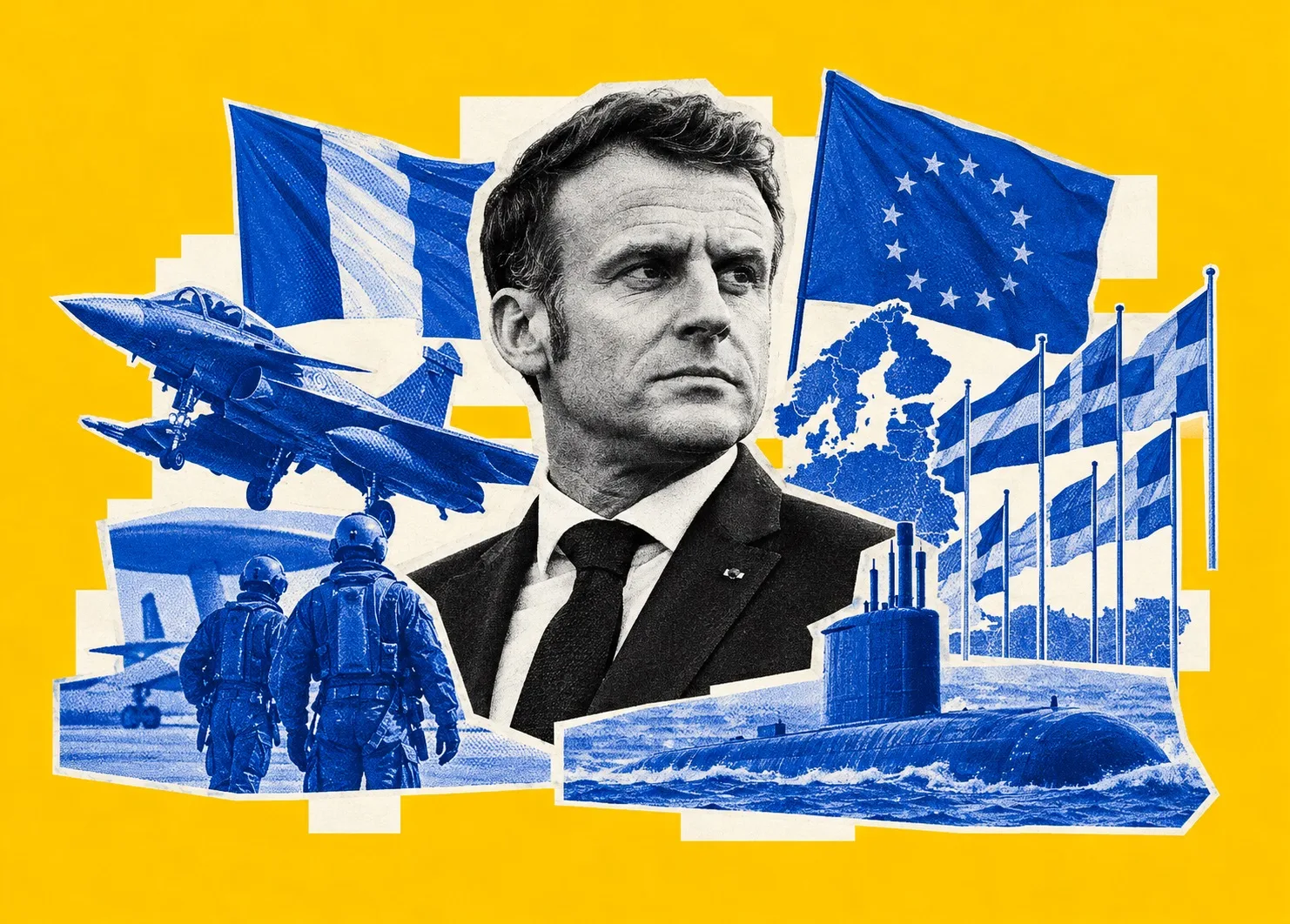
Ten European nations have joined France’s nuclear deterrence initiative to reduce reliance on US security. While Paris is expanding joint exercises and planning with allies, President Emmanuel Macron retains sole authority over the launch of France's strategic arsenal.
There is, however, a significant gap between helping France conduct a nuclear mission and receiving a French commitment to defend another country with nuclear weapons. Macron has offered the former, not the latter.
Why European Governments Are Signing Up
The appeal of the French proposal lies partly in its timing.
Russia's continuing war against Ukraine has forced European governments to reconsider how they would respond to a major military confrontation. President Donald Trump's approach to American defence commitments has added another concern: how much of Europe's security planning should depend on decisions made in Washington?
France cannot answer that question on behalf of the continent. Its nuclear arsenal is much smaller than America's, and Paris has no intention of placing it under European command. What it can offer is a closer relationship between its strategic forces and the conventional militaries of neighbouring countries.

Germany, Poland, the Netherlands, Belgium, Greece, Sweden, Denmark and the United Kingdom joined the initiative when Macron introduced it in March. Norway followed in May, and Finland became the tenth participant on 14 September.
The composition of the group is telling. Nordic and eastern European governments have a particular interest in strengthening deterrence against Russia. For them, closer cooperation with France provides another military relationship alongside their existing NATO commitments.
There are practical benefits, too. A country does not need its own nuclear arsenal to contribute to nuclear deterrence. Fighter escorts, air defence systems, intelligence and early warning capabilities all matter when planning how strategic aircraft would operate during a crisis.
France is asking partners to contribute in precisely those areas.
The arrangement allows participating governments to become involved in nuclear-related military planning without taking responsibility for maintaining nuclear weapons. Paris gains access to a wider network of conventional capabilities, while its partners gain experience working with French strategic forces.
Whether those arrangements would influence French decisions in an actual confrontation is a separate matter.
What the British-French Exercise Revealed
Exercise Rummy was more useful as a demonstration of military cooperation than as a statement of nuclear policy.
French Rafale B jets departed Saint-Dizier Air Base to conduct a simulated nuclear mission. British Royal Air Force Typhoons accompanied them, providing the conventional fighter support that could be needed to protect strategic aircraft.
No nuclear weapons were used.
The exercise showed that the two countries could coordinate an operation involving France's airborne nuclear component without creating a joint nuclear command.
That is an important distinction for Paris, which has consistently treated independent decision-making as a central part of its deterrence doctrine.
France's nuclear forces include aircraft capable of carrying ASMPA-R cruise missiles and Triomphant-class submarines equipped with M51 ballistic missiles. Its stockpile has been estimated at roughly 290 warheads, although Macron has announced plans to expand it and stop publishing the total.
The decision to increase the arsenal comes alongside efforts to involve more European states in the military activities surrounding it. France is strengthening its own capabilities while encouraging allies to take a greater role in supporting them.
The next stage may involve more than joint flights.

Through Operation Topaze, France has explored the use of alternative airfields, including civilian and military facilities, for dispersed aircraft operations. Temporary deployments to partner countries could give French strategic aviation more options during a confrontation.
An adversary would then have to consider the possibility of French aircraft operating from several locations rather than relying exclusively on established bases in France.
But there would be complications for the host countries. Allowing nuclear-capable French aircraft to operate from national territory could make them more directly involved in a confrontation involving France's strategic forces.
They would still have no authority over whether those weapons were used.
The American Question France Cannot Avoid
The French initiative is developing alongside NATO's existing nuclear arrangements, not in place of them.
That distinction is particularly important for countries that regard American extended deterrence as a central element of their security.
Washington's commitments operate within an established alliance framework. Macron's proposal, by contrast, consists of voluntary cooperation arrangements that do not include formal French nuclear guarantees.
There is no provision requiring Paris to respond with nuclear weapons if a participating country comes under attack. Nor does membership give partners a role in authorising a French nuclear strike.
This leaves European governments with an unusual proposition. They can contribute to the effectiveness of France's deterrent without obtaining an explicit promise that it will be used to protect them.
Such cooperation is not necessarily without value.
A country that trains regularly with French strategic forces develops closer military relationships and a better understanding of how those forces operate. Shared planning can also make it easier to coordinate conventional military responses during a crisis.
But none of that removes the uncertainty surrounding French political decisions.

Nuclear deterrence depends heavily on an adversary's assessment of whether a government would actually use its weapons. France's partners may become more closely connected to its military preparations, but they cannot determine how Macron or his successors would respond to a threat against their territory.
The Trump administration's position on the latest French developments is not established in the available information. What is clear is that the initiative has gathered support as European governments reconsider the reliability of long-term American commitments.
For now, they are seeking additional options rather than choosing between the two nuclear powers.
Paris Prefers Bilateral Deals to a Common European Command
The way France is organising the initiative may prove as important as the number of participating countries.
On 14 October, French and Dutch officials held their first high-level nuclear steering group meeting. France has established a similar bilateral structure with Germany.
These arrangements allow governments to discuss cooperation directly with Paris, taking account of their individual military capabilities and political constraints.
They also avoid the much harder question of who would control a common European nuclear deterrent.
Macron has not proposed transferring French launch authority to an EU institution or multinational military command. Each participating country works with France under its own arrangements.
For Paris, that preserves national sovereignty while increasing its influence over European defence planning.
For other governments, it offers a way to deepen cooperation without committing to a new European nuclear structure whose political and legal implications would be far more demanding.
The price is fragmentation.
Italy has declined to join amid political friction, and the initiative does not encompass every major European military power. Even among participating countries, the nature and depth of cooperation may differ.
This is a distinctly intergovernmental model of European security. It depends on governments agreeing to cooperate with France rather than accepting a single set of European defence obligations.
That may limit the emergence of a unified European deterrence policy, but it also makes cooperation possible between countries that would struggle to agree on a more ambitious arrangement.
France has found a way to broaden the European role in its nuclear operations without reopening the fundamental question of ownership and command.
A Wider Deterrence Network on Russia's Borders
Latvia and Estonia are now negotiating entry into the framework, following Finland's accession in September.
Their potential participation would extend French-led cooperation further into the Baltic region, where military planning is closely connected to concerns about Russia.
For Moscow, a larger network of European states supporting French strategic operations creates additional complications. French aircraft could receive conventional protection and operational support from more countries, while coordination on intelligence and warning systems could improve preparations for a crisis.
Russia has already treated the initiative as part of a wider European military build-up directed against it.
Yet the political significance of Baltic participation should not be confused with a change in France's nuclear obligations.
Neither Latvia nor Estonia would acquire a formal French nuclear guarantee simply by joining. Their negotiations concern participation in the framework, not the transfer of nuclear decision-making powers.
The same limitation applies to Finland, Poland and the other partners.
It is possible to imagine increasingly sophisticated cooperation between French nuclear forces and European conventional militaries. Exercises could become more frequent, planning mechanisms more detailed and temporary aircraft deployments more familiar.
Such developments would make the military network surrounding France's deterrent more substantial.
They could also make the absence of shared political authority harder to ignore.
If French strategic aircraft were operating from an allied airfield during a major confrontation, the host government would have a direct interest in the decisions being taken in Paris. Its territory, military infrastructure and conventional forces could be involved in supporting an operation whose nuclear dimension remained outside its control.
France has so far managed to separate these questions. Its partners can participate in preparations while the French president retains exclusive authority over the weapons themselves.
The more deeply those partners become involved, the more consequential that separation may become.
Sources: EconoTimes, Defense, Le Monde, WSJ