
EU Debates €70bn Funding for Ukraine as Member States Split Over Long-Term Support

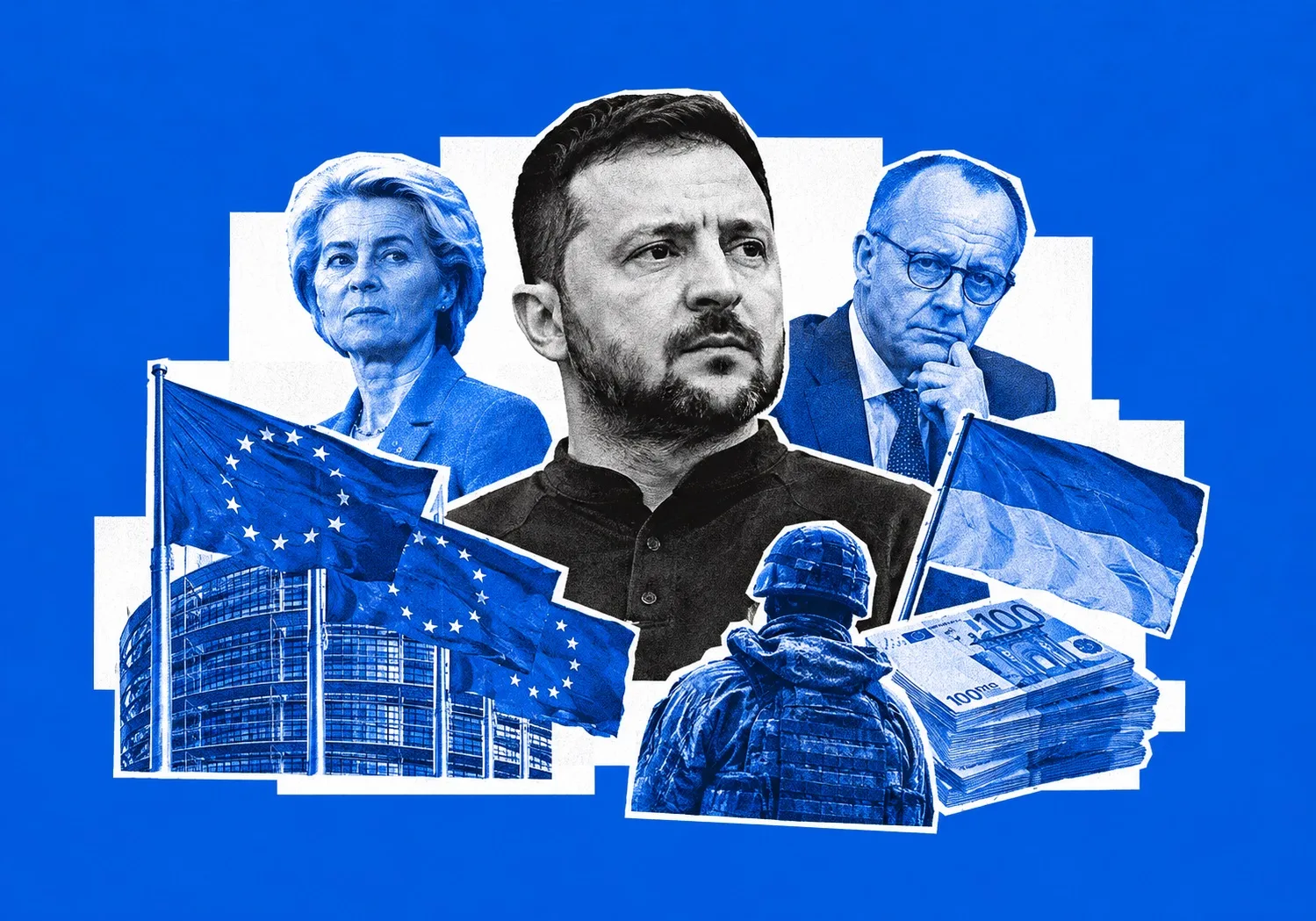
Following Volodymyr Zelenskyy’s request for €70bn to cover Ukraine’s 2027 war costs, European leaders face a growing divide over how to finance long-term support. While countries like Sweden press ahead with bilateral military and winter aid, opposition from Slovakia and Hungary is forcing the EU toward more flexible, coalition-based funding models.
European leaders have accepted the scale of the problem without yet agreeing on how to cover it. The resulting gap between political support and financial commitments is becoming a central test of the EU’s capacity to sustain Ukraine beyond successive emergency funding rounds.
The war is becoming a budgetary commitment
Ukraine’s request for €70bn is not simply a demand for more weapons. It reflects the difficulty of financing a state that must maintain its armed forces while keeping public services operating under the pressure of a continuing war.
The military component includes ammunition, drones, air-defence systems and 300 Patriot missiles. The civilian requirements are equally consequential. Electricity, heating, water supplies, hospitals, schools and telecommunications must continue functioning despite Russian attacks on critical infrastructure.
These needs reinforce one another. Damage to energy networks increases pressure on public finances, while the resources required to defend the country compete with the money needed to sustain civilian life. A funding shortfall could therefore affect both Ukraine’s ability to fight and its ability to maintain the state behind the front line.
The €155bn projected cost of the war in 2027 gives European governments an indication of the scale of the commitment ahead. Yet the €70bn request is not itself a detailed calculation of every component of that total. It is the additional financing Kyiv says it needs to address its projected budgetary and defence shortfall.
That distinction matters. The political question is no longer whether Ukraine requires substantial external support, but how European governments can turn an acknowledged need into a predictable stream of money.
Ursula von der Leyen, president of the European Commission, has said the deficit must be covered. French President Emmanuel Macron has pointed to discussions involving the G7, the EU and other partners, while German Chancellor Friedrich Merz has argued that previous funding is insufficient and that the issue must be addressed in November and December.
Their positions indicate broad agreement on the need for further assistance, but not yet a settled financing plan. For Kyiv, the interval between recognition and commitment is itself a source of uncertainty.
Europe's financing model is changing
The proposed funding for 2027 follows an existing €90bn Ukraine Support Loan covering 2026–2027, established under an EU mechanism adopted in February 2026. That arrangement already demonstrated how the bloc could organise substantial assistance without requiring every member state to participate financially.
The emerging model relies on more flexible arrangements, including specialised loans and enhanced cooperation among participating countries. Rather than allowing disagreement within the EU to prevent action altogether, these mechanisms permit willing governments to move forward while others remain outside the financial commitment.
The distinction is increasingly important as the war extends into another year of European budget planning. Emergency grants can respond to immediate needs, but sustained military procurement and state financing require a more structured approach. Governments need to know not only how much they intend to provide, but also how the money will be raised, distributed and maintained over time.
The €70bn proposal must be understood against that institutional shift. It is not merely another request to replenish an assistance fund. It raises the question of whether Europe can establish a sufficiently durable financing architecture for a war whose costs cannot be confined to a single budget cycle.
Frozen Russian sovereign assets are part of the wider debate. The G7’s Extraordinary Revenue Acceleration programme has already mobilised about $50bn using profits from immobilised Russian assets. Such arrangements offer a way to connect assistance to the financial consequences of Russia’s invasion, rather than relying exclusively on national budgets.
They do not, however, remove the political choices involved in future funding. The existing programme provides a precedent, not an automatic guarantee that the next financing gap will be covered. European governments must still agree on the scale, structure and distribution of the burden.
Opt-outs are becoming part of the system
Slovakia and Hungary have said they will not participate in the proposed €70bn financing mechanism. Both governments oppose the new financial commitment, although neither intends to prevent other EU members from proceeding.
Slovak Prime Minister Robert Fico has objected to further joint EU debt and advocated alternative forms of cooperation, particularly infrastructure and energy links. Slovakia has also pointed to Czechia’s decision to opt out of the earlier €90bn loan arrangement.
These positions expose a tension within the European response. The EU can maintain a common political position on supporting Ukraine while allowing its members to make different financial commitments. That flexibility can prevent individual governments from blocking assistance altogether. It also makes the distinction between collective policy and collective responsibility increasingly pronounced.
The immediate advantage is practical: a coalition of willing states can move ahead without waiting for unanimity on every funding decision. The longer-term risk is institutional. If opt-outs become routine, the cost of supporting Ukraine may fall disproportionately on a core group of countries and EU institutions.
France and Germany will be central to resolving that problem. Their willingness to discuss additional financing gives the proposal political weight, but neither country's position amounts to a final commitment to the full amount requested by Kyiv.
The negotiations scheduled for the coming months will therefore concern more than the technical design of a loan. They will test how far European governments are prepared to institutionalise their financial obligations to Ukraine, and whether a flexible coalition can provide the predictability that a prolonged war demands.
Sweden is planning beyond the next winter
Sweden’s latest commitments offer a more tangible illustration of the two time horizons confronting European policymakers.
Stockholm has announced approximately €45mn in civil assistance, equivalent to 500mn Swedish kronor, to help Ukraine prepare for winter. The package is intended to support electricity and heating for about 150,000 people, alongside repairs to power grids and assistance for hospitals, schools, water supplies, telecommunications, internally displaced people and food security.
The intervention targets the systems whose failure can turn military pressure into a broader humanitarian and economic crisis. Keeping electricity and heating available is not separate from sustaining Ukraine’s war effort: functioning infrastructure allows communities to remain viable and public institutions to continue operating.
Yet emergency repairs alone cannot address the longer-term security problem. Russia’s attacks on energy infrastructure make air defence a continuing requirement, while the cost and complexity of replacing damaged equipment place additional pressure on Ukraine’s resources.
Sweden’s military commitments are designed around that longer horizon.
On 16 October, Sweden and Ukraine finalised a contract with Saab for 16 Gripen E multirole fighter jets, valued at approximately $2.5bn, or 24.6bn Swedish kronor. The aircraft are scheduled for delivery between 2029 and 2030, with financing through the EU’s Ukraine Support Loan and support from the United Kingdom. Sweden also plans to provide 16 older Gripen C/D aircraft as military aid from early 2027.
The two tracks serve different purposes. The planned C/D deliveries could strengthen Ukraine’s available combat-aircraft fleet sooner, while the Gripen E contract establishes a longer-term procurement commitment. Together with Ukraine’s F-16s, the Swedish aircraft would contribute to a more diversified Western-supplied fleet.
Their value will depend on how they are integrated into Ukraine’s operational requirements, including the defence of airspace against missile and drone threats. The aircraft cannot be treated as an immediate solution to the winter energy crisis: the newer jets are years away, and even the older aircraft will require effective integration into Ukraine’s air operations.
The contract nevertheless represents a significant shift from supplying emergency military equipment towards planning a future air force around long-term Western industrial partnerships. Saab’s role is no longer limited to a potential supplier under discussion; a defined procurement agreement now connects Swedish defence production to Ukraine’s future capabilities.
The gap between immediate needs and future commitments
Europe’s response is consequently operating on two different clocks. Energy assistance must address vulnerabilities before winter, when attacks on electricity, heating and water infrastructure can have immediate consequences. Financial planning must secure the resources to keep the Ukrainian state functioning throughout 2027. Defence procurement extends further still, with some of its most important deliveries scheduled for the end of the decade.
Each timetable creates a different political challenge. Civil assistance can be delivered through comparatively targeted packages, such as Sweden’s €45mn commitment. Long-term military contracts require confidence in future financing, production and delivery. Covering Ukraine’s projected fiscal and defence deficit demands agreement on a scale of spending that individual governments may be reluctant to assume.
The EU’s emerging funding architecture is an attempt to reconcile those pressures with the reality of internal disagreement. Flexible mechanisms can keep money moving when unanimity is unavailable, while partnerships with countries such as the United Kingdom and coordination through the G7 broaden the framework beyond the EU itself.
But flexibility is not the same as certainty. Ukraine can plan around the Gripen contract because its terms and delivery timetable have been established. Its wider 2027 financing requirement remains subject to negotiations among governments whose political support has not yet translated into an agreed package.
That difference is where Europe’s institutional challenge becomes most acute: building a predictable system for sustaining Ukraine while relying on a political coalition that remains unwilling to share every part of the bill.
Sources: Statement by the Swedish Minister for European Union Affairs, Jessica Rosenkrantz/X, France24, The Economic Times, United24 Media, The Kyiv Independent