
Black Sea Grain Deal: Turkey and India Proposed as Guarantors for Ukraine-Russia Shipping

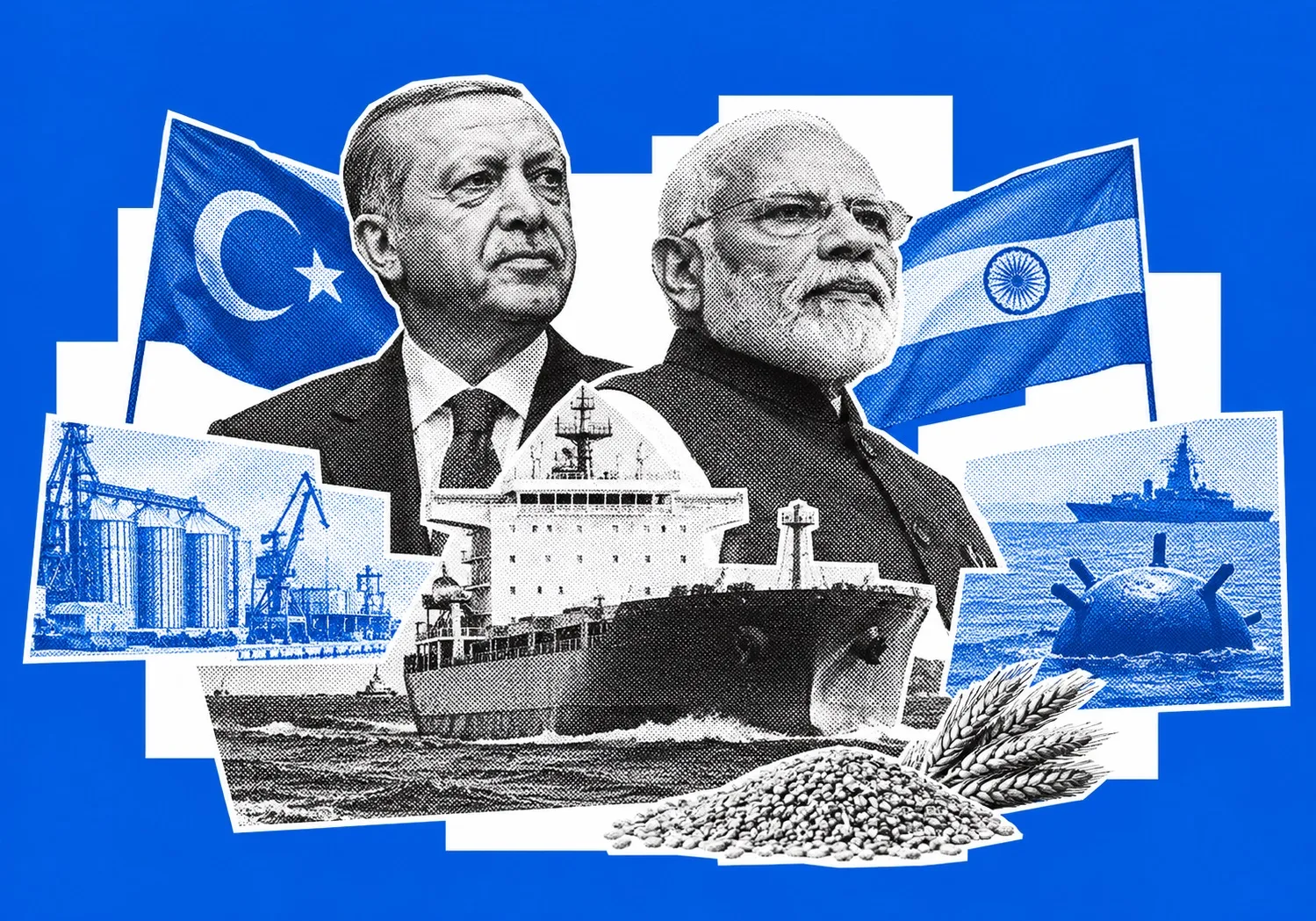
Germany and the United States are backing new negotiations at the G20 to restore safe commercial shipping in the Black Sea. Under proposals being examined by Washington and Berlin, Turkey, India, and Egypt could register merchant vessels and act as neutral guarantors for Ukrainian and Russian grain and energy corridors.
The initiative is significant partly because of who is driving it. Western powers remain involved, but the practical negotiations increasingly depend on countries that maintain working relationships with both Moscow and Kyiv.
Turkey, India and Egypt are seeking to make their diplomatic influence a form of protection for merchant vessels. Whether that influence can withstand a missile attack is another matter.
A Shipping Agreement Without a Peace Agreement
The proposals under discussion would divide commercial traffic into two geographically separate corridors.
Ukrainian vessels would travel towards the Bosphorus along the Romanian and Bulgarian coastlines. Russian commercial ships would use routes following the Georgian and Turkish coasts.
A second mechanism would place civilian cargo vessels entering Ukrainian and Russian ports under the flags of Turkey, India or Egypt. Ukrainian President Volodymyr Zelensky has confirmed discussions about a reciprocal arrangement in which one foreign-flagged vessel enters a Ukrainian port while another enters a Russian port, with guarantees that neither will be attacked.
The underlying calculation is straightforward. Moscow might be prepared to attack a Ukrainian commercial vessel but hesitate before striking a ship registered in a country whose political and economic cooperation it values.
This would give neutral or non-Western states a direct stake in enforcing maritime restraint.
Unlike the earlier UN-brokered Black Sea Grain Initiative, the emerging framework relies heavily on arrangements between individual governments and their willingness to protect their own commercial interests. The proposed coastal corridors would also separate Russian and Ukrainian traffic rather than depend primarily on a common diplomatic mechanism for agricultural exports.
It is a narrower ambition than ending the war, but potentially a more achievable one.
The difficulty is that commercial shipping cannot be completely separated from the military conflict surrounding it. Ports remain vulnerable, maritime approaches are dangerous, and Russia's broader position on the war has not changed.
On 28 October, Moscow said it had no interest in a new grain agreement. Foreign Minister Sergei Lavrov reiterated on 31 October that Russia's wider position remained unchanged.
Turkish President Recep Tayyip Erdogan nevertheless called that same day for an immediate end to attacks on commercial shipping in the Black Sea.
The negotiations are therefore advancing without a clear public commitment from one of the two belligerents.
Can a Foreign Flag Stop a Missile?
The most uncertain element of the plan is its reliance on the nationality of commercial vessels.
A ship's flag establishes a legal and political connection with its state of registration. It does not provide physical protection against missiles, drones or naval mines.
The war has already supplied a warning.
In July, the Golden Leo, a vessel carrying Ukrainian corn under the flag of Guinea-Bissau, was struck by three Russian cruise missiles while entering Ukraine's maritime corridor.
The incident exposed the limits of foreign registration as a safeguard. A vessel can be legally associated with a third country and still become a target.
Turkey and India, however, occupy a different diplomatic position from Guinea-Bissau. Both have relationships with Moscow that Russia has reasons to preserve. Their participation would make an attack politically more consequential, even if it did nothing to reduce the vessel's physical vulnerability.
That distinction is central to the proposal.
The deterrent is not the flag itself but the potential diplomatic cost of attacking it.
A Russian strike on a Turkish-flagged merchant vessel could create a serious confrontation with Ankara, which is simultaneously acting as mediator and maritime stakeholder. An attack on an Indian-flagged ship would force New Delhi to respond to a direct challenge to its commercial interests and diplomatic standing.
Neither outcome necessarily implies military retaliation. Both could damage relationships that Moscow has sought to maintain despite Western sanctions.
Yet deterrence based on anticipated political consequences is inherently uncertain. It depends on Russia believing that the costs of an attack would outweigh any military advantage.
It also depends on Turkey and India being prepared to impose meaningful consequences if their vessels are hit.
The proposals have not established how far either government would go.
Washington's Interest in a Russian Export Corridor
For Ukraine, the proposed symmetry creates a different problem.
Kyiv supports restoring safe civilian shipping but objects to arrangements that could legitimise protected Russian export routes without broader security guarantees.
The distinction matters because the two countries are not entering the negotiations from equivalent positions.
Ukraine is seeking protection for commercial activity during an ongoing Russian military campaign. Moscow, meanwhile, could receive internationally supported maritime access without making concessions on attacks against Ukrainian territory or infrastructure.
The Ukrainian Ministry of Agrarian Policy has also questioned whether Russia has actually resumed grain exports through the Azov and Black Seas, saying it lacks verifiable confirmation.
That uncertainty complicates the argument for establishing parallel corridors. If the Russian export traffic requiring protection cannot be independently established, the arrangement could deliver Moscow a diplomatic benefit before its practical commercial purpose is clear.
Washington nevertheless appears willing to examine the proposal.
Its reasoning is consistent with the wider effort to prevent the war from disrupting global commodity markets. A maritime agreement could improve trade conditions without requiring an immediate breakthrough in negotiations over the conflict itself.
There is also a notable difference between the American and German descriptions of the talks.
Wadephul has emphasised grain exports. Rubio has explicitly included energy shipments.
The difference may reflect separate economic priorities rather than a fundamental disagreement. But energy broadens the potential benefits of the agreement and raises more difficult questions about Russian export revenues.
For Kyiv, the inclusion of energy makes the terms of reciprocity especially sensitive. A framework intended to protect food supplies could also help safeguard commercially valuable Russian shipments while the wider war continues.
Whether Washington regards that as an acceptable compromise has not been publicly established in the information available from the negotiations.
The Insurance Problem Nobody Can Negotiate Away
Even an agreement endorsed by Moscow and Kyiv would not automatically make the Black Sea commercially safe.
Maritime organisations continue to assess the region as an extreme-risk environment because of missiles, drones and naval mines. The Turkish Shipowners' Association has previously advised against voyages to both Ukrainian and Russian ports.
Shipping companies must consider more than diplomatic assurances. They need insurance, reliable passage arrangements and a credible assessment of the risks to vessels and crews.
A foreign flag may reduce the perceived likelihood of deliberate targeting, but it cannot eliminate the danger from mines or other military activity.
Insurers would also need to determine whether the proposed guarantees could be verified and enforced.
Without a formal international security umbrella, much would depend on the credibility of the participating governments and the practical arrangements they negotiate.
The proposals leave another important issue unresolved: cargo inspections.
A system allowing vessels to enter both Russian and Ukrainian ports under third-party flags would need a way to establish what those ships are carrying. Otherwise, a mechanism designed to protect civilian trade could become vulnerable to allegations that commercial routes were being used for military or dual-use shipments.
Who would inspect the cargo, what authority inspectors would possess and how disputes would be resolved remain unanswered questions.
These are not merely technical details. An inspection dispute could undermine the mutual guarantees on which the entire arrangement depends.
The Growing Power of Maritime Middlemen
Turkey and India stand to gain considerable diplomatic influence if the initiative succeeds.
Ankara already occupies an important position because of its geography and its relationships with both sides. A maritime agreement would deepen its role by making Turkish participation part of the security mechanism itself.
India would acquire a more direct role in managing the economic consequences of the war, moving beyond diplomacy into arrangements affecting the physical movement of international trade.
Egypt's participation would extend the group of states with a practical interest in preserving the corridors.
For countries dependent on imported grain, the potential benefits are substantial. More predictable shipping could ease pressure on freight and insurance costs and help stabilise agricultural markets.
But the political price of that influence is exposure to the conflict.
The United States and Germany can support the initiative diplomatically while much of the immediate risk falls on the states supplying their flags and credibility.
This marks a departure from approaches centred on large international institutions. Maritime security would depend increasingly on smaller arrangements involving governments with sufficient leverage over the parties to a conflict.
The comparison with the Strait of Hormuz is instructive. In heavily militarised shipping corridors, freedom of navigation can depend as much on the strategic relationships surrounding a vessel as on the legal principles governing passage.
The Black Sea proposals would push that logic further by turning individual states into informal guarantors of commercial traffic.
Such arrangements may be easier to negotiate than a comprehensive settlement. They are also more fragile because their effectiveness rests on political calculations that can change quickly.
A successful agreement could encourage further attempts to isolate particular economic activities from the wider war. Governments unable to agree on peace might still find common ground over shipping, energy or other commercial interests.
But a failed agreement would have consequences beyond interrupted grain deliveries.
If a Turkish- or Indian-flagged vessel were destroyed after receiving guarantees of safe passage, its government would face a choice between defending the credibility of those guarantees and preserving its relationship with Moscow.
The question is no longer simply whether Russia and Ukraine can agree to let merchant ships pass.
It is how much political risk Turkey, India and Egypt are prepared to assume when the safety of international trade depends on their ability to influence a war they cannot control.
Sources: ZDF heute, Deutschlandfunk, Suedostschweiz, The Globe and Mail, Reuters