
Armed Incidents on the Latvia-Belarus Border Shift EU Security from Migration Control to Military Defense

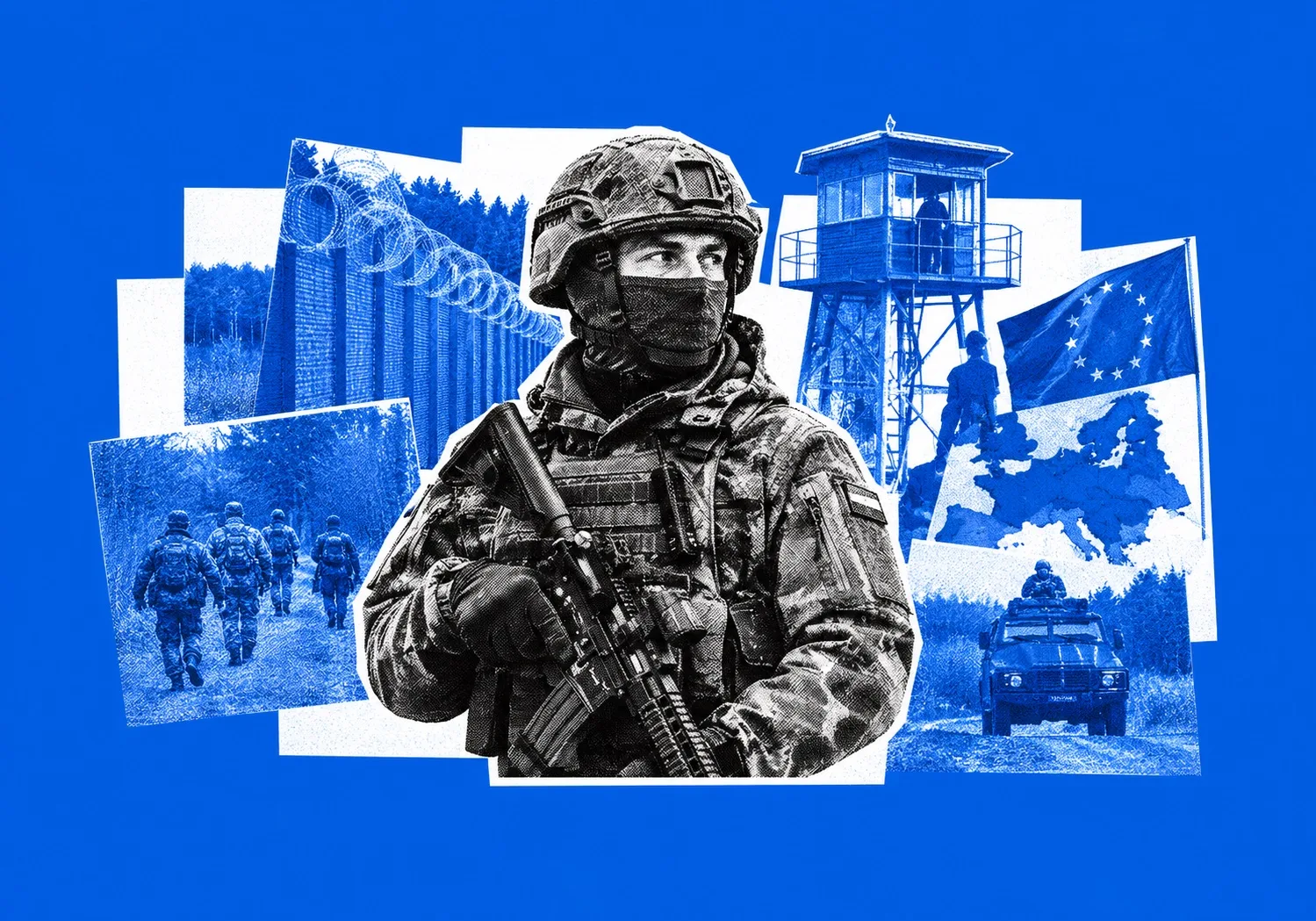
An October border breach involving armed, masked individuals escorting migrants into Latvia has forced Baltic states and the EU to treat hybrid migration pressure as a military threat. As Riga extends heightened border security through 2026, the deliberate sabotage of surveillance infrastructure marks a critical shift from administrative border control to frontline defense.
The immediate response has been to reinforce the frontier. Latvia has extended its heightened security regime through the end of 2026, while the European Commission has announced additional funding for border surveillance and counter-drone capabilities. Lithuania, meanwhile, has deployed up to 100 soldiers to its border with Russia’s Kaliningrad region amid wider regional security concerns.
The significance lies less in the number of migrants involved than in the methods used to move them across the frontier. At least 20 undocumented migrants were accompanied by unidentified armed individuals wearing masks. The group threatened Latvian military personnel, damaged a distribution cabinet and stole surveillance cameras before returning to Belarus.
That sequence changes the security calculation. A border incident intended to stretch administrative capacity can be managed through policing, asylum procedures and physical barriers. An incursion involving armed intimidation and the deliberate removal of surveillance equipment demands a different response, particularly when the perpetrators can retreat across a neighbouring state’s border.
From migration pressure to tactical interference
The confrontation has echoes of the migration crisis that unfolded in 2021, when Belarus channelled migrants from the Middle East and Africa towards the borders of Poland, Lithuania and Latvia, creating political pressure on the EU. Since then, the region has faced repeated incidents involving damaged fences, assaults on border guards and organised disturbances.
The latest episode introduces a more direct security dimension.

The presence of armed escorts does not, by itself, establish that the individuals were acting on orders from the Belarusian state. Their identity and precise relationship with the authorities in Minsk remain unconfirmed. But the combination of armed intimidation, a forced border crossing and the removal of surveillance equipment gives Latvian officials grounds to examine the incident as something more serious than an irregular migration attempt.
The damage to border infrastructure is particularly important. Surveillance cameras and associated equipment help authorities detect movement, reconstruct incursions and coordinate responses. Stealing cameras and damaging a distribution cabinet can therefore serve a tactical purpose beyond creating temporary disruption: it can reduce visibility at the point where an intrusion takes place.
Whether that was the group's principal objective has not been established. Yet the sequence of actions raises the possibility that the migrants were not simply being pushed towards Latvia, but that the border's ability to monitor and respond to their movement was also being challenged.
This is a different proposition from merely overwhelming border officials with large numbers of people. It introduces an element of operational interference, with implications for how quickly security forces can identify threats and determine whether an incident is isolated or part of a wider pattern.
For Baltic governments, the distinction matters because the same frontier must accommodate ordinary border enforcement while remaining resilient to deliberate attempts to exploit its weaknesses.
Minsk's denial leaves the central question unanswered
On 13 October, Alexander Lukashenko dismissed the incident as a staged provocation organised by Riga to obtain additional financial support from the EU. He said the event had not been coordinated with him and questioned the effectiveness of Latvia's border fencing, claiming migrants could cross it in four to six minutes.
The accusation redirects attention from the actions of the armed group to the motives of the country that reported the breach. It also offers a political explanation for European funding decisions without establishing that Latvia fabricated the incident.
The available account does not independently resolve every question about who directed the masked individuals. Nor does it provide conclusive proof of direct Belarusian state involvement. Those limits matter: attributing an operation to a government requires stronger evidence than demonstrating that an incident occurred.
Latvian authorities have rejected Lukashenko's version. Guntis Pujats, head of the State Border Guard, indicated that the armed individuals were likely members of an organised criminal group operating with the tacit tolerance or complicity of Belarusian authorities, rather than regular state forces. Interior Minister Janis Dombrava described the episode as particularly aggressive and demonstrative.
The distinction between direct command and tolerated activity is strategically significant. Hybrid operations can exploit precisely this uncertainty. Armed individuals may create pressure on a neighbouring state without providing clear evidence of a conventional military operation that would demand a more formal response.
That ambiguity complicates deterrence. Latvia must decide how to protect its personnel and infrastructure without treating every suspicious border incident as an act of war. Minsk, for its part, can contest responsibility while the operational consequences fall on its neighbour.
Lukashenko's allegation about EU funding does not answer the substantive security questions raised by the incident. But neither should the absence of definitive public evidence about the perpetrators' chain of command be mistaken for proof that the event was staged. The immediate facts and the question of state responsibility must be assessed separately.
The response is becoming more military
Latvia's decision to maintain heightened security through the end of the year reflects a shift in the demands placed on its border agencies and armed forces. Military personnel will continue supporting border operations, while officials discuss tightening the rules governing the use of force by border guards.
That debate exposes a difficult operational problem. Border guards are responsible for enforcing the law and managing people who may be seeking asylum. When armed individuals threaten their colleagues, however, the same personnel may face a situation requiring rapid decisions about the use of force and the protection of critical infrastructure.
Rules designed for ordinary border enforcement may not provide sufficient clarity when an incident combines a migrant crossing, armed intimidation and deliberate sabotage. Yet broader authority to use force also carries risks, particularly where the intentions of individuals in a group are not uniform or immediately apparent.
The challenge for Latvia is to improve its capacity to respond without allowing the security emergency to erase the distinctions between armed perpetrators and migrants who may themselves be vulnerable to coercion.
The regional response points to a wider change in priorities. Lithuania's deployment of up to 100 soldiers to its border with Kaliningrad is not evidence that the Latvian incident was directed from that Russian exclave. It does, however, show how developments along one part of the Baltic security perimeter can reinforce concern about other potential pressure points.
The geography matters. Latvia's frontier with Belarus, Lithuania's border with Kaliningrad and the broader eastern flank form part of a regional security environment in which civilian border management, military readiness and infrastructure protection increasingly overlap.
A localised incident can therefore generate consequences well beyond the stretch of fence where it occurred.
Brussels is investing in a more integrated frontier
The European Commission's additional border security funding, announced on 13 October, is directed towards detecting unauthorised drones, countering hybrid threats and integrating counter-drone systems into national surveillance networks.
These capabilities address a problem that physical barriers alone cannot solve. Fences can slow movement, but they cannot independently identify who is approaching, determine whether surveillance equipment has been compromised or coordinate a response across different security agencies. A more integrated system can improve detection and information-sharing, although technology cannot eliminate the uncertainty surrounding an operation whose organisers remain unidentified.
Counter-drone systems also broaden the meaning of border protection. The frontier is no longer simply a line to be guarded against people crossing it on foot. It is a surveillance environment in which authorities must account for movement across the ground and through the air, while protecting the systems used to monitor both.
The institutional consequences could be as important as the equipment itself. The EU has been seeking faster responses to weaponised migration, greater coordination between member states and stronger technological surveillance. Frontex, the bloc's border agency, sits within this evolving framework, as European governments seek to make national border management more responsive to hybrid threats.
However, the briefing provides no specific new Frontex mandate or formal expansion announced in connection with the October incident. It would therefore be premature to treat the latest funding decision as proof that the agency has acquired new powers. The immediate development is more concrete: Brussels is directing additional resources towards capabilities that can strengthen national surveillance and counter-drone networks.
For the Baltic states, such support can help distribute the cost of responding to a threat that individual border services cannot address in isolation. For the EU, it raises the question of how common security priorities should translate into operational responsibilities across national jurisdictions.
The political incentive to reinforce the frontier is clear. The institutional arrangements required to do so without duplicating responsibilities or weakening accountability are less straightforward.
The human cost of a hardened border
The military dimension does not remove the humanitarian one. Migrants remain central to the incidents, even when armed actors appear to be directing their movement. Their presence can be exploited to create pressure on European governments, while the response may involve more restrictive crossing procedures, faster removals and reduced access to protection.
The danger is that increasingly militarised border policies treat the entire movement as a security problem, obscuring differences between people attempting to cross irregularly and those organising or facilitating armed incursions.
For Latvia, the priority is to protect its personnel, restore surveillance capability and ensure that the frontier cannot be used as a platform for intimidation. For Brussels, the task is to help member states respond to deliberate interference without allowing emergency measures to become a substitute for clear legal standards.
The distinction will become harder to maintain as border guards operate alongside military personnel, surveillance networks acquire a greater role in security decisions and the authority to use force comes under review.
An armed group can return across the border after minutes of confrontation. The institutional changes prompted by such an incident are likely to last considerably longer.
Sources: Zerkalo, Belarus, Hromadske, Dagens