
Romania’s MOBEX 2026 Exercise Exposes Demographic Clock in NATO Reserve System

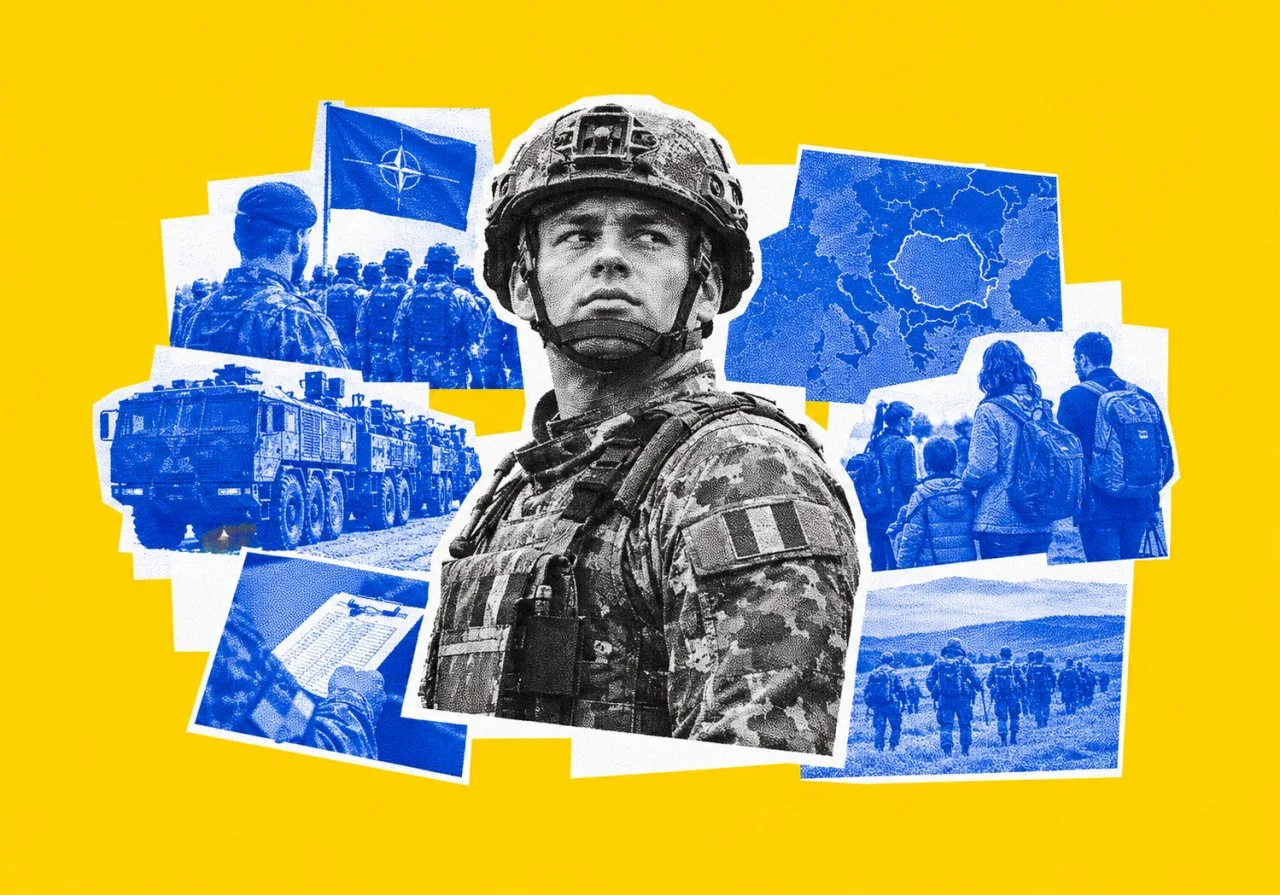
Romania has summoned 10,000 army reservists aged 43 to 63 for the MOBEX Bucharest–Ilfov 26 exercise, testing its mobilization infrastructure following severe administrative failures in 2025. While officially routine, calling up the country's final generation of pre-2007 conscripts highlights a critical demographic bottleneck for NATO’s Eastern Flank: an aging reserve pool that is running out of time.
That is a harder problem than simply increasing the number of people on a register.
The lesson from last year
MOBEX B-IF-25, held in October 2025, was intended to test the same broad system. Instead, it exposed how much friction had accumulated inside it.
More than 10,000 reservists were summoned, but just over 8,000 - about 83 per cent - reported. Those who did arrive encountered late or incorrectly addressed notices, long queues at mobilisation points and insufficient accommodation in barracks. Much of the allotted time was consumed by paperwork rather than military training, including tactical and live-fire activities.
The episode attracted public criticism, including from former Defence Minister Mihai Fifor, who argued that the exercise damaged Romania’s image as a dependable NATO partner. Military authorities acknowledged the organisational deficiencies and said subsequent exercises would be used to correct internal registries and improve coordination.
That makes this year's exercise unusually measurable.
The Ministry of National Defence is not simply asking whether reservists turn up. It is testing whether the machinery that identifies them, summons them, receives them, processes them and assigns them can function at scale.
The decision to use a staggered, single-day reporting system is particularly important. Each reservist is required to appear at a designated Bucharest Garrison unit on the specific date stated in the call-up order, rather than creating one large influx at mobilisation points. Medical and psychological screening follows before personnel move into training.
The practical details matter because a reserve force exists on paper until the state can actually assemble it.
An army with a demographic clock
Romania's deeper problem cannot be solved by better paperwork.
The men being recalled in 2026 belong to the final generation to have completed compulsory military service before Romania suspended peacetime conscription in 2007 and moved to a fully professional standing force. The current exercise consequently depends on a pool of citizens who received military training more than a decade ago and who are now aged between 43 and 63.
That is a narrowing resource.
The professionalisation of the armed forces solved one set of problems, but it also changed the foundations of the reserve system. Once compulsory service disappeared, Romania stopped generating large cohorts of newly trained civilians who could eventually replenish the reserve. The country is now relying on the accumulated legacy of the pre-2007 system while that legacy ages.
The issue is not simply physical age. Military technology and the requirements of modern warfare have changed considerably. The reserve personnel being recalled need to be integrated into an environment increasingly shaped by digital communications, drones and updated weapons systems. A citizen trained under the old conscription model cannot automatically be treated as an interchangeable component of a modern reserve force.
That creates a tension between the speed with which Romania can mobilise existing manpower and the much slower process of creating a new trained reserve.
For NATO's eastern flank, that distinction matters. A professional active force can provide highly trained personnel and modern capabilities, but a national defence system also depends on the ability to generate additional manpower when required. If the reserve pool is ageing faster than it is being renewed, the apparent size of that reserve can become misleading.
Modern equipment, legacy administration
MOBEX 2026 is also testing whether Romania can bring an older human resource into a more modern military structure.
Reservists are being put through weapons inspections, medical procedures, tactical communications, engineering tasks and CBRN defence training. The exercise also introduces live-fire qualification with the garrison's newly integrated 9 mm service pistol.
The significance of the pistol is modest in isolation. Its importance lies in what it says about the exercise itself: reserve readiness is not merely a question of finding names in a database. Personnel, equipment, training standards and command structures have to work together.
That was precisely where last year's exercise struggled.
A reserve system built around outdated records and paper-heavy procedures is poorly suited to rapid force generation. The challenge for Romania is to move from maintaining a nominal register of trained citizens towards a system that can provide commanders with reliable, current information about who is available, where they are, what condition they are in and what capabilities they possess.
MOBEX offers a rare opportunity to test those assumptions under real conditions.
The Defence Ministry can compare what its records say with what happens when thousands of people are actually summoned. It can identify errors in addresses, attendance, medical status and unit allocation. It can also measure how quickly the Bucharest Garrison can process personnel without turning mobilisation into an administrative queue.
This is less dramatic than a major weapons acquisition. It may be more fundamental.
The state has legal leverage
Romania's reserve system is not voluntary in the ordinary sense.
Designated reservists are legally required to comply with mobilisation exercises. Refusing to accept a service notice or failing to attend without justification constitutes an administrative violation and can result in a monetary fine. Employers are required to provide participating employees with one paid day of leave once military authorities certify their attendance.
Those mechanisms give the Defence Ministry a considerable degree of control over the existing reserve pool. They also make the exercise a test of the relationship between military readiness and civilian administration.
The state can compel a reservist to report. It cannot, however, compel an ageing generation to become younger or recreate a system of compulsory military training that ended in 2007 simply by issuing more notices.
That is where the limits of MOBEX become visible.
Routine exercise, strategic pressure
The ministry has explicitly rejected claims that MOBEX Bucharest–Ilfov 26 represents a general mobilisation or is linked to the war in Ukraine or incidents in the Black Sea. It has also launched a counter-disinformation campaign, after previous exercises became targets for online narratives portraying routine readiness checks as covert preparations for foreign conflict.
That distinction is important, particularly in an environment where military exercises can acquire political meaning well beyond their operational purpose.
But treating the exercise as routine does not make the underlying issue insignificant.
Bucharest and Ilfov contain Romania's political and economic centre, making the ability to mobilise and organise forces there a particularly important part of national defence planning. The 2026 exercise also covers units that were not included in the previous year's iteration, allowing the ministry to extend its audit of the capital's defence infrastructure.
The immediate question is whether the organisational failures of 2025 have been fixed. The more difficult question is what happens after the people being tested this week gradually leave the reserve pool.
Romania can improve databases. It can streamline reporting. It can introduce newer weapons and refine command procedures. It can make a single-day call-up work where last year's system produced queues and paperwork.
None of those changes resolve the demographic problem.
The reserve model still draws heavily on the final generation created by compulsory military service. As those cohorts move towards retirement from reserve obligations, Romania will have to maintain readiness with a shrinking supply of civilians who possess prior military training.
That turns a bureaucratic exercise in Bucharest into a longer-term institutional question for Romania's defence planning: whether a professional army can remain genuinely scalable without a mechanism capable of continuously generating a modern trained reserve.
The answer will not be found in this week's attendance figures alone. It lies in what the Defence Ministry does with the data after the exercise ends - and whether the next generation of reservists exists before the current one disappears.
Sources: Euro News, Romania Insider, The Moscow Times, Militarnyi