
US Targets Russian Oil Buyers with New Tariff Threat as Moscow Builds Parallel War Economy

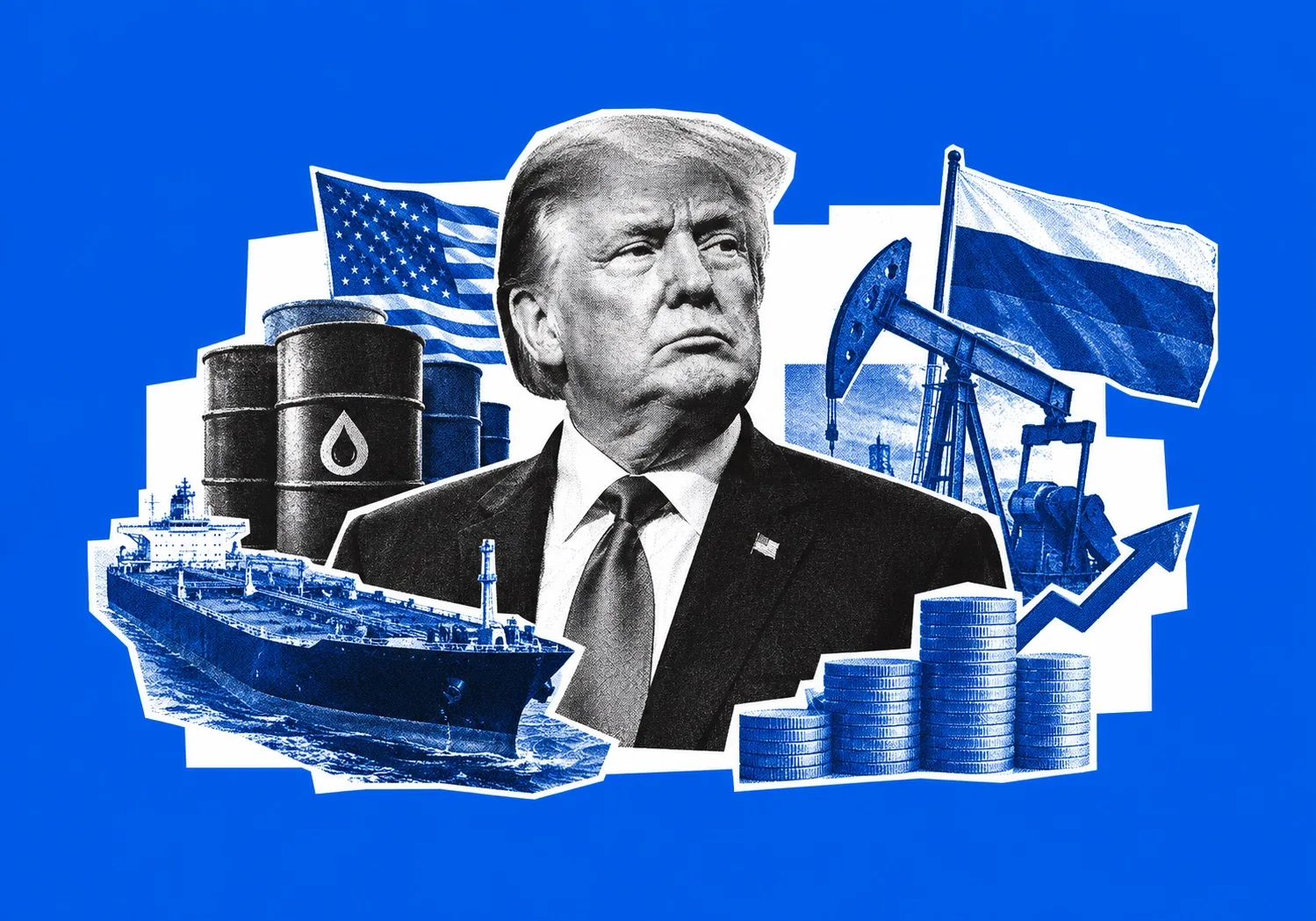
The US House of Representatives has approved legislation authorizing President Donald Trump to impose punitive tariffs of up to 100% on countries buying Russian energy, fundamentally shifting Western sanctions policy toward extraterritorial trade coercion. Coupled with evidence of thousands of North Korean workers powering Russia’s defense factories, the development highlights a transition from isolated transaction bans to an all-out confrontation over global supply chains.
The House voted 262–159 on September 16, following Senate approval last month. A White House official has said Trump intends to sign the bill in the coming days.
The legislation allows the president to impose tariffs of up to 500 per cent on Russian goods and an additional 100 per cent tariff on countries that are among the five largest purchasers of Russian crude oil or natural gas, as well as entities helping Russia evade sanctions. China, India and Turkey are among those potentially exposed.
That is a significant change in the architecture of sanctions. Instead of targeting Russia alone, Washington is preparing to make access to the US market part of the price for maintaining commercial ties with Moscow.
Sanctions become a trade weapon
For years, sanctions against Russia have depended partly on persuading third countries, financial institutions and companies to restrict dealings with Moscow. The new legislation pushes that logic further by placing the commercial relationship itself under threat.
The potential scale is considerable. A 100 per cent tariff on imports from major trading partners would not simply affect individual Russian-energy transactions. It could alter decisions made by governments and companies far beyond Russia, particularly where cheap Russian hydrocarbons remain economically attractive.
That creates a dilemma for countries such as India, Turkey and China. Continuing to purchase Russian energy could preserve access to discounted supplies while exposing wider trade with the US to punitive measures. Complying with Washington, meanwhile, could mean changing established energy relationships and absorbing higher costs.
The legislation therefore creates leverage well beyond the immediate value of the tariffs themselves. Its effect may depend less on how frequently the White House actually imposes the maximum penalties than on whether governments believe it is prepared to do so.
The breadth of presidential waiver authority is important here. Congress has created a potentially powerful instrument while leaving the administration considerable discretion over when and against whom it is used. That makes the legislation both an economic threat and a diplomatic bargaining tool.
There is already a political cost attached to that approach. Democratic leaders have warned that broad tariff powers could feed inflation and damage US allies. An attempt to exempt the EU from being treated as a single entity was rejected.
For Washington, the problem is familiar but increasingly difficult: pressure on Russia can be intensified, but doing so through secondary trade penalties risks transferring part of the economic burden to partners whose cooperation is needed elsewhere.
Moscow is building around the sanctions
Russia's response is taking a very different form.
Reports from Bloomberg, The New York Times and the Multilateral Sanctions Monitoring Team indicate that between 15,000 and 30,000 North Korean workers have been integrated into Russian manufacturing and defence-industrial sectors. As many as 25,000 are reported to have been deployed to drone-production facilities, particularly in the Special Economic Zone at Alabuga in Tatarstan.
The mechanism is strikingly simple. UN Security Council Resolution 2397 required member states to repatriate North Korean workers by the end of 2019. Russia has instead issued more than 36,000 visas to North Koreans in 2025, more than four times the number issued in 2024. More than 98 per cent were registered under educational or student categories.
Institutions such as Moscow's Sodeistvie College have reportedly provided the administrative cover. Industrial work lasting as long as 14 hours a day can be classified as an internship, while payments of roughly 50,000 roubles a month are presented as scholarships.
The distinction between education and labour is therefore doing the work that a sophisticated sanctions-evasion network might otherwise require.
It also reveals something about Russia's military economy that conventional sanctions statistics cannot fully capture. Western restrictions have constrained access to parts of the Russian economy, but they have not eliminated Moscow's ability to mobilise labour, materials and foreign partners.
Alabuga illustrates the point. The facility has become a major production centre for Geran-2 strike drones, the Russian designation for the Shahed-type systems used against Ukraine. Bringing North Korean workers into such facilities provides Russia with a large pool of low-cost labour at a time when domestic labour shortages are acute.
The significance is not simply the number of workers involved. It is the creation of an industrial arrangement capable of functioning outside the institutions that were supposed to prevent it.
Pyongyang's workforce has become a strategic export
For North Korea, the arrangement offers something more valuable than employment.
The regime receives hard currency and access to Russian resources and technology while providing Moscow with workers and military personnel. North Korea has also dispatched an estimated 16,000 combat troops to Russia, with casualties reported at up to 2,000.
The exchange is therefore broader than a labour agreement. It connects manpower, military assistance, energy, food and technology.
The North Korean economy has other channels for generating foreign revenue. State-linked labour exports contributed to $188mn in wig and eyelash sales to China in 2024 alone. Chinese ports have also seen increased direct dockings by North Korean vessels carrying coal and iron ore, including ships identified as unflagged or blacklisted.
The wider pattern matters because it demonstrates how sanctions pressure can be offset when several sanctioned or sanction-resistant economies begin to trade directly with one another.
For Kim Jong-un's regime, the relationship with Moscow provides access to hard currency, oil, agricultural commodities and advanced Russian military and missile technologies. North Korea's economy has subsequently recorded annual growth of more than 3 per cent, reversing the decline associated with the pandemic period.
For Russia, the arrangement solves a different problem: how to maintain industrial production despite labour shortages and the demands of a prolonged war.
The workers themselves bear the costs. Reports describe long shifts, hazardous conditions and the extraction of workers' earnings by the North Korean state. But from the perspective of the governments organising the exchange, those human costs are externalised.
The UN system is losing ground
The deeper shift is institutional.
The international sanctions regime built around the UN Security Council was designed on the assumption that major powers would enforce common restrictions even when their strategic interests diverged. That assumption has become increasingly difficult to sustain when Russia and China themselves can obstruct or bypass enforcement mechanisms.
The result is not simply weaker sanctions. It is a different sanctions geography.
Washington is moving towards extraterritorial economic coercion, using access to the US market to influence countries outside its formal alliances. Moscow and Pyongyang are constructing parallel supply chains based on direct state-to-state transactions, while China provides important commercial channels through which sanctioned commodities can continue to move.
These systems operate according to different rules.
One relies on the extraordinary reach of the US economy. The other relies on the willingness of states to trade outside Western-controlled financial and regulatory networks.
Neither approach is cost-free.
For the US and its partners, aggressive secondary tariffs risk higher prices, disrupted supply chains and friction with countries that have not accepted the Western approach to Russia. For Moscow and Pyongyang, evasion increasingly requires dependence on a narrow group of political partners and the exploitation of workers and commodities that can be moved beyond effective international oversight.
The battlefield in Ukraine sits inside this contest.
Russia's ability to keep producing drones and ammunition is partly a question of factories and components, but increasingly it is also a question of labour networks, energy arrangements, shipping routes and political alliances. Washington's response is no longer confined to freezing Russian assets or restricting Russian companies. It is preparing to pressure the economies that keep those networks commercially viable.
That creates a strategic tension the new law does not resolve. The broader the secondary tariffs become, the more Washington risks turning sanctions policy into a contest over the architecture of global trade itself. The more Russia succeeds in building alternative industrial and supply networks, the less effective sanctions become as a purely multilateral instrument.
The war is therefore being fought not only over territory or weapons production, but over who gets to decide which parts of the global economy remain connected - and on whose terms.
Sources: NYT, Global Affairs Canada, Mediafax, Mofa, Bloomberg,