
US Expands Sanctions Framework Against Russia and Its Energy Buyers

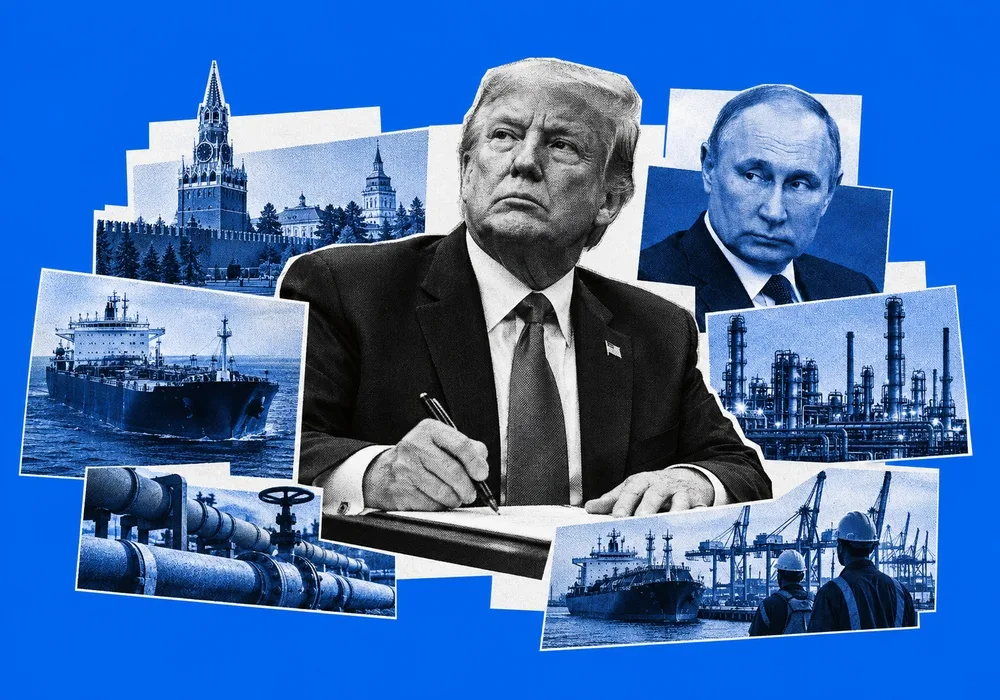
US President Donald Trump has signed legislation expanding the statutory framework for sanctions against Russia and authorising tariffs of up to 100% on imports from certain major buyers of Russian oil and gas. The law targets Russian energy, financial and defence networks while giving Washington additional leverage over countries that continue to maintain significant economic ties with Moscow.
US President Donald Trump has signed legislation expanding the US sanctions framework against Russia and giving the administration new powers to target countries that continue to purchase Russian oil and gas. The legislation, approved by Congress with broad bipartisan support, strengthens restrictions on Russian energy, financial and defence sectors while introducing the possibility of tariffs of up to 100% on imports from certain countries that maintain significant energy ties with Moscow.
Trump signed H.R. 5334, the Lindsey O. Graham Sanctioning Russia and Iran Act of 2026, on 18 September. The Senate approved the legislation 86–11 in August, followed by a 262–159 vote in the House of Representatives on 16 September. The bill also extends the Iran Sanctions Act through 2031, making the legislation part of a broader US sanctions framework covering both Russia and Iran.
Tariffs targeting Russian energy buyers
The most significant new instrument concerns countries that continue to buy Russian oil and natural gas. The law authorises the president to impose tariffs of up to 100% on goods imported into the United States from countries that meet criteria established under the legislation, including major purchasers of Russian energy and states involved in facilitating sanctions evasion.
The measure does not automatically impose a 100% tariff on any particular country. Instead, it gives the White House authority to determine which governments fall within the scope of the mechanism and whether tariffs should be applied. Countries whose imports account for less than 15% of Russia’s natural gas exports and that have taken significant steps to reduce their dependence can qualify for an exemption under the legislation.
This gives Washington a mechanism for extending economic pressure beyond Russia itself. Rather than targeting only Russian producers, banks and officials, the United States can potentially increase the cost of maintaining commercial relations with Moscow for third countries. The practical impact will therefore depend heavily on how the Trump administration uses the authority created by Congress.
China and India in focus
The new powers are particularly relevant to China and India, which have remained major purchasers of Russian crude since European restrictions reduced Russia’s access to its traditional energy markets. Their purchases have provided Moscow with an important source of export revenue and helped sustain Russian oil flows despite Western sanctions and price restrictions.
The legislation does not specifically impose tariffs on either country. However, both could be affected by the framework depending on how the administration defines major Russian energy purchasers and whether Washington decides to activate the tariff mechanism against them.
For the global energy market, this creates another potential source of uncertainty. Any significant disruption to Russian oil exports would affect supply flows well beyond the United States and could influence prices, shipping routes and the commercial position of refiners in Asia and elsewhere. At the same time, the possibility of tariffs gives Washington an additional negotiating tool without requiring an immediate disruption of Russian energy exports.
Pressure on Russia’s shadow fleet
The legislation also strengthens the broader sanctions architecture targeting Russia’s so-called shadow fleet. The network consists of vessels, intermediaries and opaque ownership structures used to transport Russian oil and reduce the effectiveness of Western restrictions on the country’s energy exports.
US sanctions have increasingly focused on shipping companies, vessel owners, traders and financial networks connected to this activity. The new legislation provides additional statutory authority to target Russian officials, companies, financial institutions and foreign actors involved in sanctions evasion or in supporting Russia’s military-industrial economy.
The issue has direct relevance for European companies because much of the international infrastructure surrounding Russian oil exports involves shipping, insurance, finance and commodity trading. European firms can therefore face compliance risks even where they have no direct commercial relationship with the Russian government.
Russian banks and defence-related networks
The legislation extends beyond the energy sector by strengthening the legal basis for sanctions against Russian financial institutions, political figures and entities connected to the country’s defence industry. It also creates additional scope for action against foreign companies and intermediaries that help Russia obtain restricted goods, technologies or financial services.
This reflects a broader change in Western sanctions policy. The focus is increasingly moving from individual Russian entities towards the networks that allow restricted goods, money and energy to continue moving through third countries.
For companies operating across multiple jurisdictions, this makes sanctions compliance more complex. Transactions may require scrutiny not only of a direct counterparty but also of beneficial ownership, shipping arrangements, financial intermediaries and the final destination of goods.
A shift from direct sanctions to third-country pressure
One of the more significant aspects of the new law is its potential to turn access to the US market into leverage over countries maintaining economic relations with Russia. Conventional sanctions generally restrict the activities of a designated Russian company or individual, while the new tariff mechanism can impose costs on a third country's wider exports to the United States.
The distinction matters because tariffs can affect entire sectors rather than individual sanctioned entities. If Washington applies the mechanism broadly, exporters in countries buying Russian energy could face higher costs when accessing the US market, potentially creating pressure on their governments to reduce purchases or strengthen enforcement against sanctions evasion.
The legislation nevertheless leaves considerable discretion with the White House. The maximum tariff is an authorised ceiling rather than an automatic rate, and the administration will determine how the mechanism is implemented. The immediate economic consequences will therefore depend on decisions taken after the law enters into force.
The law gives sanctions a stronger statutory basis
The legislation also changes the legal architecture of US Russia policy by placing significant sanctions authorities within federal law. This provides a more durable basis for restrictions that might otherwise depend primarily on executive orders and administrative decisions.
The change does not make the sanctions entirely permanent or remove presidential discretion. The administration retains waiver and implementation powers under the legislation, while Congress remains able to amend or repeal statutory provisions. Nevertheless, the new framework makes Russia-related sanctions more firmly embedded in US law.
The legislation followed more than a year of congressional negotiations. It was initially developed by Republican Senator Lindsey Graham and Democratic Senator Richard Blumenthal and was subsequently renamed following Graham’s death in July. Its final congressional votes reflected support from lawmakers across both parties despite disagreements over the scope of the president’s tariff authority.
Concerns over wider trade effects
The expansion of tariff powers was one of the most controversial elements of the legislation. Some lawmakers who supported stronger sanctions against Russia raised concerns that giving the president broad authority to impose tariffs could have consequences for US businesses and consumers if the measures were applied extensively.
Tariffs operate differently from conventional sanctions because their economic effects can extend beyond the targeted government. Importers may face higher costs, which can then be passed through supply chains to manufacturers, retailers and consumers.
The legislation therefore combines two distinct forms of economic pressure: targeted sanctions against Russia and related networks, and potentially broad trade measures against third countries. How these instruments are balanced will determine whether the law primarily functions as a sanctions mechanism or becomes part of a wider US trade strategy towards countries maintaining economic ties with Moscow.
Implications for Europe
The new US framework adds another layer to an already complex sanctions environment for European governments and companies. The EU maintains its own restrictions on Russian energy, finance, shipping, technology and trade, while European businesses with exposure to the US market must also account for American sanctions and export-control rules.
The shipping sector is particularly exposed because European companies remain involved in insurance, maritime services, finance and commodity trading. Additional US designations of vessels or intermediaries connected to Russian oil could therefore affect European companies even where their activities are not directly prohibited under EU law.
Financial institutions face similar challenges. Banks and payment providers may have to assess whether transactions involving Russian-origin energy, third-country intermediaries or sanctioned vessels could create exposure under US rules. The result is a sanctions environment in which regulatory decisions taken in Washington can have consequences for commercial activity across European markets.
What happens next
The immediate significance of the legislation lies in the powers it creates rather than in an automatic change to every existing Russia-related restriction. The Trump administration must still decide which Russian entities and foreign networks to target, whether to use the new tariff mechanism and which countries could be subject to additional trade measures.
For Russia, the main risk is a further increase in the cost and complexity of maintaining energy exports through alternative markets and shipping networks. For major buyers such as China and India, the legislation creates the possibility of additional pressure on their trade with Moscow, although the extent of that pressure will depend on how Washington implements the new authorities.
For Europe, the law reinforces the importance of monitoring US sanctions decisions alongside EU measures. The combination of energy restrictions, financial sanctions, shipping controls and potential tariffs against third countries means that changes in US policy can increasingly affect European companies indirectly through international supply chains and financial markets.
Sources: The White House, Euractiv