
Meloni Warns US-Russia Diesel Deal Could Undermine Pressure on Moscow

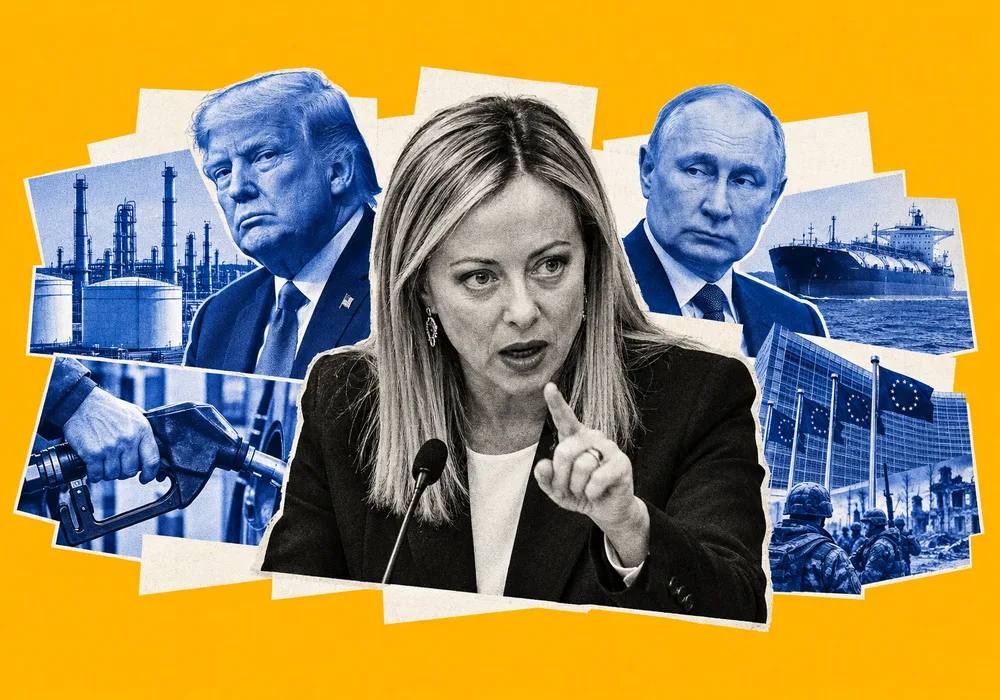
Italian Prime Minister Giorgia Meloni has criticised the US agreement to import Russian diesel, warning that it could provide Moscow with additional revenue, weaken sanctions and undermine Western efforts to end Russia’s war against Ukraine. Her remarks also highlight growing concerns over Europe’s role in negotiations with the Kremlin and the need for a coordinated EU position.
Italian Prime Minister Giorgia Meloni has described the US-Russia diesel agreement as a “very risky choice”, warning that it could undermine Western efforts to pressure Moscow into negotiations over the war in Ukraine. Speaking in the Italian parliament on 14 October ahead of an EU summit, Meloni argued that the economic benefits of the arrangement remain uncertain, while its political and strategic consequences could extend well beyond the energy market.
US President Donald Trump has defended the agreement as a way to increase fuel supplies and bring down energy prices in the United States. The arrangement is expected to involve more than 300,000 metric tonnes of Russian diesel in an initial phase, potentially opening an additional market for Russian fuel exports. For Washington, the deal offers a possible means of addressing domestic concerns over energy costs. For Moscow, it creates an opportunity to generate revenue from energy exports while its war against Ukraine continues.
Meloni warned that the agreement could provide Russia with additional resources to finance its military campaign and undermine the effectiveness of Western sanctions. The concern is not limited to the immediate financial value of the fuel. A decision to resume or expand purchases of Russian energy could also signal that commercial and domestic political considerations are taking precedence over the broader objective of constraining Moscow's capacity to wage war.
Ukrainian President Volodymyr Zelenskyy has likewise criticised the agreement, arguing that it risks providing financial support to a country whose military operations continue to devastate Ukrainian cities. Kyiv has consistently maintained that Russia's energy revenues are directly relevant to its ability to sustain the invasion, making restrictions on those revenues an important part of the wider international response.
Sanctions and the Credibility of Western Policy
The agreement exposes a persistent tension in Western policy towards Russia: how to balance domestic economic priorities with the strategic objective of limiting the Kremlin's resources. Sanctions are intended to restrict Moscow's access to revenue and markets while increasing the costs of continuing the war. If individual governments relax restrictions or establish new commercial arrangements without corresponding concessions from Russia, the collective pressure becomes harder to sustain.
The practical effect of the diesel deal will depend on the volumes delivered, market conditions and the extent to which the additional supplies influence prices. Russian fuel entering the US market would not automatically produce a substantial reduction in consumer costs. The political implications, however, could be more immediate, particularly if Moscow presents the arrangement as evidence that Western governments are increasingly willing to resume economic cooperation despite the war.
The distinction between limited commercial transactions and a broader relaxation of restrictions will therefore be important. Even if the initial volumes remain modest, the agreement could establish a precedent for further transactions or encourage other governments and companies to reassess the risks of dealing with Russian suppliers. For European policymakers, the central concern is whether such arrangements weaken the credibility of the sanctions framework at a time when the EU continues to treat economic pressure as an instrument of its Russia policy.
Meloni Calls for a Common European Negotiating Position
Meloni's criticism of the agreement is accompanied by a proposal to strengthen Europe's role in negotiations over the war. She has called on the 27 EU member states to appoint an authoritative representative who could negotiate on their behalf. She has also raised the possibility of giving a formal mandate to the E3 group of France, Germany and the United Kingdom, allowing the three countries to represent the wider European position if they believe a smaller negotiating format would be more effective.
The proposal reflects longstanding difficulties in coordinating European diplomacy. France, Germany and the UK possess considerable political, economic and military influence, but their involvement in negotiations does not automatically guarantee that the interests of all EU member states will be represented. A common mandate could help establish clearer objectives and prevent national initiatives from diverging from the bloc's broader strategy. Achieving such an agreement, however, would require governments with different security priorities and political assessments of Russia to accept a shared negotiating framework.
The question has become more pressing as Washington pursues its own arrangements with Moscow. If bilateral US-Russia agreements begin to shape the economic and diplomatic environment surrounding the war, European governments risk having to respond to decisions made without their direct participation. A designated European representative could give the bloc a more consistent voice, although the effectiveness of such a role would depend on the authority granted by member states and their willingness to maintain a common position.
Hybrid Threats and Europe's Critical Infrastructure
Meloni also warned that Russia's activities against European countries extend beyond its military operations in Ukraine. She said the EU summit would address what she described as an escalation in Russian hybrid attacks, including drone incursions, cyberattacks, sabotage and other covert operations intended to weaken European support for Kyiv.
Energy networks, undersea cables, ports and airports are among the critical infrastructure requiring greater protection. Disruption to these systems can affect economic activity, communications and national security without taking the form of a conventional military attack. Such incidents also create challenges for European governments, which must establish responsibility, coordinate intelligence and security responses, and determine how to deter further activity without allowing individual incidents to undermine wider political cohesion.
The connection between energy policy and infrastructure security is particularly relevant. European governments are attempting to reduce strategic vulnerabilities while maintaining the economic capacity required to support Ukraine and strengthen their own defence. A fragmented approach to Russian energy revenues, combined with uneven responses to hybrid threats, could complicate these efforts. Meloni's remarks therefore place the diesel agreement within a broader discussion about the consistency of Europe's economic and security policies.
Europe's Influence Over the Next Phase of the War
The US-Russia diesel arrangement highlights a wider challenge for European governments: maintaining a common strategy while Washington explores agreements that may not align with European priorities. The immediate economic impact of the deal remains uncertain, but the questions it raises about sanctions, diplomatic leverage and the distribution of influence are significant.
Meloni's call for a stronger European negotiating mandate suggests that Italy wants the EU to move beyond reacting to decisions made by Washington and Moscow. A more coordinated position could help European governments defend their security interests and ensure that their concerns are represented in discussions over the future of Ukraine. Yet a formal mandate alone would not guarantee influence; it would need to be backed by agreement among member states and a willingness to maintain pressure on Moscow.
The dispute ultimately concerns the relationship between short-term economic decisions and the longer-term objectives of Western policy. If energy arrangements are pursued independently of diplomatic and security considerations, they risk weakening the leverage that sanctions are designed to provide. For the EU, the challenge is to ensure that its economic measures, negotiating strategy and response to Russian hybrid activity reinforce one another rather than develop along separate political tracks.