
Trump’s Belarus Potash Deal: Why US Sanctions Relief Threatens a Transatlantic Split with Europe

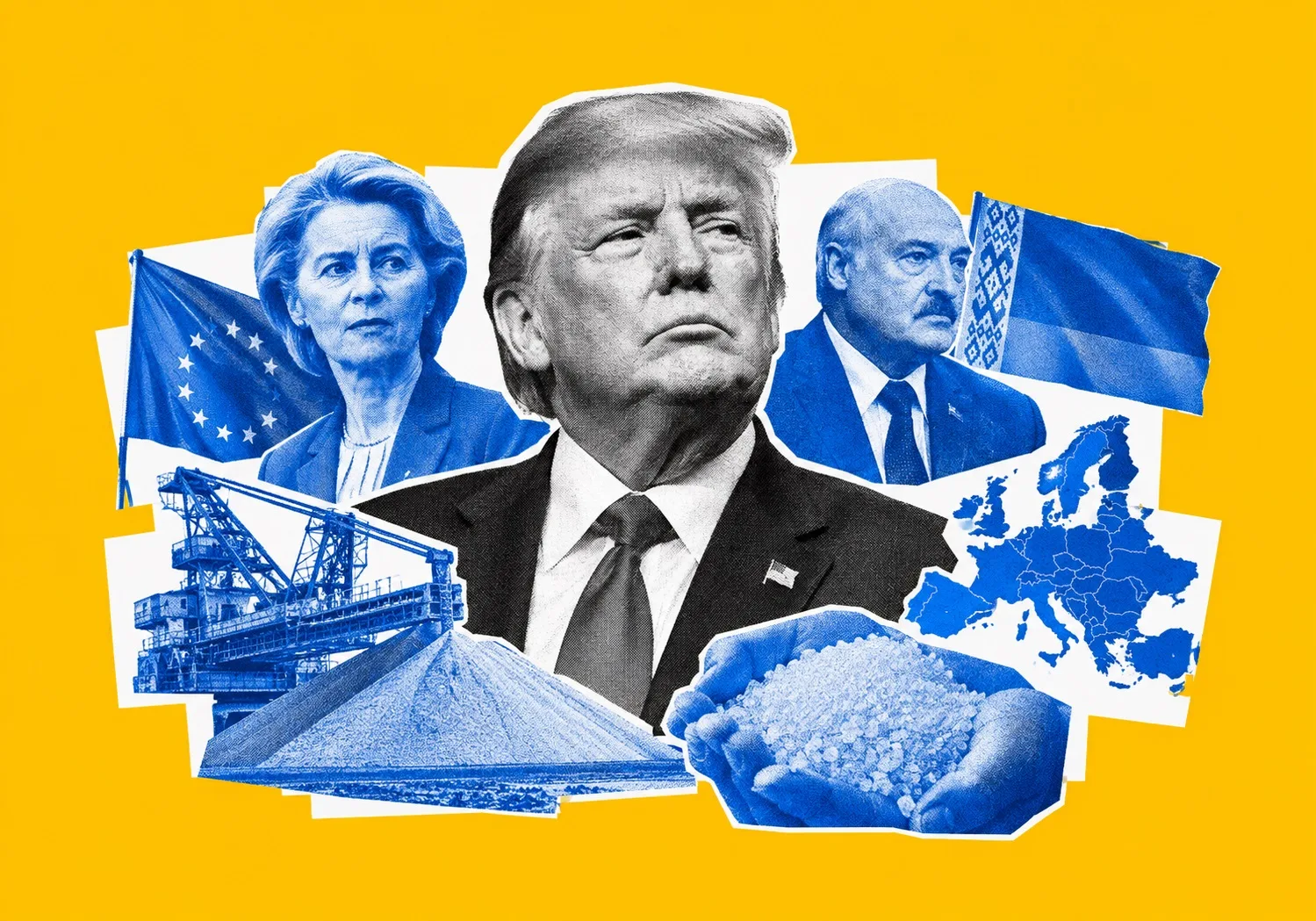
While Donald Trump and Volodymyr Zelenskyy discussed ending the war in New York, Washington’s easing of sanctions on Belarusian potash signals a growing transatlantic rift. As the US considers cheaper Belarusian fertilisers, European farmers remain locked out under strict EU rules - exposing a deepening divergence between American transactional diplomacy and Brussels’ sanctions regime.
During their 22 September meeting, Zelenskyy pressed for security guarantees, air defence, and sustained sanctions, while Trump focused on a negotiated settlement. That contrast reflects a broader shift: Washington is increasingly using economic incentives and selective sanctions relief as diplomatic tools. Belarusian potash offers a concrete example of what this transactional approach means for Europe.
A cheaper alternative to Canadian potash
Trump told reporters that the US would continue buying potash from Canada, but added that Belarus wanted to sell it at a “much lower price”. The comment came as Washington considers a potential purchase of Belarusian potash, following a series of steps that have already eased restrictions on major Belarusian producers.
The US has a structural reason to care about the issue. According to US Department of Agriculture data, the country imported around 13 million tonnes of potash in 2025, with almost 90% coming from Canada. Longer-term US Geological Survey data put Canada’s share at 79% of American potash imports between 2021 and 2024.

That dependence gives Ottawa a strong position in the US market, but it also gives Washington an incentive to develop alternative sources.
The Belarusian option is therefore about more than the price of fertiliser. It also fits Trump’s broader use of trade relationships as leverage in disputes with allies.
If Belarus can supply potash to the US at a lower price, Washington gains an alternative to Canadian supply. If Canadian producers subsequently have to compete for a smaller share of the American market, they could have a greater incentive to seek customers elsewhere.
Europe is one of the obvious destinations.
That does not mean Canadian potash will suddenly flood European markets. The scale of any shift would depend on American purchasing volumes, production capacity, transport costs and existing contracts. But additional Canadian supply could increase competition for European buyers and put modest downward pressure on fertiliser prices.
For European farmers, that would be the most immediate economic effect of a change that begins with US-Belarusian diplomacy.
Washington is easing restrictions while Europe is not
The potash question is also a test of a wider divergence between Washington and Brussels.
The US did not remove all sanctions on Belarus in a single move. In December 2025, the US Treasury’s Office of Foreign Assets Control issued General License 13, allowing certain transactions involving Belaruskali, the Belarusian Potash Company, and related entities while they remained on the Specially Designated Nationals list.

On 26 March 2026, OFAC went further and removed Belaruskali and the Belarusian Potash Company from the SDN list. The move removed the direct blocking restrictions applying to those entities, although the broader US sanctions regime against Belarus remained in place.
On 17 September, OFAC also removed two other Belarusian companies, Lakokraska and Bellesbumprom, from the SDN list. The latest steps followed the release of political prisoners and formed part of Washington’s broader engagement with Minsk.
The distinction between a licence and a delisting is important. The former permits specified transactions under defined conditions; the latter removes the entity from the particular sanctions list. Together, however, the sequence shows a gradual expansion of the space for US economic dealings with Belarus.
The European position is different.
Lithuanian Foreign Minister Kęstutis Budrys said on 22 September that EU rules continued to prevent Belarusian fertilisers from entering or transiting the bloc. He also said that no EU country could participate in the US arrangement involving Belarusian fertilisers under the current rules.
That creates a practical problem for Europe. Washington can negotiate with Minsk over access to Belarusian commodities without changing EU law. European governments cannot simply mirror the American decision.
Any change to the EU position would require its own political and legal process.
The sanctions gap could become more important than the potash itself
For now, the immediate economic effect of a US-Belarusian potash deal is likely to be limited. Industry analysts have questioned whether Belarus could quickly replace Canadian supplies to the US on a scale large enough to transform the North American market.
The political significance is potentially greater.
For years, the US and Europe have broadly used sanctions as part of a coordinated response to Russia’s war against Ukraine and Belarus’s alignment with Moscow. Washington’s recent steps towards Minsk suggest a more transactional model: sanctions can be eased selectively in exchange for political concessions, while trade can be used to create economic incentives.
That approach does not automatically change European policy. But it can create pressure on it.
If American farmers gain access to cheaper Belarusian potash while European farmers remain excluded from the same supply, the economic argument for maintaining restrictions becomes more visible. At the same time, European governments face a different calculation because Belarus remains closely linked to Russia and its war effort.

The result is not necessarily a transatlantic split. It is a growing difference in how sanctions are being used.
For Ukraine, that distinction matters. Zelenskyy arrived in New York asking for continued pressure on Moscow and additional European sanctions. Trump, by contrast, continues to emphasise a negotiated settlement and has shown a willingness to use economic incentives in parallel with diplomacy.
The two approaches can coexist, but they create different expectations about what should happen after a ceasefire or peace agreement.
Europe could feel the effect through the fertiliser market
The most tangible European consequence may therefore be indirect.
Suppose Washington increases purchases of Belarusian potash. Canadian suppliers retain access to the US market, but face stronger price competition from a new source. Even a partial shift in American demand could encourage Canadian producers to expand sales elsewhere.
Europe would be an attractive destination because it has a large agricultural sector and established demand for imported fertilisers.
More Canadian supply would not necessarily produce a dramatic fall in European prices. Potash markets are global, but freight costs, contracts, port capacity and regional supply conditions all affect the price paid by farmers. The EU’s restrictions on Belarusian potash would also remain a major constraint.
Nevertheless, an additional source of Canadian supply could give European buyers more negotiating leverage.
This is where a seemingly distant trade decision in Washington can become relevant to European households and businesses. Fertiliser prices feed into farmers’ production costs, which can ultimately affect food prices and agricultural competitiveness.
The effect may be small. The political signal is larger.
A new American approach is being tested
The Trump-Zelenskyy meeting therefore points to two parallel developments.
On Ukraine, Washington is pushing the idea that the war can be brought to an end through a negotiated settlement, while Kyiv continues to insist that any settlement needs credible security guarantees and continued pressure on Russia.
On Belarus, Washington is testing whether selective sanctions relief and renewed trade can produce political concessions while also giving American buyers access to alternative supplies.

For Europe, these issues are increasingly connected.
If the US moves further towards economic engagement with Belarus and potentially towards a broader settlement with Russia, European governments will have to decide how closely they want to follow Washington. The question will not only concern sanctions or security guarantees. It will also concern trade, supply chains and the economic costs of maintaining restrictions.
The Belarusian potash debate is an early example of that wider challenge.
For European policymakers, the question is no longer simply whether Washington and Brussels agree on the war. It is whether they will continue to use the same economic tools - and accept the same economic costs - when the diplomatic landscape begins to change.
Sources: Reuters, Zelenskiy / Official, The Independent, Bloomberg, Money, National Observer