
Trump’s Russian Diesel Deal Exposes Growing Divisions Over Ukraine

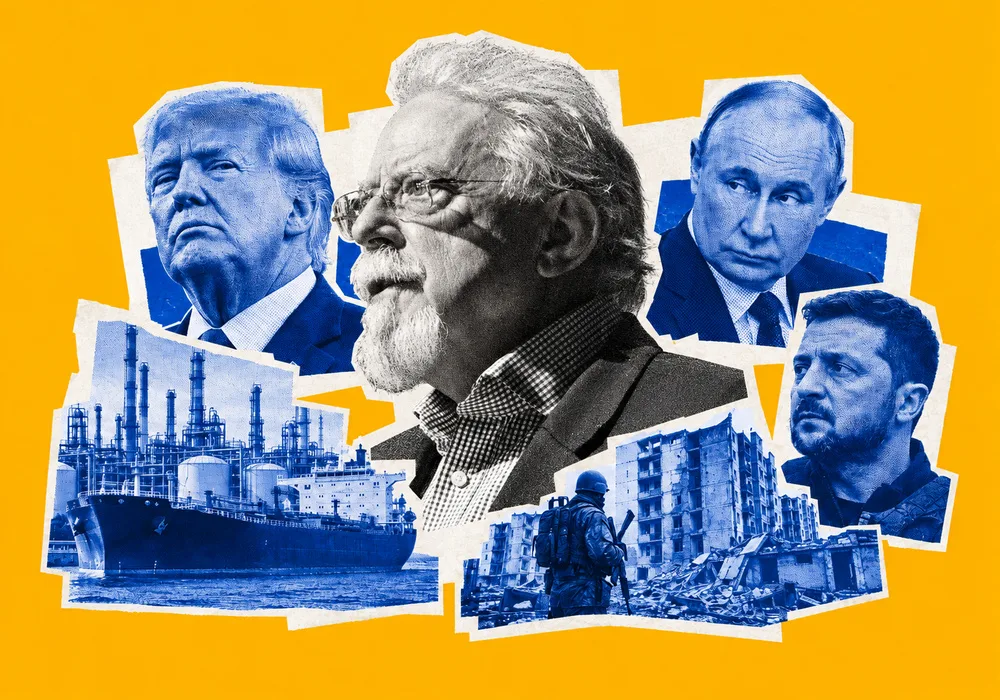
The US approach to Russian diesel has raised questions about the consistency of Western policy towards Moscow. British political analyst Tony Meehan argues that Donald Trump’s domestic political priorities risk weakening pressure on Russia, complicating Ukraine’s defence and widening divisions between Washington and its European allies.
The Western response to Russia’s invasion of Ukraine is facing a growing strategic challenge: maintaining pressure on Moscow while the United States pursues decisions that may conflict with the objectives of its European allies. The Trump administration’s approach to Russian diesel has raised concerns about the economic consequences for Russia, while reports of pressure on Kyiv to limit strikes against Russian energy infrastructure have added to uncertainty over Washington’s expectations of Ukraine. Together, these developments raise questions about the consistency of the Western strategy and the extent to which the United States and Europe remain aligned in their approach to the war.
In an interview with Russian Mask, hosted by Andrii Bohdanovych, British political analyst Tony Meehan argued that Donald Trump’s decisions are driven primarily by domestic political calculations and his personal approach to power. He described the US president as “a freeloading opportunist looking for the best opportunity to enhance his self-importance, exercise his power”. Meehan’s central criticism is that decisions presented as pragmatic solutions to immediate problems may carry wider strategic costs, particularly if they weaken economic pressure on Russia while leaving Ukraine with fewer options to defend itself.
Domestic political calculations behind the Russian diesel deal
The approaching US midterm elections provide an important context for Trump’s energy policy. Fuel prices remain a politically sensitive issue, giving the administration an incentive to demonstrate that its foreign policy can deliver tangible economic benefits for American voters. Meehan believes Trump wants to present his relationship with Moscow as a means of addressing domestic energy concerns.
“He wants to be able to say, ‘I have solved the shortage of fuel through my relationship with Russia,’” Meehan explained. He questioned whether the arrangement would provide substantial relief for American motorists, arguing that the financial benefits to consumers could be limited while Russia would gain additional revenue. “The amount of oil he is allegedly buying will have very little impact or benefit to the American motorists, but it will put much needed money into Putin’s war machine.”
The analyst also questioned who would ultimately bear the costs of the policy. “It’s not coming out of Trump’s pocket, but the pocket of the millions of American taxpayers,” he argued.
The implications extend beyond the immediate effect on fuel prices. Russia’s ability to generate revenue from energy exports remains relevant to its capacity to sustain the war, while restrictions on its energy sector form part of the wider Western effort to limit that capacity. Any easing of pressure therefore carries implications for the effectiveness of sanctions and the credibility of the policies intended to constrain Moscow.
For European governments, the concern is not simply whether an individual agreement delivers economic benefits to the United States. It is whether Washington’s decisions could undermine a broader strategy that depends on sustained coordination between allies. If the United States adjusts its approach to Russian energy for domestic political reasons while European countries continue to support sanctions, the resulting differences could complicate the enforcement of restrictions and weaken the collective pressure on Moscow.
Presidential power and the limits of American institutions
Meehan’s criticism of Trump extends beyond his approach to Russia. He also questioned the president’s understanding of constitutional limits and accountability. “He’s trying to go against the American constitution,” Meehan said, arguing that Trump’s conduct suggests he considers himself above the law and answerable to no one.
The analyst linked these concerns to the role of American institutions, including the military. He recalled the principle that the US armed forces are responsible for defending the Constitution rather than serving as a president’s personal instrument. In Meehan’s assessment, the willingness to test institutional boundaries creates uncertainty about how far the administration may go before encountering an effective response.
“Push as far and as hard as you can to see what happens,” he said, describing what he sees as Trump’s approach to political limits. Meehan also predicted that continued attempts to expand presidential authority would generate stronger resistance: “The more he pushes, the harder the responses will become.”
These concerns have implications for foreign policy because the reliability of US commitments depends partly on the institutions and political processes through which they are implemented. European governments must consider not only the administration’s declared position but also the possibility that decisions could change rapidly in response to domestic political pressures or the president’s personal priorities.
For Ukraine, this uncertainty affects the wider relationship with Washington, including the future of military assistance, intelligence cooperation and diplomatic support. For European allies, it reinforces the difficulty of planning long-term security policy around commitments whose durability may be contested within the United States itself.
Europe maintains pressure on Moscow
The disagreement over Russian diesel reflects a broader divergence between Washington and European capitals over how to approach the Kremlin. European officials have maintained that sanctions should remain in place while Russia continues its invasion of Ukraine. Meehan described the relationship between the two sides as increasingly divided. “There is already the split between Europe and Trump,” he observed.
The difference concerns the strategic purpose of economic pressure. For European governments, sanctions are intended not only to impose immediate costs but also to constrain Russia’s ability to finance its military campaign and signal that the invasion will carry long-term consequences. Decisions that ease restrictions without securing changes in Russian behaviour risk weakening that approach.
A divergence between Washington and European capitals could also complicate future coordination on energy policy, military assistance and negotiations. The United States remains a major actor in the international response to Russia, and differences in policy can affect the broader environment in which European governments make their own decisions. Even if European sanctions remain formally unchanged, a less coordinated Western approach could create additional opportunities for Moscow to exploit disagreements among its opponents.
Political developments within Europe add another layer of uncertainty. Meehan identified the growing influence of right-wing parties as a concern, pointing to Alternative for Germany (AfD) and similar movements in France and the United Kingdom. “The greater concern is the growing influence of AfD in Germany and other parties in France and the UK,” he said.
The consequences will depend on how these parties translate electoral support into political influence and whether mainstream political forces can maintain agreement on Russia and Ukraine. Domestic debates over energy costs, defence spending and relations with Washington may place additional pressure on governments seeking to sustain a common European position. However, the rise of these parties does not in itself determine a change in policy; their influence will depend on national political circumstances and the decisions of governing coalitions.
Ukraine’s right to defend itself
The debate over Russian energy infrastructure raises a fundamental question about the terms under which Ukraine is expected to negotiate. Reports of pressure on Kyiv to limit strikes against Russian oil facilities have prompted concerns that Ukraine could face restrictions on its military options while Russia continues attacks on Ukrainian territory and infrastructure.
Meehan rejected the idea that Ukraine’s right to defend itself should depend on the preferences of outside governments. “Ukraine’s right to defend itself, its nationhood, cannot and should not be questioned by any third party,” he said.
He also defended Ukrainian strikes against Russian energy infrastructure in response to Russian attacks on Ukraine’s own energy system. In his view, these operations must be considered within the context of the wider war rather than treated as an isolated cause of instability in energy markets.
This distinction is important for any future negotiations. Restrictions on Ukrainian attacks could reduce Kyiv’s ability to impose costs on Russia, particularly if Moscow is not required to accept comparable limitations on its own operations. Such an arrangement could shift the burden of restraint towards the country defending itself without ensuring a corresponding change in the aggressor’s behaviour.
Meehan argued that Ukraine’s position on a potential agreement cannot be separated from the fact that the country remains under invasion. His assessment was that the absence of a deal reflects the fundamental obstacle facing Kyiv: Russia’s continued war against Ukraine. A settlement cannot be evaluated solely by whether it ends active fighting in the short term; its durability would also depend on the terms imposed on both sides and whether it provides credible safeguards against renewed Russian aggression.
Meehan also challenged Trump’s attempts to attribute rising global oil prices to Ukrainian attacks on Russian infrastructure. “He’s blamed Ukraine for the increase in global oil prices, but it’s not Ukraine’s fault. It’s actually his,” the analyst argued.
The disagreement reflects a wider tension between the political pressure to reduce energy prices and the strategic objective of limiting Russia’s capacity to wage war. For European policymakers, the central question is whether diplomatic pressure will lead to a settlement that addresses the security concerns behind the invasion or instead constrain Ukraine’s options without resolving them.
Uncertainty over Washington does not mean the loss of US support
Meehan distinguished between Trump’s decisions and the broader American political system. He argued that doubts about the president’s conduct should not automatically be interpreted as a rejection of Ukraine by the United States as a whole.
“They have major doubts in his honesty. They have major doubts in his integrity,” he said, referring to concerns about Trump. However, he cautioned against concluding that the relationship between Washington and Kyiv had been irreversibly damaged. “This does not mean that Ukraine will lose America.”
US policy towards Ukraine is influenced by the president, Congress, government agencies, public opinion and the wider political environment. These institutions do not necessarily share the same priorities, and their ability to constrain or counterbalance the administration depends on the issue and the political support available. Nevertheless, decisions made by the White House can have immediate consequences for military assistance, intelligence cooperation and diplomatic engagement.
For Ukraine, the challenge is to distinguish between the current administration’s choices and the longer-term position of the United States. For European governments, the same uncertainty strengthens the case for developing greater capacity to support Kyiv and deter Russia independently, while maintaining cooperation with Washington wherever possible.
Meehan suggested that the current situation could force Ukraine to reassess the reliability of its partners. The issue, in his view, is identifying which countries can be trusted to maintain their commitments when political circumstances change. Greater European defence capacity would not automatically replace the military and intelligence capabilities provided by the United States, but it could reduce Ukraine’s exposure to abrupt shifts in American policy.
Black Sea incidents and NATO’s response
The interview also addressed attacks on merchant shipping in the Black Sea’s exclusive economic zones near Romania and Bulgaria. Such incidents raise concerns about commercial maritime activity and the potential for Russian operations to increase pressure on countries bordering the region. They also present NATO with the challenge of assessing how to respond to Russian actions without allowing individual incidents to trigger a wider confrontation.
Meehan acknowledged that he could not identify a specific threshold that would automatically prompt an Alliance response. “I don’t know if NATO has a red line. I’m sure it does, but I’m not aware of that,” he said.
He interpreted Russia’s actions as an attempt to test NATO’s resolve and determine how far Moscow could go without provoking a stronger response. “My personal view of the latest development is, as always, Putin has been testing NATO’s resolve and response,” he added.
Meehan believes that NATO would be monitoring developments and preparing for possible escalation while activity remains in international waters. He also argued that Moscow could seek to portray a Western response as evidence of NATO aggression, using the resulting dispute to widen divisions between member states or complicate decisions about further action.
These remarks represent Tony's interpretation rather than confirmation of NATO’s internal assessments or operational plans. The Alliance’s response to any incident would depend on its circumstances, location, the evidence available and consultations among member states. Nevertheless, pressure on commercial shipping in the Black Sea illustrates how Russia’s war can create risks beyond the battlefield, including for maritime security and the countries bordering the region.
Meehan described the relationship between Russia and NATO as a prolonged contest in which Moscow tests the limits of Western tolerance. “With Putin, it’s a waiting game,” he said. The challenge for the Alliance is to deter further escalation while preserving the political unity needed to respond if the situation deteriorates.
A test of Western strategic coordination
The Russian diesel deal, disagreements over Ukraine’s military options and continued pressure on NATO in the Black Sea illustrate the difficulty of maintaining a coherent Western approach to Russia when the United States and Europe do not always share the same priorities. Decisions taken in Washington can influence the effectiveness of sanctions, the balance of pressure in negotiations and the confidence of European governments in long-term American commitments.
Meehan’s assessment is that Trump’s personal and domestic political calculations risk undermining objectives that require sustained cooperation among allies. For Europe, the immediate challenge is to preserve support for Ukraine, maintain pressure on Russia and strengthen its own defence capabilities while navigating uncertainty over US policy.
The longer-term question is whether European governments can maintain sufficient political unity to prevent transatlantic disagreements from weakening their collective position towards Moscow. The answer will affect not only the future of sanctions and military assistance to Ukraine but also Europe’s ability to deter Russia and respond to security risks across the continent.