
Santiago Floods: How Wildfires and Extreme Rain Exposed Infrastructure Limits in Chile

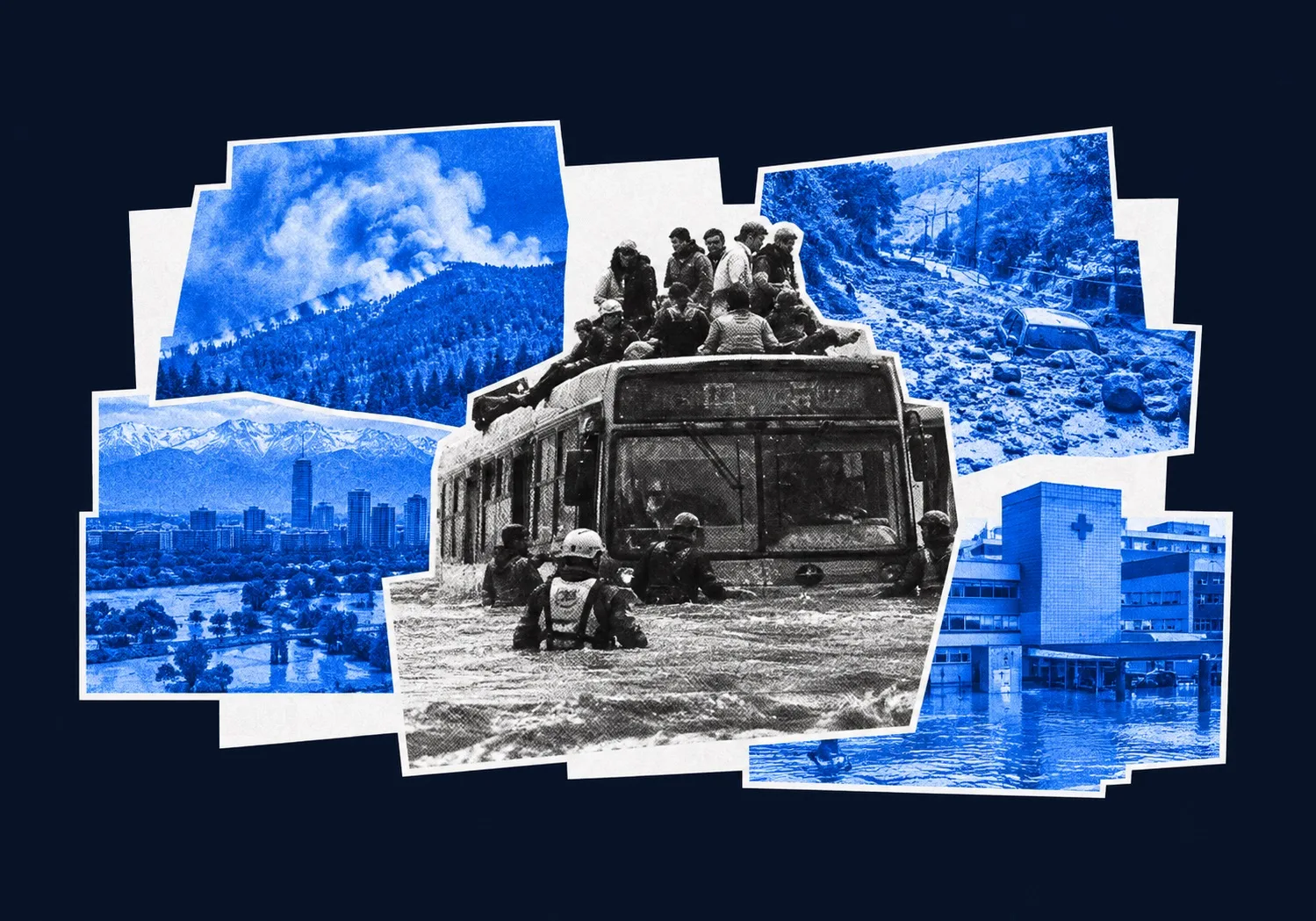
When flash floods and mudslides inundated Santiago’s affluent Las Condes district, damaged nearly 2,000 homes, and flooded critical medical facilities, rain was only part of the story. The disaster highlights how the compound impact of Andean wildfires, rising snowlines, and legacy urban drainage can paralyze even the most modern infrastructure.
But the rain alone does not explain what happened.
The hills above Santiago had already been weakened by fire. Warmer conditions meant more mountain precipitation fell as rain rather than snow. And once the water reached the city, drainage channels struggled to cope with the mud and rocks it carried. Each problem made the next one harder to manage.

For Santiago, the question is no longer simply how much rain its infrastructure can handle. It is whether the city has accounted for what that rain can bring down from the mountains.
The damage began long before the storm
In January, a wildfire destroyed vegetation in the Andean foothills above Las Condes. The loss of plants and their root systems left the soil less stable. When heavy rain arrived months later, water could wash loose material down the slopes and into the urban area.
That link between two separate disasters is easy to overlook. Wildfires are usually treated as an immediate threat to life, property, and the natural environment. Once the flames are extinguished, attention turns to recovery. Yet the damaged landscape can remain dangerous long after the fire itself has disappeared.
In Las Condes, the consequences became apparent when several days of rain saturated the ground. The district received 14.4 centimetres of precipitation, roughly nine times its average rainfall for October. The Mapocho River and local waterways, including Canal Las Perdices and Estero Lampa, overflowed. Streets became conduits for fast-moving water, mud, rocks and debris.

This was not a straightforward case of drains failing to carry away excess rain. The drainage system was dealing with material washed down from the surrounding terrain as well as the water itself.
Authorities are investigating whether blockages in particular canals contributed to the flooding. Those findings will matter when responsibility for individual failures is assessed. But the wider problem is already apparent: a city can maintain its streets and drainage networks and still be exposed to damage originating beyond its built-up area.
For municipalities situated near hills and mountains, the condition of the surrounding landscape is part of the flood risk. Ignoring it can leave expensive urban infrastructure vulnerable to events that begin far outside the city limits.
When rain replaces snow in the mountains
Another factor increased the volume of water reaching Santiago. Temperatures during the storm raised the atmospheric freezing level, meaning precipitation fell as rain at elevations where colder conditions might have produced snow.
Snow stores water temporarily. Rain runs off much more quickly, especially when the ground below is already saturated. In the Mapocho River basin, where mountain runoff feeds waterways crossing metropolitan Santiago, that difference can have serious consequences.
The timing was particularly difficult. Chile entered the spring season with a strong El Niño phase influencing regional weather patterns. The World Meteorological Organization and Chile’s meteorological authority identified changes in precipitation associated with the phenomenon, while seasonal forecasts anticipated above-normal rainfall across central and southern Chile in October, November and December.
El Niño should not be treated as a complete explanation for the mudslide. Nor do the available facts establish that climate change alone caused this particular disaster. What matters is the combination of conditions that turned an intense rainfall event into a much more destructive one.
Warmer air can hold approximately 7% more water vapour for each additional degree Celsius. That increases the potential for heavy precipitation. Where heavy rain falls on fire-damaged slopes, with a high freezing level and limited capacity to contain runoff, the consequences can escalate quickly.
Forecasting the rainfall is only one part of the task. Authorities also need to understand how much water will reach a river, what it will carry with it, and whether the surrounding infrastructure can cope.
A clinic flooded, a bus trapped
The disruption in Las Condes extended beyond residential streets. Mud and floodwater entered the ground floor of the UC San Carlos de Apoquindo Clinic, forcing staff to transfer patients within the facility. Two other private clinics also suffered structural flooding.
A public bus was caught in the rushing water, leaving several passengers to seek safety on its roof before rescue teams could reach them. Power cuts affected as many as 12,000 customers across Santiago.
These incidents show how quickly a flood can spread its effects across a city. A damaged home is an immediate problem for its occupants. A flooded medical facility creates additional pressure on emergency services, while disrupted transport makes it harder for people to reach safety and for responders to move around the affected area.

The emergency response prevented the Las Condes mudslide from producing confirmed direct fatalities on Thursday, although at least six injuries were reported. Separately, emergency services recovered the body of a man from a flooded underpass in San Bernardo during the wider rain event; the cause of death was still being verified.
SENAPRED, Chile’s national disaster prevention and response agency, issued red alerts for Santiago and surrounding districts. Schools in affected areas were ordered to close on Friday. More than 1,000 people were evacuated across the affected zone, including 11 residents of a senior care facility in Las Condes. In Talagante, roughly 600 households in the Ribera del Río settlement were evacuated as the Mapocho rose.
Those measures address the immediate danger. The more difficult work will begin once the water recedes, and the full cost of the damage becomes clearer.
The expensive question of rebuilding
For Las Condes, the financial consequences will extend well beyond clearing mud from roads. Hundreds of properties need assessment, dozens of homes have suffered severe structural damage, and businesses must deal with disrupted operations. Insurers face claims involving homes, vehicles and commercial premises. The municipality must also determine whether its existing drainage infrastructure is adequate for similar events in the future.
Simply repairing damaged channels may not be enough.
If culverts and enclosed streams repeatedly become blocked by debris, engineers will need to examine their capacity to handle flows that contain more than water. Slope stabilisation and the restoration of vegetation could also become essential parts of flood prevention. Without addressing the condition of the hillsides, improvements within the city may offer only partial protection.

That work will require difficult decisions about public spending and land use. Municipal authorities must weigh the cost of strengthening infrastructure against the damage that can follow when it fails. They also need to consider whether development in vulnerable foothill areas is compatible with the risks posed by unstable slopes and increasingly intense rainfall.
The Chilean disaster has a familiar counterpart in Europe. Flooding in Central Europe in September 2024 and atmospheric-river events affecting western Europe in February 2026 exposed the limits of drainage systems confronted with intense precipitation and rapid runoff. The local circumstances differ, but the engineering challenge is much the same: water overwhelms the systems intended to control it, and damage spreads from one part of the urban environment to another.
Chile’s experience also raises a question for civil protection agencies. Emergency services can evacuate residents, close schools and mobilise additional resources. They cannot, by themselves, restore the natural protections lost in a wildfire or redesign drainage networks built around different assumptions.
The immediate recovery in Las Condes will be measured in repaired homes, restored services and reopened roads. The longer-term test is whether the next storm encounters a different city, one whose flood defences take account of the burned hillsides above it as well as the streets below.
Sources: AP, Euronews, ABC, Publi Metro