
Russia Expands Depression Treatment Standard as Mental Health Pressures Rise

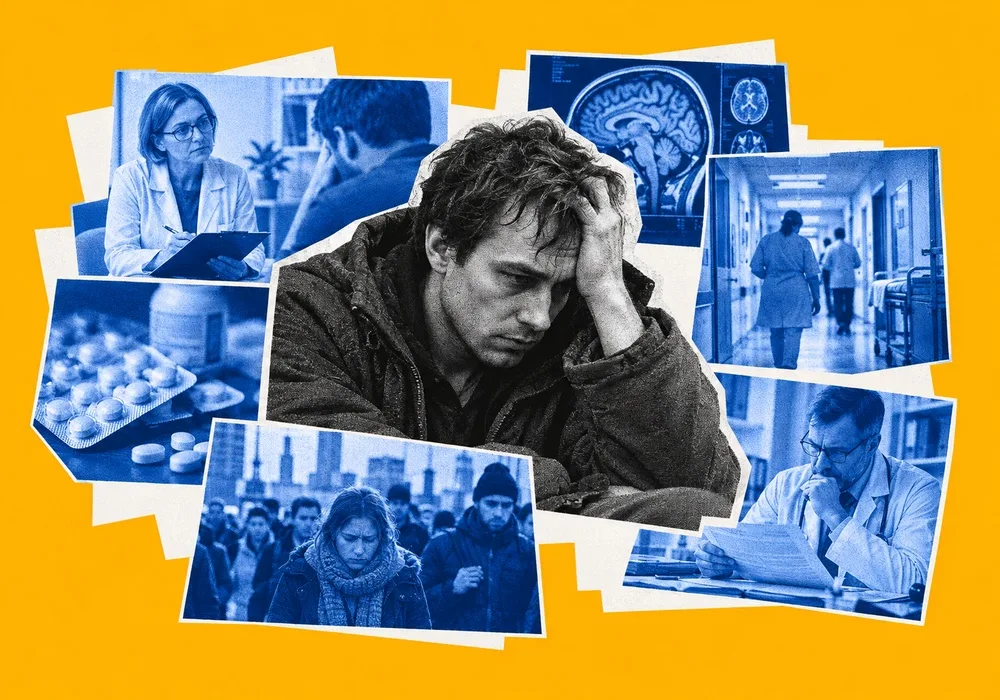
Russia has expanded its national standard for treating recurrent depression, retaining electroconvulsive therapy while adding a wide range of electrical, physical and alternative procedures. ECT is an internationally recognised treatment for severe and treatment-resistant depression, but its cognitive risks require strict safeguards. The wider development comes as Russian data show a significant rise in depression, anxiety and stress-related disorders, pointing to a growing mental-health burden on the country's healthcare system.
Russia has expanded its state treatment standard for adults with recurrent depression, bringing renewed attention to electroconvulsive therapy while simultaneously adding a broader range of electrical, physical and alternative procedures. The new standard, approved by the Health Ministry in August and registered with the Justice Ministry in September, entered into force on October 3, replacing the previous framework adopted in 2022.
The development is significant less because Russia has suddenly introduced electroconvulsive therapy (ECT) than because the country is formalising a wider and increasingly complex set of interventions at a time when indicators of depression, anxiety and stress-related disorders have been rising. The new framework illustrates both the growing demand for psychiatric care in Russia and the uneven evidence base behind some of the treatments being made available within the state system.
ECT is not a new Russian treatment
Electroconvulsive therapy has become the most controversial element of the new standard. The procedure uses a controlled electrical stimulus to induce a brief seizure while the patient is under general anaesthesia and receives muscle relaxants. Modern ECT is therefore fundamentally different from the painful procedures associated with the historical image of “electric shock treatment”.
It is also not a treatment invented or uniquely promoted by Russia. ECT has been used in psychiatry for more than 80 years and remains an established option internationally, particularly for severe depression, treatment-resistant cases, psychotic depression and situations involving a high suicide risk where a rapid clinical response is required.
Russian clinical recommendations already recognise ECT as an option for patients whose depression has not responded to several previous stages of treatment. The recommendations envisage courses of eight to 12 sessions, normally conducted over two to four weeks. They also allow earlier use in particularly severe cases, including psychotic depression, pronounced psychomotor disturbance, refusal to eat and high suicide risk.
This means that headlines suggesting that Moscow has suddenly decided to “treat Russians with electric shocks” oversimplify what has actually changed. ECT was already present in the previous Russian treatment framework. The new standard replaces the 2022 document and retains the procedure within the state's list of possible interventions.
The real controversy is what comes alongside ECT
The more unusual feature of the new document is the breadth of the non-drug treatments included alongside conventional psychiatric care.
The standard lists psychotherapy, transcranial magnetic stimulation and brain electrical stimulation, but also includes electroacupuncture, extremely high-frequency acupuncture, plasma exchange, blood ultrafiltration, hypoxia therapy and intravenous low-intensity laser treatment. ECT itself appears with an average frequency of up to 20 procedures in the standard's calculation framework.
This does not mean that every patient with depression will receive these treatments. The figures in the Russian standard describe expected frequency of particular medical services rather than a mandatory treatment sequence for every patient. ECT, for example, has a very low frequency coefficient in the document, indicating that it is intended for a limited subset of patients rather than routine treatment of depression.
Nevertheless, the combination raises a broader question about the boundary between evidence-based psychiatric medicine and procedures for which the evidence is considerably weaker.
Experts quoted by Current Time questioned the scientific basis of some of the newly listed methods, particularly electroacupuncture and other physical interventions. The concern is not equivalent across all procedures: ECT and transcranial magnetic stimulation have substantially different evidence bases from some of the other techniques appearing in the same document.
That distinction is important because the formal inclusion of a procedure in a national healthcare standard can give it an appearance of equivalence with better-established treatments, even when the scientific evidence behind them differs substantially.
Cognitive risks remain a central problem
The debate around ECT also cannot be reduced to whether the treatment is effective. Cognitive side effects are one of the main reasons the procedure remains controversial even in countries where it is widely accepted.
Temporary confusion and memory problems can occur after treatment, while some patients report longer-lasting gaps in autobiographical memory. The risk varies according to the technique, electrical dose, electrode placement, frequency of treatment and individual patient characteristics.
Russia's own clinical recommendations acknowledge cognitive and memory effects as an issue. At the same time, they describe modern modified ECT — performed under short intravenous anaesthesia, with muscle relaxation and ventilation — as the standard safety approach. Russian recommendations estimate the effectiveness of an ECT course at 50–80%, while stressing its use particularly in treatment-resistant depression.
The contradiction is therefore not between “ECT works” and “ECT is dangerous”. Both can be true. ECT can be highly effective in severe depression while carrying meaningful risks that require careful patient selection, informed consent and monitoring.
That is why the international debate around ECT has increasingly focused not on whether it should exist, but on when it should be used, how patients are informed about cognitive risks and how outcomes are monitored.
Russia is facing a much broader mental-health problem
The expansion of the treatment standard comes against a backdrop of growing demand for psychiatric care.
Rosstat data reviewed by Kommersant showed that newly diagnosed non-psychotic disorders — including depression, anxiety and stress-related disorders — were 21.5% higher in 2024 than in 2020. The increase occurred during a period marked by the COVID-19 pandemic, Russia's full-scale war against Ukraine, economic uncertainty and growing social pressure.
The pharmaceutical market points in the same direction. According to data cited by Kommersant, sales of antidepressants increased from 13.8 million packages in 2022 to 23.6 million in 2025. In January 2026 alone, more than one million packages were sold during the first 18 days of the year, an increase of 18% compared with the same period of the previous year.
These figures cannot simply be translated into a statement that “Russians have become more depressed”. Higher diagnosis rates and drug sales can also reflect better detection, greater willingness to seek treatment and increased access to psychiatric services.
But the scale of the increase is nevertheless significant. It suggests that the Russian healthcare system is dealing with a substantially larger population seeking treatment for depression, anxiety and stress-related conditions than several years ago.
Young adults are emerging as a particularly vulnerable group
The deterioration is especially notable among younger adults. According to data cited by Current Time from monitoring by the Institute of Psychology of the Russian Academy of Sciences, 49% of respondents reported symptoms of depression in July 2026. The highest levels were recorded among people aged 25–34, a group that was also showing increasing anxiety.
Such survey figures should not be interpreted as clinical diagnoses: experiencing depressive symptoms is not equivalent to having a major depressive disorder. But they provide an indication of the broader psychological burden within the population.
For the Russian state, this creates a policy problem extending far beyond psychiatric hospitals. A larger number of people requiring mental-health support means greater demand for psychiatrists, psychologists, medication, hospital capacity and long-term follow-up.
It also puts pressure on a system in which access to high-quality psychotherapy and modern psychiatric care remains uneven between major cities and Russia's regions.
The financial burden is increasingly shifting to patients
There is another structural problem behind the expansion of psychiatric treatment: who pays for it.
Kommersant reported in 2025 that Russians purchased 175.9 million packages of medicines for mental disorders in 2024, worth about 57 billion roubles. Only around 8.46 billion roubles of this spending came through public procurement, meaning that the overwhelming majority of purchases were financed directly by patients.
The figures cover a much broader category of psychiatric medicines rather than antidepressants alone, so they cannot be treated as a direct measure of the cost of depression treatment. They nevertheless illustrate the degree to which mental-health care in Russia can depend on household spending.
This matters because depression is frequently a long-term condition rather than a single episode requiring a short intervention. Medication may need to be continued for months, while severe or recurrent cases require specialist monitoring and sometimes psychotherapy or hospital treatment.
A system increasingly dependent on out-of-pocket spending risks creating a divide between people who can afford continuous treatment and those who cannot.
Psychiatry also carries a particular political legacy in Russia
The discussion of ECT has an additional dimension in Russia because of the history of Soviet psychiatry.
ECT was introduced in the Soviet Union in 1939. By the 1970s, Soviet psychiatry had become internationally notorious for the political abuse of psychiatric institutions, including the forced confinement of dissidents. The methods and institutional circumstances of modern ECT are fundamentally different from Soviet-era practices, and equating contemporary ECT with punitive psychiatry would be medically inaccurate.
But the historical legacy remains relevant to public trust.
That concern has acquired new significance since Russia's full-scale invasion of Ukraine. Reuters reported in 2025 that dozens of people critical of the Russian government had been subjected to compulsory psychiatric treatment in politically motivated cases. Human-rights organisations documented cases in which anti-war activists and other critics were sent for psychiatric assessment or treatment by court order.
This does not establish a connection between the new depression-treatment standard and political repression. There is no evidence that the introduction or retention of ECT in the 2026 standard is designed for that purpose.
The significance is institutional: psychiatric medicine operates within a state system in which questions of informed consent, independent oversight and the ability of patients to challenge decisions can have consequences beyond ordinary clinical care.
The new standard reflects a system under pressure
The most revealing aspect of the October reform may therefore be the combination of two developments: a growing demand for mental-health treatment and an increasingly broad state-defined menu of interventions.
Russia is not uniquely turning to ECT. The procedure remains part of mainstream psychiatry internationally, particularly for severe and treatment-resistant depression. Nor does its inclusion in the Russian standard mean that most depressed patients will undergo the procedure.
The more important issue is whether the expansion of psychiatric treatment is accompanied by the safeguards expected from a modern healthcare system: accurate diagnosis, evidence-based treatment selection, informed consent, monitoring of cognitive side effects, access to psychotherapy and transparent evaluation of outcomes.
The answer will determine whether the new standard represents an adaptation to a growing mental-health burden or simply an expansion of the number of procedures available inside a pressured healthcare system.
For Europe, the wider Russian trend is relevant because mental health is increasingly becoming part of the continent's demographic, labour-market and social-policy debate. Russia's rising use of antidepressants and growing prevalence of reported depressive and anxiety symptoms are another indicator of the social costs accumulating in a country experiencing prolonged war mobilisation, economic pressure and demographic decline.
The controversy around “electroshock” therefore risks obscuring the larger story. Russia is not suddenly discovering ECT. It is confronting a broader mental-health burden while expanding the state's framework for treating it — and the quality, evidence base and safeguards of that system will increasingly matter as demand continues to grow.
Sources: Russia's updated depression treatment standard, Russian Health Ministry Order No. 745н, Full 2026 medical standard for recurrent depression