
Putin’s New Elite: Is Russia Preparing for a Permanent War with the West?

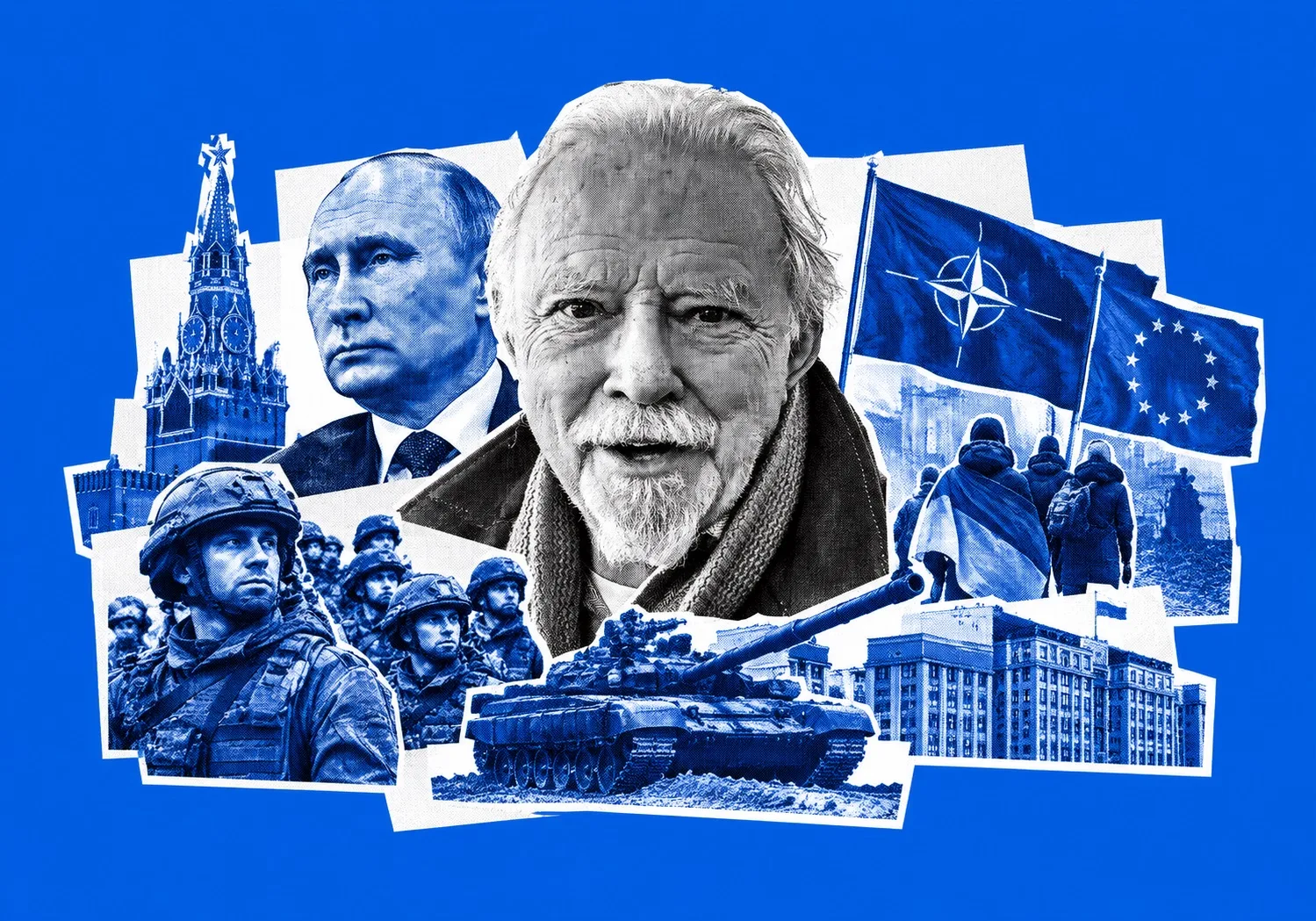
Russia’s latest parliamentary elections were designed to demonstrate continuity. But beneath the familiar rituals of voting, campaigning and a predictable political outcome, another process is becoming harder to ignore: the growing role of war veterans, military institutions and security structures in the Russian state.
Professor Tony Meehan, a British political communications analyst, argues that the shift could matter beyond Russia’s domestic politics. In the latest episode of Russia Unmasked, he discussed Russia’s parliamentary elections, the emergence of a new political elite shaped by the war against Ukraine, growing concern over a possible future confrontation with NATO, political pressure on Germany, Britain’s military preparedness, European integration and the latest US sanctions on Moscow.
His central argument is that Putin’s political system is not being reorganised around peace. It is being reorganised around control, security and the possibility of continued confrontation.
The September 18–20 State Duma elections offered a clear example. Russia did not invite OSCE observers, while independent observers and Western governments have pointed to restrictions on political competition and the exclusion of genuine anti-war opposition. The European Union also rejected Russia’s attempt to hold the vote in occupied Ukrainian territories.
For Meehan, however, the purpose of the elections is not primarily to determine who governs Russia.
Elections as a mechanism of political legitimacy
Putin needs elections because they allow the Kremlin to present political control as popular participation, Meehan argued.
The message to Russian citizens is simple: you have a voice in the future of your country, even if the political system offers little meaningful competition.
The vote therefore serves a legitimising function. It allows the Kremlin to maintain the appearance of a conventional political system while preserving centralised control.
The elections held in occupied Ukrainian territories serve a different purpose. In Meehan’s interpretation, they are intended to reinforce the Kremlin’s narrative that Russia is accepted in the territories it claims to have annexed.
The European Union has explicitly rejected that claim, saying the organisation of Russian elections in occupied Crimea, Sevastopol and parts of Donetsk, Luhansk, Zaporizhzhia and Kherson has no legal validity.
The distinction matters because the elections are not only about domestic legitimacy. They are also part of Moscow’s attempt to present territorial conquest as an established political reality.
From technocrats to a wartime elite
Perhaps the more consequential development is taking place inside the political class itself.
Russia has increasingly promoted veterans of the war against Ukraine as a new generation of political figures. Almost 200 veterans were among the candidates in the parliamentary elections, while 49 were ultimately elected to the State Duma. The Kremlin has openly presented veterans as part of Russia’s “new elite”.
The European Council on Foreign Relations has described the process as the creation of a “proto-elite”, noting that several thousand actual and nominal veterans already occupy political and government positions. The shift represents a move away from the earlier emphasis on technocrats towards loyalty rooted in wartime service.
Meehan sees a deeper political calculation behind the process.
He questioned whether Putin is gradually replacing civilian political figures with a military elite whose interests are tied directly to the continuation of the current system.
For Putin, he argued, the issue is not peace but control.
That interpretation is important because the political promotion of veterans changes the relationship between the Russian state and the war itself. If military service becomes a route into political power, the war is no longer simply an external policy pursued by the state. It becomes part of the mechanism through which the state produces its future leadership.
That does not necessarily mean that every veteran entering politics supports permanent war. But the institutional shift gives the Kremlin a new pool of officials whose political identity is closely connected to the conflict.
Russia’s military preparations: warning or deception?
This question becomes particularly important amid reports that Russia is preparing between 16,000 and 20,000 additional hospital beds for military personnel.
The figures have not been independently verified to a degree that would establish their purpose. Reports cited by Polish media say Russia plans to allocate additional civilian hospital capacity to military needs and has been expanding its military medical infrastructure.
For Meehan, such movements cannot simply be dismissed.
Military preparations can indicate preparations for an operation. But they can also be deliberate deception.
He described this as part of what he sees as Putin’s broader pattern of “bluff, distract, destroy, confuse”: making Western governments watch one possible direction while concealing the real objective.
That creates a difficult problem for European intelligence and defence planners.
If Russia increases military medical capacity near the Baltic region, the development may indicate preparation for a future operation. But it may also be intended to convince NATO that an attack is imminent in one particular area while Russian planning focuses somewhere else.
The only safe assumption, in Meehan’s view, is that both possibilities have to be considered.
The broader concern is not necessarily that Russia is preparing to attack NATO tomorrow. It is that Moscow has created a political and military system in which the possibility of another conflict remains a useful instrument.
Germany’s political instability is another opening for Moscow
Germany provides another part of the picture.
The AfD’s strong performance in the September election in Saxony-Anhalt dealt a significant political blow to Chancellor Friedrich Merz’s CDU. The party won around 44% of the vote, while the result intensified pressure on the federal government. Reuters subsequently reported that the AfD’s rise was complicating Germany’s political landscape and raising questions about the future of Merz’s coalition.
Meehan does not expect German support for Ukraine to disappear simply because of one regional election. Germany’s commitments through the EU and NATO, he argued, remain broader than the politics of one state.
But instability itself benefits Moscow.
Russia does not necessarily need to change a government to achieve a strategic effect. Political fragmentation, public frustration and disputes within established alliances can be enough to consume attention and weaken consensus.
This is particularly relevant in Germany because Berlin remains one of Ukraine’s most important European supporters.
For Moscow, according to Meehan, the broader objective is to exploit fractures wherever they appear - inside Germany, Britain, NATO or the EU.
Britain is not ready for a major war
The discussion becomes more uncomfortable when viewed from Britain.
Meehan, who lives in the UK, gave a blunt assessment of British military preparedness: Britain would not be ready for a major direct war with Russia tomorrow.
He pointed to shortages in defence funding, personnel, equipment, ships, aircraft, drones and missiles. He also argued that parts of the British military remain insufficiently adapted to the realities of 21st-century warfare.
Ukraine, in his view, has developed capabilities and battlefield experience that European militaries now need to study - particularly in drone warfare, unmanned systems and the use of technology to reduce the exposure of human soldiers.
This does not mean Britain or Europe lacks military power altogether. NATO as a whole possesses substantial personnel and resources, and Meehan argued that the scale of the Alliance is one reason Russia may remain cautious about confrontation.
The problem is therefore not simply the size of European forces. It is whether individual European states are prepared for the type of warfare that has emerged in Ukraine.
Could Russia push Europe towards deeper integration?
That question leads to an unexpected political development.
Former French prime minister Gabriel Attal has proposed creating a more integrated “United States of Europe”, potentially involving a smaller group of countries prepared to move faster on economic, political and defence integration. His proposal includes deeper fiscal integration and a directly elected leadership structure, while Britain has also been mentioned as a potential participant.
For Meehan, however, the idea raises more questions than answers.
Who would control such a structure? Who would be responsible for defence, economic policy and security? How would sovereignty be divided between national governments and a federal European authority?
He also questioned whether creating a new European entity would actually strengthen the continent.
His preferred path for Ukraine is more conventional: continued pursuit of EU and NATO membership rather than joining an untested new political structure.
The irony is that Russia’s pressure on Europe could contribute to precisely the opposite of what Moscow has traditionally sought.
Rather than permanently dividing European states, sustained security pressure could encourage them to cooperate more closely on defence, energy, sanctions and strategic autonomy.
Whether that eventually produces deeper European integration is a political question. But the pressure for greater cooperation is becoming harder to separate from the security environment created by Russia’s war.
The sanctions test: will Washington target Russia’s biggest buyers?
The final test is economic.
President Donald Trump has now signed the Lindsey O. Graham Sanctioning Russia and Iran Act of 2026 into law. The legislation expands sanctions against Russian officials, banks and economic sectors, targets the shadow fleet used to transport Russian oil and gives Trump authority to impose tariffs of up to 100% on major buyers of Russian oil and gas.
The significance lies less in the existence of another sanctions package than in who Washington may eventually target.
China and India are among the countries most exposed to the new tariff powers because of their purchases of Russian energy. The law does not automatically impose the 100% tariffs; it gives the US president the authority to use them.
Meehan sees the legislation as an additional attempt to make Russia’s war economy harder to sustain.
But China presents a different challenge. Beijing has the economic and geopolitical weight to resist US pressure, and any attempt to punish it through tariffs could create consequences far beyond Russia’s energy revenues.
That makes implementation more important than the legislation itself.
The new law gives Washington another instrument. Whether Trump uses it, against whom, and at what scale will determine whether it becomes a serious constraint on Russia’s ability to finance the war or primarily another source of pressure in negotiations.
The same question runs through almost every issue discussed by Meehan.
Russia’s elections, the promotion of veterans, military preparations, European political divisions and sanctions are not separate developments. Together, they point to a confrontation that is increasingly being fought through institutions, political systems, economic pressure and strategic signalling as well as on the battlefield.
And that leaves Europe facing a question that extends beyond the war in Ukraine: whether the security architecture that emerges from this conflict will be designed for a return to normality - or for a Europe that assumes confrontation with Russia may last for years.
Read also:
- As the Kremlin tests Western boundaries through diplomatic signaling and escalation threats, European security hinges on decisive military support for Ukraine. Speaking on Russia Unmasked, British political analyst Professor Tony Meehan details why internal political fractures in the EU are failing to stop Russia - and what NATO must do to force a fundamental shift in Moscow’s calculations.
- Russia's war against Ukraine is no longer confined to the battlefield. Moscow is testing Western political resolve, probing European security through sabotage and hybrid operations, and looking for opportunities to exploit divisions inside NATO and the European Union.