
Putin, Sanctions, and European Defense: How Western Resolve Can Defeat Moscow’s Attrition Strategy

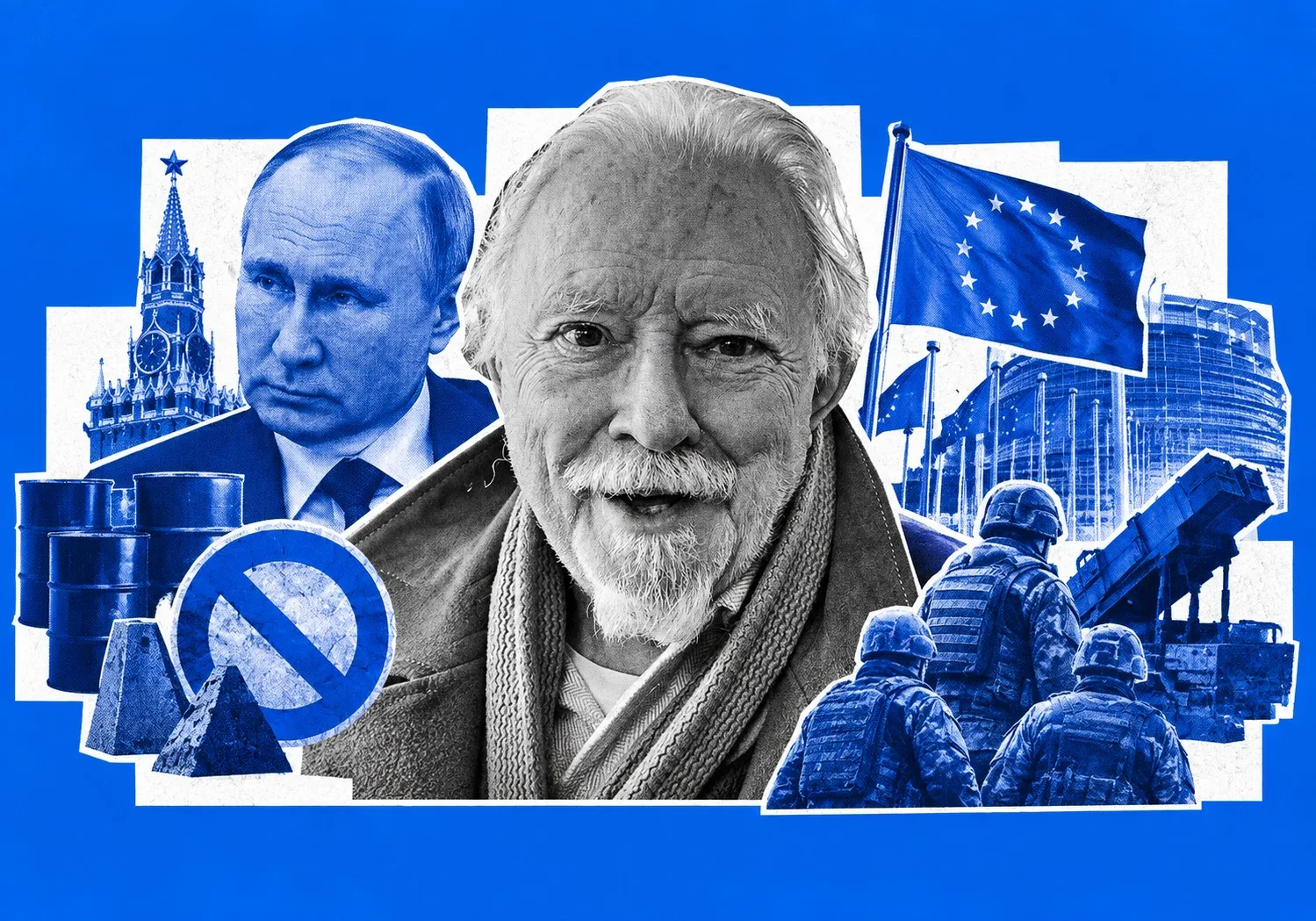
As the Kremlin tests Western boundaries through diplomatic signaling and escalation threats, European security hinges on decisive military support for Ukraine. Speaking on Russia Unmasked, British political analyst Professor Tony Meehan details why internal political fractures in the EU are failing to stop Russia—and what NATO must do to force a fundamental shift in Moscow’s calculations.
Putin is under intense pressure at home. He is politically isolated, surrounded by subordinates who feed him filtered reports, and trapped in his own belief that Russia can outlast the West. That makes his next move inherently unpredictable and dangerous.
Diplomatic Contact and Kremlin Signals
Russian officials are slowly resurfacing at international forums on American soil.
US officials confirmed that Russian Finance Minister Anton Siluanov will join the J-20 energy meeting in Houston. The invite immediately reignited debate over whether Washington is keeping practical lines open or giving Moscow a free pass back into international life.
This is not routine diplomacy.
Putin is simply testing the water to see if Moscow still carries weight under J-20 rules.
Much of this friction reflects Donald Trump’s role as an international disruptor rather than a coordinated shift by member states.
Floating Russian attendance serves mainly to create noise—a familiar tactic seen in political rhetoric aimed at Canada, the UK, the Falklands, and Ireland.
These moves show a distinct lack of grip on regional history.
Yet they often backfire, driving allies to close ranks faster than expected, much like Canadian provinces uniting under external pressure.
When Ukrainian President Volodymyr Zelensky suggested confronting Putin directly at these summits to force real accountability, Moscow balked, offering a non-starter counter-proposal to meet in Russia.
Kyiv rightly ignored the setup.
If Washington intends to maintain contact, it must set hard prerequisites rather than hand out unearned legitimacy.
That means requiring an immediate halt to missile and drone strikes against Ukrainian infrastructure, an end to the execution and abuse of prisoners of war, and an explicit Russian admission that military victory over Ukraine is out of reach.
Moscow must also commit to respecting European borders—regardless of NATO status—drop nuclear threats entirely, and cooperate on practical regional security, including opening strategic shipping channels with Iranian help.
Putin will almost certainly push back on these terms to project strength domestically.
Surviving internal challenges remains his priority, and he needs to look capable of standing up to Washington.
Still, establishing hard boundaries matters. Without them, Western engagement looks like weakness.
The Sanctions Leak
While diplomatic signals draw public attention, internal European splits over economic pressure are doing far more damage.
Paris and Bratislava are actively tugging at the EU sanctions list.
Slovakia wants oligarchs Alisher Usmanov and Mikhail Fridman removed.
France supported dropping Usmanov, framing it as a necessary trade-off to secure wider agreement on the broader sanctions package.
The French position exposes a clear contradiction. Paris projects a hardline stance on backing Ukraine in public, yet lobbied behind closed doors to unfreeze a key Russian billionaire, pointing to vague national security requests. If those security concerns were real, French officials failed to explain them clearly to their allies.
Slovakia’s angle is simpler: front-line anxiety, economic vulnerability, and decades-old ties to Moscow.
Allowing individual capitals to carve out exemptions guts the collective pressure framework. When Turkey previously argued for clearing Usmanov on humanitarian grounds, the point was rightly dismissed.
Sanctions cannot turn into a political marketplace.
De-listing an individual or business requires strict, verified compliance evaluated by the entire sanctioning body.
Exemptions should only kick in once Russia implements a full, monitored withdrawal from occupied territories and commits to audited war reparations.
Any other approach simply guarantees a queue of exemption requests at the next renewal vote.
Politics in Central Europe
Economic disagreements are now colliding with shifting domestic politics across Central Europe.
Regional elections in Saxony, Thuringia, and Brandenburg saw significant gains for the far-right Alternative for Germany (AfD).
Kremlin state media predictably cited the outcome as proof that Western voters are rejecting policy on Ukraine.
The reality is more complex.
Parts of eastern Germany retain a distinct political memory shaped by decades under Soviet influence. Historical ties and fears of economic hardship make these voters far more receptive to populist arguments than public opinion in London or Paris.
The AfD played directly to local fears of a wider war, promising cheap Russian energy and instant peace. Mainstream parties like the CDU countered by warning of broader conflict and pushing for stronger defense investments.
To counter populist arguments, European leaders need to point directly to Putin’s recent rhetoric in India, where he explicitly raised the prospect of conflict with Europe.
The Kremlin’s pressure is not confined to Ukraine’s borders.
Putin uses fear as primary leverage.
When internal problems pile up, the regime manufactures external threats to force domestic unity. Cheap Russian energy was never just a commercial transaction; it was a political leash.
Deterrence Over Dialogue
As European nations debate long-term security plans, the Kremlin continues trying to set artificial limits on Western military aid.
Putin framed any potential deployment of European forces to Ukraine as an act of war, while simultaneously claiming Russia harbors no aggressive designs against Europe.
Moscow is trying to exercise an informal veto over Western security policy. Russia has no procedural vote in NATO, so it uses nuclear threats to exploit Western risk aversion and prevent long-term security guarantees for Kyiv.
Yet this posturing masks serious internal weaknesses.
Extended warfare has left the Russian economy under severe strain, while the Kremlin operates inside an information bubble where officials feed the leadership false reports of military progress.
Putin leans on nuclear threats precisely because Russia lacks the conventional force to challenge a prepared European defense alliance. His warnings reflect constraints, not strength.
Clear military action speaks louder than diplomatic statements.
Speeding up F-16 deliveries, supplying Patriot air defense systems, and ramping up ammunition production prove that Western policy is driven by Ukrainian operational needs, not Kremlin rhetoric.
Moscow’s reliance on North Korean troops shows just how thin its own manpower reserves have run.
Putin operates on a Soviet-style belief that sheer endurance wins wars. He will not adjust his plans because of diplomatic declarations; he will stop only when faced with hard military capacity that makes further advances impossible.
The Math of Attrition
The conflict’s ultimate weight falls on human and economic resources. British military estimates put Russian casualties past 500,000 killed and wounded, while broader figures point to a staggering total of 1.5 million dead and injured since the full-scale invasion began.
In a normal political system, losses of this scale would trigger immediate political consequences.
But after 25 years in power, Putin knows that conceding failure threatens his regime directly. Admitting that hundreds of thousands of lives and trillions of rubles produced no strategic gain would shatter his position at home.
Even so, ordinary Russians are beginning to question why and at what cost this war is being waged. Mounting casualties, rising public debt, and persistent economic pressure are quietly straining Russian society, even as the Kremlin apparatus continues executing orders to keep the regime in power.
Putin has convinced his inner circle that Western political resolve will collapse under economic fatigue.
That calculation might have looked viable to Moscow early on, but it is failing today. Long-term security commitments—including Canada’s 100-year framework with Ukraine, multi-year EU and NATO funding lines, and expanding industrial supply chains—show that Western support is built for the long haul.
Putin’s political survival depends on keeping the war going. The West’s job is straightforward: enforce sanctions, supply equipment, and ensure the Kremlin runs out of options first.
Professor Tony Meehan, political analyst