
Poland Foils Alleged Plot Against Donald Tusk on Eve of Warsaw Security Summit

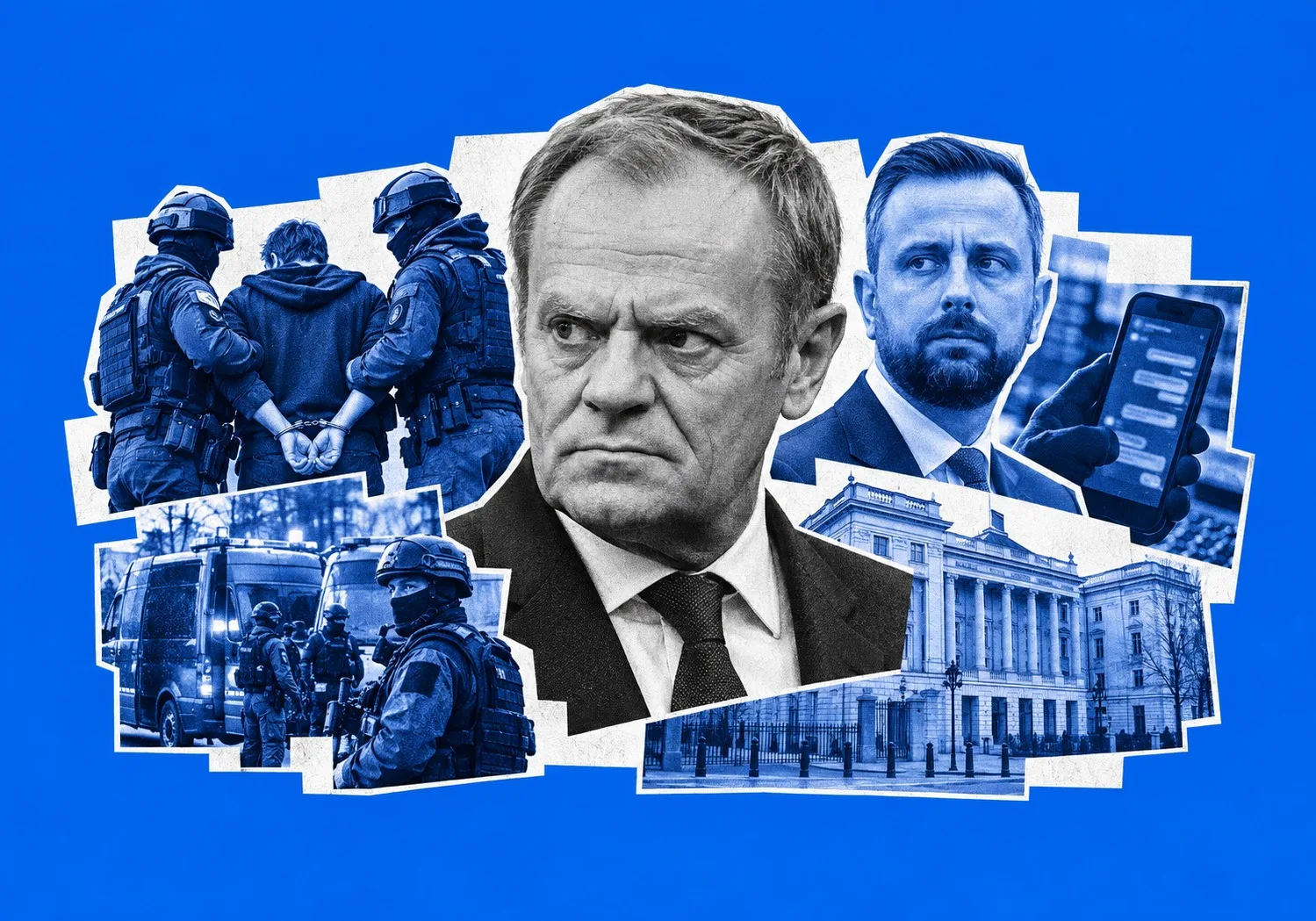
Polish security services have detained a suspect in Lower Silesia following an intelligence tip detailing an armed conspiracy targeting Prime Minister Donald Tusk and Defense Minister Władysław Kosiniak-Kamysz. Executed during the opening hours of the Warsaw Security Forum, the operation has exposed the acute friction between domestic extremist threats and high-level European defense diplomacy in the Polish capital.
The operational response began during the night between Saturday and Sunday. An electronic report reached the State Protection Service (SOP). Reports by Gazeta Wyborcza, Polsat News, and TVN24 indicate that an informant contacted state security after encountering a fringe network. Within this group, an individual identified as Krzysztof was observed discussing the procurement of firearms, hostility toward the government, and planned actions against state officials.
Following the alert, an emergency meeting convened at the Anti-Terrorist Center.
Officials from the Ministry of Internal Affairs and Administration (MSWiA), special services coordinator Tomasz Siemoniak, the Polish Police, the State Protection Service, and the Internal Security Agency (ABW) evaluated the credibility of the information. Government spokespersons Jacek Dobrzyński and Karolina Gałecka confirmed by Sunday morning that security agencies were responding to a threat rated with a high probability of execution.
By Sunday afternoon, police forces located and arrested the 60-year-old suspect in Wrocław, linking him to fringe factions, as confirmed by Minister of Internal Affairs Marcin Kierwiński.
Prime Minister Tusk issued a statement on platform X thanking law enforcement officers for their intervention.
Opposition lawmakers criticized executive leadership for publicly announcing the threat while defense delegations arrived in Warsaw. Representatives from Law and Justice (PiS) and Konfederacja questioned the government's communication strategy and timing. Meanwhile, counter-terrorism analysts examined the operational implications of releasing threat details prior to concluding investigations into the suspect's wider network.

From Telegram manifestos to Lower Silesia
Reporting by Gazeta Wyborcza detailed the organizational context behind the threat. Polish journalists identified the organization named in the security tip-off, though major outlets chose not to publish its official name.
On its social media accounts, the organization describes its purpose as fighting against what it terms the "POPiS agency in the hands of globalists and the Judeo-Communist conspiracy."
Directed at state leadership, profanity and statements were recorded on Friday, October 9, by one of the movement's figures, identified as 66-year-old Krzysztof N.
The recording specifically addressed Donald Tusk as a "red-haired German traitor" and Władysław Kosiniak-Kamysz as a "village mongrel."
Krzysztof N. introduced an individual referred to as the "Leader of the Slavic Home Army" in a second video published on Saturday.
Making claims regarding state vaccination programs, the speaker called for the mobilization of prison inmates across Polish correctional facilities. The sequence of events from online broadcasts to statements regarding firearms procurement illustrates the path through which digital channels connect with physical security threats.
Regarding operational sequencing, the arrest in Wrocław demonstrates the execution of tasks by Poland’s intelligence and law enforcement bodies. Moving from an initial tip to a targeted detention in Lower Silesia within twenty-four hours required inter-agency communication between the Internal Security Agency, the State Protection Service, and local police units.
Operating on digital platforms, decentralized domestic networks present specific parameters for security agencies.
These loose domestic cells operate without fixed organizational frameworks due to a lack of conventional hierarchical command structures, altering the requirements for intelligence gathering and risk assessment.
For law enforcement agencies, distinguishing between online speech and actionable violent planning remains a central task. Identifying the point at which individuals or groups transition toward physical execution relies on digital monitoring and inter-agency data integration in environments where extreme rhetoric circulates online.
Security logistics during a summit week
Alongside the Warsaw Security Forum, the security response to the plot against Poland’s prime minister and defense minister proceeded. Positioned as a logistical host on NATO’s eastern flank, Poland finds the physical safety of its leadership tied directly to its broader regional commitments.
Specific security measures were required due to the presence of NATO commanders alongside visiting European defense ministers in Warsaw. An attack or security breach during an international conference carries implications for host-nation security procedures and international perception.
Standard counter-terrorism protocols often emphasize operational confidentiality. This maintains tactical advantage and protects ongoing intelligence channels. Publicly acknowledging an electronic tip-off and subsequent arrest communicates a law enforcement response while signaling to potential associates that an investigation is active.
Executive authorities exercised available operational options when choosing to issue public statements. Government officials balance public communication requirements with operational secrecy when threat intelligence involves domestic citizens, influencing how security measures are perceived within domestic political debates.
The political fallout in Warsaw
Differing interpretations of state security communications in Warsaw were highlighted by the political responses following Minister Kierwiński’s announcement. Opposition political figures argued that the timing and manner of the government's public statements were selected to influence public discussion during an international summit.
Variations in political reactions point to the conditions under which national security information is received. Public evaluation of official statements and institutional procedures varies across political lines when security operations become a subject of partisan debate.
Security protocols for executive officials and international delegates attending the Warsaw summit were maintained by government agencies. Under time constraints, the State Protection Service, the Police, and the Internal Security Agency executed coordination protocols.
A central focus for state institutions remains the interaction between digital radicalization, domestic political commentary, and executive protection. Addressing these factors involves operational execution by field agencies alongside the managed communication of intelligence data within a competitive political landscape.
The Anti-Terrorist Center's midnight decision
Defined legal mandates and administrative divisions between civil intelligence, military coordination, and police enforcement form the structural framework governing Poland's response to internal security alerts.
Primary responsibility for counter-terrorism prevention under Polish law lies with the Internal Security Agency (ABW), which operates the Anti-Terrorist Center as an inter-agency hub. Verification across state databases is required by protocol when a tip-off regarding executive safety enters the system through the State Protection Service (SOP).
The intelligence received during the October 10–11 operational window required integrated data processing across administrative boundaries.
A protective mandate focused on designated state personnel and physical facilities is held by the State Protection Service, which lacks broad investigative jurisdiction over domestic civilian groups. Consequently, SOP transferred the intelligence to the ABW and the General Headquarters of the Police upon receiving information regarding an armed threat originating from radical circles.
The Anti-Terrorist Center took charge of the intelligence pipeline during the midnight emergency session.
Representatives from the Ministry of Internal Affairs and Administration alongside law enforcement units evaluated the credibility matrix of incoming data. Rated with a high probability of fulfillment, the threat classification triggered parallel actions: physical protection enhancements for Prime Minister Tusk and Deputy Prime Minister Kosiniak-Kamysz, alongside signal tracking executed by specialized police units in Lower Silesia.
Established European counter-terrorism standards separate intelligence gathering from executive policing powers through this division of institutional labor. Continuous operational alignment is nevertheless required by the multi-agency structure.
Technical connectivity between central intelligence monitoring in Warsaw and regional police operations in Lower Silesia was demonstrated by the detention of the 60-year-old suspect in Wrocław within twenty-four hours.
Surveillance limits and the Polish Penal Code
The legal and technical mechanisms used by European state security services to monitor online extremism are highlighted by the role of digital media in the Lower Silesia investigation. Specific challenges regarding statutory surveillance limits and criminal law are posed by the dissemination of video manifestos and encrypted messages by fringe networks.
Judicial or prosecutorial authorization is required under the legal framework governing intelligence interception in Poland for deep operational surveillance.
Emergency provisions permit temporary tracking when a threat to human life or state security is identified. Intelligence analysts evaluated the content provided by an informant regarding the individual named Krzysztof and his discussions of firearms procurement against statutory thresholds for criminal conspiracy and terrorism offenses under the Polish Penal Code.
The transition from public online rhetoric to actionable conspiracy represents a distinct legal boundary.
Public incitement to commit crimes or praising illegal acts is addressed under Article 255 of the Polish Penal Code. Direct preparation for acts against state officials falls under Article 148 in conjunction with counter-terrorism statutes. Recovered digital records, video recordings from Friday and Saturday, and communication logs provided the evidentiary foundation required to justify the emergency intervention in Wrocław.
Analyzing decentralized digital networks extends the challenge facing intelligence services beyond tracking individual accounts. Utilizing open social media platforms alongside private messaging channels, small groups operating without formal leadership structures disseminate material. Continuous algorithmic processing of public data streams combined with human intelligence inputs is required to monitor these networks, as occurred when the informant reported direct contact with the group.
Host-nation duties on NATO's eastern flank
Host-nation obligations within the NATO alliance connect directly to the security alert occurring alongside the Warsaw Security Forum. Positioned on the eastern flank, Poland has seen Warsaw transformed into a hub for diplomatic and military coordination in Central and Eastern Europe.
Multi-layered security architectures designed to mitigate external threats alongside domestic disruptions are required when hosting international military leadership. Transport corridors and conference venues must be secured by the State Protection Service and the Police as foreign defense delegations arrive. Competing operational demands on state security assets were created by an internal security alert targeting the host nation's prime minister and defense minister.
The operational risk was not just political.
From a logistics perspective, resource distribution for the Polish police and special services was tested by managing a counter-terrorism arrest in Lower Silesia while maintaining cordon security in Warsaw. Managing tactical operations in Wrocław without redirecting personnel away from international summit venues in the capital was required of the Police General Headquarters.
Foreign security details accompanying visiting ministers and military commanders evaluate host-nation stability as an operational factor. Allowing diplomatic proceedings to continue, the execution of high-level security protocols without disrupting the schedule of the Warsaw Security Forum demonstrated the operational capacity of Polish security services to international observers.
Why Warsaw decided to talk
Contrasting methodologies in European crisis communication are illustrated by the debate surrounding the public disclosure of the Wrocław arrest. Strategies regarding when and how to inform the public about thwarted plots vary among security apparatuses across EU member states.
Complete operational silence is prioritized by one operational model frequently utilized in traditional counter-espionage and counter-terrorism workflows. Public statements under this approach are delayed by law enforcement agencies until potential co-conspirators are identified, evidence is secured, and formal indictments are filed by prosecutors. This minimizes the risk of alerting peripheral members of a network who might destroy evidence or evade arrest.
Immediate public confirmation once an initial suspect is in custody was favored by Polish authorities on October 11 as an alternative model. Needing to inform the public during active security events to counter unverified leaks, establish factual narratives, and demonstrate state control over threats is pointed to by proponents of this approach. Confirming that protective measures have been executed is served by public statements from government spokespersons in high-visibility circumstances.
Distinct political and institutional consequences are carried by the selection of a communication strategy. Rapid public announcements by executive ministers can be interpreted by political opponents as attempts to leverage state security operations for political narrative management in polarized media environments. Conversely, speculative reporting is risked if news of the operation leaks through non-official channels when withholding information during an international event. Core features of contemporary European security policy continue to include the ongoing evaluation of these communication models.
Sources: Gazeta Wyborcza, Polsatnews, Reuters