
Germany Considers Ukraine’s 'Bars' Missile Drone Amid US Supply Delays

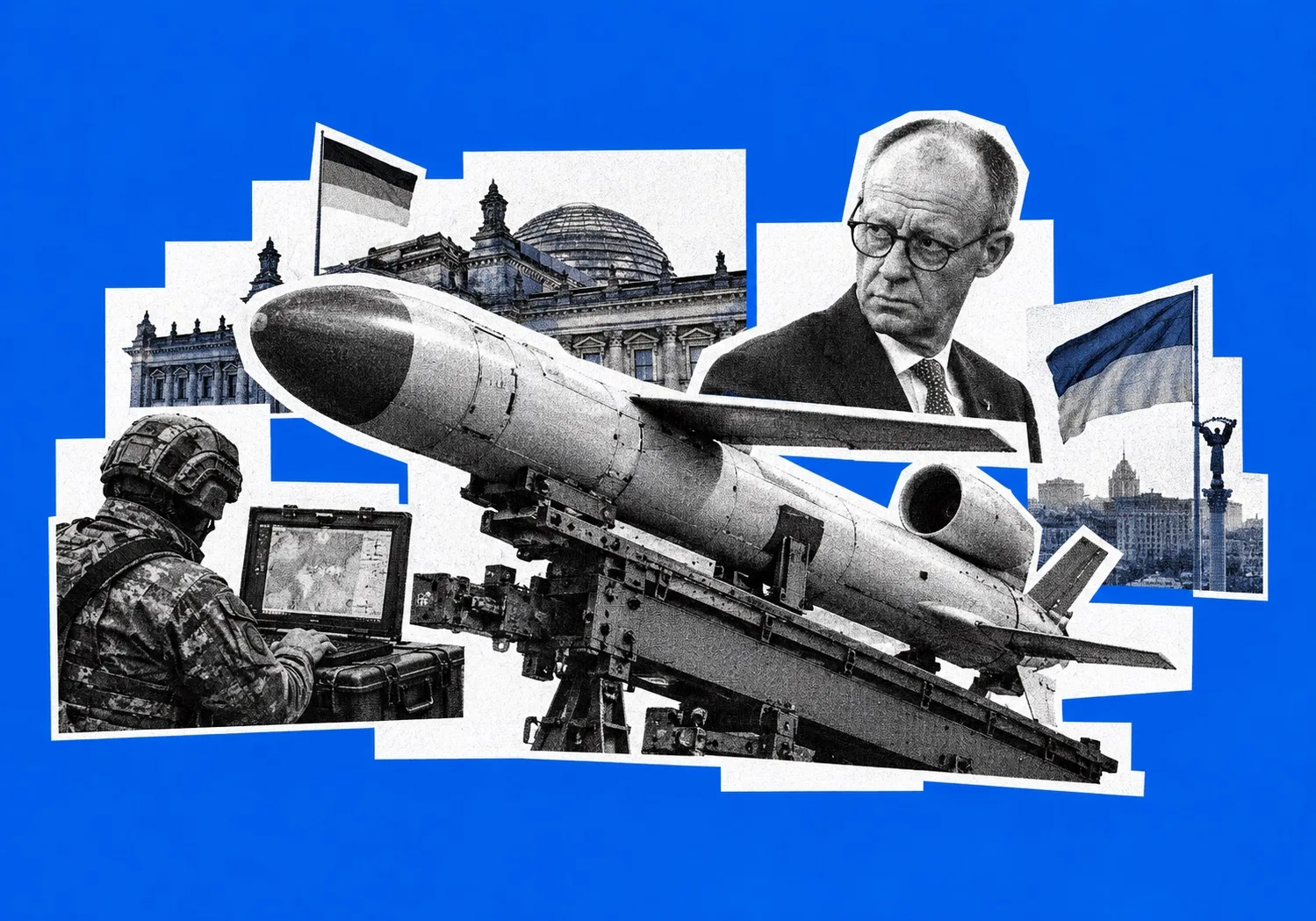
Berlin is negotiating to acquire Ukraine’s Bars long-range cruise missile drone for the Bundeswehr. Facing years of delays for US Tomahawk and Typhon systems, Germany is turning to combat-proven Ukrainian technology to fill Europe’s growing long-range defence gap urgently.
According to reporting by the Financial Times, Bloomberg, and German media, Berlin is considering an initial batch for technical assessment, potentially followed by orders for several hundred systems. The Bundeswehr could begin evaluations in early 2027 if an agreement is reached in the coming weeks.
The significance extends beyond the missiles themselves. Ukraine, long treated primarily as a recipient of Western military assistance, could become a supplier of long-range strike technology to one of Europe's largest defence establishments.
American delays are changing Germany’s calculations
Germany's interest in Bars has developed against a difficult backdrop for European missile procurement. Plans to obtain American Tomahawk cruise missiles have encountered export licensing obstacles, strained relations with Washington and a manufacturing backlog that could push deliveries back by as much as five years.
The procurement process has reportedly been effectively frozen for almost a year. For German defence planners, that creates a problem which additional funding alone cannot resolve.
A missile ordered today but delivered years later does little to address an immediate shortage of long-range strike capability. Nor can European governments assume that American export approvals will necessarily follow their own procurement schedules.
The Typhon missile system presents related difficulties. Although American long-range weapons remain attractive for their established capabilities, their availability depends on decisions and industrial capacity beyond Berlin's control.
Ukraine offers a different proposition. Its manufacturers have developed weapons while facing continuous operational demands, with production and design evolving alongside battlefield experience. Bars belongs to a category of comparatively inexpensive systems intended to be manufactured and deployed in substantial numbers.

This does not make it a direct substitute for every mission assigned to a Tomahawk. The weapons differ considerably in payload and operational characteristics. But Germany's interest indicates that military planners are increasingly willing to consider a broader mix of strike systems rather than wait for a limited number of expensive missiles.
Availability has become a strategic consideration in its own right.
A different approach to long-range firepower
Bars occupies the increasingly important space between conventional unmanned aircraft and cruise missiles.
The ground-launched system uses a solid-fuel booster to accelerate from a rail launcher before a miniature turbojet engine powers its flight. Its design allows it to operate at speeds considerably higher than those associated with many propeller-driven long-range drones.
Published specifications vary by modification. A standard version carries a 22kg warhead, has a maximum take-off weight of 135 kg, and accommodates 95 litres of fuel. Its cruising speed is approximately 400–450km/h, with maximum speeds exceeding 700km/h.
Heavier variants reportedly carry payloads ranging from 60kg to more than 105kg, while certain configurations can reach targets up to 1,000km away. The platform also incorporates terminal operator guidance, providing a means of influencing its final approach to a target.

Those figures describe a family of configurations rather than a single weapon with all the stated characteristics simultaneously. They also do not establish how each variant would perform under every operational condition.
The attraction for Germany lies partly in the relationship between capability, production volume and cost.
Traditional Western cruise missiles deliver substantial precision-strike capability, but their sophisticated components, complex production processes and high unit costs constrain the quantities available. Ukrainian developers have pursued another model: weapons capable of reaching distant targets without requiring the industrial investment associated with the most advanced Western missiles.
Norwegian defence analyst Fabian Hoffmann has identified Bars as among the most widely produced and operationally proven inexpensive Ukrainian cruise missiles in its category.
That production experience matters. A weapon intended for repeated use in a high-attrition conflict must be judged not simply by its individual performance, but by how quickly manufacturers can replace expended stocks.
A smaller warhead may be a limitation against certain hardened targets. Against other objectives, the ability to launch larger numbers of relatively affordable weapons may offer advantages, particularly when an adversary must expend scarce air-defence resources to intercept them.
The calculation is therefore not simply whether Bars can match an American missile. It is whether Germany needs every long-range strike to be delivered by a weapon designed around the same requirements and cost structure.
From financing Ukrainian weapons to buying them
Berlin and Kyiv already have an industrial arrangement capable of supporting closer cooperation.
On 8 July 2026, the two governments signed an implementation agreement under the Build with Ukraine initiative, establishing a framework for joint production of Ukrainian unmanned systems with German financial support.
The initial purpose was to manufacture equipment for Ukraine's armed forces. The first deliveries from that cooperation reached Ukrainian forces in October.
The proposed Bundeswehr purchase would extend the arrangement into a different market. Rather than financing weapons exclusively for Ukrainian use, Germany would become a customer for Ukrainian-developed technology.
Existing joint manufacturing structures could help support such an expansion, although the terms of any direct German procurement agreement remain unresolved.
This distinction is important for Ukraine's defence industry. Western funding has already helped sustain Ukrainian weapons production. Direct procurement by a major European military would provide a different form of recognition: that Ukrainian systems can compete for contracts intended to equip NATO forces.
It could also create longer-term commercial opportunities. An initial evaluation order would be relatively modest, but subsequent purchases involving several hundred units would give manufacturers a stronger basis for planning production and investment.
The financial implications cannot yet be quantified. No confirmed unit price or contract value has been disclosed, and the manufacturer's identity remains withheld for security reasons.
Nevertheless, the industrial direction is clear. Ukraine is seeking a place within European defence supply chains not only as a production location or recipient of assistance, but as a developer of systems that other armed forces may want to operate.
The Bundeswehr still has to make its decision
Germany's interest should not be confused with a decision to field Bars.
In early October, Christian Freuding, Inspector General of the German Army, acknowledged that two candidate systems, including Bars, were under consideration for the army's long-range artillery and missile requirements.
A formal purchase agreement would allow the Bundeswehr to proceed towards technical evaluations in early 2027. Those assessments would have to establish whether the Ukrainian platform meets German military standards before larger orders could be justified.
The precise testing programme has not been publicly detailed in the briefing material. Questions surrounding operational reliability, guidance performance, integration with German military systems, and the suitability of different configurations will be relevant to any decision on service adoption.
Germany must also determine how a weapon developed around Ukraine's immediate wartime requirements fits into its own force structure.
A system that works effectively within Ukrainian operations is not automatically ready for German deployment. Training, maintenance, logistical support and integration into existing command arrangements all influence the practical value of a new capability.
Yet the potential evaluation itself is revealing.
For established Western defence contractors, Germany's search creates a competitive challenge that extends beyond the Ukrainian market. If a European military concludes that a lower-cost Ukrainian system can fulfil part of its long-range strike requirements, procurement agencies elsewhere may face pressure to examine similar alternatives.
That would not eliminate demand for high-end American missiles. It could, however, weaken the assumption that such weapons must dominate European long-range strike planning.
Europe's defence industry confronts the lessons of Ukraine
Russia's full-scale invasion forced Ukraine to develop its own long-range strike options as access to certain Western weapons remained restricted.
Systems including Bars, Palyanytsia and Peklo emerged from efforts to reach Russian military logistics, infrastructure and other distant targets without relying entirely on imported missiles.
The resulting development model differs from conventional European acquisition programmes. Ukrainian manufacturers have had to respond quickly to changing battlefield conditions, placing particular emphasis on affordability, production speed and operational adaptation.
European militaries have traditionally prioritised sophisticated systems acquired through lengthy development and procurement cycles. Such programmes can produce exceptional capabilities, but they are poorly suited to rapidly replenishing weapons consumed in large numbers.
Germany's consideration of Bars brings these approaches into direct contact.
The Bundeswehr is not abandoning advanced Western technology. Rather, it is examining whether Ukrainian manufacturing experience can help address gaps that established suppliers cannot close quickly enough.
For Russia, the prospect carries a separate implication. Ukrainian long-range weapons developed to operate against Russian defences and logistics networks could eventually become part of the inventories of European armies.
That would extend the military consequences of Ukraine's wartime innovation beyond the current conflict.
For Germany, the more immediate question concerns procurement authority and industrial priorities. European governments have committed themselves to strengthening defence capabilities, but larger budgets cannot guarantee faster deliveries when production capacity is constrained, and foreign export decisions remain uncertain.
Buying Ukrainian technology could offer one way around those constraints. It would also require European procurement institutions to accommodate weapons developed through a faster, less conventional process than the one they are accustomed to supervising.
The tension will become particularly acute if Bars performs well in German testing. The Bundeswehr would then face a choice between moving quickly to acquire a comparatively inexpensive system already produced for wartime use, or subjecting it to the extended acquisition procedures that have contributed to Europe's existing capability shortages.
For an army seeking long-range firepower while American deliveries remain uncertain, the time required to make that decision may prove almost as consequential as the missile's performance.